

Mohd Arbaaz is an Editor and Writer at Fitnessison.com with 5 years of experience in SEO and digital content creation. He creates informative, reader-focused content covering fitness, workouts, nutrition, health, healthy lifestyle, technology, and computers.

Shashi Teja is a Reviewer at Fitnessison with over 6 years of experience in SEO, content strategy, digital publishing, and content optimization. He reviews content for clarity, research quality, topical relevance, readability, structure, and overall usefulness to readers.
Last Updated: September 22, 2026
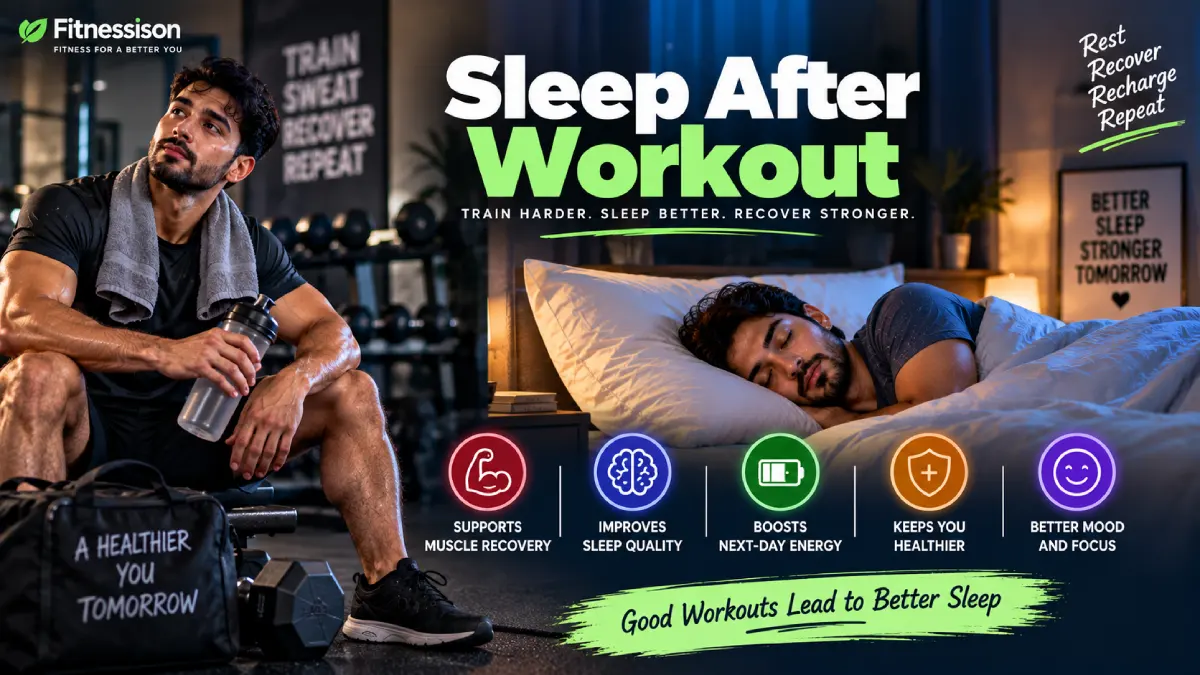
Getting quality sleep post your workout is another aspect of recovery. When you step up your game in training this overloads your muscles energy pathways and nervous systems and sleeping offers the conditions for the body to recover and repair itself. Exercising regularly can actually benefit your sleep, although the method and timing of exercise can alter the latency period for sleep.
Why Is Sleep Important After a Workout?
Most of your recovery is happening when you are not working out. Your body needs sleep to help the normal repair processes in your tissues, your immune system, memory, mood and your performance. For active people regular sleep can help support recovery between sessions. Consider it like a training stimulus. Maybe if you push yourself really hard for the entire day and don‘t sleep enough you might find yourself become more exhausted, less able to work as well as you could otherwise.
Can You Sleep Better After Exercise?
Yes. For many people exercising regularly can help to fall asleep in a more natural way and can improve sleep quality. In general exercise has been associated with better sleep duration and quality and decreases in sleep latency. It can also help the individual to relax by reducing stress and increasing endorphin levels. However, individual results can vary. When some individuals exercise in the evening they find it stimulating, feeling energized for the next several hours.
Is It Okay to Sleep Right After a Workout?
If you’ve just completed a workout, naturally you want to sleep. The optimal time to wait after working out is up to you – the more important question is if your workout promotes or hampers sleep. Given that you’re going to have an elevated heart rate and body temperature after working out, you need to reduce your heart rate and increase your core temperature as well, so the body can relax and prepare to sleep. If you feel sleepy and comfortable after working out, then briefly relax before drifting off, however, if you aren’t sleepy and comfortable, then give yourself more time to cool off.
What If You Exercise at Night?
Workout later in the evening is not necessarily detrimental to sleep. There is evidence indicating that most individuals can work out in the early evening and not be negatively affected. Several variables, including exercise intensity and the patient response will influence how late an individual can work out without sleep disruption. Generally, vigorous-intensity exercise closer to bedtime may pose a problem. If finishing a workout later frequently leaves you feeling awake and restless, try working out earlier in the evening. Using a less intense workout may be helpful.
How Long Should You Wait Before Bed?
No one waiting period is suitable for everyone. While a few sleep recommendations suggest prohibiting vigorous activity right before bed, more recent evidence points to a possibility that moderate activity might be well tolerated by some individuals. The best course of action may be to ‘listen’ to your body. If a vigorous workout at 9 p.m. results in insomnia at 11 p.m., it may be necessary to try working out earlier. If a moderate workout at 9 p.m. does not interfere with sleep at all, there may be no need to alter your workout.
What Should You Do After a Workout?
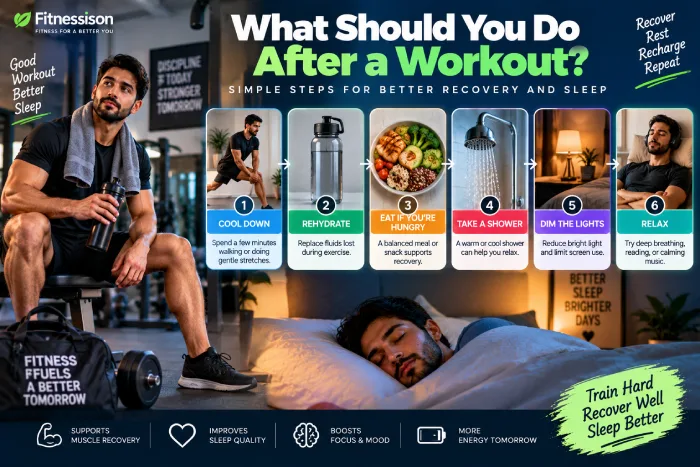
A post-workout has the power to help your body shift gears from workout to relaxation!
1. Cool Down
Take a 1-minute slow stroll or do a gentle mobility warmup after an intense workout. Allow your body some time to come off the gas gradually.
2. Rehydrate
Water replacement by drinking fluids after exercise for any loss through sweating. This may be if you have had a warm weather or long session workout. Four intake will be based on the exercise type and length the ambient temperature and the individual.
3. Eat If You Are Hungry
A well-rounded post-workout meal or snack can offer you with carbs and protein. Great intake decisions are a cup of Greek yogurt with fruit, eggs with several grains bread, oatmeal with milk, or a balanced dinner.
4. Take a Shower
A relaxing shower can be added to your routine after that evening workout. Keep your routine relaxing instead of making this workout another stimulating activity.
5. Dim the Lights
Cut down on bright lights and turning on the TV or computer. Creating a relaxed environment can help your body prepare for the beginning to shut down.
What If You Feel Sleepy After a Workout?
It is normal to be tired after exercise. When you workout it consumes energy and makes you want to go to sleep. If you are extremely fatigued or experience dizziness, weakness, or anything else abnormal regularly after workouts then it is time to consult a physician. Maybe the problem is not with the workout itself but with the combination of hard training and a crappy lifestyle (lack of sleep, bad nutrition, stress etc). Watch your volume and recovery strategy.
Should You Nap After a Workout?
A nap after a workout may be very tempting, particularly if you’ve just had a hard training session. If you choose to rest after training, napping may increase your alertness and performance, provided your nap is short and not taken too late in the day; however, a nap longer than 30 minutes or later in the day may cause difficulty falling asleep at night.
Sleep After Workout: Simple Recovery Routine
Try this basic routine after an evening workout:
Workout.→ Goodcool down.→ good rehydrate.→ then eat, if needed.→ then take deep shower.→ then turn off light.→ now relax and go to sleep.
The actual time will vary depending on when you are working out and your usual bedtime. The ultimate is not about perfection. It is about integrating a natural flow from activity to sedation.
Final Thoughts
Sleep following a workout is certainly a key aspect of your recovery strategy. While statistically, regular exercise is associated with improved sleep Quality and duration however, very high-intensity workouts late in the day can also lead to disturbed sleep for some, so monitor your response and modify your training time and intensity accordingly. For optimal recovery make sure your training program is coupled with consistent sleep, appropriate nutrition and hydration and rest days the stimuli are created by good training, recovery is achieved with good sleep.