

Mohd Arbaaz is an Editor and Writer at Fitnessison.com with 5 years of experience in SEO and digital content creation. He creates informative, reader-focused content covering fitness, workouts, nutrition, health, healthy lifestyle, technology, and computers.

Shashi Teja is a Reviewer at Fitnessison with over 6 years of experience in SEO, content strategy, digital publishing, and content optimization. He reviews content for clarity, research quality, topical relevance, readability, structure, and overall usefulness to readers.
Last Updated: September 17, 2026
A vegan diet plan can be defined as a diet plan based entirely on plant foods. This means no foodstuffs of animal origin e.g. meat, fish, eggs or dairy foods, are included in the diet plan. By definition, then, a vegan meal will comprise vegetables and fruits, plus beans and lentils, rice and bread, nuts and seeds, cheese and other plant foods.
Going vegan doesn‘t mean living on salads. Avoid dietary monotony by preparing satisfying recipes that will give you a good source of proteins, fibers, healthy fats, mineral constituents, and vitamins with some planning. Diversity is the best way to meet missing nutrients. Vitamins B12, calcium, iron, iodine, and D are some to focus on.
What to Eat on a Vegan Diet
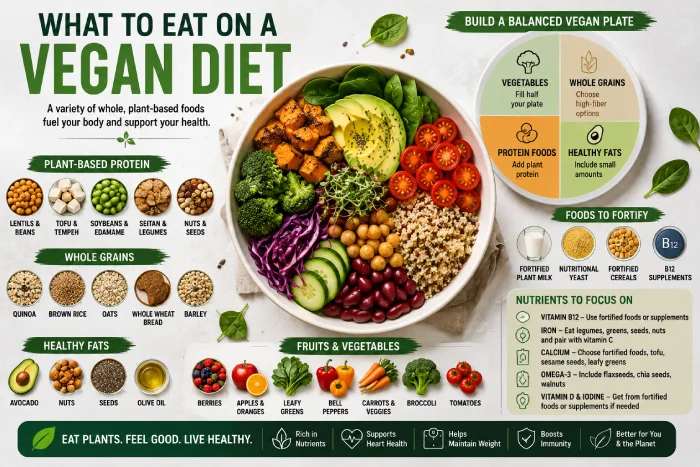
A healthy vegan meal really doesn‘t need to be complicated. For a balanced plate make sure to include a protein source (such as legumes), a generous serving of vegetables, a wholegrain or other starchy carbohydrate, and a good source of healthy fat.
Good vegan protein sources
Protein doesn‘t have to come from meat or dairy. Try:
- Lentils
- Chickpeas
- Black beans
- Kidney beans
- Tofu
- Tempeh
- Edamame
- Peas
- Nuts and seeds
- Nut butters
- Seitan
- Plant based protein products that have been fortified
For more soy foods, tofu, tempeh, edamame are very useful as they are easy to add to the food every day and are very versatile.
Healthy carbohydrates
Choose carbohydrates that also bring fiber and nutrients:
- Oats
- Brown rice
- Quinoa
- Whole-wheat pasta
- Whole-grain bread
- Potatoes
- Sweet potatoes
- Barley
All fruit and vegetables should be out and on show throughout the day.
Healthy fats
Vegan sources of omega-3 are avocado, walnuts, chia seeds, flaxseeds, pumpkin seeds and plant oils. Also flaxseeds, chia seeds, hemp seeds and walnuts are sources of plant omega-3.
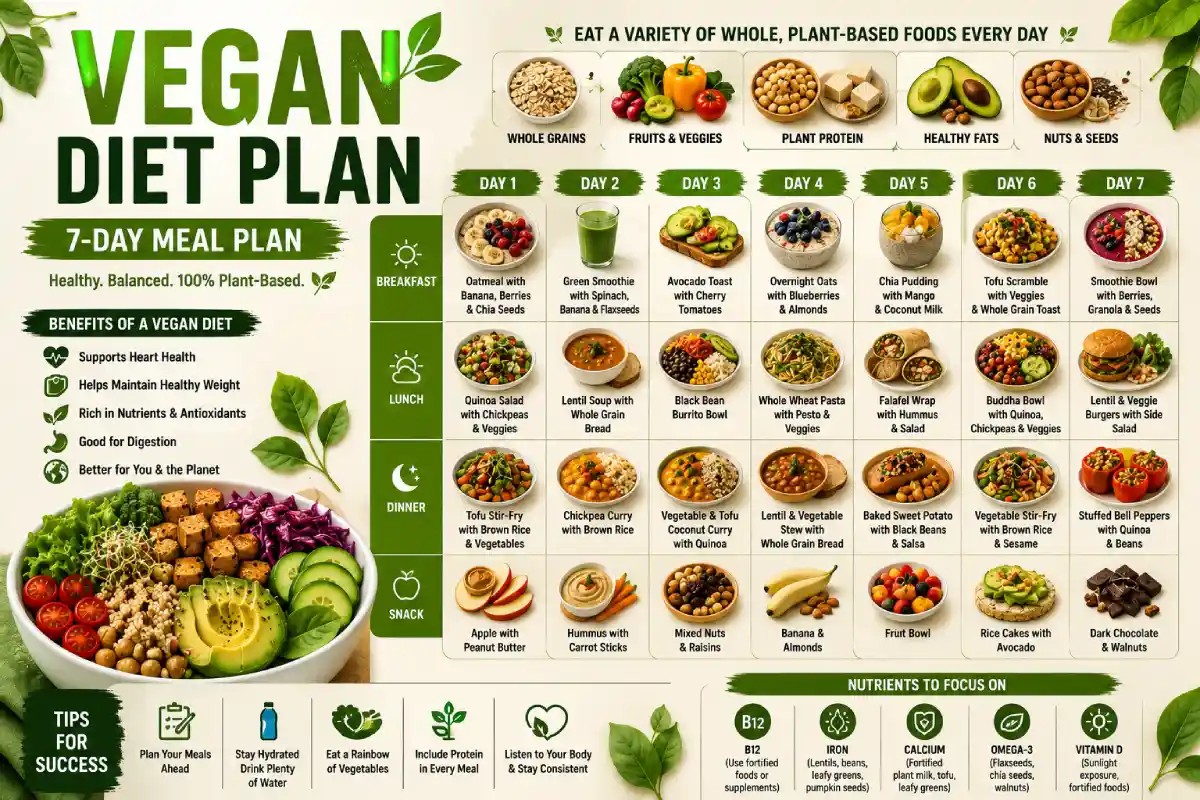
7-Day Vegan Diet Plan
You won‘t require original receipts to stay on a vegan diet. Here is an easy weekly plan that you can adapt to fit your daily caloric requirements:
| Day | Breakfast | Lunch | Dinner | Snack |
| Day 1 | Oatmeal with banana, chia seed and walnuts | Chickpea quinoa salad | Tofu stir fry with brown rice and vegetables. | Apple and peanut butter |
| Day 2 | Poached eggs on wholemeal toast with slices of avocado and berries | Lentil soup served with whole-wheat bread | Black bean tacos, served with lettuce, tomato and avocado. | Humus and the carrots |
| Day 3 | Banana, berry, spinach and fortified soy milk smoothie | Tofu and vegetable grain bowl | Chickpea curry with brown rice | Almonds (hand) Researchers found that consuming an ounce of almonds (28 gm.) or ¼ pound (124 gm.) 3 times a week for 4 weeks reduced LDL cholesterol by 41% and 37.5% respectively. 10 Consumption of 43 almonds (28/ gm.) a day for 8 weeks also resulted in a significant decrease in cholesterol. 11 |
| Day 4 | Blueberry and flaxseed over night oats | Black bean and corn salad | Whole-wheat pasta served with a tomato based sauce, including mushrooms and spinach | Frti and waluts |
| Day 5 | Tofu scramble with veggies and toast; combination of ingredients. | Lentil and roasted vegetable bowl. | Tempeh served with cooked quinoa and steamed broccoli | Hummus & cucumber, cheeks, shoulders, back, and bottom. |
| Day 6 | Oatmeal can add apples, cinnamon and even peanut butter. | Chickpea wrap with available salad veg2. A chickpea-based wrap with salad vegetables. | Vegetable and bean chilli and baked potato. | Yogurt with additional berries of a fortified plant-based yogurt |
| Day 7 | Whole-grain toast, peanutbutter and banana. | Quinoa, black bean and avocado bowl | Tofu vegetable curry with brown rice | Oranges and mixed nuts |
Depending on your personal hunger, activity, current body size and goal the parts should be varies. Someone who want to gain weight or build muscle will require most of the food and protein intake compare to someone who need less energy.
Important Nutrients on a Vegan Diet
A healthy vegan diet can be nutritious; it isn‘t as simple as just giving up animal foods; you need to ensure you get their nutrients. B12 merits further examination due to the scarcity of dependable vegan sources. Could B12 in fortified foods and B12 supplements be used as a point of entry in the trade against B12 deficiency?
Sources of iron from plants are lentils, beans, chickpeas, tofu, nuts, seeds, whole grains and green leafy vegetables. Iron from plant sources is not as easily absorbed as iron from meat and it is therefore recommended to eat an iron rich food with a source of vitamin C such as: oranges, peppers, strawberries or broccoli.
Fortified with calcium include plant milks, where the calcium is usually added to soy milk, rice milk or nut milk; calcium-set tofu; green leafy vegetables; tahini; and some health bars. Vitamin D and iodine may also be of concern, depending on your food preferences and needs. These can be obtained from other foods fortified with these.
Can a Vegan Diet Help With Weight Loss?
This is of course very true, and it all depends on what the meals are based around, and the portion sizes. Fiber rich vegetables, fruits, pulses and grains can provide a very satisfying meal if chosen in appropriate quantities. However, at the same time it doesn‘t mean to be low-calorie. A vegan cheese cake, a deep-fried Mars, a packet of crisps, drinks with excessive sweeteners, and big portion of nuts/nut butters can still be a calorie bomb. If you‘re trying to lose weight, a majority of your diets should be based on vegetables, legumes, whole grains, fruits and small quantities of healthy fats.
How to Make a Vegan Diet Easier
The trickiest part for the newbie is to decide on what to make. It is good to have two or three recipes which you really like and can prepare happily. There is no need to have a different taste every evening.
Common Vegan Diet Mistakes
Another mistake is substituting meat and dairy with vegan equivalents of highly processed snacks and sweets eaten at every meal. Some of these vegan equivalents are decent options for inclusion in a healthy diet, while the bulk of the diet should be based on whole or less processed foods. Another mistake forgetting about protein. This can be avoided by making sure you always add a protein source to every major meal instead of trying to make up for it at dinner. Lastly, do not overlook B12 and others just because your food seems good. Planetary health has also shown that even a varied diet of veganishas to be planned, or the nutrient status of the consumer can suffer.
Frequently Asked Questions
Is a vegan diet healthy?
A varied, thoughtfully planned vegan diet can be healthy, flexible and vitalisewithecheats. It appears that the reply appears to be including a broad spectrum of foods, and being conscious of those nutrients that may not be as naturally available to you without the inclusion of animal foods.
Can I build muscle on a vegan diet?
Yes. Ensure you‘re taking in sufficient calories, and sufficient protein, from throughout the day, include protein leaning foods throughout the day, and engage in an appropriate resistance training program.
Final Thoughts
A vegan diet plan doesn‘t need to be limiting or complicated! Put as much on your plate as possible of these foods vegetables and fruit beans and pulses whole grains, water-proteins and feeds together with nuts and seeds. The most important and the first thing, planning for your nutrition, instead of only avoiding animals. Think about your vitamin B12, calcium, iron, vitamin D and iodine intake and chose fortified foods or supplements if needed. A handful of and depended on as the backbone to a good spread of a foolproof meal prep and a good range of plant food items. A vegan diet can become everyday life rather than a thrash and crash diet.