


Mohd Arbaaz is an Editor and Writer at Fitnessison.com with 5 years of experience in SEO and digital content creation. He creates informative, reader-focused content covering fitness, workouts, nutrition, health, healthy lifestyle, technology, and computers.

Shashi Teja is a Reviewer at Fitnessison with over 6 years of experience in SEO, content strategy, digital publishing, and content optimization. He reviews content for clarity, research quality, topical relevance, readability, structure, and overall usefulness to readers.
Last Updated: September 17, 2026
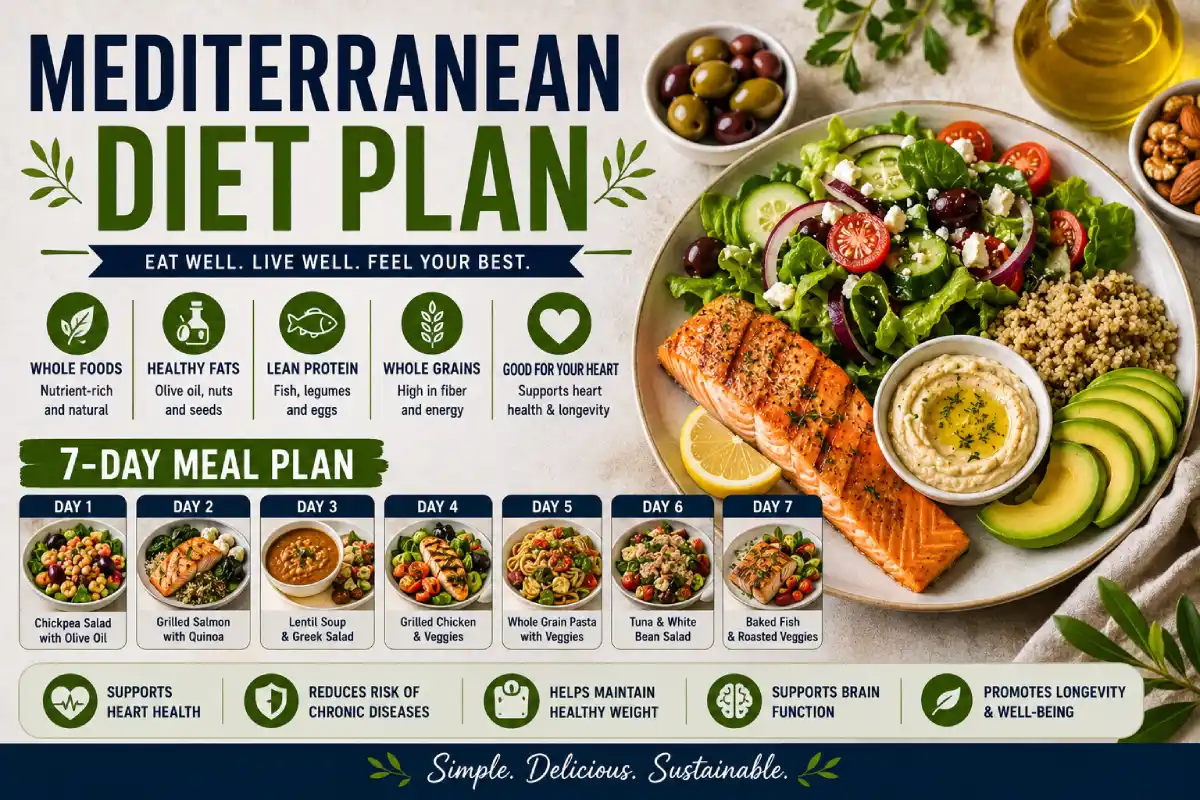
Here is a nutritious diet plan that does not exclude certain foods such as bread, fruit and cereal. If you are looking for this sort of diet then you may wish to try a Mediterranean Diet Plan. This plan involves a lot of vegetables, fruit, beans, lentils, whole-grains, nuts, seeds, olive oil and fish, with almost no other processed food.
Mediterranean diet is not a fixed menu. Variations in eating habits occur across countries and regions of the Mediterranean however the underlying advice remains true, highest intake of plant foods and fats, the main source of protein from fish and other sources and limiting highly processed foods, added sugars and meats.
What Is the Mediterranean Diet?
Although considered a diet, the Mediterranean diet is in effect more than simply a dieting regime. The following foods are consumed daily. Vegetables, Fruits, Whole Grains, Legumes, Nuts, Seeds and Olive Oil. The following foods are consumed weekly. Fish and Seafood The following foods are sometimes consumed. Protein foods, Poultry, Eggs, Yogurt & Cheeses.. The following foods are rarely consumed. Protein foods, red meat and sweets.
This makes it very flexible. You don‘t have to always use authentic Mediterranean ingredients in the same way. A bowl of oat flakes with berries and walnuts can be adapted to the pattern just as well as Greek salad with chickpeas and olive oil, or…
Foods to Eat on a Mediterranean Diet
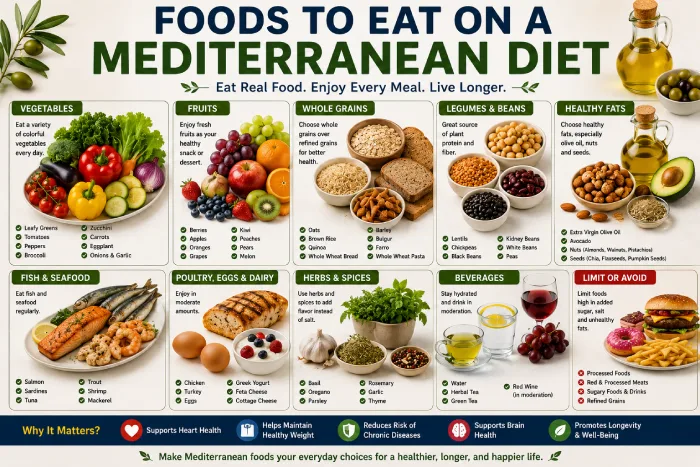
A further way is to express the balanced diet by enumerating the kinds of foods.
Vegetables and Fruit
Eat as many as you like, ensuring you include lots of vegetables. Always a thing to separate a extra lot of spinach, tomato, broccoli, peppers, cucumber, carrot, courgette, aubergine, greens, etc. Appealing snacks or as a follow-up to a meal, fruit is readily available. Snacks that are appropriate and easy to eat include: grapes, pears, peaches and bananas.
Whole Grains
The inclusion of whole grains provides carbohydrate, fiber and fit naturally to a Mediterrean style eating pattern.
Good choices include:
- Oatmeal
- Brown rice
- Quinoa
- Barley
- Bulgur
- Farro
- Whole-wheat pasta.
- Whole-grain bread
You don‘t need to eliminate all carbohydrates to stay on this plan.It focuses even more on selecting healthy options and integrating them into balanced, filling meals.
Beans and Legumes
Specifically found in this zone are legumes such as beans, lentils, chickpeas and pulses. They are reasonable to buy, versatile and can be used as component of many different recipes such as a starter, salad or grain bowl.
Nuts, Seeds, and Olive Oil
Multiple various nuts and seeds. Including almonds, walnuts, cashews, pistachio, chia seeds, flaxseeds, etc. These when put in packaged products can be very high in sugar. Extra-virgin olive oil: the extra-virgin olive oil is an essential element of Medifast style diet, it can be used for cooking, dressing, or marinades, or poured directly over the vegetables. As reported by Harvard Health at the centre of the traditional Mediterranean diet is olive oil it is consumed with high usage of plant foods like wholegrains, vegetables, legumes, nuts and fruit.
Fish and Seafood
Can add chicken, eggs, yogurt, and cheese to the diet, even if it isn‘t the main course in a meal.
Foods to Limit
Mediterranean diet isn‘t a kind of harsh diet and eliminates one or few foods completely. Mediterranean diet has some foods that are eaten irregularly.
Try to limit:
- Processed meats!
- Red meat; which involves the intake of large quantities of the product.
- Drinks with a high sugar content
- Confectionery 9 : the making and marketing of sweets (LO2). Confectionery9 : the manufacturing of sweets and trading of sweets (LO2).
- Ultra processed snacks.
- Refined grains
- Is your nutrition making your lazy? Does your appetite resembles a Swede? Is the decision to always eat ready made foods? Foods that is high in added sugar.
- Deep fried foods
Below is one of the reasons why the diet may be more sustainable than more restrictive eating programs. Because you can still enjoy a dessert or restaurant meal occasionally without feeling as if you‘ve really “blown” your diet
Mediterranean Diet for Weight Loss
While the Mediterranean diet can definitely help contribute to weight control, it‘s not a miracle pill that melts fat in an instant. Its advantage is not to eat a big amount of filling, foods of nutrients, of you need while an overdependence on processed foods. Fruits, fish, vegetables, beans, cereals and other proteins offer qualities of happiness your usage without committed on too much to exploiter and to step processed foods. The size parts still makes a difference. Olive, nuts, cheese and cereals are all good, they only become a problem when eaten in very large amounts. Eat a bit more vegetables. Click in the preceding text to find out what you can do if you want to loose weight: Harvard Health reports that the Mediterranean diet has shown to be one of the most effective diets for long term weight maintenance. (As well as leading to a decreased risk of several chronic diseases.)
How to Start the Mediterranean Diet
No it‘s not to ‘renovate’ your kitchen overnight. Start with one or two modifications. Eat more olive oil and less butter in your food. Add some vegetables to your midday and evening meals. Keep fruit for a snack. Change to wholemeal bread in place of white bread or try using whole grains and more fiber in your other foods. Have beans/lentils in a couple of your meals a week. Build upon the changes that become normal. Now you are able to prepare some specific parts of the other meals without ruining all your time preparing them. For example, extra grilled chicken can be used for a salad the next day, or roasted vegetables may be incorporated into an egg or grain bowl.
Is the Mediterranean Diet Healthy?
The advantages of the Mediterranean diet model have been very thoroughly studied. Research suggests that adopting a Mediterranean diet has been found to be linked to reduced risk of cardiovascular disease, type 2 diabetes, some forms of cancer and other diseases. The American Heart association has also included several Mediterranean Diet type eating patterns as another intervention to support all the components of cardiovascular health and risk factors. No diet can make you healthy. many other factors, such as physical activity, good sleep, relaxation, your genetics, your history in the clinic and some other features of your life style have also got a great impact.
Frequently Asked Questions
Can I eat bread on the Mediterranean diet?
Yeah definitely. I would always go for a wholemeal bread if I were going to eat it with veg, good oils or protein.
Can I eat rice and pasta?
Certainly. The brown rice, whole-wheat pasta, etc., just naturally went hand in hand with the Mediterranean Diet. Still, it was the quantity and what was consumed with it that mattered.
Can I eat meat?
Yes, the red and processed meat are not taken so often. There is much more emphasis on the fish and seafood, the beans and other alternate protein sources.
Is the Mediterranean diet good for beginners?
Yes. It‘s relatively easy to get started because of its flexibility. You are not required to use a strict menu. Just modify a few of the foods you regularly consume.
Can vegetarians follow a Mediterranean diet?
Absolutely. Several options of pulses (beans, lentils, chickpeas), grains, vegetables, fruit, nuts, seeds, eggs and dairy could be very generous in a vegetarian version of the Mediterranean diet.
Final Thoughts
A good Mediterranean Diet Plan is not that complicated. ‘Include a larger proportion of the following foods in your daily diet:vegetables and fruits, beans and lentils, wholegrains, nuts, and seeds, olive oiland good quality protein sources(eg fish). You don‘t have to worry about replicating every traditional dish, or having every meal turn out perfect. The key is the overall pattern and the habits you develop.
So begin modestly, keep the foods you eat pleasurable and keep the healthy foods within easy reach. That‘s the secret that can turn the Mediterranean diet from one more diet to try, to a way of eating we can actually live with. If you want to find other diet planning guides, head on over to the Diet Plans pillar page and check out the other plans including keto, low carb, high protein, vegetarian, weight-loss, and intermittent fasting.