

Mohd Arbaaz is an Editor and Writer at Fitnessison.com with 5 years of experience in SEO and digital content creation. He creates informative, reader-focused content covering fitness, workouts, nutrition, health, healthy lifestyle, technology, and computers.

Shashi Teja is a Reviewer at Fitnessison with over 6 years of experience in SEO, content strategy, digital publishing, and content optimization. He reviews content for clarity, research quality, topical relevance, readability, structure, and overall usefulness to readers.
Last Updated: September 22, 2026
Sleeping in an environment you don‘t enjoy can have a negative impact on your sleep. If your sleeping pattern is healthy and you are sleeping at regular times, sleeping in a room that is brightly lit, noisy, warm or uncomfortable can lead to problems falling asleep and waking frequently. Having a room you feel comfortable in, can be made more so with a few simple alterations.
What Is a Sleep Environment?
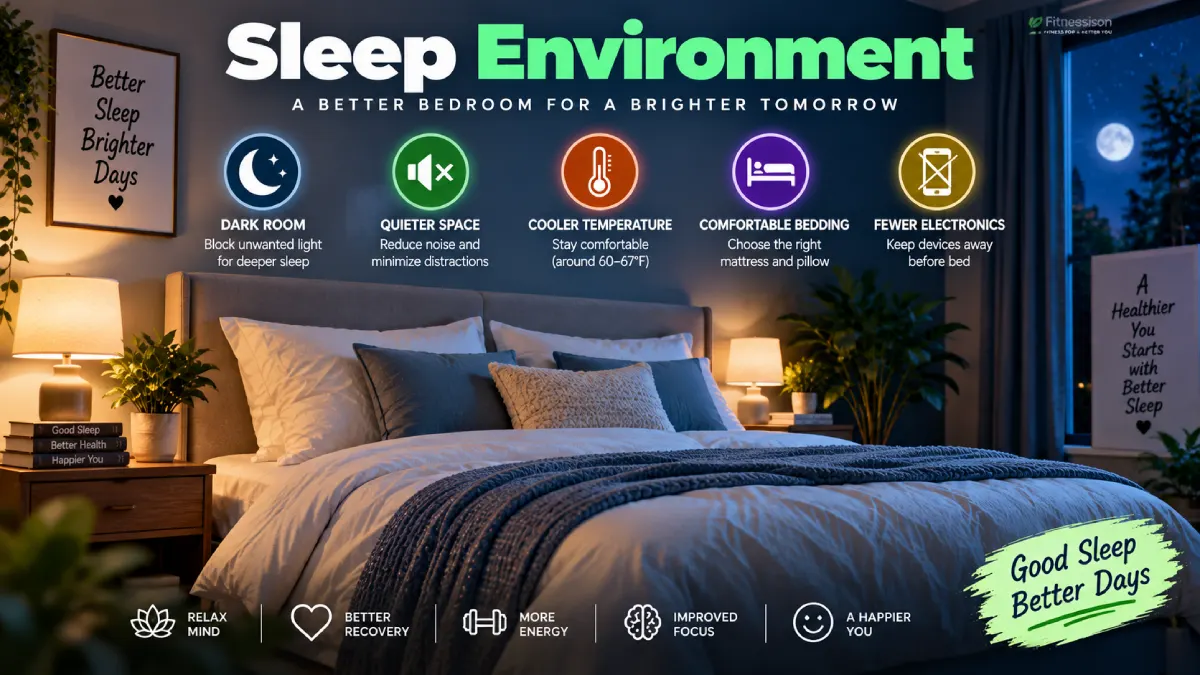
A sleep environment refers to anything and everything in your environment while sleeping. Your environment may be your room temperature, lighting, noise levels, mattress, pillow, bedding, presence of electronics, what you do in your bedroom, and so on. The NHLBI suggests a bedroom that is cool, dark, and noise free to encourage good sleeping habits. The idea is simple: fall asleep in your bedroom since it is a place for slowing down.
Why Does Your Sleep Environment Matter?
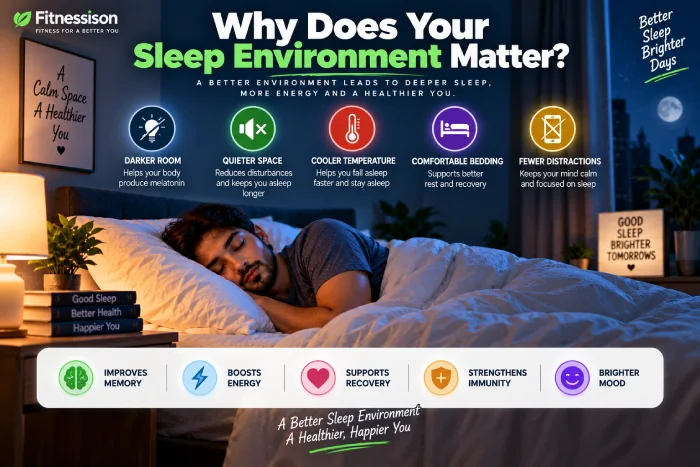
Environment Your environment can contribute to how quickly you fall asleep as well as its quality. The noises, light, temperature and electronics all are distracters during the night. The CDC suggests that you keep the bedrooms calm, cool and quiet, and that you turn electronics off before sleeping. Better sleep environment may be the key to helping you maintain the set sleep schedule.
1. Keep Your Bedroom Dark
Light Light is among the most important signals from the environment affecting your sleep wake cycle. Bright sleeping conditions such as street lights, TV, Phone, Alarm clocks or other bright lights may interferes with your sleep. Block external light from entering the room by black out curtains or shades on the windows. Remove other unwanted light sources with sleep covers or a eye mask. For those working sleeping during night shifts, blocking out light may be essential.
2. Reduce Noise
Sudden noises can be very disruptive to Sleep. Cars, gun shots, sirens and people talking inside and outside of the house can interfere with your sleep. Disable your cell phone into do not disturb and shut down any unimportant notifications. If your sleeping area is still noisy, try ear plugs, or even a fan or white-noise generator to drown out the sound.
3. Keep the Room Comfortably Cool
The bedroom being too warm is one of the biggest reason that sleeping can be uncomfortable, the expert recommendation from NHLBI is that the bedroom should be kept cool, also same thing is written on CDC guideline). Likewise there is no such ideal temperature that will suit everyone person, you have to take a wise decision and set your room in a way that you remain cool. Besides, you may use an air condition, a fan, or the breath rate bedding and adjust it as per your comfort level)
4. Choose a Comfortable Mattress and Pillow
Your sleep and pillow should feel comfortable and support you. If every morning you wake up feeling tight, uncomfortable and sore then you may need to change your sleeping surface. You do not need to buy the most expensive mattress or pillow but your sleep environment should be comfortable and enable you to sleep on your back or sides. Similarly your linen should be comfortable and feeling as though you look forward to crawling into bed each night.
5. Keep Electronics Away From Bed
Another distraction can be the use of electronic devices. This includes phones. I usually just want to check one notification and then I end up scrolling for the next 30 minutes. The CDC recommends turning all electronic devices off at least 30 minutes before bed time. Consider sleeping your phone across the room or turning Do not Disturb mode on before getting into bed.
6. Make Your Bedroom Relaxing
Your bedroom should be a place where you relax. Keep clutter to a minimum, use comfortable bed coverings and set your lighting to a calming level for the evening. develop a brief bed time routine. reading, gentle stretching, breathing exercises or taking a nice warm bath may be effective ways to relax according to the healthy sleep guidelines.
7. Use Your Bedroom Mainly for Sleep
If you can, try not to make your bed the office, TV lounge or a place to spend hours at a time on the computer. Some sleep advice suggests that if you keep the room to sleep and [have] sex, your brain may start to associate the room with relaxing more strongly. (This may also be helpful if you tend to work or watch television from bed.)
Common Sleep Environment Mistakes
A few little habits can quietly sabotage the sleep in the long run:
Common mistakes include:
- How leaving bright lights on at night shows up on our planet
- Leaving your cell phone on your pillow or near your head
- Sleeping in a temperature too high; increasing evidence links higher than ideal room temperature to sleep disturbances.
- Ignoring constant background noise
- Watching television in bed
- Earning a living from your bed on a daily basis
- Sleeping on bed with uncomfortable pillows or bedding
- Staring at the clock all night.
You don‘t have to address everything at the same time. Begin with the issue that has the biggest impact on your sleep.
A Simple Sleep Environment Checklist
Before bed, ask yourself:
- Is my bedroom dark?
- Is it quiet enough?
- Is the temperature comfortable?
- Is my mattress and pillow comfortable?
- Are my phone and notifications under control?
If you’ve answered yes to most of these questions, congratulations, you’ve made your bedroom a sleep havens.
Final Thoughts
You won‘t need to spend a lot of money redesigning your bedroom to achieve the perfect sleep environment. Just keep it dark, quiet and at a comfortable room temperature, have nice bedding and avoid the presence of electrical appliances or any distractions, that should be a good place to begin. Work out the things that relax you before bed, ensure you get enough sleep and plan out a positive sleep routine to build on your progress. If however you find that you still experience sleep problems and modifying your current lifestyle and environment has not made a difference, consult a healthcare professional.