

Last Updated: September 15, 2026
Weight loss is commonly thought of as rigid dieting, no more treats, hours in the gym, meal skipping etc. But more likely, when it is achieved, it is in fact about learning about weight loss food and creating long term eating habits.
Healthy eating and diet plans may have you cutting down your calorie intake but still getting enough protein, fiber, vitamins, minerals and healthy fats your body requires. It‘s not about eating as little as possible it‘s about safe eating. Healthy eating and diet plans may have you cutting down your calorie intake but still getting enough protein, fiber, vitamins, minerals and healthy fats your body requires. It‘s not about eating as little as possible it‘s about safe eating.
What Does Nutrition for Weight Loss Consist Of?
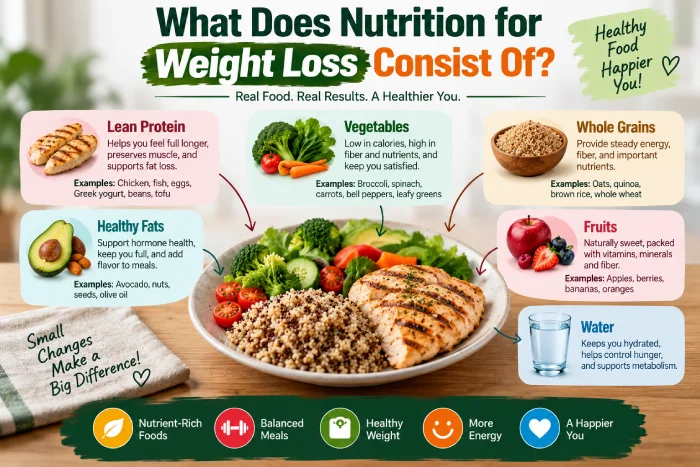
Weight Loss Nutrition involves selecting foods and portions to enable a slow weight reduction, while adhering to good nutrition. Fitting weight-loss into a healthy diet usually means an energy intake for weight maintenance is reduced, but with careful consideration of the quality of food intake. Combining this with a variety of nutrient dense food including vegetables, fruit, whole grains, lean protein, pulses, nuts, seeds and good sources of fat. From a more natural perspective instead of a temporary diet, nutrition of weight loss becomes a way of eating.
Prioritize Protein
Proteins a suitable component of a weight-loss diet. It can help to fill you up and promote muscle retention.
Good protein choices include:
- Eggs
- Fish
- Chicken
- Greek yogurt
- Cottage cheese
- Lentils
- Beans
- Chickpeas
- Tofu
- Nuts and seeds
Experiment with including some protein in your main meals. If desired, then, it might be beneficial to have ready access to a protein-packed snack between main meals.
Eat More Fiber-Rich Foods
Fiber- Can fill you up and is good for a healthydigestive system. Fibres are found naturally in all foods and are found predominantly in plant foods. Intake of a variety of foods such as:vegetables and fruits,beans, lentils, oats, whole grains, nuts and seeds, would all be a good idea. Some simple swaps can be your well processed cereal, for a certain degree of oatmeal, ersatz bread for wholemeal and a super-processed take away snack for some fruit and a few nuts. The transition step is best to begin with a gradual increase in fiber and drinking a lot of liquids.
Make Vegetables a Bigger Part of Your Meals
Vegetables do add volume and taste to foods but they do not give the food as many calories as other higher energy dense foods. Try to make a large portion of your meal vegetables such as red, and/or green peppers, carrot, lettuce, tomato, cucumber, spinach, broccoli, and cauliflower. You can barbecue, steam, sauté, grill or even eat it raw if you wish at every meal. Varying the way you spice up your foods including an extensive mixture of herbs and spices can make you learn to love your vegetables without having a heavy sauce.
Choose Healthy Fats in Reasonable Portions
Fat is an important food-group but one that‘s got more calories per gram than either protein or carbohydrate and so may be a factor in your weight-loss goals.
Instead of avoiding fat completely, focus on nutritious sources such as:
- Avocados
- Almonds
- Walnuts
- Seeds
- Olive oil
- Natural nut butters
- Fatty fish
These foods may be included in a balanced diet, but if may be useful to measure portion sizes as it is easy to eat too many calories via high calorie foods.
Be Mindful of Added Sugars
Most foods containing a lot of sugar and energy will not fill you up for long. Many soft drinks, sugar in coffee and desserts or biscuits, chocolate and different packaged foods are high in added sugar. You don‘t have to do away with these completely, just enjoy them in moderation and be sure that the majority of your diet is made up of nutritionally dense foods. Selecting more often water, unsweetened tea, or other beverages with fewer calories can likewise help to cut out higher-calorie contaminants.
Don‘t Skip Meals Just to Lose Weight
While fasting may be suitable for some, it is not necessarily a healthier aid for weight loss. However, by extending the duration of time between meals can result in some individuals becoming overly hungry. Having your meals at regular times can help support making better food choices. Brains always function better with three regular meals (which, in some countries, are called breakfast, lunch and dinner), but if you find you need small healthy snacks to tide you over, then there are no right or wrongs. The key thing is to find an eating pattern that will actually work in practice for you.
Pay Attention to Portion Sizes
Healthy foods can still cause you to gain weight if you consistently eat additional large portions that your body doesn‘t require. Simple solutions are available. Have smaller plates. Have food served to you. Eat more slowly. It might also be useful to learn how to read nutrition labels on packaged foods especially serving size and calorie counts.
Build Balanced Meals
A very simple way of approaching weight loss nutrition is to center your meal planning on some food groups.
A balanced meal might include:
- Protein: Chicken, fish, eggs, tofu, beans or lentils.
- Vegetables: Different vibrant vegetables or neat leafy vegetables.
- Carbohydrates: Potatoes, brown rice, oats, whole-grain bread, other wholegrains.
- Healthy fats: Avocados, nuts, seeds or a little olive oil.
This way the eat delicious can be added exciting pieces to the mix. This type of plan gives you some variety and prevents eating too much of the same foods.
Stay Hydrated
Sometimes thirst can be confused with hunger. Ensuring that you drink sufficient water during the day will help maintain regular body function, allowing you to differentiate between thirst and hunger. Water should usually be your main drink and only because you don‘t like it won‘t you drink anything else. If you don‘t like plain water you can always add lemon, mint, cucumber or fruit to enhance it. But don‘t think is a substitute for healthy meals.
Focus on Consistency, Not Perfection
Perhaps the most important guiding principle of weight loss nutrition is: consistency. You don‘t have to eat perfectly every single day. Having a restaurant meal, a pudding or celebration doesn‘t make any difference. What is more important is how you behave for the rest of the time. Don‘t impose strict rules; simply choose healthy practices such as increasing vegetable intake, additional protein, reducing consumption of highly processed snacks, controlling portion sizes and including exercise into your routine.
Final Thoughts
Most importantly, pick things that you are able to keep doing for months, and years. For individuals with health issues, specialized dietary needs or weight problems; assessment from an accredited health professional or nutritionist may be beneficial.