

Mohd Arbaaz is an Editor and Writer at Fitnessison.com with 5 years of experience in SEO and digital content creation. He creates informative, reader-focused content covering fitness, workouts, nutrition, health, healthy lifestyle, technology, and computers.

Shashi Teja is a Reviewer at Fitnessison with over 6 years of experience in SEO, content strategy, digital publishing, and content optimization. He reviews content for clarity, research quality, topical relevance, readability, structure, and overall usefulness to readers.
Last Updated: September 8, 2026
Caring about losing weight can mean hitting the gym, going for a long run, or following an intense workout regime. But… what if you aren‘t able to workout today or don‘t want to workout?
However you can still make a significant impact on your weight through your diet and daily lifestyle.
The key is to manage expectations. Being physically active is beneficial for health and can be effective for weight control, but reducing food and beverage intake will also lower the amount of energy you consume, NIDDK says. weight is determined by: This includes: between the calories you take in and those you use.
This means that it is possible to lose weight without exercising for a number of people, but it should not be taken as a recommendation that they can do without exercise at all. Moving regularly has all sorts of benefits for the heart, muscles, mood and sleep even when you aren‘t trying to lose weight.
If you‘d like some additional strategies, check out our main Weight Loss Tips pillar page.
Can You Lose Weight Without Exercise?
Absolutely, weight loss can be achieved without any specific exercise program.
How much energy do your body and how much you do place daily? Cutting back on how many calories you take in each day, for example over a period of time, leading to a negative energy balance and thus a loss of weight. NIDDK state that ‘Cutting back on how many calories a person takes in can lead to weight loss. Physical activity can significantly increase the amount of energy used and has further benefits2.
This however isn‘t an indication to go on an overly restrictive diet. My objective is to make sensible modifications which lead to a reduction in unnecessary caloric intake, while still ensuring good nutrician. Nutrition-based strategies can be especially effective for an individual who is unable to exercise due to injury, disability, health condition, temporary circumstances, etc.
10 Weight Loss Tips Without Exercise
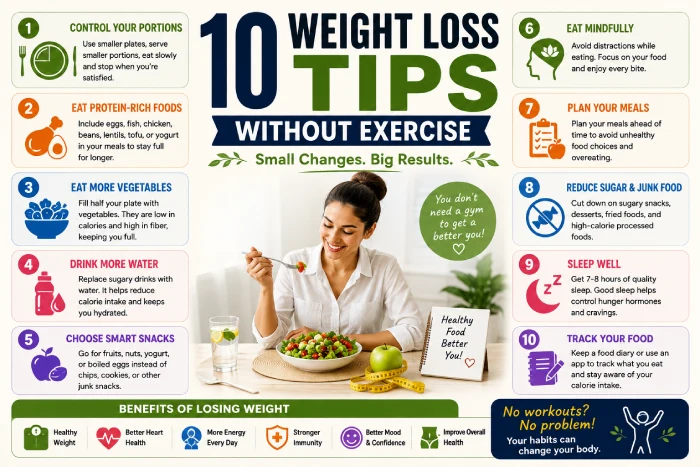
1. Start With Your Portions
The easiest way to cut back on calories is to be more conscious of portion size.
You‘re not required to give up your favorite foods. Just just to see some information about quantities:
Try:
- Reducing portion size by using visual cues and/or smaller dinnerware as appropriate
- Having food on a plate rather than eating straight from a package
- Starting with less food at first; Before beginning to eat, arrange the food, so it is less accessible. To serve portion as toward the center of the plate smaller then toward the outside. The use of various size plates; Plate size influences how much people serve, so select plate that are not too large.
- Eating slowly
- Taking a break in between first and second aidings
- Verifying restaurant portions
According to NIDDK, calorie requirements differ, depending on aging, size of body, being a male or female, and using the metabolism and the activity factors, observing the portion size contribute to controlling weight. You don‘t want to be making every meal mini. It‘s to start being more conscious of portion sizes.
2. Make Protein a Regular Part of Your Meals
A protein-containing diet can be fulfilling using a balanced diet.
Depending on your preferences, options include:
- Eggs
- Fish
- Chicken
- Lean meats
- Greek yogurt
- Cottage cheese
- Beans
- Lentils
- Tofu
- Other sources of protein.
Unite protein with vegetables, fruit, grains (especially whole grains), or other healthy items and include in a healthy diet. Do not just rely on one “fat-burning” food instead, start to develop an eating pattern that will supply your body with the nutrients required. If you‘re not sure how much protein you need (for example if you have kidney disease or another medical condition), check with a health professional about your diet.
3. Fill More of Your Plate With Vegetables
In addition to mouthwatering, wholesome menus, consider that melons and vegetables can also be helpers in creating satiety without overfeeding on calorically dense items. D. Attempts to include vegetables in lunch and dinner.
Examples include:
- Spinach
- Broccoli
- Carrots
- Cucumber
- Tomatoes
- Bell peppers
- Cauliflower
- Green beans
- Cabbage
- Greens
The NIDDK suggests a healthy eating pattern should incorporate a wide array of brightly colored vegetables and other nutrient-dense foods. You are not required to eatsocalls..watch how you eat large salads every time. One easy initial step is to Improve your favorite meals by re-committing to more portion of vegetable.
4. Replace Sugary Drinks With Water More Often
For this reason people sometimes underestimate the caloric contribution of drinks. Soda, sweetened tea and coffee beverages, flavored coffee drinks, energy drinks, and other hi-calorie sugar drinks can pack a punch and take up valuable calories in your day. Something you can change immediately: Get yourself in the habit of having water with your meal.
You can also try:
- Sparkling water
- Unsweetened tea
- Plain coffee
- Water with lemon or lime15
The NIDDK recommends choosing water over sugar-sweetened beverages as one of the strategies to achieve a healthy eating pattern. And for beverage choice you may not have to give up something that you love. Just cut the frequency and make the lower-calorie foods more accessible.
5. Choose Snacks Before Hunger Takes Over
Unplanned snacking can put your total intake out of control. Keep healthy snacks handy rather than going hungry.
Some possibilities include:
- Fresh fruit
- Yogurt
- A handful of nuts as a snack.
- Carrots or other vegetables as desired
- Boiled eggs
- Beans or other appropriate Proteine. Good Protein and suitable for the preparation of a variety of different meals.
The NIDDK recommends keeping more nutritious snacks on hand to stifle hunger and less temptingly enable to pig out on food. You only need a snack between two meals. If your hungry you eat, if not you don‘t have to eat ‘because the clock says its snack time’
6. Slow Down While Eating
The faster we eat, the less aware we are of actually feeling full. Try quieting it down instead. Between bites, feel free to set your fork down. Munch on your food not too fast. Don‘t eat using distractions like the television or your cell whenever you can.
Allow yourself some leisure time to relax during the rest of the meal. Not magic and not a weight-loss technique (it won‘t make you loose weight.) However, it can help you be more aware of your eating habits and portion size.
Mindful eating may be helpful in moments when you reach for food out of habit instead of hunger.
7. Make High-Calorie Foods Less Convenient
You environment may be affect your decisions. If cookies, chips, candy and other very tempting foods, are constantly sitting out on your desk or on the kitchen counter, you might chow down just because they‘re there.
Make the healthier choice the easier to reach. I saw that the fruits can be kept in high light. Place food in less accessible positions. Come up with balanced meals to eat ahead of time. Don‘t just use your strength of will.
According to NIDDK, Your environment — where you live, work, and play — can affect your weight and how you do health behaviors. It might be easier for you to change your environment than to fight temptation day after day.
8. Plan Your Meals Before You’re Hungry
Planning your meals. It is easier to make decisions about food choices when you are not hungry. You aren‘t required to make seven identical meals on Sunday. Plan in advance what you will have for your main meals, rather than:
For example:
- Breakfast: Egg, wholegrain bread, piece of fresh fruit.
- LUNCH: Chicken or beans with vegetables and rice.
- Snacks: Yogurt and fruit.
- Dinner: Fish or other proteins will be provided with vegetables and potatoes.
The foods can be altered to suit your culture, likes-dislikes, money, and nutritional requirements. As far as planning is concerned, it just provides you with a framework.
9. Improve Your Sleep Routine
Controlling weight isn‘t all about food. Another factor that can affect your health and lifestyle is sleep. Sleep is another factor identified by NIDDK as is related to weight and health. Establish a sleep routine.
You could:
- Get to bed around the same time every evening.
- Wake up at roughly the same hour.
- Limit the use of too much screen time.
- Make your bedroom a relaxed environment.
- Allow yourself sufficient time to get to sleep.
Although getting great sleep alone doesn‘t guarantee weight loss, it does help a person live a more healthy life. If you‘re looking to establish healthier routines in various aspects of your life, check out our article on Healthy Sleep Habits.
10. Track What You Eat for a Short Period
You don‘t necessarily have to keep a food journal for the rest of your life. However, keeping a food diary for a few days will help you to become aware of your existing behaviors.
You might discover that you:
- Consume more calories than you thought.
- Curates at usually ND.
- Just eat more! Eat larger portions than you‘d normally eat.
- Miss meals and be starving from a hole in your stomach.
- Eat while you are busy and not paying attention.
- I eat out more frequently than you think.
Track is an awareness builder. The NIDDK cites eating behavior monitoring as a feature in structured weight-management programs. A spreadsheet, notebook, or application whatever is most convenient. The goal is not to criticize. It is about discovering ways in which you are able to modify existing patterns.
What Should You Eat to Lose Weight Without Exercise?
There‘s not one specific diet that can help you lose weight without exercise.
A healthy eating pattern can include:
- Vegetables: As many as possible of different colors.
- Lessons learned,-Fruit: Frequent consumption of whole fruit.
- Protein: egg, fish, poultry, beans, lentils, yogurt, tofu, or other protein.
- Whole grains: Think oats, brown rice, whole-wheat bread and other such foods that are made from whole grains.
- Healthy fats: if eaten in moderation, nuts/seeds/avocado/oils can all be part of a balanced diet.
The important thing is not to find a “perfect” food. It offers a healthy overall eating pattern that can be followed to achieve an adequate intake of nutrient and minimize excess caloric intake.
NIDDK advises that “a healthy eating plan is one you can stick to over the long term that is based on your personal food preferences, taste, cultural background, and nutritional needs.”
Foods to Limit When Trying to Lose Weight Without Exercise
You don‘t need to totally cut certain foods out. But it can also be useful to cut down on food and drinks that are high in calories but relatively low in nutrients.
These can include:
- Sugar-sweetened beverages
- Candy
- Masses of desserts
- Fried foods
- Highly processed snack foods.
- Eating fast food regularly
- Soups and consumés. Deep roasts and various gravies. Use an array of pungent herbs, garlic, wine, lemon, hot pepper as whenever possible. Heavy sauces and dressings.
- Intake of high-energy (“bad”) foods mostly foods high in sugar, flour, salt, and trans-fats, such as:
NIDDK advises avoiding food and drink, which are high in calories, added sugar and saturated fat, for a healthy weight-management strategy. Think less on occasion and smaller servings instead ofnever again.
Can You Lose Belly Fat Without Exercise?
You don‘t know how your body‘s going to store fat. Losing body fat by eating in a way that is appropriate and calorie controlled may reduce your waist size but the results differ for each person in the amount of fat lost from the areas desired, and the percentage lost over time.
Remain suspicious of any products or programs that promote any food or drink, supplement, or method that targets belly fat alone. According to NIDDK, ‘Claims that you will lose weight from a certain part of your body are a red flag when considering a weight-loss program.’.
These are all effective methods but overall weight management is most beneficial.
What If You Can’t Exercise Because of an Injury?
Cannot exercise due to an illness or injury don‘t automatically think that‘s a reason to give up on your health goals.
Focus on what you can safely control, such as:
- Food portions
- Meal planning
- Healthy eating 0 Selection of nutrition (energy minimum).
- Sugary beverages
- Sleep
- Stress management
- Eating patterns over time:
As soon as you have permission to start moving again, you can commence doing so gradually and under the guidance of your healthcare provider. If you have a disability or other chronic health condition, a healthcare professional or registered physiotherapist may be able to recommend safe ways of movement for you.
Weight Loss Without Exercise: What You Should Not Do
Avoid extreme approaches such as:
Crash Diets
Some diets such as very-low-calorie diets can be hard to maintain and not provide the nutrition the body requires.
Detoxes and Cleanses
Your body already has the organs to process and remove trash. There is not need to buy a very expensive “detox” product to shed bodyfat.
Starving Yourself
Eating less than you should is not a sustainable or wise way of managing your weight.
“Fat-Burning” Supplements
Avoid products that claim to cause you to lose fat easily or quickly!
Completely Eliminating Carbohydrates
You don‘t need to automatically cut out the carbs. Healthy foods which contain carbs can be included in a balanced way of eating.
Promises of Rapid Results
Claims that should be viewed with suspicion include: any that promise rapid weight loss or anything claiming to be a ‘breakthrough’ diet or ‘advanced’ diet or that anyone can lose ‘huge amounts of weight’. NIDDK also specifically advises:
What About Physical Activity?
Looking for weight loss tips without exercise? It‘s not the same to not exercise as to be completely inactive. Losing weight is possible without a structured exercise program, though there are other advantages to paying attention to fitness levels. Physical activity may increase protection of the cardiovascular system, muscles and bones and one‘s well-being, sleep quality and quality of life.
If it is safe to lift, then any small movement is valuable. To be less sedentary, go for a walk around your house and do at-home chores; take a few movement breaks in-between activities; choose activities you find enjoyable; and all of the above. If you‘re unable to do exercise at the moment, concentrate on nutrition and do it when you are able to.
A Simple Day of Weight Loss Without Exercise
Here‘s an example of what a practical day could look like:
Morning:
Drink 1 glass of water and eat a well balanced breakfast with eggs, toast (preferably multi-Grain) and fruit.
Lunch:
A source of protein, with vegetables and an adequate quantity of rice, potatoes or some other carbohydrate.
Afternoon:
A pre-weekend snack if hungry – fruit and yogurt.
Dinner:
Protein, vegetables and some reasonably sized carbohydrate.
Evening:
Have you ever snack while watching the tele? Only put in your mouth if you are really hungry. This is just an example, and is not the same as a diet plan for everyone. Is your body different? Your calories, nutrition requirements, and abs are yours.
Frequently Asked Questions
Can I lose weight without exercising?
Yes. Altering food and beverage consumption can decrease calorie intake and promote weight loss in the absence of a exercise program. But physical activity offers many health benefits and can aid in weight management.
What is the easiest way to lose weight without exercise?
Begin with minor adjustments such as avoiding high-sugar beverages, manging.
Can I lose belly fat without working out?
It is possible to lose overall body-fat and aid reduction of abdominal fat, however not in a predictable way of where your body will begin to burn it from first.
Should I skip meals to lose weight?
You don‘t have to skip meals to lose weight. A regular meal pattern that enables you to control your daily calorie consumption is probably the easiest to stick to.
How quickly can I lose weight without exercise?
The rate is different for everyone. Don‘t sign up for a program that claims to give you results very fast. For most people who need to lose weight, NIDDK recommends reasonable weight-loss goals, such as an initial goal of 5–10 percent of starting body weight in six months.
Do I need to count calories?
Not necessarily. Calorie tracking can be helpful for some individuals, but an understanding of what constitutes a portion size and better food choices can have the same effect. If you do choose to track calories, do so with reasonable goals and seek the advice of a properly trained healthcare professional.
Final Thoughts
The most effective weight loss tips without exercise are the ones about what you can take control of. They are: eat smaller portions, choose more nutrient dense foods, increase your water intake, cut down on sugar laden drinks, meal planning, eat more mindfully and sleeping better. And just to be clear: no exercise does not equal no concern for your health. If you can‘t work out now for physical reasons, make better lifestyle choices and optimize nutrition in the mean time. Should you become able to exercise later, the additional movement will be good for your health. Most importantly, an unreliable weight-loss method is one that involves crash diets and false promises. A healthy weight-loss strategy must be compatible to your lifestyle and not take over your life