

Mohd Arbaaz is an Editor and Writer at Fitnessison.com with 5 years of experience in SEO and digital content creation. He creates informative, reader-focused content covering fitness, workouts, nutrition, health, healthy lifestyle, technology, and computers.

Shashi Teja is a Reviewer at Fitnessison with over 6 years of experience in SEO, content strategy, digital publishing, and content optimization. He reviews content for clarity, research quality, topical relevance, readability, structure, and overall usefulness to readers.
Last Updated: September 8, 2026
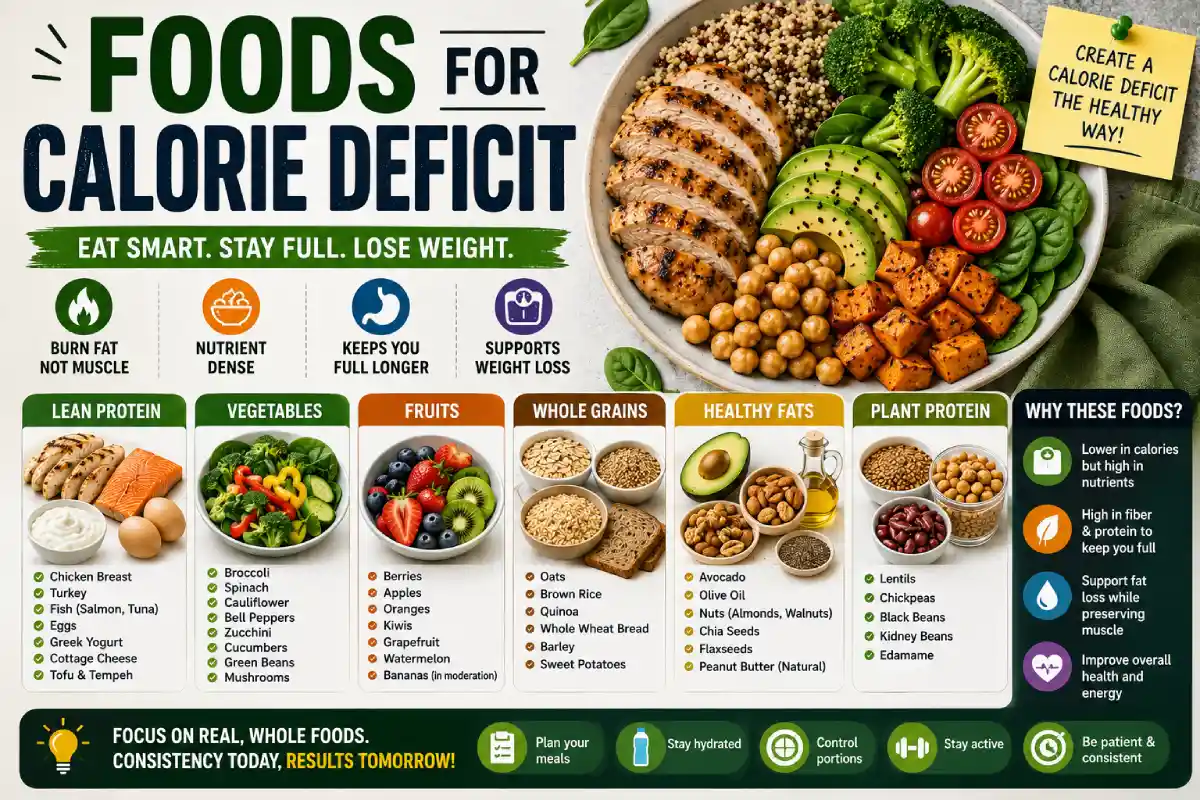
Foods for Calorie Deficit
Selecting the correct foods to eat for calorie deficit is one of the most simple ways to lose weight, and still not be hungry all the time. a calorie deficit is eating less calories than your body uses, but what kind of food you do eat is just as important as how much you eat.
Some foods are quite filling and, as they contain plenty of protein, fibre and nutrients, this state can last for several hours. Others are these high in calories but contain little purpose and very little to fill you up so that you end up eating more than you should. By choosing the right things on your plate, you can stay within your allocated target caloric intake while keeping your body nourished.
Whether just starting on your weight-loss path or already on it but want to eat healthier, this article provides info on the best foods for a calorie deficit diet, foods to moderate in your diet, and how to create nourishing, caloric deficits foods.
Not familiar with the idea? Read our Complete Calorie Deficit Guide first to understand how calorie deficits work before making your meals.
Best Whole Grains for a Calorie Deficit
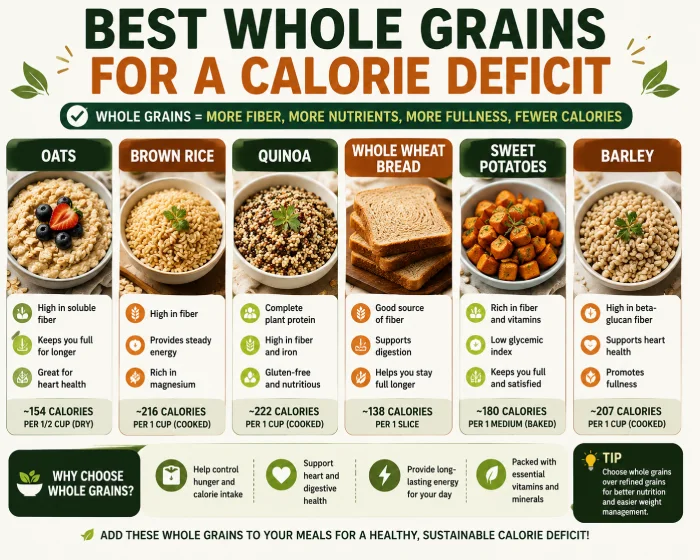
Carbohydrates aren‘t enemies when it comes to weight loss. In fact, choosing healthy carbs can be a great way to increase your energy and workout ability and stave off hunger for hours.
Whole grains rather than refined grains are higher in fibre and nutrients. A good choice would be:
Oats
Oats are the perfect breakfast foods for weight loss.
Benefits
- Rich in soluble fibre.
- Helps satisfy your appetite for hours.
- Good for the cardiovascular system.
- Time consuming; If it is not presented properly or taken care of, it can be time consuming.
Best ways to eat oats
- Overnight oats
- Oatmeal with berries
- Protein oats
- Homemade oat smoothies
Brown Rice
Brown rice is a complex carbohydrate and it will take longer to digest than the white rice.
Benefits
- Contained abundant dietary fibre.
- High in magnesium
- Provides long lasting energy
- Great for meal prep
Quinoa
Quinoa is the only plant to contain all nine amino acids.
Benefits
- Excellent source of protein
- Screened juice was concentrated by evaporation, then evaporated prepared by hydration from the raw material(grapefruit pulp), high in fibre (hazelnut skins, citrus pulp).
- Naturally gluten-free
- Magnesium and iron high content.
Whole Wheat Bread
Pick whole wheat bread, derived from a kernel of whole grain, instead of refined white type.
Select breads that provide 3–5 g of fibre or more per serving.
Sweet Potatoes
Sweet potatoes provide:
- Complex carbohydrates
- Vitamin A
- Potassium
- Fibre
They‘re sweet naturally and they suit chicken, turkey, fish.
Barley
Barley (has beta-glucan fibre in it to help you feel full up and keep healthy cholesterol levels).
Healthy Fats to Include
The good fats are imperative in hormone production, brain function and the absorption of the fat soluble vitamins. while it is true that fats contribute to more calories per gram than either protein or carbohydrate, eatingsmallamounts will actually suppress hunger.
Avocados
They also contain the heart friendly- monounsaturated fats as well as fibre.
Enjoy them:
- On wholegrain toast
- In salads
- With eggs
- In wraps
Olive Oil
Extra virgin olive oil is one of the healthiest cooking fats.
Use it:
- On salads
- Specific for roasting vegetables, to Enhance cooking of vegetables, used as.
- In a homemade dressing.
Remember to measure portions, one tablespoon is about 120 calories.
Almonds
Almonds are a snack that is very good because they contain healthy fats, protein and fibre.
An approximately 23 almonds serving contains approximately 160Kcal.
Walnuts
The walnuts are loaded with omega-3 fatty acids and antioxidants.
Can be used in when having oatmeal, yogurt and salad.
Chia Seeds
Although they are tiny, chia seeds are rich in fibre and fats.
Try adding them to:
- Smoothies
- Yogurt
- Overnight oats
- Homemade puddings
Natural Peanut Butter
Buy the natural form of the peanut butter to get protein and healthy fats.
Use varieties with no added sugar and no hydrogenated oils.
Healthy Snacks for a Calorie Deficit
Snacking isn‘t necessarily a bad thing if you are eating healthful, nutrient dense foods.
Some satisfying snack ideas include:
- Greek yogurt with blueberries
- Cottage cheese and cucumber
- Apple with peanut butter
- Hard-boiled eggs
- Baby carrots and hummus
- Air-popped popcorn
- Edamame
- And tuna with whole grain crackers;
- Protein smoothie
- Roasted chickpeas
In between meals, try to aim for snack types with protein and fiber!
Foods to Limit During a Calorie Deficit
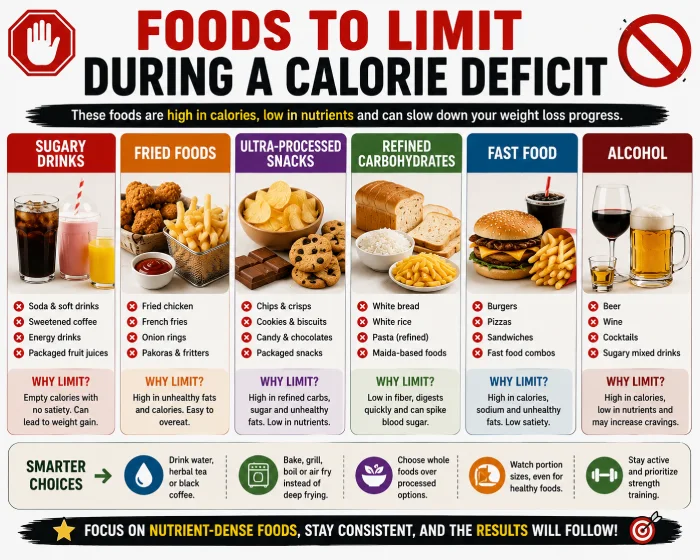
Nothing needs to be cut out entirely, but there are certain foods that we tend to overconsume as they are very calorie-dense and lacking in nutritional value.
Try to limit:
Sugary Drinks
Examples include:
- Soft drinks
- Sweetened coffee drinks.
- Energy drinks
- Sweetened fruit juices Several other fruit juices were added with high levels of sugars (e.g. apple and pear juices) and sweetening agents, in order to modify their T.S. contents; and seven products on this basis were obtained.
They only deliver calories but don‘t fill you up.
Fried Foods
Examples include:
- French fries
- Fried chicken
- Onion rings
- Fried snacks
When fried, the calorie content also increases.
Ultra-Processed Snacks
Examples include:
- Potato chips
- Cookies
- Candy
- Doughnuts
- Pastries
Such foods are usually load with refined carbohydrates, saturated and trans fats, and additional sugar.
Fast Food
Sometimes having fast food once in a while is can still be okay but the more you eat the harder it is to keep that deficit.
Alcohol
Alcohol has calories and might impair willpower at mealtimes.
Drink in moderation if you indulge.
One-Day Calorie Deficit Meal Plan
This is a typical 1800-calorie day.
| Meal | Food | Approx. Calories |
| Breakfast | A bowl of oats served with fresh blueberries in Greek yogurt. | 400 |
| Morning Snack | Apple-15 Almonds. | 180 |
| Lunch | I have chosen grilled chicken, brown rice and broccoli. The chicken has been given Extra Hot sauce, which probably adds to the calories! | 500 |
| Afternoon Snack | Cottage cheese with cucumber | 150 |
| Dinner | Baked salmon, roasted veg, sweet potato Endnotes: Mass seems to be the primary factor affecting the GSI response but the others should also be considered. | 520 |
| Total | 1,750–1,800 |
This plan offers a good balance of carbohydrate, protein, healthy fat and fibre. This will help keep the patient feeling full and maintain steady levels of energy.
Grocery Shopping List for a Calorie Deficit
Protein
- Chicken breast
- Turkey breast
- Eggs
- Salmon
- Tuna
- Greek yogurt
- Cottage cheese
- Tofu
- Lentils
- Chickpeas
Vegetables
- Broccoli
- Spinach
- Bell peppers
- Cucumbers
- Tomatoes
- Cauliflower
- Green beans
- Mushrooms
- Zucchini
Fruits
- Apples
- Bananas
- Berries
- Kiwi
- Oranges
- Grapefruit
- Watermelon
Whole Grains
- Oats
- Brown rice
- Quinoa
- Whole wheat bread
- Whole wheat pasta
- Sweet potatoes
Healthy Fats
- Avocados
- Almonds
- Walnuts
- Chia seeds
- Olive oil
- Peanut butter
Common Mistakes to Avoid
By the same token, even if you are eating healthy foods, you can still stall your progress if you make some of the following mistakes.
Eating Too Little
An extreme calorie deficit may lead to:
- Fatigue
- Muscle loss
- Nutrient deficiencies
- Increased hunger
There is generally more comfort in a moderate deficit.
Ignoring Portion Sizes
Healthy foods have calories as well.
For example:
- Nuts
- Avocados
- Peanut butter
- Olive oil
Measuring your portions can help you stick to your calorie target.
Not Eating Enough Protein
Protein benefits muscle maintenance and appetite regulation.
Make sure to have a source of protein at every meal.
Drinking Your Calories
Many coffee drinks, fruit juices, soft drinks and all alcohol contain hundreds of calories with little fullness.
Avoiding All Treats
Complete denial of desirable foods tends to lead to cravings and binging.
Indulge a little now and again, within the allotted calorie intake.
Frequently Asked Questions
What foods are best for a calorie deficit?
Eating lean proteins, vegetables, fruits, whole grains, legumes, and healthy fats are the best foods because they pack the nutrients you need but leave you feeling satisfied.
Can I eat carbohydrates during a calorie deficit?
Yes. Good carbohydrate foods that can be consumed on a healthy caloric deficit diet are oats, brown rice, quinoa, sweet potatoes and fruit.
Is protein important for weight loss?
Yes. Protein helps to keep lean muscle, recovery and has an increased satiety value that makes it easier to stay in a calorie deficit.
Are fruits good for a calorie deficit?
Yes, they are. Those access to them will actually ensure you some variety of fibres, vitamin and minerals within ones natural sweetness and taste.And they are actually indeed not calorie, as many pre made desserts.
What should I avoid?
Don‘t eat foods that are high in sugars, refined grains, fried foods, sweetened beverages, and other heavily processed snacks. They‘re easier to overeat and provide less of the nutrients our body needs.
Can I eat my favourite foods while losing weight?
Yes. To keep on losing weight you need to take in fewer calories than you burn everyday, so eating in moderation will hopefully easier longterm
Conclusion
One of the smartest things you can do is learn to choose the correct foods for your calorie deficit. Instead of just counting and trying to limit your calories, try to make your meal mostly from foods that will fill you satisfactorily, supply the nutrition you need and keep you feeling content for as long as you remain hungry. Foods that are suitable include lean protein, an array of fruits and vegetables, nuts and legumes, whole grains and healthy oils.
Remember that there is no‘magic food‘that is going to help you shed pounds. Carrying out regular eating, the proper portion sizes, exercising, sleeping and being patient will all be part of your formula for success.
Use this diet plan along with the Complete Calorie Deficit Guide, How to Calculate Calorie Deficit, and Calorie Deficit Meal Plans to develop a complete weight-loss plan. Use the information given in these guides for calculating the amount of calories you will need, choosing real and healthy foods, and designing a balanced meal plan that you can maintain.