


Mohd Arbaaz is an Editor and Writer at Fitnessison.com with 5 years of experience in SEO and digital content creation. He creates informative, reader-focused content covering fitness, workouts, nutrition, health, healthy lifestyle, technology, and computers.

Shashi Teja is a Reviewer at Fitnessison with over 6 years of experience in SEO, content strategy, digital publishing, and content optimization. He reviews content for clarity, research quality, topical relevance, readability, structure, and overall usefulness to readers.
Last Updated: September 8, 2026
One of the best ways to shed pounds and keep your energy up while improving your muscles and forming good eating patterns is to follow a calorie deficit meal plan. This means cutting your daily intake of calories to below your body‘s average output instead of cutting out foods. The trick isn‘t just to eat less, but to eat wisely. Following a nutritionally complete meal plan, there should be eat least a fair share of the right stuff; good sources of protein, ingest good fats, fibres, some vitamins, and minerals to give you satiety and strength to get your body mobilize your stored fat sources for energy. Are you trying to shed a few kilos, tone up or eat healthier? Whatever your aim, this articles offers you the tool for a successful calorie deficit meal plan that fits into your life. Go through my Complete Calorie Deficit Guide before selecting a meal plan. It will give you an idea of how the calorie deficit works and how to find out how many calories you need to eat each day.
What Is a Calorie Deficit Meal Plan?
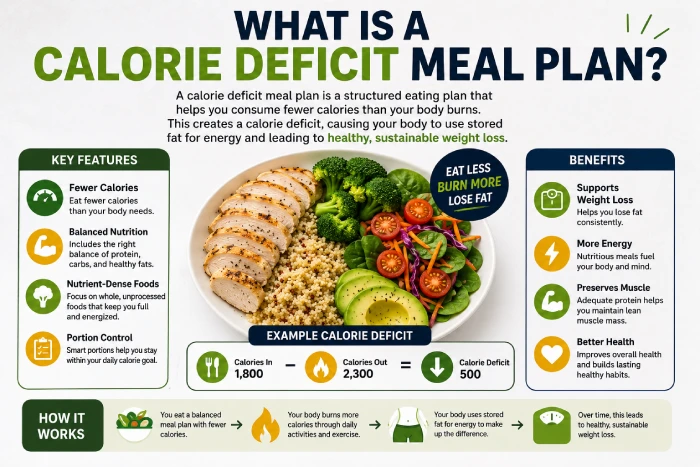
A calorie deficit meal plan is a eating plan designed to help you eat less than you burn.
If your calorie intake is below your general energy output, your body will source its energy from stored fat, leading to slow but steady fat reduction.
-
- More suitable portion sizeIn spite of punishing fad diets where you achieve unrealistic results to quickly, calorie deficit meal plans discourage overeating and ingests sensible foods
Example
- Maintenance Calories: 2,400
- Daily Intake: 1,900
- Daily Deficit: 500 Calories
So maintaining this deficit, the table shows that most people will lose 0.5kg ( 1lb) a week.
Why Meal Planning Makes Weight Loss Easier
Pre planning your diet will remove the uncertainty and make it much easier for you to stay on course.
Benefits include:
Less impulse eating.
- More suitable portion sizeIn spite of punishing fad diets where you achieve unrealistic results to quickly, calorie deficit meal plans discourage overeating and ingests sensible foods
- Shopping for groceries is easier.
- Increased consumption of protein, as represented by the differentiation within each cluster.
- Better nutrition.
- Less food wastage.
- Less variation in calorie tracking
Meal preparers tend to find it easier to stay on track with their calories through out the week.
How to Calculate Your Calories Before Choosing a Meal Plan
Step 1: Calculate Your BMR
Your BMR (Basal Metabolic Rate) is based on how many calories you burn when you are at rest.
Step 2: Calculate Your TDEE
Multiply your BMR by the level of activity since you wake up for a rough estimate of how many calories you need a day.
Step 3: Create a Deficit
Use the equation to subtract 250–500 calories to your TDEE and get 1–2 pounds of weight reduction each week.
For a step-by-step explanation, read our How to Calculate Calorie Deficit guide.
Best Foods to Include in a Calorie Deficit Meal Plan
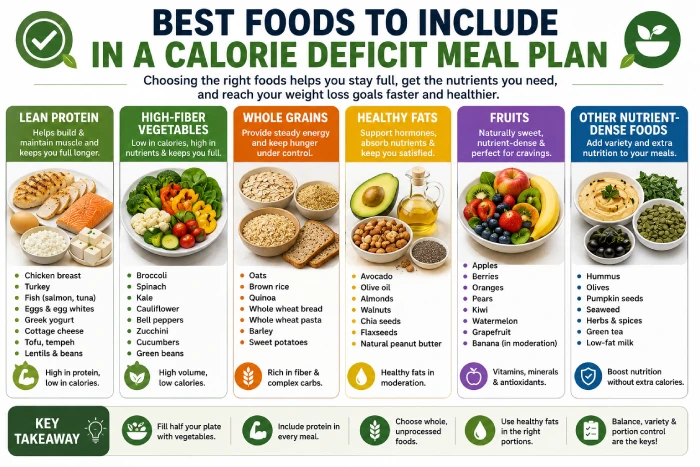
Opting for foods that are rich in nutrients allows you to feel full and in control of the calories in your diet.
Lean Protein
Protein has been shown to induce satiety and aid in the preservation of muscle tissue.
Good options include:
- Chicken breast
- Turkey
- Fish
- Eggs
- Greek yogurt
- Cottage cheese
- Tofu
- Tempeh
- Lentils
- Beans
High-Fibre Vegetables
More vegetables provide bulk, without a few added calories.
Excellent choices:
- Broccoli
- Spinach
- Kale
- Cabbage
- Bell peppers
- Cauliflower
- Zucchini
- Cucumbers
Whole Grains
Whole grains supply complex carbohydrates and fibre.
Choose:
- Brown rice
- Oats
- Quinoa
- Whole wheat bread
- Whole wheat pasta This is let‘s say the healthier alternative to white pasta, all because of its whole wheat constancy. Whole wheat is better for you because the fiber content is a lot higher which will help promote stomach function. With more fiber means more nutrients so eat up.
- Sweet potatoes
- Barley
Healthy Fats
Healthy fats contribute to good health including hormone production.
Include moderate portions of:
- Avocados
- Olive oil
- Almonds
- Walnuts
- Chia seeds
- Flaxseeds
- Actually, natural peanut butter.
Fruits
Examples include:
- Apples
- Berries
- Oranges
- Pears
- Kiwi
- Watermelon
- Grapefruit
Foods to Limit During a Calorie Deficit
There are no foods you shouldn‘t eat, the following are just more rotable to eat in excess because they are calorie-dense and not very filling:
Limit:
- Sugary drinks
- Fried foods
- Fast food
- Candy
- Pastries
- Processed snacks
- Excess alcohol
- Caffe drinks with a lot of calories
Sample 1,500-Calorie Meal Plan
| Meal | Food | Calories |
| Breakfast | Add Greek yogurt, fruit ( berries) and oats.44 If needed add (more) water to make it easier to pour over the must. | 350 |
| Morning Snack | Apple + 15 almonds | 180 |
| Lunch | Grilled Chicken, brown rice,broccoli. | 420 |
| Afternoon Snack | Cottage cheese | 150 |
| Dinner | Venus appeasedshe was also on the verge of being called Venus; her concerns with appearance was bewitching. Baked salmon, smooth sweet potato, bright green beans I made sure to confess the amount of dairy I ate; I‘m fat. | 400 |
Total: Approximately 1,500 Calories