
Last Updated: July 1, 2026
Clean Eating V Whole Food Diet is a comparison that people who are trying to change up their eating habits often make. As a first glance type of comparison, they appear to be very similar; promoting healthier food choices and avoiding overly processed foods.
While they are similar in many ways, there are skill differences in the two eating styles that could make one more ideal for you over the other. Being familiar with those differences will help you determine whether an ovo-vegetarian or an ovo-lacto-vegetarian diet is feasible to your activity level, body, and health goals.
Before I learned up on nutrition I thought that clean eating and a entire food diet were exactly the same. The more I read up on it the more they seem to intersect but a they are not completely equivalent.
In this guide we will discuss what clean eating and whole food diets actually are, what the benefits are, compare their main differences and help you decide which one‘s best for you.
Clean eating vs whole food from our pillar guide.
What Is Clean Eating?
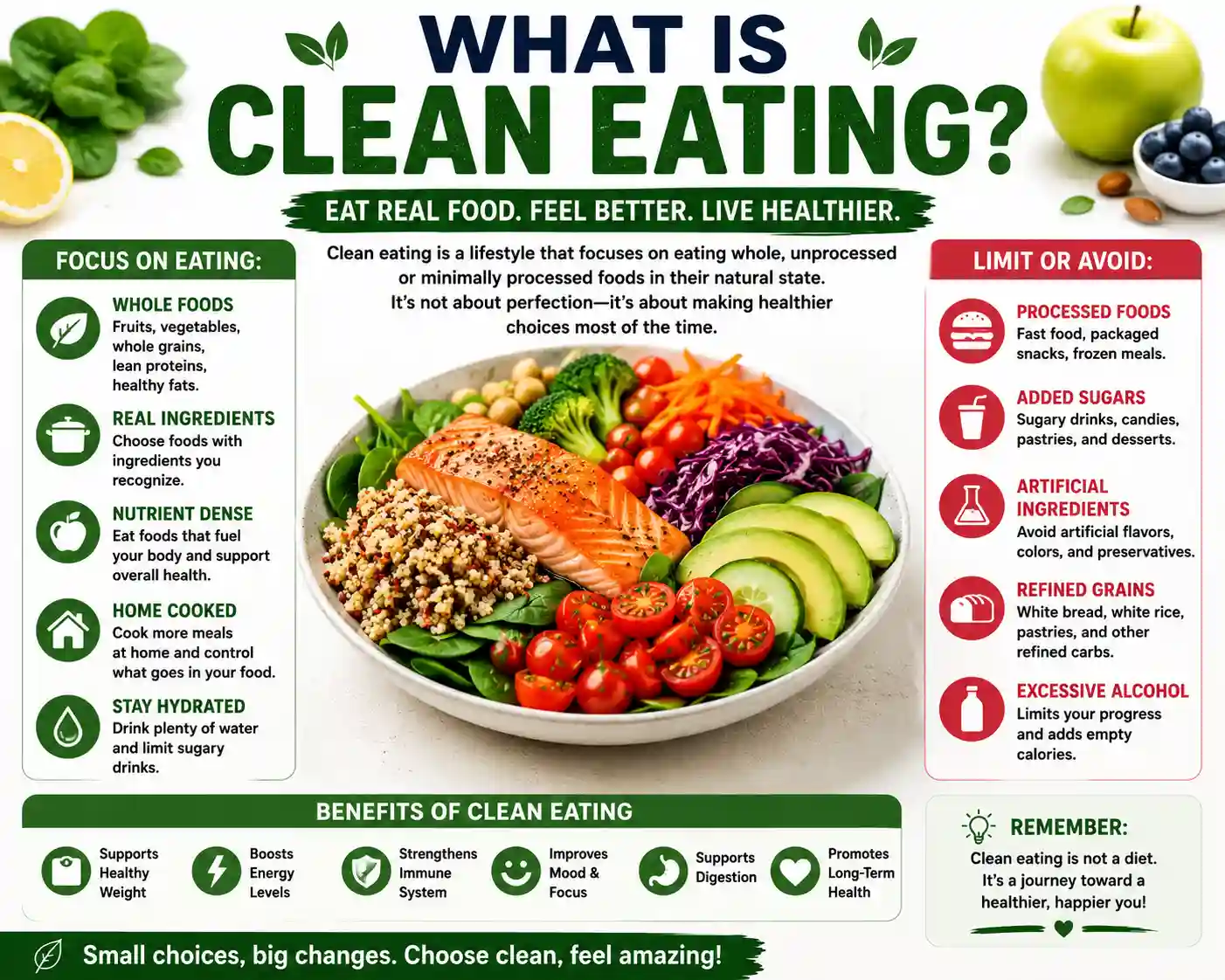
Eat is less of a diet than a lifestyle view on how to lead your life.
The principle is straightforward: eat as much whole, natural food as likely while reducing intake of highly advanced and heavily processed foods.
People who follow clean eating naturally focus on:
- Fresh fruits and vegetables
- Lean proteins
- Whole grains
- Healthy fats
- Natural ingredients
- Home-cooked meals
At the same time, they try to limit:
- Fast food
- Sugary drinks
- Packaged snacks
- Refined carbohydrates
- Artificial ingredients
- Highly processed foods
The target isn‘t perfect. It‘s only to increase the reasonable number of healthy options.
What Is a Whole Food Diet?
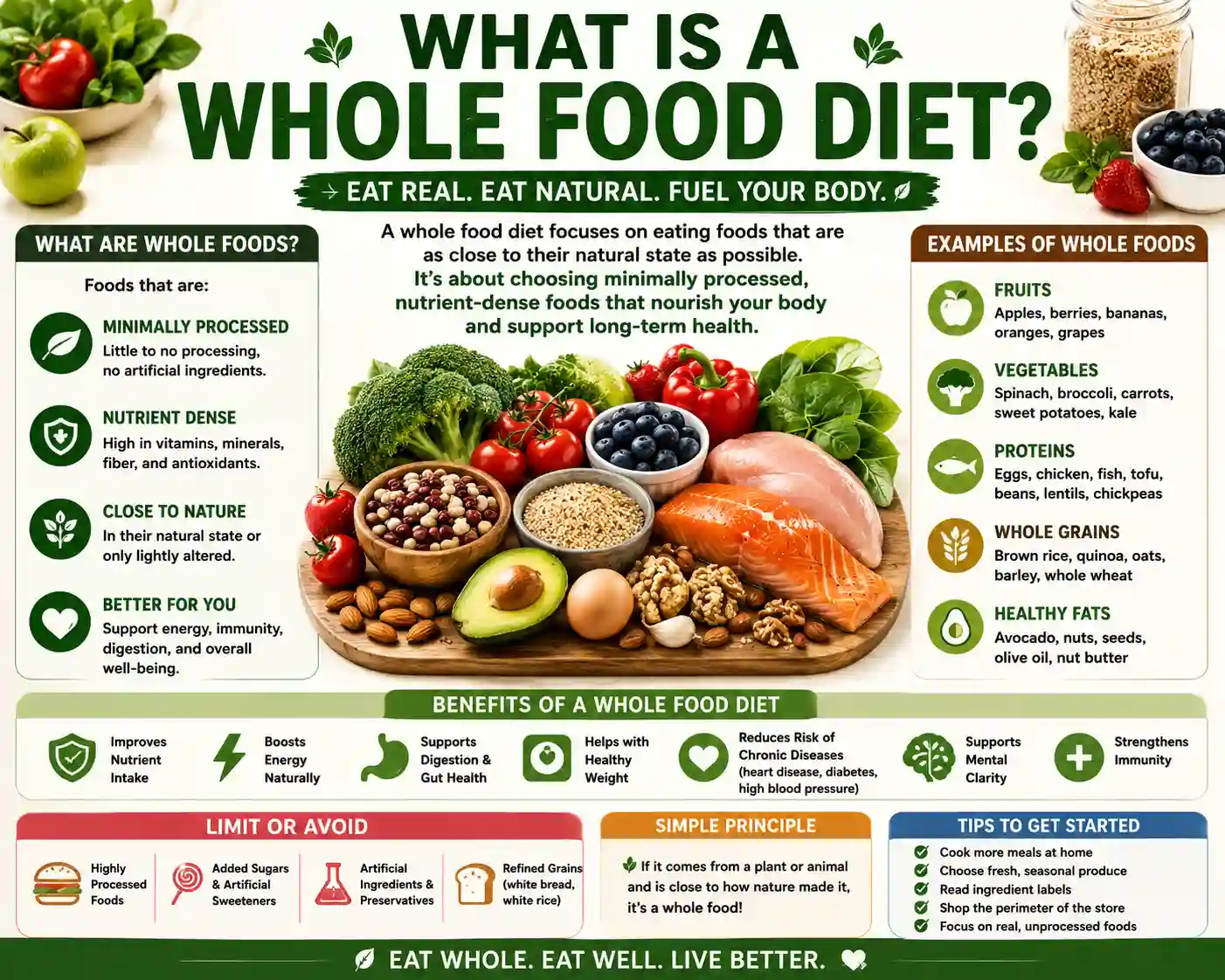
A food diet fundamentally involves eating only foods that are as natural and natural as possible.
Whole foods: Food in its natural state; that has experienced minimal processing.
Examples include:
- Fresh fruits
- Vegetables
- Beans
- Lentils
- Nuts
- Seeds
- Whole grains
- Eggs
- Fish
- Unprocessed meats
In contrast to clean eating, which is at times subject to individual interpretation, a whole food diet directly addresses the level of processing.”
The less processed a food is, the better it generally fits in with a whole food eating plan.
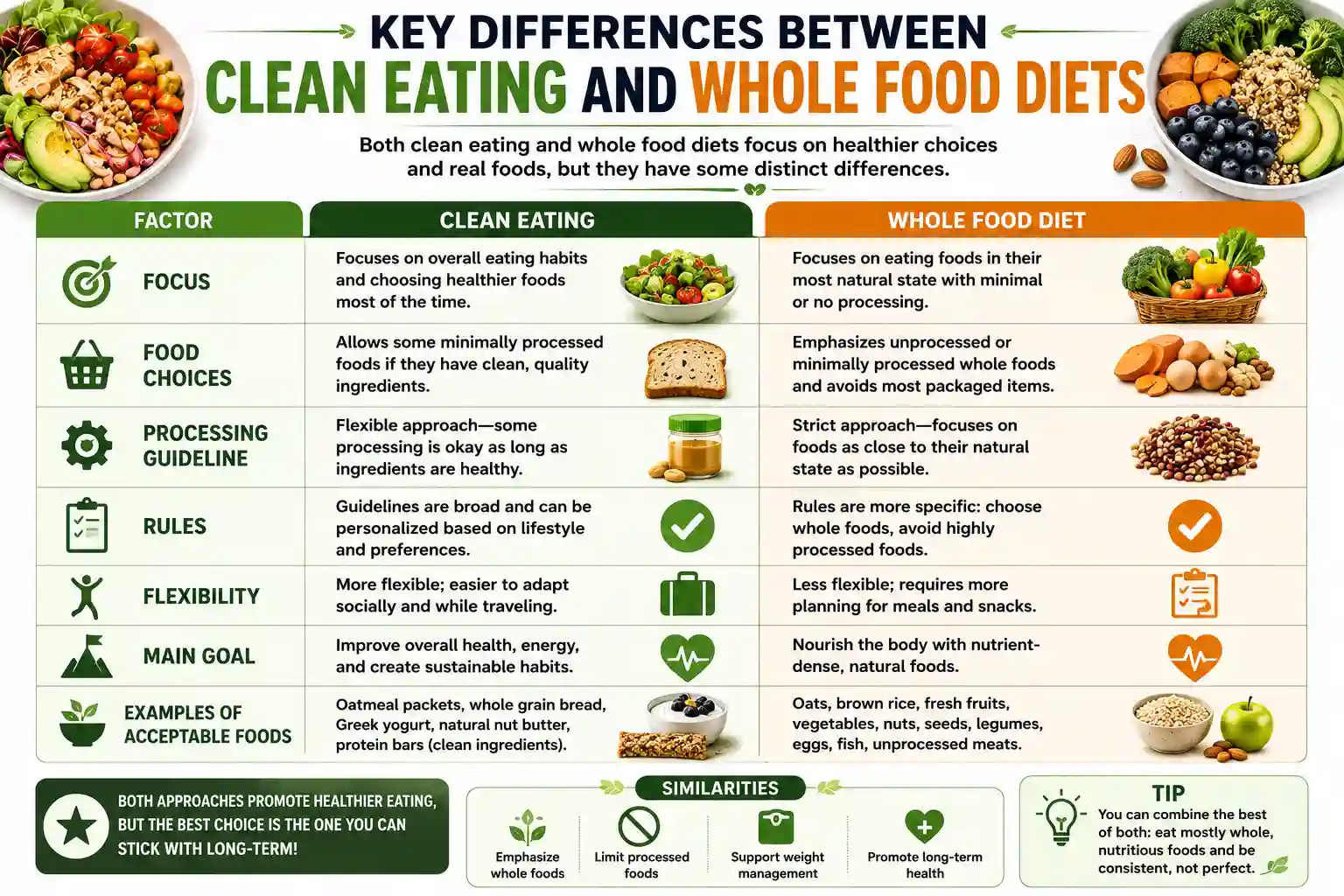
Clean Eating vs Whole Food Diet: Quick Comparison
| Feature | Clean Eating | Whole Food Diet |
| Focus | Healthy eating habits | Minimally processed foods |
| Allows Some Processed Foods | Yes | Limited |
| Meal Planning | Flexible | More ingredient-focused |
| Main Goal | Better overall nutrition | Emphasize natural foods |
| Lifestyle Approach | Yes | Yes |
| Restrictive Level | Moderate | Usually less restrictive |
While the two approaches share many similarities, clean eating may be more encompassing of a lifestyle as whole with fewer specifics, whereas a whole food diets centers the intake on the foods we eat.
Similarities Between Clean Eating and Whole Food Diets
The reasons that lead to the common confusion of these two dining styles are:
Both Encourage Whole Foods
Both plans emphasize foods like:
- Fruits
- Vegetables
- Whole grains
- Lean proteins
- Healthy fats
Both Reduce Processed Foods
Both show a low level of intake of and have mechanisms for minimizing consumption of highly processed foods.
Both Support Weight Loss
Both diets ensure no weight is guaranteed. However the diet both promote (promotion of more nutritious foods) can make individuals feel hungry while eating less calories.
Both Promote Long-Term Health
Plates of this sort are popular because they encourage nutritious eating habits as opposed to diets in the short term.
New to the topic? See our clean eating for beginners guide.
Key Differences Between Clean Eating and Whole Food Diets
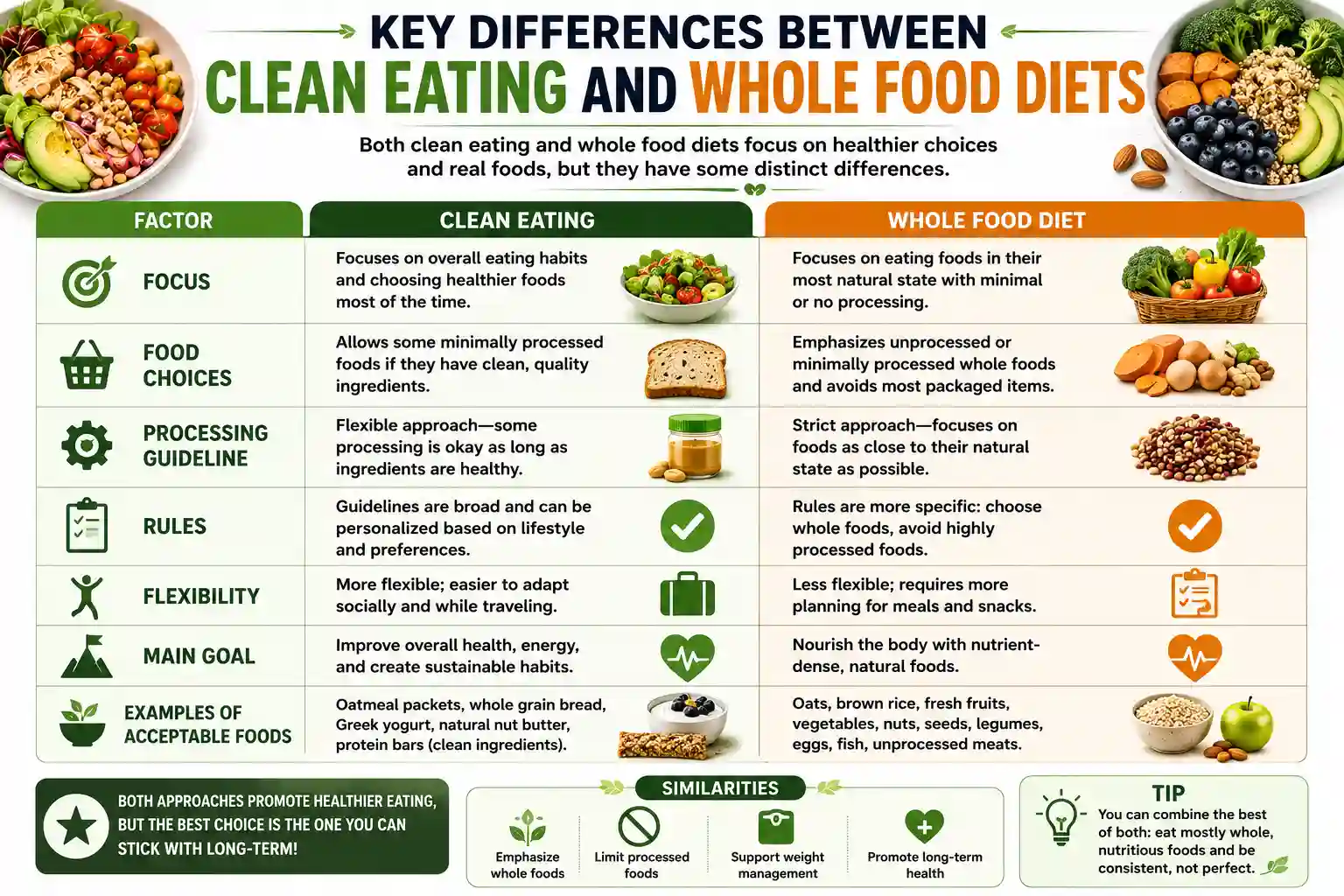
There are many parallels. Why not others? There are a few differences.
Clean Eating Focuses on Eating Habits
Clean eating often includes broader lifestyle recommendations such as:
- Reading ingredient labels
- Cooking more at home
- Reducing added sugars
- Practicing portion control
This refers to the general quality of your pattern of eating.
Whole Food Diet Focuses on Food Processing
A whole food diet is easier to maintain.
The primary question becomes:
“Is this food highly processed?”
Many foods are encouraged if they are kept as natural as possible.
Clean Eating Can Be More Flexible
Certain clean eating programs permit some processed items if they include high quality ingredients.
Examples might include:
- Whole-grain bread
- Natural peanut butter
- Unsweetened yogurt
Some of the more militant whole food advocates that tend to be a little more health obsessive might steer clear of these altogether.
Benefits of Clean Eating
Many people get into clean eating because it feels effective and feasible.
Potential benefits include:
Improved Nutrient Intake
Vitamins and minerals, which are usually higher in whole foods.
Better Energy Levels
Cutting out highly processed foods could help prevent a dip in energy.
Weight Management
These foods have higher fibers and higher protein levels, which can support appetite control.
Healthier Food Awareness
Reading labels, knowing about ingredients, usually leads to better decisions.
Benefits of a Whole Food Diet
A whole food diet has many benefits too!
Fewer Artificial Ingredients
Most kept to natural foods purchased had less additives.
Increased Fiber Consumption
Along with whole foods, there are many natural foods that offer fiber.
Better Food Quality
Whole foods tend to have nutrients in their original state.
Simpler Food Choices
The rules are fairly simple–pick foods that have undergone little processing.
Which Diet Will Help Me Lose Weight?
These are some of the oftenasked questions.
In reality both have the potential to be used as a means of losing weight.
Weight loss ultimately depends on:
- Calorie intake
- Physical activity
- Consistency
- Portion control
However, both eating styles encourage foods that:
- Increase fullness
- Reduce overeating
- Improve nutrition
Both can work for the many.
Sample Day of Clean Eating
Breakfast
Oatmeal topped with berries and chia seeds.
Snack
Apple slices with almond butter.
Lunch
Chicken, rice (in a pod), and vegetables (brocolli) cooked on a barbecue.
Snack
Greek yogurt with fruit.
Dinner
Salmon alongside quinoa and oven roasted vegetables.
Sample Day of Whole Food Eating
Breakfast
Fresh fruit, eggs, and oats.
Snack
Raw almonds.
Lunch
Beans, vegetables and brown rice.
Snack
Fresh berries.
Dinner
Baked fish with sweet potatoes and broccoli.
Common Misconceptions
Clean Eating Means Perfection
Not true.
Most successful clean eaters are obsessed with consistency, not perfection.
Whole Food Diet Means No Convenience
Not necessarily.
Quite a few minimally processed foods are still convenient.
You Must Eliminate Entire Food Groups
Both dietary regimes done have to cut out or severely restrict entire food groups for most people.
Healthy Foods Are Always Expensive
Affordable foods that fit both mouth and bogan eating styles include beans, oats, eggs and seasonal produce.
Tips for Getting Started
Isolate and Make Changes: Pay special attention to one change each time.
Transitions are simpler to sustain.
Eat More Fruits and Vegetables
This is one of the easiest and most straightforward improvements you can undertake.
Read Ingredient Labels
A shorter list of ingredients is often a good indicator.
Cook More Meals at Home
You have the ability to choose the ingredients in home cooking.
Stay Consistent
It‘s the progress, not the perfection.
Practical buys in our clean eating food list.
Frequently Asked Questions
Is the phrase ‘clean eating’ just a synonym of eating a whole food-based diet?
Not quite. They are similar in many ways but clean eating is concerned with one‘s overall eating habits whereas a whole food diet is centered on foods that are little to not processed.
Which is better for starters?
For many people, clean eating is easier as it is flexible.
Fundamentally, diet 1 or diet 2 can be effective in proportion as they result in a reduction in energy intake when compared to diet 3 (need at least 1000kJ or 250 kcal difference).The difference is by how much diets 1 and 2 reduce energy intake in comparison with diet 3.
Yes. Both are able to aid weight loss if used in conjunction with a calorie controlled diet.
Are processed food totally forbidden?
No. The people following either approach tend to cut down on really processed foods.
Am I Allowed to use both methods together?
Certainly. A lot of folks always integrate both.
Final Thoughts
Clean Eating vs Whole Food Diet isn‘t quite the battle of who wins and who loses. Rather, both actually promote having a healthier diet, more meals cooked from scratch with fresh, whole ingredients and trying to take in more nutrient-dense foods.
For those who feel life is more flexible or you like the broader focus on quality of lifestyle rather than food alone, clean eating is probably the better route for you. If you prefer simple rules focused on food quality and minimal food processing, try a whole food diet.
No plan is superior just because it is a perfect plan no matter whether you select the clean eating plan, the whole food nutrition plan, or even a combination of the two, if the plan is not feasible, it won‘t matter.