
Last Updated: June 22, 2026
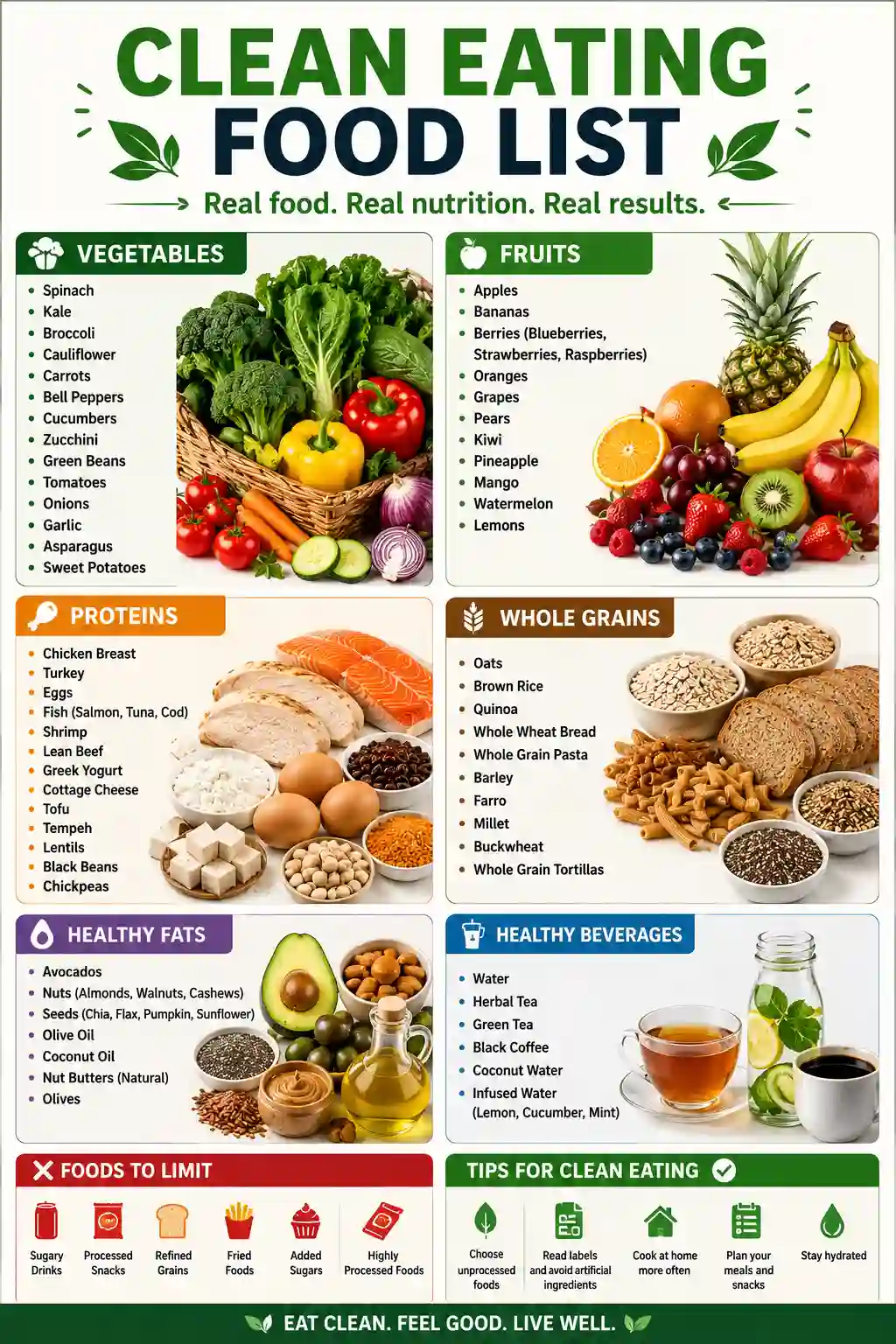
Clean Eating Food List
Learning what foods are appropriate in a clean eating diet is perhaps one of the biggest obstacles most people face when it comes to properly eating, which comes down to one simple fact: many people don‘t know what can and can‘t be a part of a healthy lifestyle.
Navigate a grocery store aisles and you will see (or hear advertisements about) foods that say they are “natural,” “healthy,” “organic,” or “diet friendly. But the labeling can be overwhelming. A package might seem healthy on the outside but the product itself has names on it you have trouble pronouncing.
This is exactly why a practical clean eating food list will really help take the hassle out of your shopping.
Fundamentally clean eating isn‘t about bans. It‘s more about selecting foods in their most unrefined state as opposed to those that have been packaged and processed.
For those new to this concept of clean eating, it means as simple as eating more whole foods and cutting back on highly processed foods.
What Actually Does Clean Eating Mean?
Ask ten people to tell you what they think about clean eating, and you‘ll likely receive ten answers.
To most others clean eating focuses on consuming foods that are nutritious, but not overly processed.¶35 High-sugar foods and synthetic ingredients should be avoided.
Rather than designing meals around packaged foods, Clean Eating guides you to design your meal around fresh and natural ingredients.
For example:
Opt for the original ‘plain’ instant oatmeal instead of the flavored ones.
Use whole fruit instead of sugary fruit drinks.
Avoid relying on processed snack foods try nuts and seeds or fresh fruit and vegetables.
Trivial modifications will eventually sum up.
The Foundation of a Clean Eating Grocery Cart
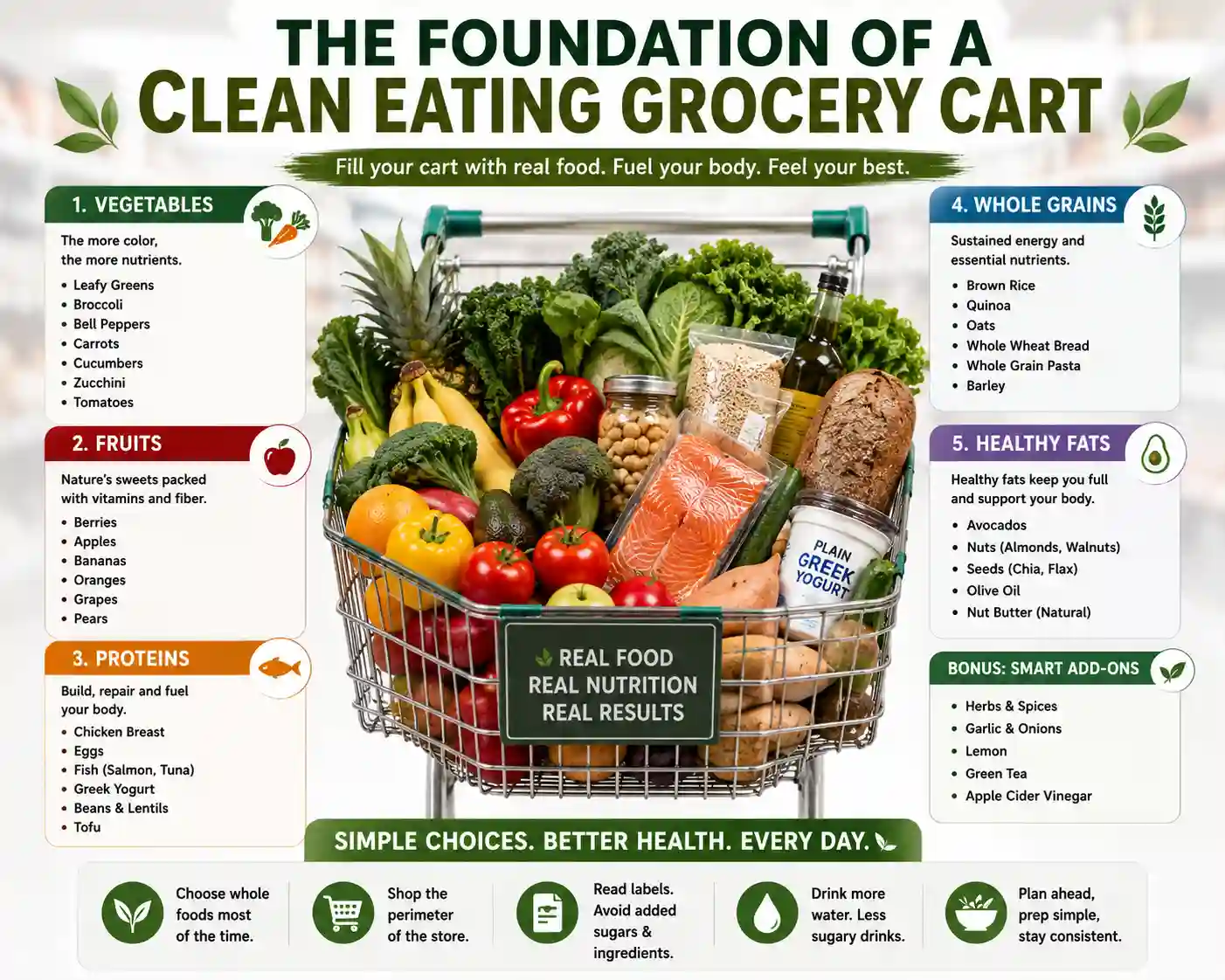
The five general food types I always recommend healthy shopping lists to contain when I‘m assisting someone with designing one are:
These groups are the bulk of a clean eating balanced diet. Nutrition experts often highlight the benefits of whole foods because they naturally provide vitamins, minerals, and fiber.
Fresh Vegetables
When most people hear the words “healthy eating”, vegetables are the first thing they think of.
For good reason.
They are a good source of vitamins, minerals, antioxidants and fiber yet are reasonably low in calories.
Some of the best options include:
- Spinach
- Broccoli
- Kale
- Carrots
- Bell peppers
- Cucumbers
- Green beans
- Cauliflower
- Cabbage
- Zucchini
A good guideline is to select a variety of colors across the week.
Colors can have variation in what nutrients they contain.
Fruits
Sometimes fruit suffers from being deemed a little too good because of the fact that it has a lot of natural sugar.
In addition, whole fruits have fiber, vitamins, minerals and antioxidants that most of us can benefit from.
Popular clean eating fruits include:
- Apples
- Bananas
- Oranges
- Strawberries
- Blueberries
- Raspberries
- Grapes
- Pears
- Watermelon
- Pineapple
Choosing whole fruit over fruit juice is advantageous, since fiber within the whole fruit slows the digestion process.
Protein Foods
Eating more Protein will help to reduce your appetite and increase your muscle.
A lot of individuals observe that they have less desire for food if they eat protein with their meals.
Good clean eating protein sources include:
- Chicken breast
- Turkey
- Eggs
- Fish
- Salmon
- Tuna
- Greek yogurt
- Cottage cheese
- Tofu
- Tempeh
- Lentils
- Black beans
- Chickpeas
You do not have to eat each one of these.
The aim is just to select protein sources, which are real convenient in combination with your taste and lifestyle.
Whole Grains
Whole grains provide energy, and they tend to be more nutritious, compared to refined grains.
Some excellent options include:
- Oats
- Brown rice
- Quinoa
- Whole wheat bread
- Whole grain pasta
- Barley
- Farro
- Millet
It also pays to check the ingredients of packaged grain products.
In an ideal world a piece of whole grain would be floating around near the top of the package.
Healthy Fats
There are still many who hold the misconception that we should keep all fat away.
The truth is that healthy fats can have a place in a healthy diet.
Foods rich in healthy fats include:
- Avocados
- Almonds
- Walnuts
- Pistachios
- Chia seeds
- Flaxseeds
- Olive oil
- Natural peanut butter
- Cashews
Including small amounts of these foods in your meal helps the meal to feel more filling.
New here? Try our clean eating for beginners guide.
Foods That Often Surprise People
Unhealthy foods: When they go on a binge they believe all the food in the package is bad.
That’s not always true.
There are several sure foods whichcan continue to be included within a clean living lifestyle.
Examples include:
- Frozen vegetables
- Frozen fruit
- Plain Greek yogurt
- Unsweetened almond milk
- Canned beans
- Natural nut butters
- Plain popcorn
The trick is to read the ingredients and avoid anything with added sugar and artificial ingredients.
Foods to Limit
Clean eating doesn‘t mean for ever banning foods.
Nonetheless, some foods are worth cutting back on when trying to improve one‘s nutrition.
Sugary Drinks
Examples include:
- Soda
- Sweet tea
- Energy drinks
- Fruit punch
These drinks can provide a high number of calories without filling you up.
Highly Processed Snacks
Common examples:
- Chips
- Candy
- Packaged pastries
- Sugary snack bars
Its okay if you indulge in these now and then, but I find that most of themaren‘t real nourishment.
Refined Grains
Foods such as:
- White bread
- White pasta
- Sugary breakfast cereals
Are usually lower in fiber than their counterparts made from the whole grain.
Processed Meats
Examples include:
- Hot dogs
- Sausages
- Bacon
- Processed deli meats
Though some of these foods can be fit in to a diet every once in a while, they shouldn‘t be eating the bulk of your dailyprotein.
My Typical Clean Eating Shopping List
When I shop for a week of healthy meals, my cart often includes:
Produce
- Spinach
- Broccoli
- Apples
- Bananas
- Berries
- Bell peppers
Protein
- Chicken breast
- Eggs
- Greek yogurt
- Salmon
Carbohydrates
- Oats
- Brown rice
- Sweet potatoes
Healthy Fats
- Avocados
- Almonds
- Olive oil
Nothing complicated.
Most clean eating plans tend to work best when they are simple.
How to Build a Clean Eating Plate
A food list can be useful however knowing which foods to combine is equally important.
A simple approach looks like this:
Half Your Plate
Vegetables
One Quarter
Protein
One Quarter
Whole grains or other healthy carbohydrates
Small Portion
Healthy fats
This removes a lot of the guess work from your meal preparation.
Clean Eating Doesn‘t Mean Perfection
Another mistake I see quite often is people trying to eat perfect from the beginning.
They throw away all snack foods, skip eating out, andanda implement strict bans.
Generally, that doesn‘t hold.
Flexibility Leave room for flexibility “clean eating is optimally effective when practiced flexibly”.
Pamper Yourself to that pizza with friends.
Birthday and other special celebration are okay.
You can even treat yourself to the foods you once loved!
Attempts to improve your overall eating habits rather than perfectionism.
A Simple Starting Point
If overwhelmed and you are already doing your besttand neglect what you know you should change.
Start with one or two habits.
For example:
- Replace your sugary drinks which you normally have every day by water.
- Add vegetables to lunch.
- Eat fruit (rather than sweet) several times a week.
- Select oats rather than breakfast cereal containing sugar.
These little adjustments tend to be easier to follow through than a complete dietary make-over.
Snack right via our clean eating snacks guide.
Final Thoughts
A clean eating food list doesn‘t have to be overly complex. As a general rule, the best foods will tend to be the simplest as they don‘t have any flash wrappers or hundreds of ingredients. At its core, a clean eating lifestyle can be described as fresh vegetables, fruits, lean meats, wholesome grains and healthy fats.
Incorporate lots of healthy choices into your diet rather than eliminating specific foods; in time the healthy choices will become habitual and healthy eating will be much easier to stick to.