
Last Updated: June 22, 2026
A clean eating diet for beginners isn‘t about constrictive diets, buying strange new foods or following a complicated meal plan. One of the first questions I hear when I talk about clean eating is “So I can‘t eat anything I enjoy?”. Well, the answer is…
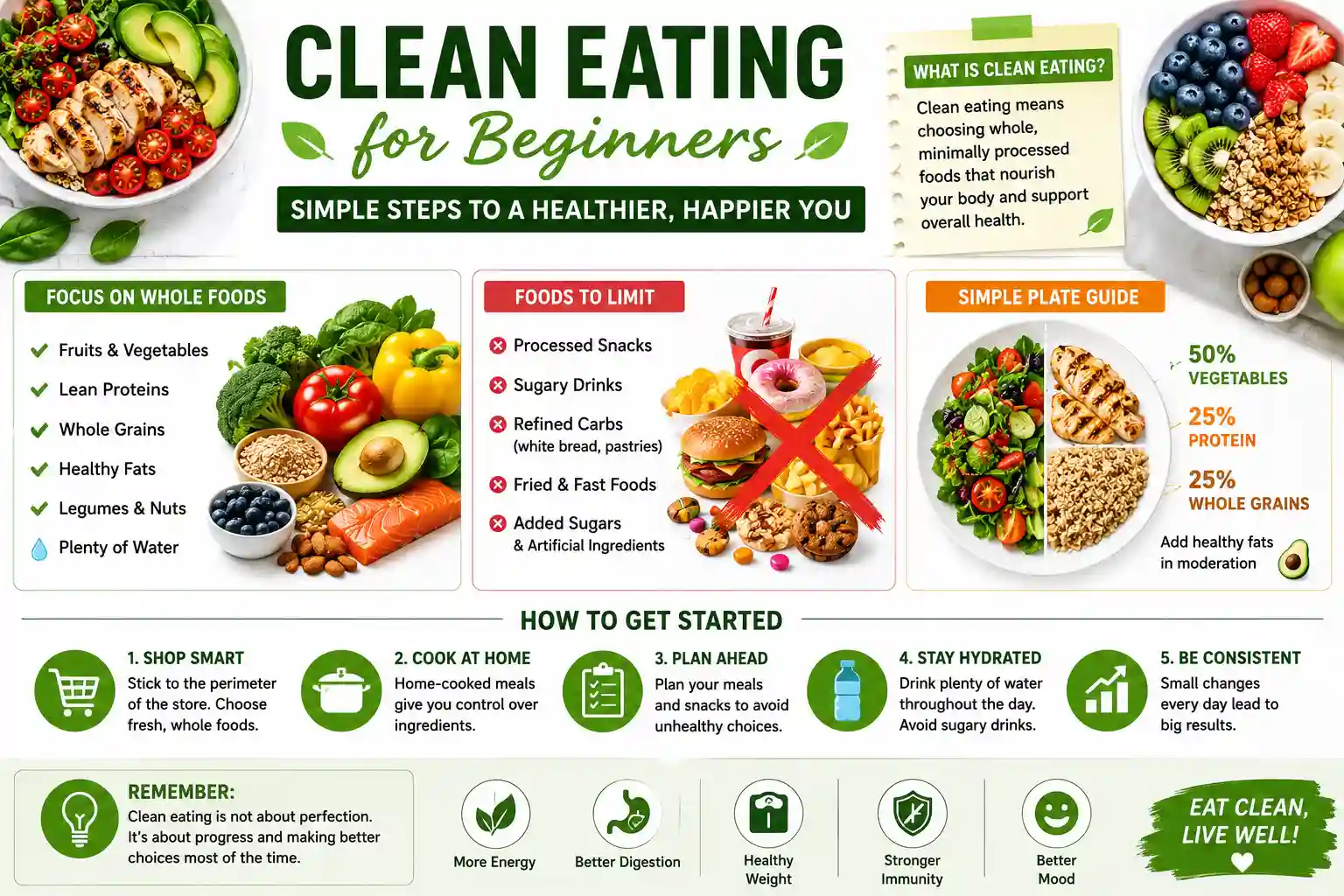
Clean eating is just selecting food items which are whole or, where possible, naturally unprocessed. The focus appears to be on lean meat/existing protein products, fruit and vegetables, plenty of whole wheat and unsaturated fats, as well as drinking water; whilst not overdoing it on all the refined foods and/or sugar.
Is this for me? If you are a novice on your healthy eating journey, this book will show you how it is done, help you avoid common misconceptions and establish realistic, sustainable habits. If you‘re new to healthy eating, learning about clean eating for beginners will definitely make your life easier.
Beginner basics from our what is clean eating guide.
What Is Clean Eating?
Clean eating is a way of eating that doesn‘t involve calorie counting or fad diets in general, but involves focusing on the quality of the food you consume.
Simple Definition
Clean eating means prioritizing:
- Whole foods
- Fresh ingredients
- Minimal processing
- Balanced nutrition
Cheesie No strict diet policies are implemented, clean eatings allows for better choices of foods.
Examples of Clean Foods
- Fresh fruits
- Vegetables
- Eggs
- Fish
- Chicken breast
- Brown rice
- Oats
- Nuts and seeds
- Greek yogurt
- Beans and legumes
Key Takeaway
Nothing to do with to be perfect. It is to be able to do better more often.
Benefits of Clean Eating
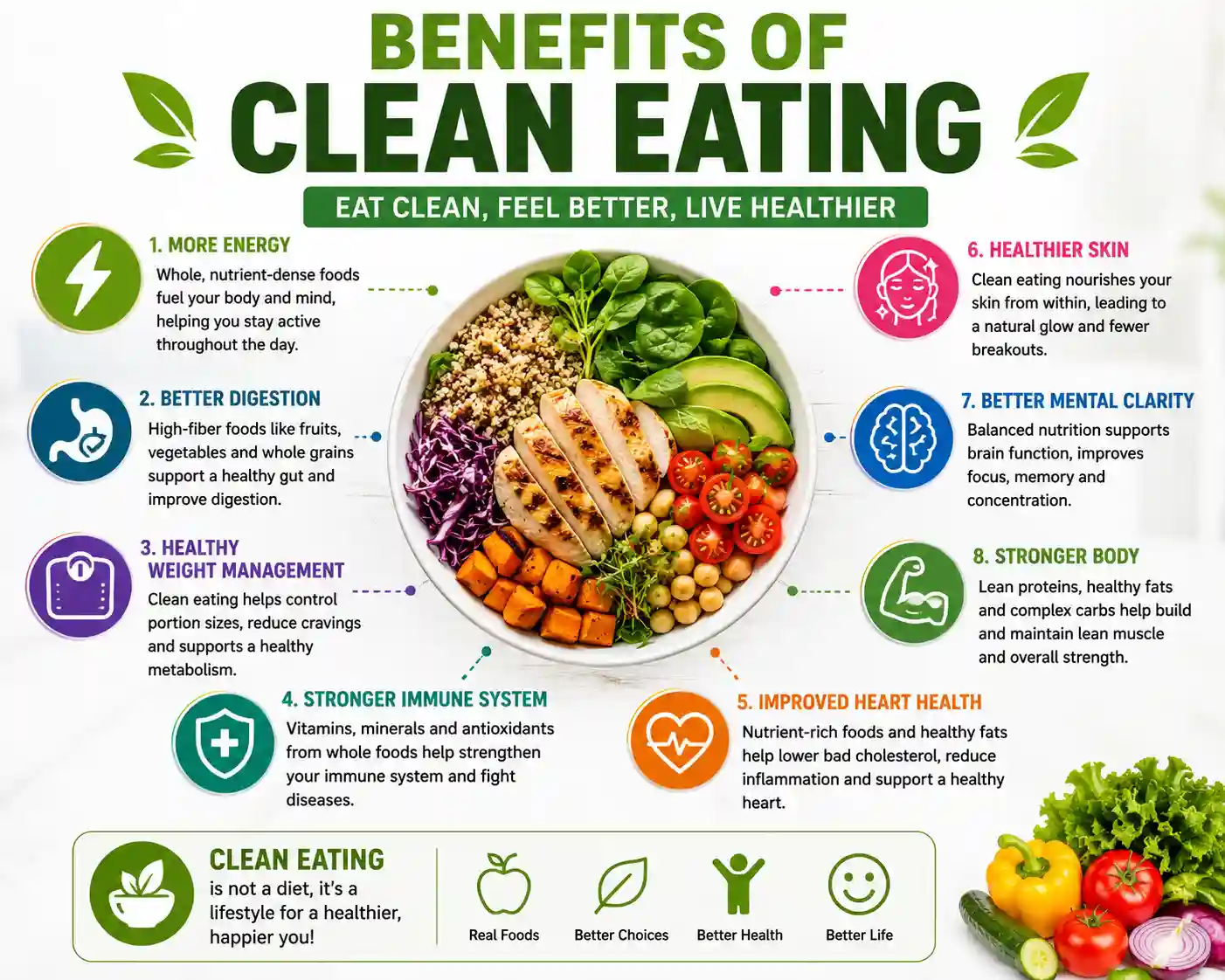
Positive results from eating healthier may take a few weeks for most people to notice.
Potential Benefits
- Increased energy
- Better digestion
- Improved focus
- Healthier weight management
- Better blood sugar control
- Reduced cravings
- Improved overall wellness
Why It Works
Naturally foods usually contain (General) more fiber, vitamins, minerals and nutrients than processed foods.
Clean Eating Food List for Beginners
Making the best choices about what to eat is an easy place to start.
Fruits
- Apples
- Berries
- Bananas
- Oranges
- Grapes
- Pears
Vegetables
- Spinach
- Kale
- Broccoli
- Carrots
- Cucumbers
- Bell peppers
Lean Proteins
- Chicken breast
- Turkey
- Fish
- Eggs
- Tofu
- Greek yogurt
Healthy Carbohydrates
- Brown rice
- Quinoa
- Oats
- Sweet potatoes
- Whole-grain bread
Healthy Fats
- Avocados
- Nuts
- Seeds
- Olive oil
- Natural nut butter
Foods to Limit
Eating clean is not about kissing those bad foods away, it‘s about saying “no” to them forever.
However, beginners should reduce:
Highly Processed Foods
- Packaged snacks
- Fast food
- Long ingredient listings on frozen ready-meals
Added Sugars
- Soft drinks
- Candy
- Sweetened cereals
- Sugary coffee drinks
Refined Carbohydrates
- White bread
- Pastries
- Sugary baked goods
Excessive Sodium
- Processed meats
- Packaged soups
- Chips
Mini Summary
Try to eat a little more nutritious foods and not too much if you have to be deprived of every bit of gluttony.
Build a routine with our clean eating meal plan.
How to Start Clean Eating
Most new learners give up because they are aiming to change everything in one day.
Not so fast wait, then gradually.
Step 1: Add More Vegetables
Aim to m ake half of your lunch or dinner plate vegetables.
Step 2: Drink More Water
Replace sweet drinks with water whenever possible.
Step 3: Read Labels
Select foods with fewer ingredients and less added sugar.
Step 4: Cook More Meals at Home
You have more power over what goes in your home-cooked meal.
Step 5: Plan Ahead
Cooking for yourself will make it easier to stay away from the junk-food temptation of buying it on the go.
Sample Clean Eating Meal Plan
Breakfast
- Oatmeal with berries
- Greek yogurt
- Green tea
Morning Snack
- Apple
- Handful of almonds
Lunch
- Grilled chicken
- Brown rice
- Mixed vegetables
Afternoon Snack
- Carrot sticks
- Hummus
Dinner
- Baked salmon
- Sweet potato
- Steamed broccoli
Evening Snack
- Greek yoghurt and chia seeds
Clean Eating on a Budget
The majority of people have the presumption that; eating healthy is generally expensive.
Lets be real whatever your budget, clean eating can work for all of us.
Money-Saving Tips
- Buy seasonal produce
- Purchase frozen vegetables
- Choose store brands
- Buy grains in bulk
- Plan meals weekly
- Reduce food waste
Budget-Friendly Foods
| Food | Affordable Option |
| Protein | Eggs, beans, tuna |
| Vegetables | Frozen mixed vegetables |
| Carbs | Rice, oats, potatoes |
| Healthy Fats | Peanut butter, sunflower seeds |
Common Clean Eating Mistakes
Mistake #1: Trying to Be Perfect
No one is perfect and you don‘t have to be.
Mistake #2: Cutting Out Entire Food Groups
More than starving yourself by dieting to the hilt, it can be possible to eat a balance of healthy foods, and be consistent with that.
Mistake #3: Ignoring Portion Sizes
Even healthy Foodstuffs can add to many more calories than is healthy if eaten in excess:
Mistake #4: Not Eating Enough Protein
Protein is also proven to aid in muscle retention and increae satiety.
Mistake #5: Following Social Media Trends
It is not always scientifically would be supported.
Myth vs Fact
| Myth | Fact |
| Clean eating, food eating cost food2 | There are a wide range of healthy foods, and many of them are actually very cheap. |
| You will not eat any foods that come in a box or a bag. | Moderation is key |
| What is considered as a clean diet- | It’s a lifestyle approach |
| Healthy food tastes boring | Great ingredients and great preparation make flavor |
Clean Eating and Weight Loss
Another advantage of clean eating is it aids weight loss because it promotes healthy consumption of diet which are normally filling.
Why It Helps
- More fiber
- Better protein intake
- Reduced added sugars
- Improved portion awareness
Nevertheless, weight loss is actually still dependent upon the correct calorie in/out ratio.
Key Takeaway
Clean eating can help you to lose weight but it isn‘t a guaranteed weight-loss plan.
How to Stay Consistent
It doesn‘t need to be perfect. It just needed to be consistent.
Practical Tips
- De-identify and do Bury Your Dead. Pay attention to what developments your text makes, whether the character ‘saying something new’. Don‘t treat this as a test try to aim for the book to be a guideline.
- Keep healthy snacks available
- As I said previously, we are to get ahead of preparing our food and help with the preparation of the food.
- Allow occasional treats
- Create realistic goals
Small but regular lifestyle modifications generally have better long term results than drastic short time procedures.
Future Trends in Clean Eating
In addition, healthy eating would evolve during the time.
Emerging trends include:
- Personalized nutrition
- Functional foods
- Plant-forward eating
- Sustainable food choices
- Smart meal planning apps
Making healthy eating simple could be the key to ensuring future trends appeal to newcomers to healthy eating.
Shop smart with our clean eating food list.
FAQs
Is clean eating really just dieting?
No. ”‘Clean eating’ is not about calories it‘s about the things that go into your mouth.”
Is it alright to eat snacks while pursuing clean eating?
Yes. Healthy fresh snacks including Fruit, Nuts, Greek style Yogurt and Vegetables are all can naturally be included in a clean eating plan.
How long can I expect to notice results?
Many find that after a few weeks they‘ll have more energy and better digestion.
Is clean eating expensive?
Not necessarily. There are many inexpensive items to purchase such as oats, eggs, beans and frozen vegetables.
Is it necessary for me to avoid all processed food?
Exactly. I want to reduce mass amount of ultra processed foods, not restriction eating packaged foods.
Conclusion
Clean Eating for Beginners is a simple way to improve your health without having to subscribe to strict, restrictive dieting rules. It focuses on increased consumption of whole foods, increased intake of water, increased consumption of home cooked meals, slow progression, all in a manner which will enable you to develop a long term affection of good health and wellness and a sustained lifestyle which presents it.