
Last Updated: September 17, 2026
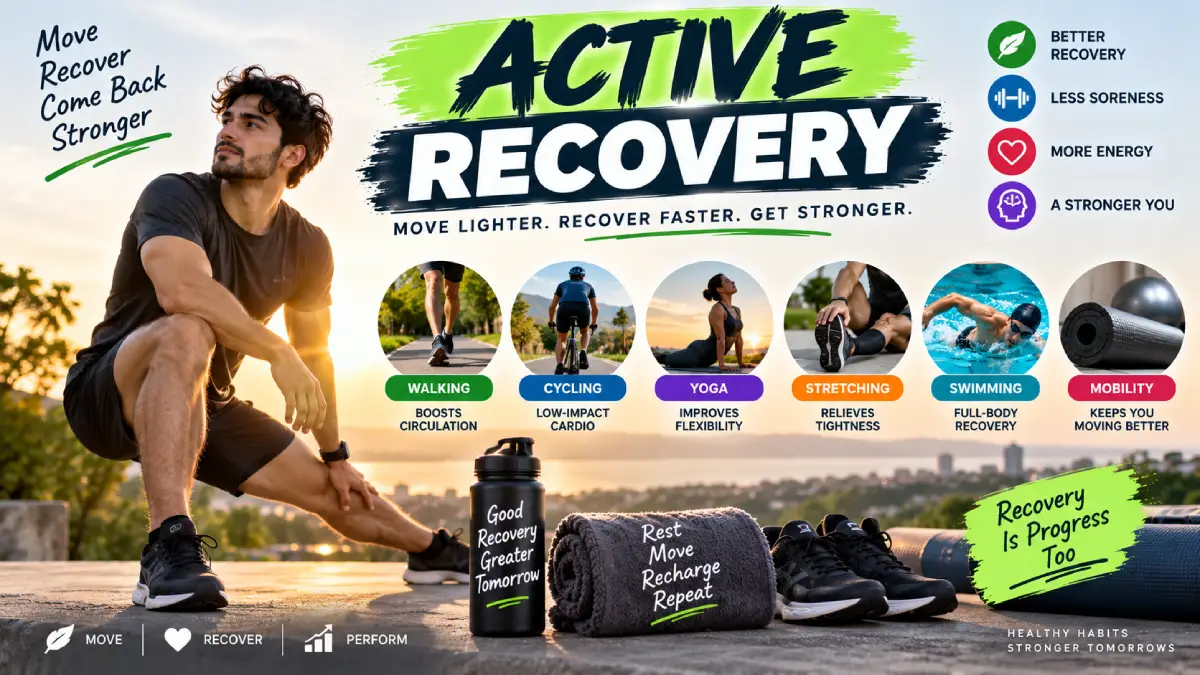
Active recovery is the most effective way to assist your body restore itself in between hard work without coming to a complete halt. Instead of sitting all day in front of the television every other rest day, passive recovery can be something as simple as a walk, easy bike ride, stretching, mobility work, or restorative yoga. The intent is not to train more. The intention is to move enough to facilitate recovery and give the muscles a rest from intense training.
What is Active Recovery?
Active recovery light exercise immediately following a strenuous workout or scheduled recovery day. Active recovery should be easy and manageable, not difficult and exhausting. For a hard leg workout, active recovery might be a 20- to 30-minute walk, a moderate ride on the bike, or doing a short mobility session. Here is a simple guideline: The active recovery should leave you feeling better than when you began. Active recovery can be a very good choice when you are sore and/or tired, but still able to move comfortably.
Why Is Active Recovery Important?
Working out intensely does stress muscles, joints, heart and nervous system. Body needs time to recover and adapt. Active recovery offers options to do light activity and not add the stress of another work out.
It may help you:
- Stiffness (lack of range of motion) in the head and neck. Decreased mobility of the joints in the head and neck may be noted. Patients may report that their head and neck feel stiff, constricted, or tight.
- Keep moving. Pick up said in pace: “I am God. I am the law 1000/1. The greatest.” It‘s the only way to bring down the beast locked inside his tiny little mind.
- Improve mobility
- Enhance blood circulation.
- Relax after hard workout
- Get your body ready for the next session of training.
- Frequent, short blocks of sit-down activities throughout the day is can help to reduce the negative effects of excessive siting.
Active recovery should not take the place of sleep, nutrition, water and rest.
Best Active Recovery Exercises
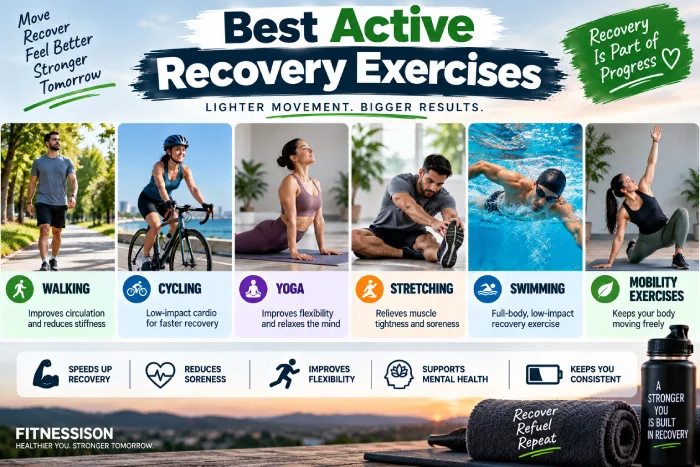
No special equipment is required for active recovery. You should choose your favorite activity and activity at a very low intensity.
1. Walking
Walking is probably the most simple active recovery activity. Any comfortable walk for 20 to 40 minutes will keep your blood flowing and not stress your muscles. This can be done outside, on a treadmill or around town.
2. Easy Cycling
Light cycling is appropriate after strength training, or other strenuous workouts. Use low-resistance and keep your pace moderate; you should be able to hold a conversation without gulping for air.
3. Gentle Yoga
Gentle yoga can supply mild motion breath and mobility activities. Select relaxed poses in lieu of difficult postures that stress out exhausted muscles.
4. Mobility Exercises
Mobility drills will help you use ranges of movement that feel good. Try some gentle hip circles, rolling on your shoulders or working some ankle mobility, moving your whole body using your own weight. Never push into painful stretch.
5. Swimming
Easy swimming can get the whole body moving with a little impact. Keep it easy and don‘t turn your recovery swim into another hard session.
How Long Should Active Recovery Last?
Active recovery has no universally optimal length. In many cases, a 15 to 40-minute LIGHT recovery session will suffice for the average person. Your history of training, currenttraining load, age, sleep, nutritionas well as your fitnesslevels will influence what recovery length will be required. It’s also possible to keep active recovery very straightforward. For example, 20 minutes of walking may suffice for one day’s recovery, whereas on another, time could be spent doing 30 minutes of light cycling and some easy mobility work. The key is level of intensity rather thanduration.
What Intensity Should I use for Active Recovery?
It should be quite comfortable because your heart rate could be increasing dramatically or your muscles are on fire, and you feel like you are mounting a comeback for another workout. Remember the talk test is a quick and simple way to measure how hard you are working. If you can easily carry on a conversation with full sentences, you are most likely exercising at a fairly low level. Limiting yourself is your whole intention here; you want to recover for next time.
Active Recovery vs. Complete Rest
Active recovery and total rest both have a place in a good workout recovery program. An active recovery involves light movement. Total rest involves no structured physical activity. Use an active recovery when you are feeling generally good but are a little stiff or fatigued. Use more rest when you are feeling very tired, you have increased soreness or pain, or your performance and energy levels remain consistently poor. Your body is always telling you what it needs you just need to be listening.
Common Active Recovery Mistakes
Active recovery sounds easy, but you can make it another workout:
Avoid these common mistakes:
- Too much strenuous exteroceptive movement without rest period: If the rider constantly pushes his body more than achievable, he becomes too weak for it. In fact, the he and/or the horse cannot again let him up the easily over a certain limit.
- Prolonging recovery sessions
- Adding weights. The negative effects caused by… weight glasses. may also be observed if the weights are increased too much:
- Ignoring painful sensations that are abnormal.
- The process of forcing oneself to treat every recovery day as if it were a workout
- Not getting sleep because you‘ve done the active recovery talk to a buddy.
- The pressure on staff to concentrate solely on movement to prevent pressure ulcers and neglect the effects of nutrition and hydration
Works well when habit(s) work in conjunction with each other.
A Simple Active Recovery Routine
Try this beginner-friendly routine on a recovery day:
- 5min: gentle walking and movement.
- Walking / cycling time (e.g. 15–20 minutes): walking at an ordinary pace/cycle at a leisurely pace.
- 5–10 mins: gentle mobilisation exercises on the areas you worked in.
- 2 to 5 minutes: Breathing can be maintained in a slow relaxed fashion.
Time-wise the history can all be taken in under 40 minutes. If you come away feeling energized, not drained, you‘re likely maintaining the right level of intensity.
When to Avoid Active Recovery
Sometimes less is more. Try taking a full rest day if you experience high levels of muscle soreness, abnormal fatigue, sleeping problems, dizziness, injury or chronic pain. Pain is not always something you just have to grin and bear, and severe, prolonged or abnormal symptoms should be checked out by an appropriate health practitioner.
Final Thoughts
Active recovery is a simple option to remain lightly active while allowing the body some time to recover from more intense sessions. Going for a walk, low pace cycling, yoga, swimming and mobility work are examples that could be incorporated into an active recovery. The trick is to keep the intensity down. Remember that active recovery isn‘t an invitation to add more chaos to your life its meant to aid your workout recovery, not turn into a workout itself. Combine mild activity with good sleep, proper food and water intake, and days off and you‘ll develop an effective recovery pattern that promotes regular training.