

Last Updated: September 12, 2026
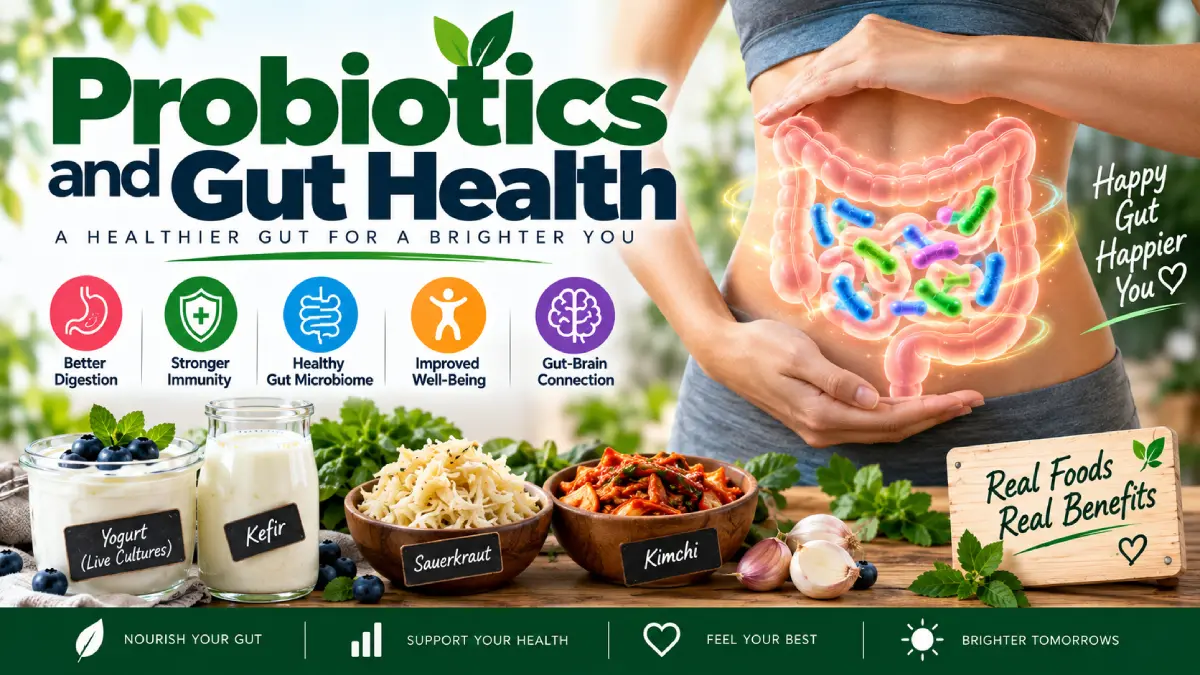
Within your digestive system there are trillions of microbes such as bacteria, fungi etc. These microbes form the gut microbiome and live in and around the digestive system, and are involved in many processes of your body. Probiotics and Gut health have been a popular topic in nutrition since some live microbes potentially have health benefit when consumed at the proper dose. Probiotics are present in fermented foods and supplements but the benefits can be strains specific. In this section we will examine the definition of probiotics, links to intestinal health, probiotic foods and products, potential health benefits and safety.
What Are Probiotics?
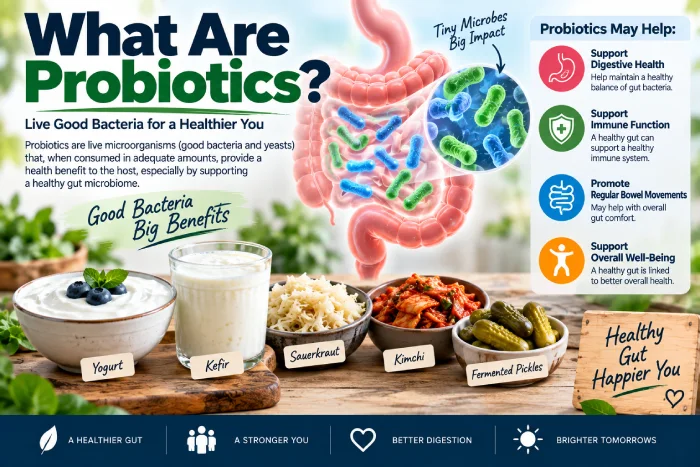
Probiotics live micro-organisms which when taken in sufficient quantity give a benefit to the health of the host.
They are commonly found in:
- Yogurt with live cultures.
- Kefir
- Some of the fermented foods;
- Probiotic supplements
- Some remedies and beverages that have been enhanced
There are a number of different microorganisms within different probiotics. Most common are Lactobacillus, Bifidobacterium, and yeasts such a Saccharomyces boulardii. The strainspecific and differ from the particular probiotic(s being used these may be P. pentosaceus (LKP)-specific.
What Is the Gut Microbiome?
The term gut microbiome is used to refer to the microbiota in the GI (Gastrointestinal) tract. Most of these bacteria are present in the large bowel. Food handling, digestion and immune system are the chemical pathways which these micro organism can be featured for.
A healthy gut microbiome is unfair by many factors, including:
- Diet
- Fiber intake
- Age
- Lifestyle
- Medications
- Physical activity
- Sleep
- Overall health
Pre4rather than Post has its own narrative: its importance is to be appreciated where, in relation to the gut, the healthy ecosystem is one that contains the correct number of microbes.
Why Is Gut Health Important?
In addition to handling the atoms we ingest the digestive system is also responsible for:
A healthy digestive system helps with:
- Digestion
- Nutrient absorption
- Clear your bowels.
- Understanding of normal immune function. Our understanding of the immune- dysregulation or repression is responsible for many chronic problems that developed in HIV-1 patients. The mechanism of immune recovering is believed to be the important part of managing this disease.
- Gut and the rest of the body develop a two-way communication system.
The microbes in our gut microbiome digest such mixes, because it digests foods such as a type of fiber.
Potential Benefits of Probiotics
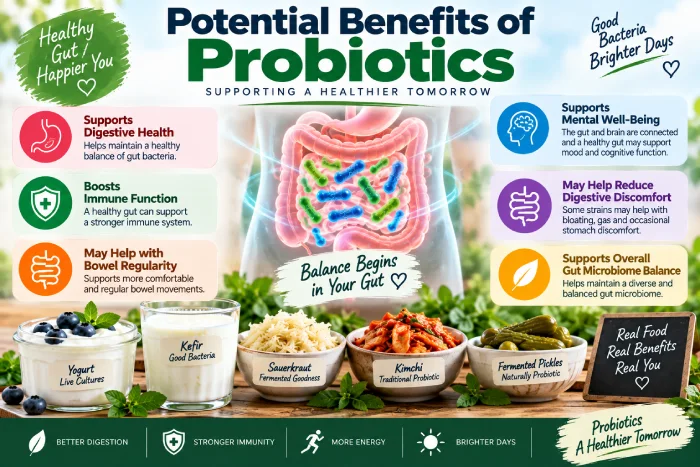
The evidence indicates some probiotic strains can provide some benefits. While probiotics cannot be regarded as a cure for each digestive disorder;
1. Supports Digestive Health
Some probiotics could potentially help to maintain normal gastrointestinal processes and support the balance of the microbes living within the gastrointestinal system.
2. May Help With Certain Types of Diarrhea
Some probiotic strains have been shown to be beneficial in shortening the duration or decreasing the risk of some of the etiologies of diarrhoea, including the diaper associated type. The type of evidence that will be available to all be based on the strain,dose and time depending.
3. May Support Regular Bowel Movements
Some probiotics may also be of benefit in some individuals. for bowel regularity or stool type. Different items often result in very different outcomes.
4. Supports the Gut Microbiome
Probiotics introduce enteric bacteria into the GI tract. Probiotics and may also competitively interact with the interactions gut microbiota. Although, they will not alter the composition of the gut microbiome permanently.
5. May Support Some Symptoms of Irritable Bowel Syndrome
There have been only a small number of strains or combinations of probiotics tested against symptoms of irritable bowel syndrome (IBS). Possible effects can be characterized as changes in bloating, abdominal pains and bowel DI et al:, trend is variable. Please note If such a person suffers from recurring or chronically digestive disorders, it is always recommended that medical advice should be sought; don‘t rely solely on probiotic preparations.
Best Probiotic Foods
Consumption of food is one of the best way on taking appropriate microorganisms in your general diet.
Yogurt
Yogurt with live cultures may provide some bacteria. Look for any mention of live or active cultures on the packaging of the yogurt you buy.
Kefir
Kefir is a fermented milk beverage and the micro-flora present are diverse. Can be eaten alone or added to shakes.
Fermented Vegetables
Certain traditionally agitated vegetables could have live microbes.
Examples include certain types of:
- Sauerkraut
- Kimchi
- Fermented pickles
However, fermented products which have been pasteurised may contain only a small number or fewer or even no live microorganisms.
Other Fermented Foods
Some fermented foods can have live cultures present, depending on the method of production and processing. The current consideration should be given to separating foods with live microorganisms from those foods that perhaps undergo fermentation during the production process.
Probiotics vs. Prebiotics
Probiotics and prebiotics may sound similar but in fact are quite different. A probiotic has been defined as Prebiotics are food ingredients or supply that enables specific changes, both in the composition and activity in the gastrointestinal microflora that confers benefits upon host health. They tend to be defined as a class of prebiotic promoted by the international scientific association of prebiotics, mainly some fibers and carbohydrates, which are selectively utilize by the commensal.
Examples of foods containing prebiotic fibers include:
- Onions
- Garlic
- Asparagus
- Bananas
- Oats
- Barley
- Legumes
- Chicory root
A diet with a variety of plant foods will be able to supply the gut microbiome with a variety of fibers.
Synbiotics: Probiotics + Prebiotics
Some products contain both prebiotics and probiotics. These are often known as synbiotics. The concept proposed is to supply a helpful microbial population combined with a suitable substrate to encourage this activity. Although the merits have been claimed, they are highly dependent on the microorganisms and ingredients incorporated.
How to Choose a Probiotic Supplement
There‘s a wide variety of probiotic supplements around, and it is confusing to understand which one is the correct.
1. Look for the Specific Strain
The probiotic should be able to define the microorganism at a suitable level, including the strain ID where relevant. Can vary from one strain of a species to another.
2. Check the CFU Count
CFU Colony forming units–the number of alive microorganisms in the substance. Just because the CFU is higher does not mean it is ‘better’. The right amount is dependent upon the strain and purpose.
3. Check Storage Instructions
Some probiotics are freeze dried, some require refrigeration. Others are said to be heat stable. Observe the storage instructions recommended by the manufacturer.
4. Check the Expiration Date
Probiotics may lose their viability with time. Always check the expiry and storage requirements of any product before you buy or use it.
5. Look at the Full Ingredient List
Check for:
- Added sugars
- Allergens
- Artificial ingredients
- Other active substances Other active compounds include:.
- Serving size
This is of special concern for those with food allergies or special diets.
What Does CFU Mean?
What is a CFU? The abbreviation CFU means colony forming units.
It is frequently used on labels of probiotics to indicate the number of live microorganisms. For example, suppose a supplement says billions of CFU per dose. And just because there are that many doesn‘t mean it‘s going to work for you. The strain, dose, formulation, storage and the possible health benefit are all relevant.
When Is the Best Time to Take Probiotics?
There simply isn‘t a single program that will work for all probiotic. Sime products are recommended for a dose during meal time, others may wish to choose a different time. Use recommended by manufacturer. If you‘re using probiotic along with medication, consult a doctor or pharmacist to see if you need to separate them. There‘s no evidence that proceeding is worse at one time of day than another. The better trial might be to persist through many times of the day until you find the ones you can commit to.
Probiotics and Antibiotics
Antibiotics have the ability to alter the gut‘s microbiome since they affect some bacteria that are susceptible to their action. Seven probiotic strains have been recorded to have been evaluated in preventing antibiotic-associated diarrhea but not all probiotics. If considering using a probiotic while on antibiotics, discuss the use of any in a course of antibiotics with a doctor or pharmacist to discover if the use of a product (if any) is recommended and when it should be administered.
Probiotics for Bloating
Bloating can have many causes, including:
- Eating too fast
- Carbonated drinks
- Constipation
- Food intolerances
- Large meals
- Some digestive disorders:
- Fluctuations in intestinal bacteria.
For some strains of probiotics can help some people with bloating but are not a good enough treatment for bloating. If the bloating is long-term, severe, or even in combination with abnormal weight loss, vomiting, the presence of blood in the stool, or with severe abdominal pain see a doctor.
Probiotics and Constipation
Certain probiotic products have been examined for effects on constipation and bowel regularity. It depends on the microorganism and the person.
A broader approach to constipation usually includes:
- Provision of enough dietary fiber;(soluble and Insoluble).
- Sufficient fluids
- Following a good physical activity.
- Regular bathroom routines
- Addressing the causes in the first place.
A healthcare professional may be able to help if the constipation is ongoing.
Probiotics and Diarrhea
Some strains of probiotic may alleviate some specific types of diarrhea. Diarrhoea may also have many causative factors like infection, drugs, food intolerance and any diseases of Digestive system. Dehydration can result from diarrhea, so hydration is vital in diarrhea. Consult a doctor if you have diarrhea that is: severe, lasts longer than a few days, associated with symptoms of dehydration, bloody, associated with a high fever, or if you are feeling very weak.
Are Probiotics Good for Everyone?
Not necessarily. Most healthy individuals can consume probiotic foods with no adverse effects, however supplements may not be suitable for all. Individuals with very compromised immune systems and those with significant underlying illnesses should seek medical advice before taking probiotic supplements. Probiotic safety may vary depending on the microorganism and the individual.
Possible Side Effects of Probiotics
Probiotics are usually well tolerated in a large number of healthy people although some people may have transient symptoms involving the gastrointestinal system:
- Gas
- Bloating
- Alteración del ritmo intestinal. Altered intestinal pattern. there are observable changes in fecal output; there may be fewer or more bowel movements than usual or a change in the appearance and consistency of stool.
- Gentle pain in the epigastrium, under the left rib cage, less than 24 hours.
The symptoms may begin to settle down as the GI tract regulates. Stop the supplement if symptoms are intense or continue for a long time. Then consult a doctor.
Can Probiotics Cause Contagions?
In some rare occasions particular probiotic organisms have been known to cause serious infections; mainly in seriously ill or compromised individuals. One of the reasons people with serious medical conditions should consult their physician or other healthcare professional before starting probiotic supplements.
How to Support Gut Health Naturally
You don‘t have to take probiotic supplements to get the benefits of a healthy gut.
Eat More Fiber
Foods high in fiber are carbohydrate foods which act as a source of energy for a wide range of beneficial bacteria in the gut.
Good choices include:
- Beans
- Lentils
- Whole grains
- Fruits
- Vegetables
- Nuts
- Seeds
Eat a Diversity of Plant Foods
Plant foods each deliver fiber and their other compounds in different forms. For such a diverse food, it is not necessary to have a wide range of foods. Instead, it is better to rotate around several different foods without single out any ‘super-foods’.
Stay Hydrated
Fruits and vegetables that have a large amount of water in can also be eaten. This will enhance the regularity of the bowels.
Exercise Regularly
Maintaining a healthy level of physical activity through exercise has many positive health benefits and may help to maintain a healthy functioning digestive system.
Limit Highly Processed Foods
Eating a diet high in heavily processed foods can increase the difficulty of ensuring sufficient fiber and variety of essential nutrients. Most of the time consume minimal processed foods.
Probiotics and a Healthy Diet
No probiotic can make up for an unnatural diet.
A gut-friendly eating pattern can include:
- Vegetables
- Fruits
- Whole grains
- Beans and lentils.
- If you‘re reading this, you probably eat nuts and seeds.
- Yogurt or kefir with live cultures.
- Fermented foods
- Adequate fluids
Our aim is to offer both good foods and a range of different fibers which maintain the gut microbiome.
Probiotics and Weight Loss
Probiotics have been used to promote weight loss. Having examined the evidence, it can be seen that it does not lend itself to use of probiotics as a method of weight-loss. Some studies have been made on the link between intestinal microflora and body weight but this is a very difficult area of research and the results are variable.
For sustainable weight management, focus on:
- Balanced nutrition
- Calorie intake. The appropriate daily number of calories required. If the body is consuming more calories than it needs on a daily basis one will increase weight, and the opposite for losing weight.
- Be more physically active on a frequent basis
- Adequate sleep
- Be consistent over the long term in good health
How Long Do Probiotics Income to Work?
No one size fits all timeline. If a singular probiotic is efficacious for a specific digestive problem, some people will notice a difference in a matter of days, while others may not notice anything.
The response depends on:
- The probiotic strain
- Dose
- Purpose of use
- Diet
- The gut microbiome restored, microbiota removed.
- Individual health
If you‘ve been on a probiotic long enough without any results, see a health professional to find out if you need to stay on it or not.
FAQs
Are probiotics decent for gut health?
Some probiotics will give certain health benefits, but will be strain specific and more individual specific.
Should I take probiotics every day?
Although some products are intended for daily use, daily supplementation may not be needed for everyone.
Are probiotic foods better than supplements?
Not always. Some fermented foods will contain live bugs along with the other nutrients and of course there have been various dietary supplements specifically to give certain strains with certain dosages.
Do probiotics permanently change your gut bacteria?
What not necessarily? A lot of probiotics might just be effects for the Gastro-Intestinal tract rather than permanently colonizing.
Final Thoughts
Probiotics and gut health go hand in hand, but there isn‘t just one probiotic that will suit every individual. Certain strains can have different outcomes and a larger CFU dose doesn‘t necessarily equate to a superior supplement. Healthy food habits for gut health for the majority of people will be an array of vegetables, fruits, whole grains, beans and pulses, nuts and seeds. Inclusion of foodstuffs with live cultures, such as the yoghurts can be consumed as part of a balanced diet. Pay attention to the strain, CFU, storage requirement and expiry date in addition to the recommended use when choosing a probiotic supplement. Seriously ill patients and immuno-compromised patients should seek the advice of a health care professional before taking a probiotic supplement.