


Last Updated: September 12, 2026
Another one of the most popular supplements is omega -3 and fish oil dietary supplements which are commonly associated with good health for the heart, brain, eyes and other organs. Omega -3 fatty acids are an essential nutrient necessary for the healthy functioning of the body. This fact sheet describes the basics about omega-3 fatty acids, including how is omega-3 different from omega-3, two types of omega-3, health benefits of omega-3, food sources, various supplement types, information about usage (dosages), and safety.
What Are Omega-3 Fatty Acids?
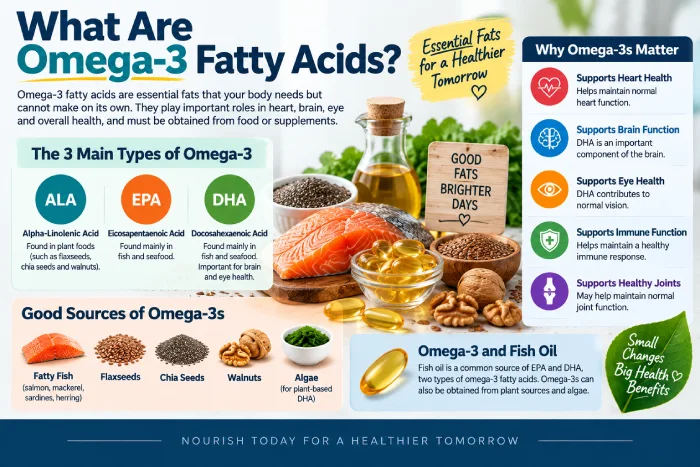
Omega-3 fatty acids are a class of polyunsaturated fatty acids and are thought to possess numerous different functions in the human body.
The three main omega-3 fatty acids are:
- EPA (eicosapentaenoic acid)
- DHA (docosahexaenoic acids)
- Pentanoic acids
There is a certain extent of conversion to EPA and DHA in the body.
What Is Fish Oil?
Fish oil – is an oil extracted from the tissues of oily fish. It naturally has in it the long chain omega-3 fatty acids, EPA and DHA.
Common fish used as sources of fish oil include:
- Sardines
- Anchovies
- Mackerel
- Salmon
- Herring
The common forms of the fish oil supplements are capsule, softgel, liquid and so on. Some persons cannot distinguish the difference between fish oil and omega3. Actually, fish oil is one source of omega3 fatty acids.
Omega-3 vs. Fish Oil
| Omega-3 | Fish Oil |
| A group of fatty acids | (1) Fish oil. |
| Includes ALA, EPA, and DHA | Primarily provides EPA and DHA |
| Found in fish and vegetines and algae and have been added to foods. | Largely consumed from oily fish |
| Can be obtained from food sources or taken as a supplement | Readily available in many health food outlets. Available mainly as a capsule but also can be purchased in powder form. As a dietary supplement. |
Even another supplement option is the use of Algal oil. It can provide DHA and if it does not already, it can also supply EPA. This is a suitable substitute as it is not derived from fish.
Potential Benefits of Omega-3
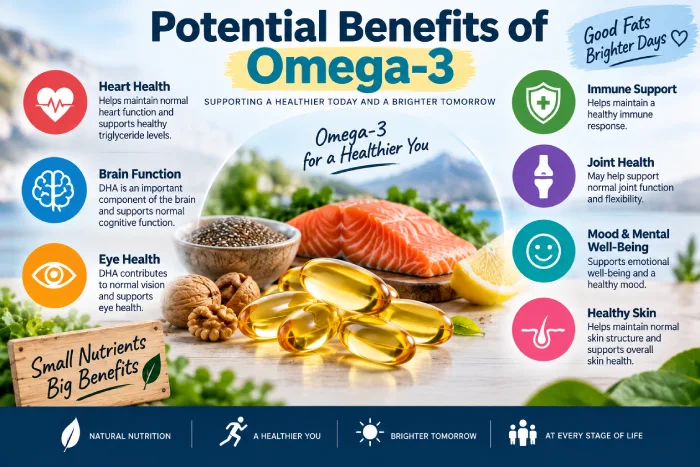
Omega-3 fatty acids are involved in various functions within the human body including the following:
1. Supports Heart Health
Both EPA and DHA including the effect of omega-3, which have also been suggested in other studies and approved to be good for normal functioning of cardiovascular system. The powder of omega-3 intake has also been studied in the blood triglyceride level.
But the effect of supplement can be varied depending on healthy condition and amount of intake.
2. Supports Brain Function
DHA is a key structural lipid of the brain and is involved in normal brain function
While there is no definitive evidence of health benefits of consuming fish by itself as a component of a healthy diet, there are possible benefits. However these cannot be assumed to occur if people take fish-oil supplements.
3. Supports Eye Health
DHA in the retina is more prevalent and is essential for vision.
4. Supports Normal Cell Function
Omega 3 fatty acids are incorporated into cell membranes and participated in different biological processes.
5. Supports Healthy Triglyceride Levels
Some prescription omega-3 formulations at high dosages are used clinically for the management of elevated triglyceride concentrations (not to be confused with ‘regular’ OTC fish-oil preparations).
Omega-3 Food Sources
One of the best ways to get enough of the omega-3s is to take them directly from dietary sources.
Fatty Fish
Good sources of EPA and DHA include:
- Salmon
- Sardines
- Mackerel
- Herring
- Trout
- Anchovies
Plant Sources
ALA can be found in:
- Flaxseeds
- Chia seeds
- Walnuts
- Hemp seeds
- Soybeans
- Canola oil
Algae
Algae is a natural source of DHA, and is the basis for some omega-3 supplements. Algal oil may also be especially helpful for those who do not eat fish.
How Much Omega-3 Do Adults Need?
The of EPA and DHA is not one fixed amount for all adults. For general nutrition, health authorities generally suggest eating fish regularly as part of a balanced diet as opposed to taking supplements for instance the American Heart Association has suggested consuming 2 servings of fish each week, especially fatty fish. For someone with a health issue like very high triglycerides supplement needs vary. In this instance a doctor may prescribe a particular formulation of omega-3s.
Fish Oil Supplement Dosage
Fish-oil products may vary in strength from. The label on a single capsule stating 1,000 mg fish oil does not imply that each capsule contains 1,000 mg of EPA and DHA.
For example, a product might contain:
- 1,000 mg total fish oil.
- 180 mg EPA for every 1 g of DGLA The evidence speaks for itself. On a number of tests the double-blind study, the 251 smoker, administered to one group of people, with 4 g of DGLA and 180 mg EPA for every 1 g of DGLA, showed dramatic results.
- 120 mg DHA For pregnant women.
Actually, even the preffered EPA + DHA is only 300 mg, not 1,000 mg. These four factors underline the importance of looking at the composition of fish-oil supplements rather than at the overall fish-oil contents. When you compare the fish-oil supplements use the EPA and DHA content rather than the overall fish-oil content.
Types of Omega-3 Supplements
Different forms of omega-3 supplements may be purchased.
Fish Oil
Conventional fish oils supply EPA and DHA.
Concentrated Fish Oil
Some products are designed to provide higher amounts of EPA and DHA per serving.
Cod Liver Oil
Cod liver oil contains EPA and DHA but also naturally rich in vitamin A and vitamin D; therefore high dose cod liver oil can result in excessive vitamin A or vitamin D intake.
Algal Oil
Algal oil supplies DHA and EPA in some formulations and is a good choice for those who do not eat fish.
Krill Oil
Krill oil is another form of an omega-3 fatty acid from the marine sources. It usually has EPA and DHA in lecithin-forms:
How to Choose an Omega-3 Supplement
When shopping for an omega-3 supplement, don‘t buy by the biggest number on the front of the bottle.
1. Check EPA and DHA
On the Supplement Facts label. Find out the amount of EPA and DHA per serving:
2. Check the Serving Size
Certain products there are actually to–per use perhaps–quite a number of capsules necessary to obtain the quantity of Omega–3 stated.
3. Consider the Source
The nutrients in fish oil, algal oil, krill oil, and so forth are also quite different.
4. Look for Quality Testing
Purchase items from well-known growers, and for quality assurance the product should have quality testing or certification completed independently wherever possible.
5. Check for Added Ingredients
On full ingredient list to check, especially if you have allergies or special diets.
When Should You Take Fish Oil?
The time of day at which to take fish oils has no standard recommendation. May be taken with food – handy in some situations and may enhance tolerability in others. If taking fish oil produces unpleasant aftertaste or ha stomach upset it can be taken with a meal. Always adhere to the dosage instructions on the product label or recommendation of your doctor.
Does Fish Oil Help With Weight Loss?
The inclusion of fish oils should not be seen as a weight-loss ‘magic bullet’. Although the essential fatty acids are very important, taking fish oil simply does not provide a means for losing body fat.
For healthy weight management, focus on:
- A well balanced diet
- Adequate calorie intake
- Exercise or physical activity.
- Adequate protein
- A good supply of vegetables and other wholefoods.
- Sufficient sleep
Possible Fish Oil Side Effects
Fish-oil supplements are generally well tolerated by many people, but some may experience:
- Fishy aftertaste
- Bad breath
- Heartburn
- Nausea
- Stomach discomfort
- Loose stools
The unit dose, which was administered in the additional food item, was taken with food. This could have minimized some gastrointestinal problems.
Who Should Consider Talking to a Doctor Before Taking Omega-3?
Professional advice is especially important if you:
- Get on blood thinners
- Have a bleeding disorder.
- There is a presence of underlying abnormal heart rhythms.
- Have substantially high triglycerides
- Are ready for surgery
- I have a allergy to fish or sea food.
- Existing services that are available for pregnant or breastfeeding women is reasonable.
- Taken various pills part 1
If supplementation is believed to be necessary, a health professional can assist in deciding what and how much to take.
Fish Oil and Pregnancy
Significance of Docosahexaenoic Acid ( DHA) in Female Genital Tract: Omega-3 fatty acids become a very important during pregnancy and infancy. Pregnant women may have access to omega-3s from consuming low mercury level fish in the recommended quantities. Some fish however are high in mercury, so choosing the right foods during pregnancy is essential. If you are thinking of taking an omega-3 supplement during pregnancy you should check it and the dose with your doctor.
Best Fish for Omega-3
Fatty fish typically contribute higher levels of EPA and DHA than lean fish.
Some useful choices include:
- Salmon
- Sardines
- Mackerel
- Herring
- Trout
- Anchovies
Simple Ways to Add Omega-3 Foods to Your Diet
It isn‘t even necessary to use supplements to get enough omega-3.
Try:
- Stir in some chia seeds to your oatmeal or yogurt.
- Adding ground flaxseed in smoothies.
- Having walnuts as a snack.
- Including sardines in salads or the toast of a whole grain.
- Dinning on the salmon.
- Eat fish in a couple of meals a week.
Final Thoughts
Omega-3 and fish oil can be a nice part of the overall nutrition. EPA, DHA and ALA each have specific benefits in the body and are found in fish, walnuts, chia seeds, flaxseed. In most cases for most adults, it makes sense to focus initially on foods higher in omega-3s or, if on a supplement, know how much actual EPA/DHA is in the supplement (not just total fish oil). And it should go without say, but large doses are not necessarily better. If on a medication, have a condition or are pregnant, or thinking of taking omega-3 at the higher doses, first check with a knowledgeable health care provider.