


Mohd Arbaaz is an Editor and Writer at Fitnessison.com with 5 years of experience in SEO and digital content creation. He creates informative, reader-focused content covering fitness, workouts, nutrition, health, healthy lifestyle, technology, and computers.

Shashi Teja is a Reviewer at Fitnessison with over 6 years of experience in SEO, content strategy, digital publishing, and content optimization. He reviews content for clarity, research quality, topical relevance, readability, structure, and overall usefulness to readers.
Last Updated: September 17, 2026
Providing your body with the necessary vitamins and minerals is has several different ways, one most effective way is having a healthy diet. There are times during our busy life (time constraints and limitation of food choices) that eating a restrictive diet and life stages when body do not have the reach of certain nutrients intake,
What Are Multivitamins?
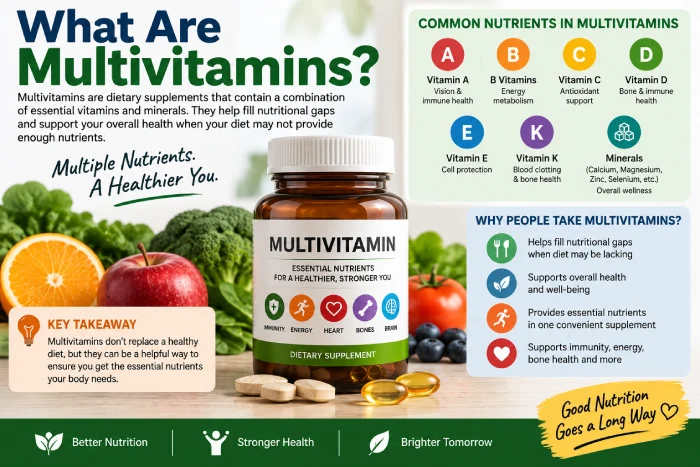
A multivitamin is a dietary supplement contains both vitamins and manytime minerals as well. The the different produce contain some different nutrients and different amount.
Common ingredients may include:
- Vitamin A
- Vitamin C
- Vitamin D
- Vitamin E
- Vitamin K
- B vitamins
- Calcium
- Magnesium
- Zinc
- Selenium
- Iron
You may not be obtaining of all these nutrients in every-one, and the quantities differ greatly.
Why Do Adults Take Multivitamins?
How does it seem to reason that multi-vitamin/mineral are taken with supplements. If neglecting to take supplements the supplement can in fact, be beneficial.
Potential reasons include:
- Restrictive diets.
- Insufficient consumption of fruits and vegetables
- We will also examine some of the corresponding deficiencies in diets.
- Enhanced nutritional requirements associated with specific life stages(Age groups)
- Find it hard to eat a balanced diet
- Some health issues that interfere with the lack of absorption of nutrients.
It‘s supposed to be seen as dietary supplement rather than a replacement for a Good and healthy diet.
Potential Benefits of Multivitamins for Adults
1. Helps Fill Nutritional Gaps
Providing extra vitamins and minerals when your diet‘s not providing you with enough is one of the main functions of a multivitamin. For instance if a person doesn‘t eat many foods high in vitamin D it is beneficial if a doctor suggests taking a supplement.
2. Supports Normal Energy Metabolism
The B vitamin group provides assistance in the body to convert the food we eat into energy that we can use. It also assists in the body‘s normal metabolism. But if you‘re getting enough vitamins and minerals, popping more isn‘t going to give you the energy rush you might be seeking.
3. Supports Bone Health
Nutrients including vitamin D, vitamin K, magnesium, calcium all help to contribute the maintenance of normal bones. The precise combination is determined by diet, age and individual factors.
4. Supports Immune Function
Some nutrients such as zinc, selenium, vitamins C and D, contribute to a normal immune system. Eating a multivitamin isn‘t a sure fire way of preventing yourself from getting infections but good nutrition does contribute to normal immune function.
Do All Adults Need a Multivitamin?
No.
Most adults can usually meet their vitamin and mineral requirements from the food they eat on a daily basis. A multivitamin / mineral supplement may be more beneficial to those who don‘t have a regular diet or have particular nutritional requirements. It is not a good idea to only take a multi-vitamin because it has lots of expensive nutrients in it. The aim should be appropriate nutrition and not the maximum number of supplements.
Types of Multivitamins for Adults
There are many different formulations of multivitamins.
Once-Daily Multivitamins
The tablets are intended to supply a full range of vitamins and minerals in a daily dose. For those who find comfort in maintaining routines, it‘s reassuring.
Multivitamins for Men
Certain nutrients, such as iron, might be present in varying quantities in products targeted at men. But none of them is suitable for all men.
Multivitamins for Women
Solutions for women could include nutrients like iron, folate, vitamin D and calcium, according to the targeted age group and age state.
Multivitamins for Older Adults
The nutrient content of foods aimed at older people might have been altered and/or iron reduced or absent if unnecessary. It is also recommended that individuals aged over 60 take into account their diet and personal requirements before purchasing any product.
Multivitamins for Men vs. Women
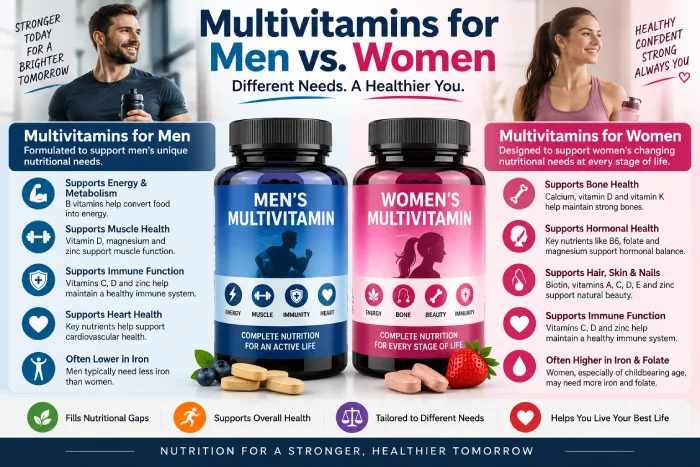
There are also nutrient requirements for men and women that differ. In some cases these differences in requirements are only relevant in certain life stages. Factors such as those may alter the requirements of iron by as much as: For instance, the p individual androgen the woman pre- need for male pre-menopausal. Furthermore, simply looking for “men” or “women” on the label is not the answer. One should look at the nutrition facts panel and compare what nutrients and how much of them are provided in the product.
How to Choose a Multivitamin
Having all these products on the market, choosing the right Multivitamin can become mind boggling.
1. Check the Nutrient List
Take note of the type and amount of vitamins and minerals that are present in one serving.
2. Avoid Excessively High Doses
Certain nutrients can have a detrimental effect if over consumed, while more is not always better.
Tends to be more beneficial than ‘one that provides relatively large doses of many nutrients’.
3. Consider Your Diet
Think about what you already consume. For instance if you eat plenty of dairy products or foods/drinks fortified with Calcium you may not require the supplement.
4. Consider Your Age and Life Stage
Nutritional needs vary over a lifetime. The needs of a young adult are different from those of an older adult or someone with particular nutritional needs.
5. Look at the Serving Size
Certain products are necessitated 1 tablet per day, others multiple tablets/capsules.
6. Choose a Reputable Product
Check for appropriate labeling and suppliers which implement the proper quality-control procedures. Where is available, further credibility can be added through independent testing/certification.
When Should Adults Take a Multivitamin?
There appears to be no consensus on when is the best time of day to take a multivitamin. Most people find it most convinent to take one with a meal. Perhaps this will help less stomach upset from some supplements when taken on an empty stomach.
Why is it important? The key point is to use the product according to the directions and by no means raise the dose.
Multivitamins and Food
Multivitamins should be a supplement to a healthy diet, not a replacement. Eating a variety of whole foods provide many nutrients in addition to vitamins and minerals such as fiber, protein, good fats and several other important nutrients.
A practical approach is:
Start good diet first→ spot nutrition gaps then supplements as needed.
Multivitamins for Adults Over 50
People require different nutrient intakes at different stages of their lifetime.
Older adults may need to pay particular attention to nutrients such as:
- Vitamin B12
- Vitamin D
- Calcium
- Vitamin B6
- Folate
Nevertheless. Different individuals will have different needs. Some elderly may still need to be aware of some nutrients or interactions with drugs. A health professional can advise if a multivitamin is recommended.
Multivitamins for Active Adults
Those who tend to work out may ask, ‘Is a specific multivitamin necessary?’
Continuous exercise is not always synonymous with high dose vitamin supplementation, as a lot of the required vitamins needed for normal metabolism and muscle function can be obtained from the diet.
Active adults should prioritize:
- Adequate calories
- Protein
- Fruits and vegetables
- Whole grains
- Healthy fats
- Fluids
- Sufficient sleep
Multivitamins may help if you are deprived of certain nutrients but should not substitute a good diet.
Multivitamins and Weight Loss
Your Multivitamins are not weight-loss products. They do not directly burn body fat, nor do they substitute for proper caloric intake and exercise. However, calorie restriction does require care and attention in the nutritional area. Crowding out within a very restrictive diet may benefit from some guidance to ensure that no necessary nutrients are being missed.
Multivitamins and Energy
We often see the statement ‘increase your energy’ on multivitamins. Although some vitamins are used in normal energy metabolism, additional vitamin supplementation will not necessarily make a healthy person feel more energised. Remedy: it is advisable to find the cause of any chronic fatigue issue rather than just to counteract with the taking of a high dose multivitamin. Possible causes for fatigue include the following: sleep deprivation, psychological stress, food deprivation, anemia, and thyroid dysfunction, as well as many other disease states.
Can Multivitamins Cause Side Effects?
Generally, multivitamins are tolerated very well; however, side effects are sometimes encountered.
Some people may experience:
- Nausea
- Stomach discomfort
- Constipation
- Diarrhea
- Unpleasant taste or aftertaste, are meaningless.
High in Iron food intake might be particularly irritating to the gastrointestinal system. It may be useful to take a multivitamin with Food, as it may reduce nausea.
Can You Take Too Many Vitamins?
Yes. Some vitamins and minerals could accumulate in the body or have negative effects at very high doses.
Particular caution is needed with high doses of nutrients such as:
- Vitamin A
- Vitamin D
- Vitamin E
- Vitamin B6
- Iron
- Zinc
Don‘t supplement other nutrients which you are already taking in another supplement.
For instance, if you took a multivitamin, a folate supplement and another mineral supplement all the result would be an overdose.
Multivitamins and Medications
Some vitamins and minerals can cause interactions with drugs: Some medicines are affected by the presence of others, for example, vitamin K may interfere with the action of some anti-coagulants; and calcium, magnesium and iron can inhibit the uptake of certain drugs. If you are on prescribed medication, check with your doctor or pharmacist before taking a new multiple.
Who Should Talk to a Healthcare Professional First?
Consider professional guidance before starting a multivitamin if you:
- Are taking prescription drugs
- Have kidney or liver disease
- Be deficient in a diagnosed nutrientdeficient.
- Possible and existing medical conditions Problems with absorption of nutrients.
- Are pregnant or trying to conceive
- Have had gastrointestinal surgery
- Are taking high-dose supplements.
- I already take some vitamins or supplements
You should have a health care provider help you determine what nutrients you truly need.
Simple Tips for Using Multivitamins Safely
Follow these practical guidelines:
- Read the label.
- Use or consume according to the directions.
- Mistake number 3: Don‘t think the higher doses are the better.
- Think about nutrients that already come from food.
- Avoid duplicating supplements that you don‘t need to.
- Store prescribd products safely and out of reach of children.
- Review any medication interactions.
- Select quality items.
Frequently Asked Questions
What is the best multivitamin for adults?
Some multis that are not recommended to the general population. The ideal one depends on: age, sex, diet, nutritional status, medication taken, health problems.
Can multivitamins replace healthy food?
No.1 They provide no fiber, protein, healthy fats and all the various other compounds that are present in real foods.
Can multivitamins help with tiredness?
May be useful if fatigue is due to deficiency of one particular nutrient, but unlikely to be effective for general fatigue. Continual fatigue should be investigated with the doctor.
Final Thoughts
Adult multivitamins are advisable if a person‘s diet is deficient in one or more of the vitamins and minerals. They can be used to complement the diet, not replace good healthy eating, and by themselves will not solve all health problems. The best supplement is the one that supplies your body with the nutrients it needs without excess. Be sure to speak to your doctor before purchasing a multi-vitamin if you are on any sort of medication, you have any health condition or intend to take a high dose product.