


Mohd Arbaaz is an Editor and Writer at Fitnessison.com with 5 years of experience in SEO and digital content creation. He creates informative, reader-focused content covering fitness, workouts, nutrition, health, healthy lifestyle, technology, and computers.

Shashi Teja is a Reviewer at Fitnessison with over 6 years of experience in SEO, content strategy, digital publishing, and content optimization. He reviews content for clarity, research quality, topical relevance, readability, structure, and overall usefulness to readers.
Last Updated: September 20, 2026
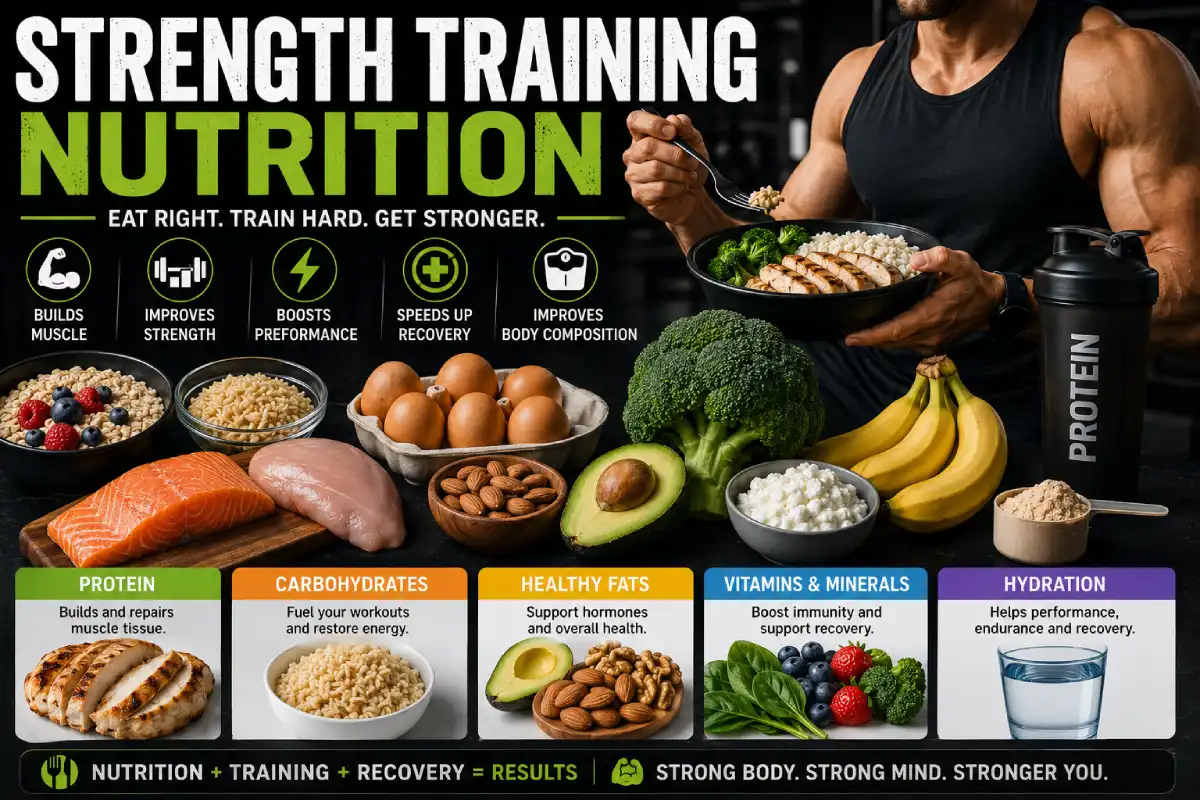
Nutrition for strength training is vital for muscle growth, gaining strength, recovery and performance enhancement during your workout. Although good programs are essential, you cannot reach your full potential without ensuring your nutrition is directed toward accomplishing your fitness objectives.
There are others who are obsessed with their workouts and absolutely ignore the importance of proper nutrition. The fact of the matter is that, the muscles require good nutrients to recover, to escalate and to perform efficiently.
If you‘re new to strength training and struggling to get gains, or if you‘re a seasoned lifter who wants to maximize your results, then developing your strength training nutrition knowledge is sure to help you make quicker, more long-term progress.
In this guide you‘ll learn strength training nutrition essentials, including the types of foods that can help you build muscle and strength, how much protein you may need, what to eat before and after a strength training session, and the best supplements that could help improve your strength performance. Nutrition guide from our strength training pillar.
Why Nutrition Matters for Strength Training
Muscle training gives your muscles ‘a punishing’. Your muscles repair themselves from this ‘punishment’ and the muscle fibers repair themselves and the muscles get stronger and larger.
Proper nutrition helps:
Support muscle recovery
- Increase strength gains
- Improve workout performance
- Maintain energy levels
- Reduce fatigue
- Enhance body composition
- Promote long-term health
Without proper nutrition, even the best program will have their results go down the drain.
Best Foods for Strength Training
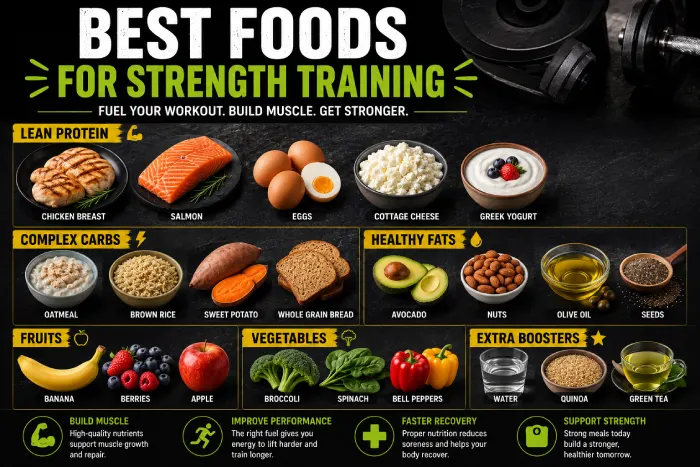
Eating a nutrient rich diet ensures your body has the nutrients necessary to build strength and recover.
Some of the best protein-rich foods include:
- Chicken breast
- Turkey
- Fish
- Eggs
- Tofu
- Tempeh
- Lentils
- Beans
Complex Carbohydrates
Carbohydrates are the body ‘s main source of energy when you train.
Good carbohydrate sources include:
- Oats
- Quinoa
- Sweet potatoes
- Whole grain bread
- Whole wheat pasta
- Fruits
- Vegetables
Healthy Fats
Healthy fats support hormoneproduction and general health.
Examples include:
- Avocados
- Nuts
- Seeds
Vegetables and Fruits
Fruits and vegetables? Nature‘s pharmacy, filled with vitamins and minerals, antioxidants, fibers that help the system recovers and re energise the immune system.
Excellent options include:
- Spinach
- Broccoli
- Kale
- Berries
- Bananas
- Apples
- Oranges
- Incorporating these foods into an overall well rounded diet can greatly improve performance in addition to aid in recovery.
Protein Intake for Strength Training
While you train, the small tears occur in the muscle and the protein supplies the amino acids that are taken to repair and rebuild the tears muscle.
Protein Requirements : How Much do you Need?
Most strength-training individuals benefit from consuming:
1.6–2.2kg of protein /kg of body weight /day
For example:
- 70 kg person=112–154 gram of protein/day
- Person weighing 80 kg = 128 176 grams of protein per day
Best Times to Consume Protein
Spread the amount of protein through the day.
Aim to include protein with:
- Breakfast
- Lunch
- Dinner
- Snacks
- Post-workout meals
It enables further muscle repair and growth.
High-Protein Foods Per Serving
| Food | Protein |
| Chicken Breast (100g) | 31g |
| Eggs (2 Large) | 12g |
| Greek Yogurt (200g) | 20g |
| Salmon (100g) | 22g |
| Tofu (100g) | 10g |
| Lentils (1 Cup) | 18g |
It is extremely important for the maintenance of strength gains that you regularly surpass your daily protein needs
Pre-Workout Nutrition
Supplies fuel. Prevents from feeling hungry when training.
Best to eat 1-3hrs before your workout.
What to Focus On
Your pre-workout meal should contain:
- Carbohydrates for energy
- Moderate protein
- Low to moderate fat
- Support muscle repair
- Reduce muscle breakdown
Post-Workout Meal Examples
Option 1
- Whey protein shake
- Banana
Option 2
- Chicken breast
- Rice
- Vegetables
Option 3
- Greek yogurt
- Fruit
- Granola
Try and eat protein and carbohydrate within 2/3 hours after training for best recovery. Fuel strength training at home sessions properly.
Supplements for Strength Training
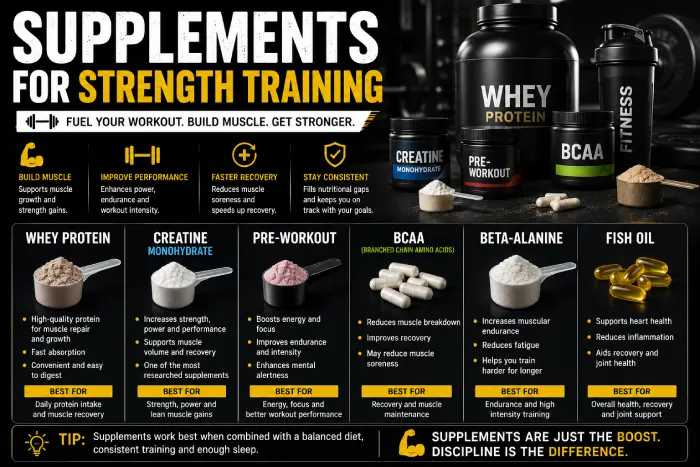
Supplements are not required, however. certain supplements can assist in promoting strength and performance, if used with good training and nutrition.
Whey Protein
Whey protein is one of the most popular and successful Supplement.
Benefits include:
- Convenient protein source
- Supports muscle recovery
- Helps meet daily protein goals
Creatine Monohydrate
Creatine is one of the most heavily studied supplements.
Benefits include:
- Increased strength
- Improved power output
- Enhanced muscle recovery
- Better training performance
Most individuals benefit from:
3–5 grams daily
Caffeine
Enhance workout performance:Caffeine helps you to focus better and have more energy.
Sources include:
- Coffee
- Pre-workout supplements
- Tea
Fish Oil
The fish oil contains omega 3 fatty acids that can help in recovery and for general health.
Multivitamins
If you are not getting enough of certain micronutrients in your diet a quality multivitamin could help to supplement the deficiencies.
Are Supplements Necessary?
Supplements cannot nourish you instead of good nutrition!
Focus on:
- Consistent training
- Balanced diet
- Adequate sleep
- Recovery
And only then can you look at any supplements.
Meal Plan for Strength Training
Sample Meal Plan that Provides Well Balanced Nutrition for Strength Workouts
Breakfast
- 3 Whole Eggs
- Oatmeal
- Banana
- Black Coffee
Mid-Morning Snack
- Greek Yogurt
- Mixed Berries
- Almonds
Lunch
- Grilled Chicken Breast
- Brown Rice
- Broccoli
- Olive Oil Dressing
Pre-Workout Snack
- Banana
- Whey Protein Shake
Post-Workout Meal
- Chicken Breast
- Sweet Potato
- Mixed Vegetables
Dinner
- Salmon
- Quinoa
- Green Salad
Evening Snack
- Cottage Cheese
- Peanut Butter
This meal plan includes a good amount of carbohydrate, protein and good fats to allow strength build up and recover.
Even mild dehydration can negatively affect:
- Strength
- Endurance
- Recovery
- Focus
Common Nutrition Mistakes Strength Athletes Make
Not Eating Enough Protein
Inadequate protein intake can hinder muscles’ recovering ability.
Skipping Meals
Omission of regular meals can consequently lower energy level and hamper performance.
Avoiding Carbohydrates
Intense training requires carbohydrate and there is no place for restricting carbohydrate unnecessarily.
Final Thoughts
Nutrition for strength training must be played like how you plan your workout is also very crucial. The correct diet balance of protein, carbohydrates, healthy fats, water and nutrition dominated foods for recovery, can enhance your strength and muscle development significantly.
Eat only whole foods, exceed your daily protein intake, eat correctly before training and be consistent in your nutritional habits. Supplements can be a support to an already sound nutritional plan. Powerlifters: pair nutrition with our powerlifting guide.
Frequently Asked Questions
What should be eaten for strength training?
A diet of lean protein, complex carbs & fats, and fruit & veg is absolutely perfect for strength training.
What is the amount of protein that I have to consume to follow a strength training program?
For an average person, the recommended dietary allowance (RDA) of protein is 1.6–2.2 gram/kg.
What I eat before going into the weight room:
Eating one hour, preferably 1–3 hours before activity, a carbohydrate and protein containing meal will improve performance.
Is creatine beneficial for strength training?
Definitely. Creatine monohydrate is definitely one of the most beneficial for strength and power.
What about Supplements? Would you really need to take them?
No. The essentials diet, training, sleep and rest are much more important than any supplement.