

Mohd Arbaaz is an Editor and Writer at Fitnessison.com with 5 years of experience in SEO and digital content creation. He creates informative, reader-focused content covering fitness, workouts, nutrition, health, healthy lifestyle, technology, and computers.

Shashi Teja is a Reviewer at Fitnessison with over 6 years of experience in SEO, content strategy, digital publishing, and content optimization. He reviews content for clarity, research quality, topical relevance, readability, structure, and overall usefulness to readers.
Last Updated: September 20, 2026
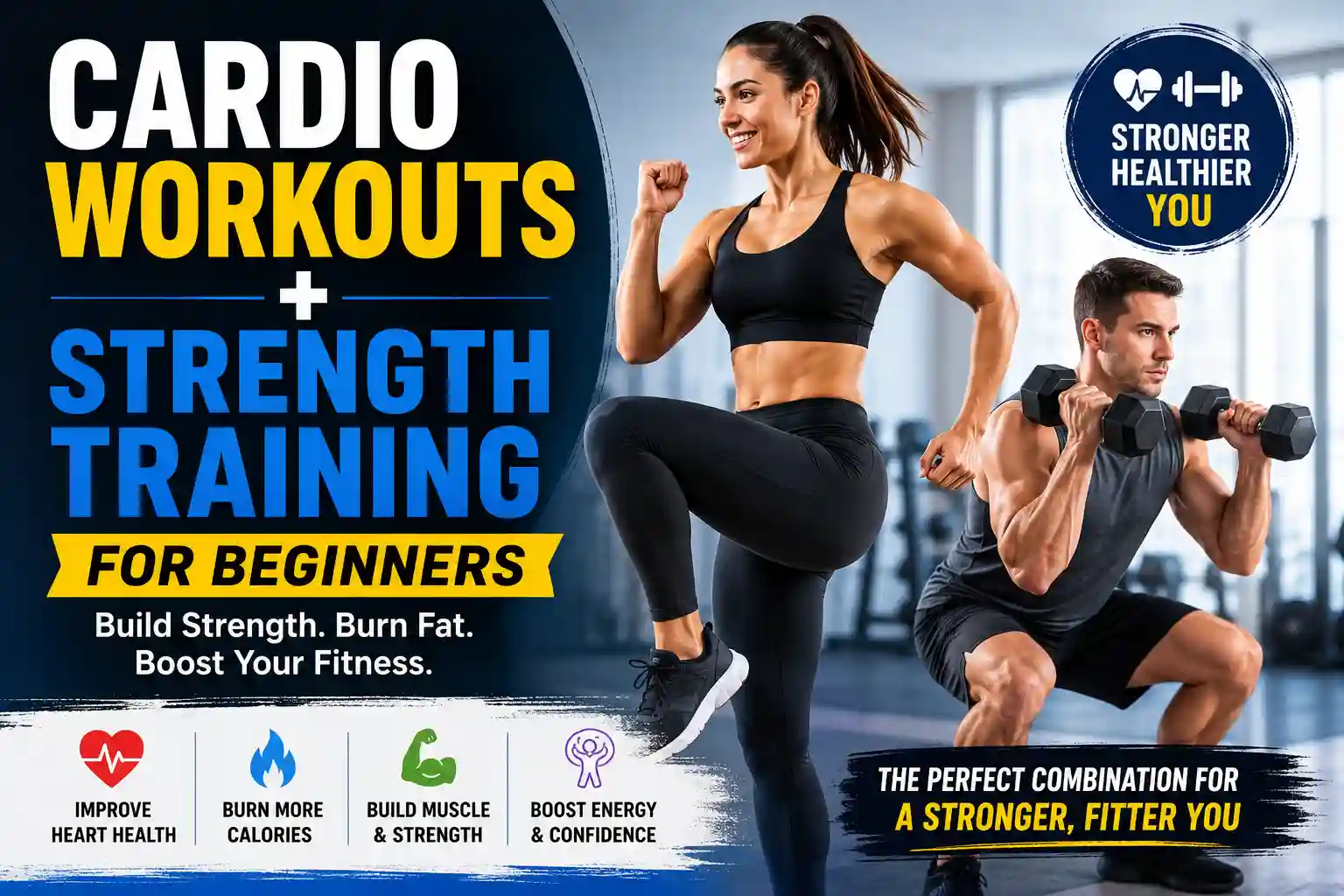
Strength training can be the fastest way for you to improve your levels of fitness and well-being if you are a beginner. Whether it is to help you lose weight, increase muscle mass, enhance your metabolism or raise your self esteem, strength training can do it for you.
Strength training, contrary to popular belief, isn‘t just for bodybuilders or athletes. It‘s designed for the average person, regardless of age or fitness level. It only takes a few simple principles and a systematic plan to get you on your way to building strength and loving the long-term benefits.
You want to get stronger but don‘t know where to start? Provides everything you‘ll need to know about strength training for beginners, including: why you should strength train, the basic lifts, sample training programs, common mistakes, and nutrition. Beginner basics from our strength training guide.
What Is Strength Training?
The second form of exercise is called strength training or resistance training. Strength training is all about exercises that strengthen your muscles, an example of which can be using resistance such as dumbbells, barbells, resistance bands and machines, and simply your own body weight.
The objective of strength training is to enhance the overall body power, endurance and size. If compared to cardio exercises which mainly target the cardiovascular system, strength training has another focus which is the developing and preservation of muscle tissue.
Beginning strength training does not require venturing to pricy gym memberships, let alone elaborate machinery. Even simple exercises will benefit you if you spend enough time performing them.
Benefits of Strength Training for Beginners
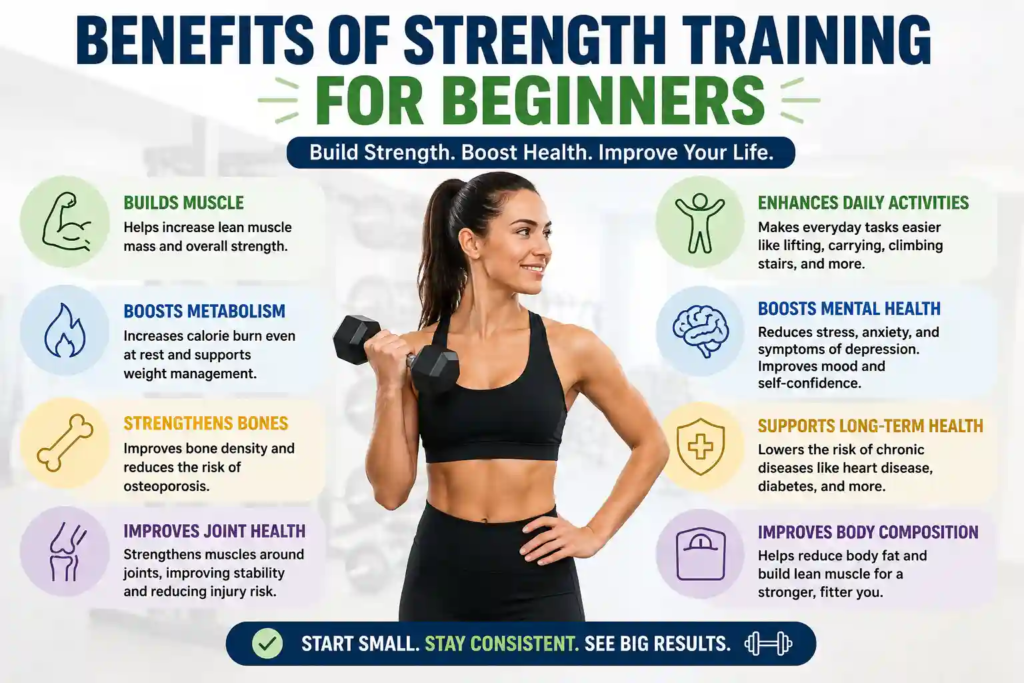
Builds Muscle Mass
Gaining a larger amount of muscle mass is one of the greatest advantages of strength training. Provided that you can overload your muscles over time with a weight lifting program then your muscles will become more and more defined.
Boosts Metabolism
Muscle burns are all time. Adding strength training while being at rest can also help you developing muscle. Thus, by helping you developing muscle, it can increase your metabolic rate and help you maintaining your weight.
Improves Bone Health
A systematic regular resistance training has proved to increase bone density and reduce the risk of osteoporosis as you get older.
Enhances Daily Activities
Strength training can help with common daily tasks. For example, carried shopping, climbed stairs or stood straight after or before activity.
Reduces Risk of Injury
Generally stronger muscles, ligaments and joints will better sustain the body and therefore lessen the amount of injuries.
Improves Mental Health
Exercise. Is known to release the hormones called endorphins which (i) make you happy, (ii) make you feel less stressed, (iii) make you more self confident.
Essential Strength Training Equipment
Beginners don‘t need a fully equipped gym to start strength training. Consider these basic options:
Dumbbells
Dumbbells are functional; perfect for many different types of exercises.
Resistance Bands
An oral band is an inexpensive, mobile, and efficient tool for a beginner.
Kettlebells
Can use kettlebells for strength and conditioning.
Body Weight
Your body weight alone will challenge for exercises such as lunges, push-ups and squats.
Adjustable Bench
An adjustable bench give you the opportunity to add more variety to your workout,While also trying keep the correct form on your exercise.
Best Strength Training Exercises for Beginners
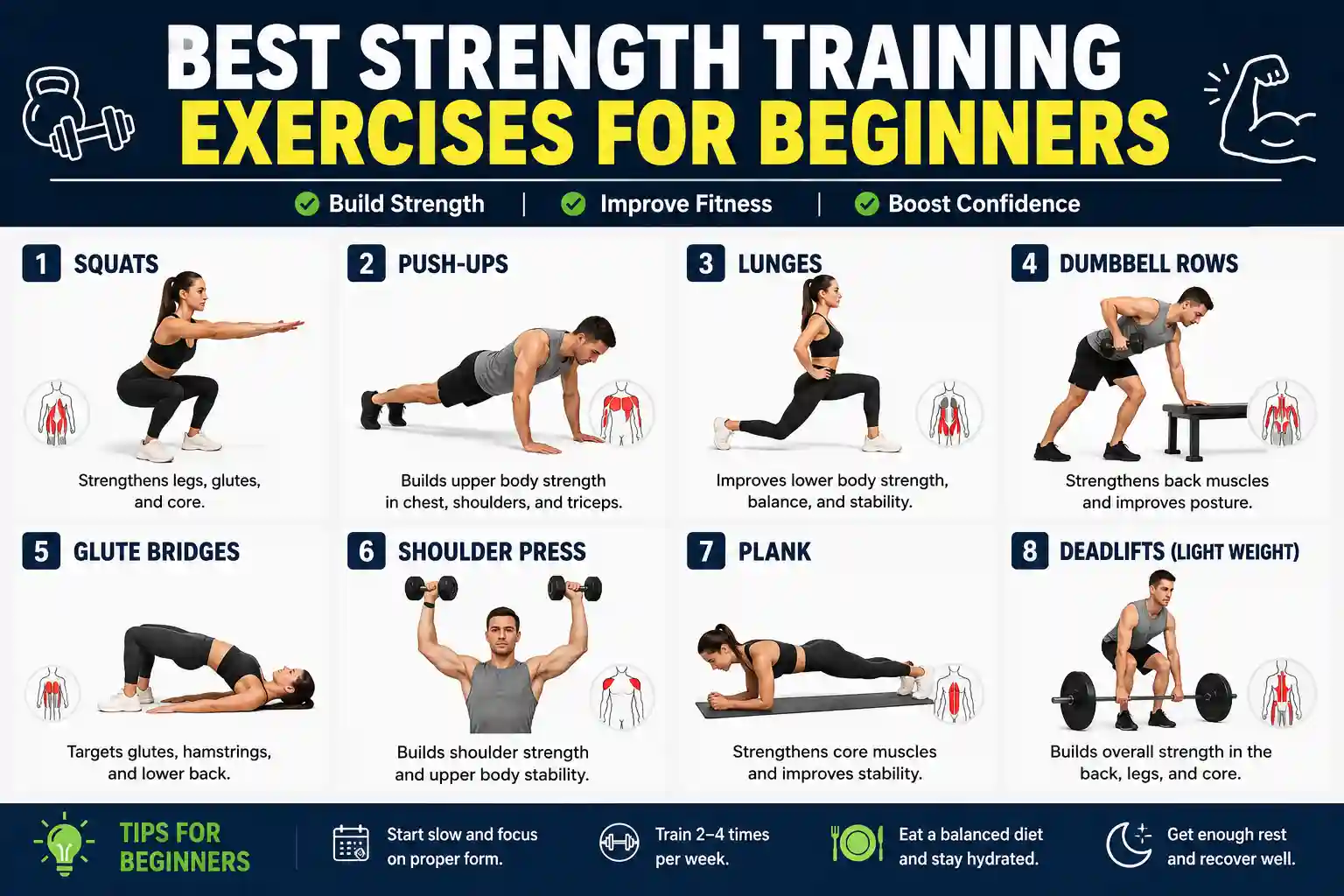
The following sets of exercises are for all major muscle groups and are very good for beginners.
1. Bodyweight Squats
Squats are great to build a strong foundation. They will effectively work your legs, glutes and your core.
How to Perform:
- Stand with your feet shoulder width apart.
- Sit in a chair, with your body bending forward until you are sitting in a chair.
- Retain your chest upright position keeping knees over your toes.
- Come back to floor position.
2. Push-Ups
A push-up works the chest, shoulders, triceps and midsection.
How to Perform:
- Begin in a plank position.
- Bring yourself down to the floor.
- Contract your chest, chest lifts off the balls Push back up so the arms are straight.
Adjust by doing push-ups on your knees (if required).
3. Lunges
Lunges strengthen and improve balance of the lower body.
How to Perform:
- Advance with one leg.
- Bring yourself down so that both knees are bent at about a 90 degree angle.
- Return to starting position.
4. Dumbbell Rows
Rows: Builds the back and improves posture.
How to Perform:
- Hold a dumbbell in each hand.
- Bend slightly forward.
- Pull; weight toward your hip.
- Gently return the object to its resting position.
5. Glute Bridges
The glute bridges work on the gluteal group, hamstrings and lower back.
How to Perform:
- Back must be flatlye on your back with knees bent.
- Raise your hips in the air.
- Squeeze your glutes at the top.
- Lower slowly.
6. Plank
Planks build up the core stability and endurance.
How to Perform:
- Forearm plank. Hold a position on your forearms.
- Keep the line of your shoulders to your feet.
- Resist Hold for 20 to 60 seconds.
Beginner Strength Training Workout Plan
If you‘re new to strength training begin with a simple, full-body workout, three times a week.
Day 1
- Bodyweight Squats– 3×12
- Push-Ups-3 sets of 10 reps
- Dumbbell Rows – 3 x 12
- Plank – 3×30 seconds
Day 2
Rest or light cardio.
Day 3
- Lunges – 3 sets of 10 reps for each leg
- Glutes Bridge – 3 sets of 15 reps
- Dumbbell Shoulder Press – 3 x 12
- Plank – 3 x 30 secs
Day 4
Rest or active recovery.
Day 5
Repeat Day 1 or Day 3.
Gives beginners the opportunity to build strength effectively and recover fully.
Suggested training days for beginners.
The majority of novices will be able to improve by strength training two to four times weekly.
Too much training can be detramental to muscle growth unless muscle groups are trained on alternate days. Training three times per week, either every other day or in the combination of two days training followed by a rest day is exemplary.
Keep in mind the heart of building muscle isn‘t during the workout, but during resting. Do not forget your rest days. Master compound exercises as your foundation.
Progressive Overload: The Key to Getting Stronger
Progressive overload refers to an incremental increase in stress placed upon your muscles.
You can achieve this by:
- Increasing weight
- Adding more repetitions
- Performing additional sets
- Improving exercise technique
- Reducing rest periods
As an example, if you are able to do 12 squats please introduce resistance and/or increase repetitions in your subsequent sessions.
Tiny enhancements over a stretch of time will boost to great outcomes.
Common Strength Training Mistakes to Avoid
Skipping Warm-Ups
An effective warm up is very important to prepare joints and muscles for work but also to decrease the chance of injury.
Using Too Much Weight
Many beginners are in the habit of starting with weights too heavy to lift. Use low resistance to train while perfecting your movements.
Ignoring Recovery
Recovery: It is fundamental to both muscle growth and the prevention of injuries.
Poor Technique
Using poor form can either prevent the desired results and/or increase the possibility of injury.
Inconsistent Training
Regularity rather than intensity. Concentrate on regularity.
Neglecting Nutrition
Just doing exercise is not enough to optimize your results. You need to eat properly for your muscles to grow and to recover.
Nutrition Tips for Strength Training Beginners
Eat Enough Protein
Protein. Repairs and builds muscle tissue.
Good protein sources include:
- Chicken
- Fish
- Eggs
- Greek yogurt
- Beans
- Lentils
- Tofu
Stay Hydrated
Adequate Hydration Optimizes Performing and Recovering.
Include Healthy Carbohydrates
The carbohydrates will give me the energy to carry out my workout.
Examples include:
- Oats
- Brown rice
- Sweet potatoes
- Fruits
- Whole grains
Consume Healthy Fats
These are the fats you want. They promote the production of quality hormones and are good for your health.
Sources include:
- Avocados
- Nuts
- Seeds
- Olive oil
Strength Training vs Cardio
This is a question many beginners ask themselves both when they want to begin strength training and when they want to switch over to a little more cardio.
The answer depends what you want to achieve.
Strength training helps:
- Build muscle
- Increase strength
- Improve body composition
- Boost metabolism
Cardio helps:
- Improve heart health
- Burn calories
- Increase endurance
A mixture of both forms of exercise is ideal for optimal fitness. ‘No gym? See our strength training at home guide.’
Final Thoughts
Strength training for beginners doesn‘t necessarily need to be complicated. Strength training in beginners is very simple and can be effective for developing strength if you use simple exercises, proper technique, gradual progression and be consistent.
Begin with simple training and remember how important recovery is, and eat healthily. A lot of weight will come off body fat, you will lift more weight, look more muscular, and have more energy.
The tip to think about most is how to just begin. Everyone if you persist will find strength training to be one of the most wonderful aspects of life.
Frequently Asked Questions
To begin with, is strength training safe for beginners?
Yes. Properly executed (good technique) during strength training with the right amount of resistance can be very safe and extremely beneficial for the untrained individual.
The duration required to notice an change is wide-ranging:
Most beginners can feel increases in strength after 4-8 weeks of training.
Is it possible to do weight training at home?
Definetly. Body weight, resistance band and dumbbells are also good for home training.
Should beginners lift heavy weights?
Beginners should begin with lower weights that can be handled using correct form. Then, gradually add resistance.
What age should you begin strength training?
Almost everyone can gain from strength training, regardless of age, if it is done carefully and sensibly.