

Mohd Arbaaz is an Editor and Writer at Fitnessison.com with 5 years of experience in SEO and digital content creation. He creates informative, reader-focused content covering fitness, workouts, nutrition, health, healthy lifestyle, technology, and computers.

Shashi Teja is a Reviewer at Fitnessison with over 6 years of experience in SEO, content strategy, digital publishing, and content optimization. He reviews content for clarity, research quality, topical relevance, readability, structure, and overall usefulness to readers.
Last Updated: September 29, 2026
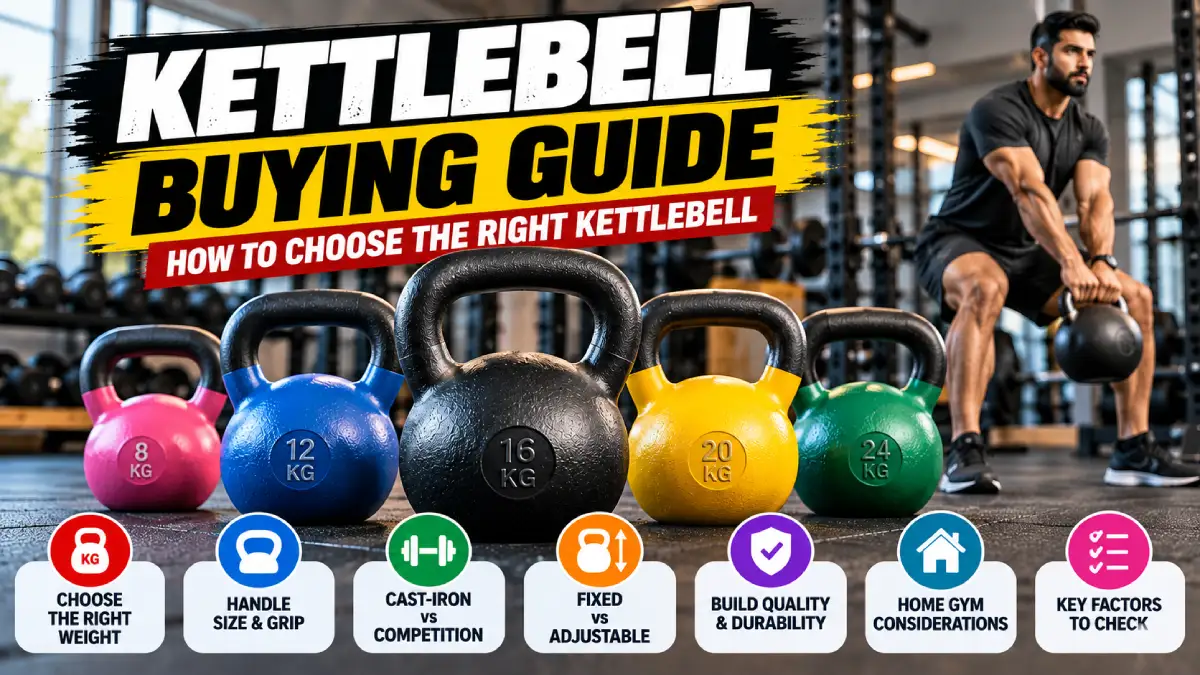
Buying a kettlebell seems like a straightforward task until you realize that a multitude of sizes, handle diameters and thickness, materials used in it‘s creation, coatings, and variations in weight have to be considered. A kettlebell might be one of the easiest strength pieces of equipment to purchased, but selecting the wrong one can make your exercises uncomfortable or less effective.
Here in this kettlebell buying guide we have laid out the key points to consider before buying. Whether you are interested in using kettlebells for home training, strength, swings, squats, or carries, the aim should be a price that is suitable for ability now, and future training improvements.
What Is a Kettlebell?
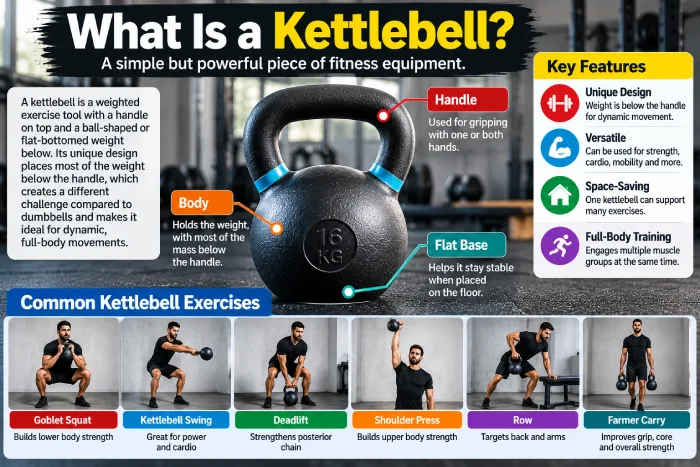
A kettlebell is a cast-iron weight with a handle on the top. Where a dumbbell has weight evenly distributed either side of the hand, most of the mass of a kettlebell is located below the handle. This provides a different sensation with exercises and lends itself to the more dynamic nature of a kettlebell.
Popular kettlebell exercises include:
- Kettlebell swings
- Goblet squats
- Deadlifts
- Farmer carries
- Shoulder presses
- Rows
- Cleans
- Turkish get-ups
One kettlebell can be used for quite a few exercise, so if you have limited space at home, this is a good investment.
Cast-Iron vs. Competition Kettlebells
The initial choice is deciding on the kettlebell style.
Cast-Iron Kettlebells
Typically made by casting metal, many old-style cast-iron kettlebells tend to get physically bigger the heavier that they are. They are the workhorse of the strength training world, often being employed for swings, carries, and squats as well as in general strength training and as a home gym workout tool. The simplicity of their design should make them a good option for beginners and casual exercisers.
Competition Kettlebells
Many of the competition style kettlebells have comparable external dimensions for different weights. So the feeling of a lighter and heavier kettlebell sitting against your arm or body can be much more similar. They are often used in kettlebell sport or more technique based training sessions. Neither is better than the other. Its down to how you want to train.
What Kettlebell Weight Should You Buy?
There is no one right starting weight for everyone.
Your ideal kettlebell weight depends on:
- Current strength
- Training experience
- Exercise selection
- Technique
- Mobility
- Workout goals
Additionally, all your exercises might require varying resistance. A certain weight might work great for a goblet squat, while the same weight could be too much for a simple overhead press. If you’re new to kettlebell training, focus on solid movement and not on an extremely heavy weight.
Test various weights, if possible, prior to purchasing.
Check the Handle Carefully
The handle is perhaps the most important part of the kettlebell as most of the movements you will perform on it rely on this.
Handle Thickness
A handle that is very thick may be harder to grip and a thinner handle may be easier. The ideal size will be determined, in part, by the size of your hand and your training preference.
Handle Width
Some workouts involve the use of two hands. For moves such as the kettlebell swing, ensure that you leave room so you can grab the handle of the kettlebell and hold with both hands at the point where appropriate.
Surface Finish
A comfortable handle should be easy to grip without having sharp seams or rough spots. Painted, powder-coated, and any finishes can feel different while holding. Comfort becomes critical here because a rough or otherwise irritating handle is more recognizable over multiple sets.
Look at the Kettlebell Base
Pay Attention to the Bottom Do not give up on the bottom. A stable, relatively flat surface makes storing much more easy and can be a help when using some exercises that require placing a kettlebell on the floor. Rest your kettlebell on something flat and see if it is stable. In a home gym, a crooked bottom can be a pest when you are storing several kettlebells.
Fixed vs. Adjustable Kettlebells
There are also adjustable kettlebells to consider if space is an issue.
Fixed Kettlebells
The weight of a fixed kettlebell is constant as it has a fixed weight.
Advantages include:
- Simple construction
- No correction needs to be made.
- Quick exercise transition
- Familiar shape
The negative side of this, as your strength increases, may be that you end up needing quite a few of them.
Adjustable Kettlebells
Multilevel versions have several resistance levels incorporated into a single unit. They can take up less storage space, and be more economical than getting several individual kettlebells.
However, check:
- Adjustment speed
- Locking mechanism
- Weight increments
- Maximum resistance
- Overall dimensions
Always ensure that things that have been adjustable are tightly secured before you exercise.
How Many Kettlebells Do You Need?
To start, you don‘t need a full kettlebell rack. A single thoughtfully-chosen kettlebell will enable you to do swings, goblet squats, rows, carries and deadlifts and is all you‘ll need initially. Later, you may wish to add a lighter kettlebell for presses and technique and another heavier kettlebell for the lower body. The advantage of buying slowly is you discover which weights you actually use.
What Can You Look For Before Purchasing?
Use this simple checklist:
| Feature | What to Check |
| Weight | This relies on your current level of ability. |
| Handle | Width and thickness of comfortableness |
| Finish | 15. Smooth, secure gripping surface |
| Base | 12.21 Stability Agreed value and reporting of close calls Easily understood and reasonably flat |
| Construction | No apparent damage/defects |
| Space | Can be stored safely without difficulty |
| Adjustability | Secure if adjustable Available or adjustable |
| Warranty | Factory coverage and support |
Pay for online purchase: review the manufacturer’s information and measurements, not just the pictures.
Common Kettlebell Buying Mistakes
The most typical mistake is to select a kettlebell just because someone else suggests a weight. Your physique, your workout will be very different.
Other mistakes include:
- Biting off more than you can chew too quickly
- Disregarding you, the handle comfort
- Selecting solely on the basis of appearance.
- Buying a number of weights at once
- Overlooking to the space needed to store it.
- Not checking adjustable devices
- By use of damaged equipment
Begin with equipment that is appropriate for your level of training.
FAQs
Are kettlebells good for beginners?
Yes. Kettlebells allow beginners to perform strength training and full-body workout routines, especially when they select manageable resistance levels and follow established exercise techniques.
Is one kettlebell enough?
A single kettlebell can be used for endless combinations of exercises. As your strength and variety of movements increase, more and more other weights become helpful.
Are adjustable kettlebells worth it?
They might be effective for individuals with less space who require a few other strength levels devices in a single device.
What is the difference between kettlebells and dumbbells?
The mass distribution of a kettlebell concentrates weight below the handle and the weight distribution of a dumbbell surrounds the hand. This affects the feel of these weights when performing some exercises.
Conclusion
A good kettlebell buying guide should focus on helping you choose the right weight for your training and not provide a list of the more expensive or heavier options. Think about style, weight, width of handle, finish, stability on the base, construction, storage, weight of a single kettlebell or replacement weight within the dumbbell. Begin with what you can comfortably manage and increase gradually. A smart investment in a kettlebell can be one of the most multi functional in your strength equipment arsenal.