


Last Updated: September 14, 2026
Eating enough protein will just become more important as we get older. It is possible to meet the high-value requirements of protein in our diet by which can in turn maintain our muscled, maintain everyday strength and provide the building blocks for tissue repair and recovery. However a high protein intakes do not have to mean protein drinks all day long or finish up at huge portions of meat. In the case of a older people a well balanced diet up the variety of sources of high-value protein should be preferable. So whether we are keeping fit, striving for independence or merely eating healthier ensuring a use of the optimal sources of protein in our diet can be advantageous.
Why Is Protein Important for Seniors?
Muscle mass tends to decrease as we age. This can have an impact on strength, balance, mobility, and function. Protein with interaction with exercise can contribute to supporting this.
Adequate protein also helps with:
- Taking care of my muscles.
- Aiding strength/mobility;
- Tissue repair
- To support normal immune function.
- Making the meals more filling
- Promoting recovery following physical exercise
However, protein is only a feature of healthy aging. Also required, is enough calories, an intake of vegetables and fruit, whole grains and healthy fats, fluids, and vitamins and minerals.
How Much Protein Do Seniors Need?
Requirements for proteins differ among individuals. Age, the weight of a person, level of activity, state of health and the health condition may influence one‘s daily in take of proteins. Another advocate for increased protein intakes for healthy older people is the general recommendation to consume at least 0.8gms of protein daily which would be realized in most of the general population. Some go as far to recommend a higher intake of about 1.0–1.2gms/Kg/Day with higher recommendations for those who are physically more active or in specific health states. A rough guide is about 1- 200 of body weight each day, for instance, a 70-kg old person would require approximately 70- 84 gram each day. This is not meant to be a personal recommendation. Your needs will be different if you have kidney disease or other health problems. If you have a health condition or are taking a number of medications, ask your healthcare professional or a Registered dietitian to help you determine your needs.
Spread Protein Across the Day
A very easy to make mistake is to eat very little amount of protein during breakfast and lunch and purchase a large quantity at dinner. How about trying a protein source with every main meal instead.
A day could look something like this:
- Breakfast: eggs on whole-grain toast with fruit
- Lunch: A bowl of lentil soup, with a spoon of Greek yogurt on the side
- Snack: Cottage cheese and berries or handful of nuts.
- Dinner. Baked fish or chicken, green vegetables and brown rice
You certainly do not have to adhere to this menu to a T. What you want to take away from this is making protein a part of your everyday eating routines and not only trying to fit it in once a day at dinner time
Best Protein Foods for Seniors
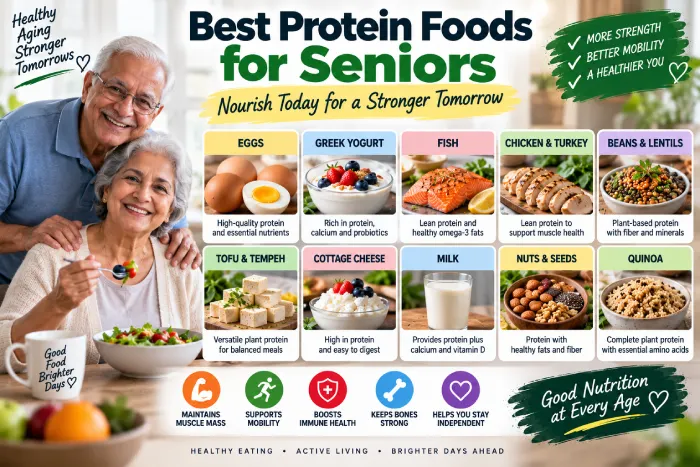
There are definitely lots of options, so you can create meals from foods that you actually like.
Eggs
Eggs are simple to prepare and could be used to make omelets, scrambled eggs, sandwiches or a salad.
Greek Yogurt
Greek yogurt is another good source of protein and can be a quick breakfast or snack. When available, opt for plain or low added sugar types and sprinkle with fruit.
Fish
The protein in fish is found in salmon, tuna, sardines and other fish. The fatty fish can provide omega 3 fats.
Chicken and Turkey
Lean poultry can be included in salads, soups, wraps, sandwiches and main meals.
Beans and Lentils
Beans, chick peas and lentils are good plant sources of protein. They are also sources of fiber and so are a healthy addition to a sensible diet.
Tofu and Tempeh
Certain soy-food products might serve as sweet substitutes for elderly people on a reduced meat diet. They can be added to stir-fried dishes, soups, salads, grains and bowls.
Milk and Cottage Cheese
Other dairy foods can be sources of protein in addition to other nutrients. Cottage cheese can be combined with fruit or used in cooked savory meals.
Nuts and Seeds
Nuts and Seeds- Almonds, peanut, pumpkin and chia seeds are a good source of protein as well as monounsaturated fats. Since they are high in calories, a small amount is generally sufficient.
Protein Shakes for Seniors
Protein drinks may be helpful if you find it difficult to eat sufficient food or cannot be bothered to prepare a complete meal. For a basic drink you could blend together, milk or fortified soy milk, Greek yogurt, berries, banana and an appropriate protein drink powder.
Never substitute shakes for all your meals. Other foods provide a greater range of nutrients and can also make eating more agreeable. Where you have experienced a huge loss of appetite, hard to chew or unexplained weight loss you should consult a healthcare professional for advice rather than just add in supplements.
Protein and Exercise for Older Adults
This would be expected to work nicely with resistance exercise. Basic strength training using such things as chair squats, resistance-band work, light weights or supervised strength training may help aged people to maintain strength and physical function.
Walking is good for keeping moving, but doing the correct strengthening exercise would be an benefit in maintaining muscle, if this is all you do. If you are not used to exercise then do it slowly and do activities that are suitable to your health and fitness.
Common Protein Mistakes Seniors Should Avoid
- Skipping protein at breakfast: , leaving only tea/coffee/toast for one of the most important meals of the day. You may find it difficult to meet your requirements even if you consume other high-protein foods throughout the day.
- Buy nothing but powders: Protein powders are easy, but shouldn‘t be used to replace a varied diet.
- Eating very big portions in a single meal: Spreading protein throughout the day can help make it easier to create balanced meals.
- Neglecting overall nutrition: Yes, protein is king, but do not forget vegetables, fruits, grains, healthy fats and enough fluids.
Final Thoughts
Skipped the protein at breakfast, with the only food source of protien (tea/coffee/toast). Considering one of the most important meals of the day, you may find it very hard to keep within the requirements, even if you are eating other high protein foods during the course of the day. Buy nothing but powders: Unquestionably, protein powders are the easiest way to go, but they shouldn‘t be utilized as your main source of nutrition in a varied diet. Drinking very large quantity of food for a single meal. Distribute the protein through out the day may assist you in making the meal balanced.