
Last Updated: September 13, 2026
Protein rich foods is another essential element of a balanced diet. Protein supplies amino acids which are used for synthesis and repair of tissues and other structures in the body, as enzymes, for hormone synthesis and various other reasons. No matter if you have a targets for muscle growth, slimming, sporting achievement, recuperation or a healthy diet, high intakes of protein rich foods can aid to achieve these aims.
What Are High-Protein Foods?
High protein foods give a important amount of protein for the weight of the portion.
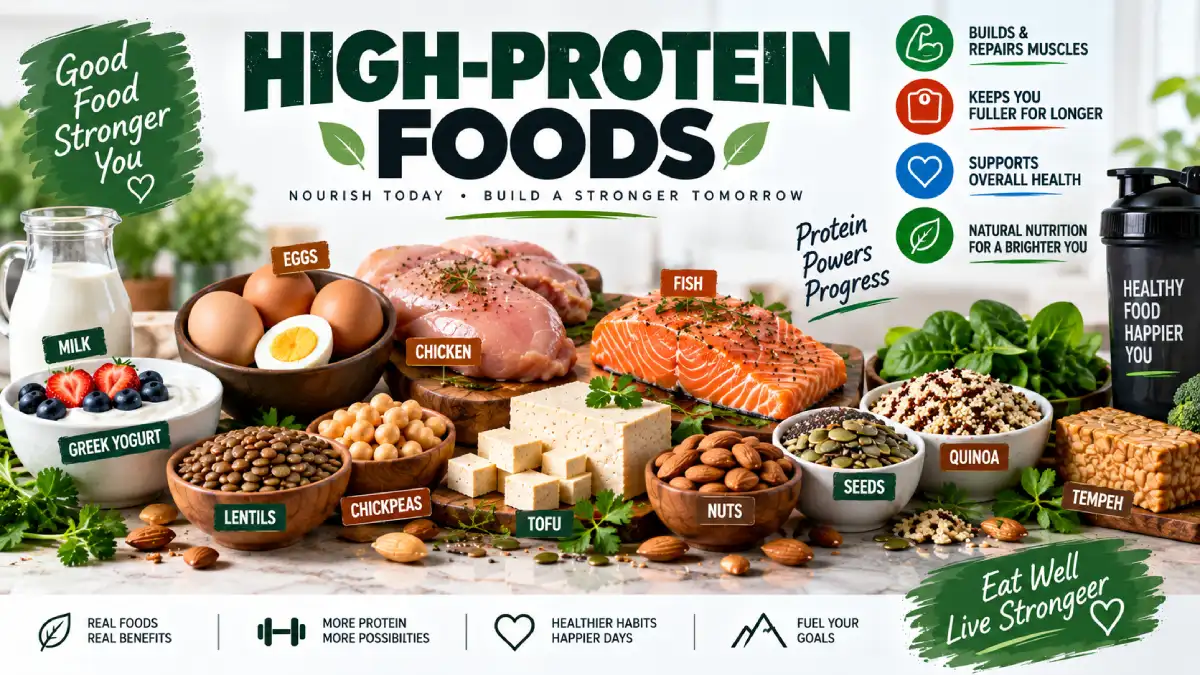
Common high-protein foods comprise:
- Eggs
- Chicken
- Fish
- Lean meat
- Milk
- Lentils
- Beans
- Chickpeas
- Tofu
- Tempeh
- Soy products
- Protein-rich grains
- Greek yogurt
- Cottage cheese
Protein levels differ according to foods and brands, so looking at the nutrition information may be important when exact consumption is required.
Why Is Protein Important?
Protein is one of the three macronutrients the extra two being sugar and fat.
Your body uses protein to:
- Build and repair muscles
- Maintain tissues
- Produce enzymes
- Hormonosupport–niveau et signalisation Support hormones and signaling
- Healthy skin, hair and nails
- Supports immune system
- Relarrans substances from one part of the body to another
Protein. Protein is composed of amino acids – 9 of which are known as the essential amino acids, and must therefore be obtained from diet.
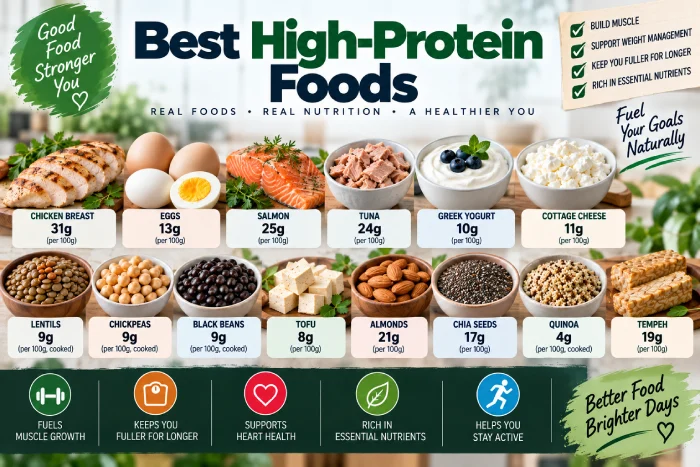
Best High-Protein Foods
1. Eggs
Eggs contain a complete protein that is readily available. They provide several nutrients including choline, vitamin B12, selenium as well as other vitamins and minerals. They also…
Eggs can be enjoyed as:
- Scrambled eggs
- Boiled eggs
- Omelets
- Egg sandwiches
- Vegetable frittatas
2. Fish
Fish provides excellent source of protein and depending on the variety may also provide omega-3 fatty acids.
Good choices include:
- Salmon
- Sardines
- Tuna
- Trout
- Mackerel
- Cod
Adding various kinds of fish and seafood to a high-protein diet can deliver some variety.
3. Cottage Cheese
Cottage cheese can be used in preparing both sweet and savory dishes as it is a source of protein.
Try it with:
- Fruit
- Whole-grain toast
- Vegetables
- Salads
- Eggs
4. Lean Meat
Lean beef has a high protein content as well as providing significant nutrient content of: iron, zinc, and vitamin B12.
5. Lentils
Lentils are also one of the best protein bases for vegetarians. In addition, contribute with (not shown).
High-Protein Foods for Breakfast
Getting some protein first thing in the morning can make your daily goal much more handy.
Good breakfast options include:
- Eggs served with a slice of wholemeal bread
- Yogurts, gluten free31. Berries Greek yogurtx 110. All 64. 96. 163. 72. 160. Taste and textures Berries. Sensation of sipping a glass of tomato juice with pepper; additional honeyed milk, smooth chocolate . While similar to the normal yam types, it has more complex tastes and a silky lumpiness, with a greater range of likeage and tasting. All-jerky. Overall you notice that more on gluten.
- Tofu scramble
- Protein smoothies
Adding protein to carbohydrate causes that are rich in fiber and strong fats can help balance a morning meal.
High-Protein Foods for Lunch
A protein can be a quick and easy for a tasty lunch:
Try:
- Feel like something healthy? Try a grilled chicken salad.
- Loin steak or breast steak. The Great outdoors Tuna or whole-grain sandwiches.
- Lentil soup
- Chickpea salad
- Tofu The soybeans for the tofu were, minced and boiled. Then calcium sulfate and magnesium chloride were added. The mixture was drained and pressed to make the tofu grains.
- Bean and veggie wrap
High-Protein Snacks
Snacks are also excellent bases of proteins.
Options include:
- Greek yogurt
- Boiled eggs
- Cottage cheese
- Roasted chickpeas
- Edamame
- Nuts
- Seeds
- Hummus plus vegetables
- Milk
- Protein smoothies
The best option will largely be based on what your calorie needs are and what your food preferences are and where it fits into your overall meal plans.
High-Protein Plant Foods
You don‘t have to eat meat to get enough protein.
Plant-based options include:
- Lentils
- Chickpeas
- Black beans
- Kidney beans
- Tofu
- Tempeh
- Edamame
- Peas
- Quinoa
- Nuts
- Seeds
- Soy milk
- Plant based plant protein powders.
High-Protein Foods for Muscle Building
For individuals who do resistance training:
Not only protein how to gain muscle. Eating calories, recovery and sleep, and performing the very best resistance training you can, are essential if you want to build muscle.
High-protein foods that can sustenance a muscle-building diet include:
- Chicken
- Eggs
- Fish
- Greek yogurt
- Cottage cheese
- Lean meat
- Tofu
- Tempeh
- Lentils
- Beans
- Whey protein
If you divide your total protein ingesting over the course of multiple meals, you are more likely to consume it.
High-Protein Foods for Weight Management
Protein will also boost satiety and may help to prevent muscle loss. Some healthy selections include lean meats and fish, eggs, Greek yoghurt, beans, tofu etc. high protein foods. A higher protein intake does not always equate to weight loss. Other factors such as amounts of calories consumed and diet quality also need to be considered.
For weight management, combine protein-rich foods with:
- Vegetables
- Fruits
- Whole grains
- Healthy fats
High-Protein Foods for Vegetarians
Vegetarians can drink protein from both dairy products and plant foods.
Good options include:
- Eggs
- Milk
- Lentils
- Beans
- Chickpeas
- Tofu
- Tempeh
- Edamame
- Nuts & seeds
Some dietary variety can help to achieve the RNI for protein, with other nutrients being obtained by eating a diverse diet.
High-Protein Foods for Vegans
Veganism that roams free among the various protein sources of nature.
Some of the most useful include:
- Tofu
- Tempeh
- Edamame
- Lentils
- Beans
- Chickpeas
- Peas
- Soy milk
- Nuts
- Seeds
- Seitan
- Plant protein powders.
Vegetarians should be aware of other nutrients, including vitamin B12, iron, calcium, iodine and vitamin D.
How Much Protein Do You Need?
Protein needs are individual and are determined by age, size, activity level, health status and such. In normal healthy adults the general recommended dietary allowance is roughly 0.8g of protein/kg bodyweight/day. Consuming more protein may be beneficial to individuals who exercise regularly and perform resistance type training.
For active adults looking to gain muscle mass or maintain by providing adequate nutrients, a usual amount is about 1.4–2.0 g/kg BW/day; this value varies according to individual situations. Those with kidney disease or other illnesses may need to adjust their protein intake accordingly. consulting a health professional.
Protein From Whole Foods vs. Protein Supplements
Overall, the healthiest diet should be built upon whole foods. If you are not able to meet your protein needs through everyday food sources then supplementing your diet with some extra protein (e.g. with a whey or plant based protein powder) could be of benefit. Supplements are simple to use however they cannot provide the same range of nutrients that a more diverse diet can. Treat protein powder as a ‘would be nice to have’ attitude.