

Last Updated: September 15, 2026
The importance of good nutrition in childhood. Good nutrition is vital for children. They must have access to a range of nutrients to allow essential growth, development, learning, sustained activity and energy. Good eating habits formed in childhood can also promote a positive attitude towards food. This should be simple! Although they are not alone among the nutritionally challenged children of the world, the emphasis on good whole foods in the diets of children need not be a lengthy or complex event. A few basic principles of nutrition would include:
Why nutritional Care?
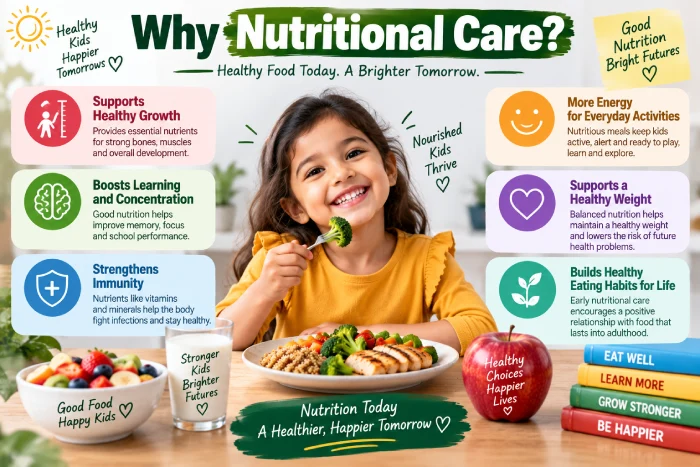
Young people are developing and growing and have different nutritional needs to adults. Their diet needs to promote health and growth and provide energy for physical activity and nutrients for normal body function and maintenance of tissues, bones and muscles. It‘s the child‘s diet overall rather than individual meals that really matter. One day the child might be eating plenty, whilst the next the child has a sedentary appearance and looks as if he or she has lost the appetite for food. By introducing a variety of healthy choices the child is more likely to be able to have the nutrients needed over time.
Include Fruits and Vegetables
Fruits and vegetables is rich in vitamins, minerals, fiber and many other beneficial plant chemicals. Provide a selection of foods in different shades of colors over the week.
Some kid-friendly choices include:
- Bananas
- Apples
- Oranges
- Berries
- Carrots
- Cucumbers
- Sweet potatoes
- Peas
- Broccoli
- Tomatoes
Presentation can be important. Suitable portions can be offered of cut up fruit and vegetables with a favourite dip. It can take up to a dozen exposures to a food before the children will accept it. While your not turning every meal into a battle if they are not having that vegetable may help.
Make Protein Part of Meals
Protein to help achieve normal growth and help maintain the body tissues. The foods that include protein are meat, fish, eggs, milk, cheese, nuts and beans. Some good, healthy selections are eggs, fish, chicken, yogurt, milk, cheese, beans, lentils, chickpeas, tofu, nuts and seeds for when appropriate and safe. Always provide a selection of alternatives and not just one ‘best’ protein option. For example an 11 year old could have an egg in the morning for breakfast, a snack of yogurt, a dish of lentils for lunch and fish or chicken for their dinner.
Choose Healthy Carbohydrates
Children who are growing and active need energy from carbohydrates. Wholegrain foods and other nutrient-buff carbohydrates can also be a source of fiber and other nutrients.
Consider foods such as:
- Oatmeal
- Potatoes
- Sweet potatoes
- Corn
- Whole-grain cereals
Carbohydrates usually don‘t have to be eliminated for children. Foods can simply be replaced with more nutritious ones and varied.
Don‘t Forget Healthy Fats
Healthy fats are also important for healthy children. Avocado, nuts, seeds,nut butters, olive oil, eggs and some fish can provide healthy fat as part of a balanced diet. In addition, nuts and foods that may present a choking risk should be modified for use at different ages as young children may not be able to safely chew whole nuts etc.
Calcium and Vitamin D Matter
Calcium – This nutrient helps to build strong bones and teeth. Milk, yogurt, cheese and calcium fortified products may be added to a child‘s diet. Vitamin D supports the health of bones. It is found in some foods and can be made in the body following exposure to sunlight. Food sources include. As children require different minerals and vitamins at all ages, they will need different supplements, the Parent should consult a pediatrician instead of offering supplements blindly.
Keep Added Sugar in Check
Most children like treats of all descriptions and, whilst not to be demonized, there is no need to deny children anything that is sweet. Just please don‘t have foods and drinks high in added sugar trying to replace nutritional alternatives. Soft drinks, candy, sweetened cereals, candy, packaged desserts and liquids can be very high in sugar as it contains few nutrients. Pre-packaged waters and packing of plain milk may be selected as everyday beverages.
Create Balanced Meals
Keep your plan as straightforward as you can. It does not have to be overly restrictive to make a significant difference to your health. Try to include some protein, carbohydrate, fruit and vegetables and healthy fats. So a typical well balanced lunch would be wholegrain roti with lentil and vegetable dish, yoghurt and fruit. Breakfast could be oatmeal with fruit and yoghurt, or dinner with rice or cous cous, beans or chicken, vegetables and avocado. The important thing is that there is some variation in what you eat.
Let Kids Develop Healthy Eating Habits
Parents may control what foods are accessible, still children require opportunities to learn independent control of food (hunger and satiety). Provide children with regular meals and healthy snacks, and enable children to choose the portion sizes that they want to eat. Making children eat everything off their plate may hinder their ability to differentiate between being hungry and being full. Encourage where possible family meals; this will not only have the social benefits, but will where appropriate enable children to see positive role models when it comes to healthy eating behavior.
Make Healthy Food Enjoyable
And healthy eating needst should not be dull. Children will tend to eat more if food is more interesting and if they are familiar with it. Or prepare snack foods such as fruit-yogurt pots, cheese and veg sandwichs, fresh wraps, oatmeal and berries etc that are easy to prepare so children can be encouraged to try new foods. Preparing food with your child that is suitable for their age may help to improve their appetite. Don‘t put foods in a “good” or “bad” category. While we don‘t want to tell children that some foods are “bad,” we do want to teach them that all foods can fit into a healthy diet.
Be Patient With Picky Eating
Childhood Eating Problems This is actually quite common. Children can, without rhyme or reason, suddenly refuse foods they have eaten happily before, and demand to eat other foods. Continue to give a variety of healthy food options without nagging or forcing too much. Mouth them together; offer something they like to eat, with something you are trying to get them to eat first. Call your doctor or registered dietitian if a child is on a very restrictive diet, has a difficulty swallowing, is not growing and/or has persistent feeding problems.
Final Thoughts
Child nutrition involves all the nutrients and assortment of foods that a growing kid requires. Fruits, vegetables, (whole) grains, sources of proteins, healthy fats as well as calcium and vitamin D are still appropriate to place. Instead of instilling flawless mealtimes, instill consistent practices. Emphasize providing healthy options, encouragement of water rather than other beverages, minimizing added sugars, involving children in the selection of foods, and not making mealtimes stressful. Small habits within childhood can set a good basis for adult good eating habits.