

Last Updated: September 16, 2026
First of all we should understand that the immune system is the body‘s natural defense system to help us from becoming ill in the first place and for help in our recovery when we are ill. There is no particular food that will prevent us from becoming ill but a balanced diet can provide most of the necessary nutrients to support it. A healthy immune diet isn‘t about believing in one miracle food. It is about consistently consuming a wide range of healthy foods, consuming a sufficient amount of protein, being well-hydrated and having good living habits.
What Is the role of nutrition in terms of immune system?
The immune system requires a variety of nutrients for normal working. Various vitamins and minerals, for example vitamin C, D, zinc, selenium and vitamin A all have different roles in normal immune function. By regularly consuming a healthy, varied diet you will be ingesting a balanced selection of these nutrients.
Top 5 Nutrition for Immunity
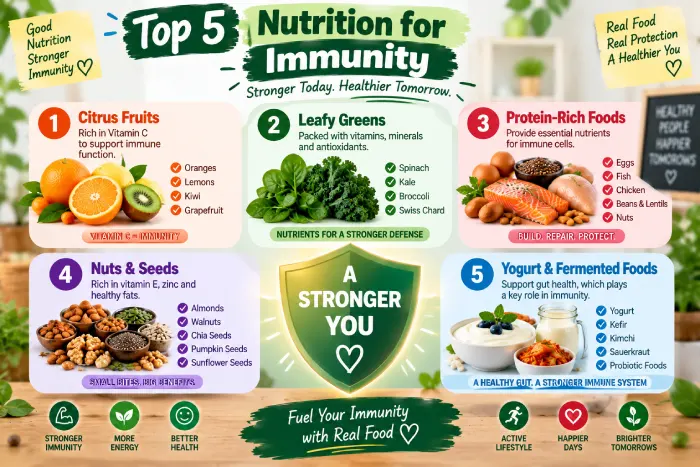
1. Eat Plenty of Fruits and Vegetables
Fruits and vegetables are an important part of a healthy diet. They make a contribution to the maintenance of a healthy diet by providing vitamins, minerals, fibre and protective phytochemicals.
Vitamin C-rich foods include:
- Oranges
- Guava
- Kiwi
- Strawberries
- Bell peppers
- Broccoli
- Tomatoes
A handful of other brightly colored fruit and vegetables provide even more additional nutrients. Consumption of a diverse range of fruit and vegetables is recommended rather than a specific type.
2. Get Enough Vitamin C
Vitamin C contributes to normal function of immune system. It is abundant in various fruits and vegetables. Citrus fruits are a common source of vitamin C, but they do not provide the only source. Guinawa, yellow and red peppers, kiwifruit, strawberries, tomatoes and broccoli will add vitamin C. In addition, eating whole fruits adds fiber to one‘s diet and is a healthier substitute for fruit/vegetable based liquids or supplements.
3. Don’t Forget Vitamin D
Vitamin D has a role in immune system and in bone health. Food sources are fatty fish, egg yolks and fortified foods. Sunlight:D erivatives of sunlight lead to the formation of vitamin D, which can be produced in the body but this again will depend on the site, season, amount of skin exposed and the individual. If vitamin D deficiency is a worry, consult your doctor as to whether you require blood tests or supplementation.
4. Choose Whole Foods More Often
The inclusion of processed foods in the total diet depends on the nutrient density of such foods. The use of very highly processed foods high in added sugar, sodium or saturated and trans fats could limit the person‘s ability to consume an adequate amount of nutrient-rich foods. Construct the majority of your meals with foods in their most natural state or close to it. For example, a filling meal might be a combination of vegetables, some whole grains and beans or lean protein, and a dash of heart-healthy fat. This way we get a mix without having a difficult diet.
5. Stay Hydrated
Water is necessary for many natural functions of the body. Drinking water is a way to promote overall health by keeping the body‘s various functions and processes normal. Whenever possible, choose water as your main drink. Other drinks like milk, tea and food, such as fruits and vegetables will also provide fluid. Sounds good. No need to drink sweet drinks labeled “immune boosting”
Can Supplements Boost Immunity?
Supplements should only be used if a person is to be diagnosed as being deficient in a nutrition or as having a needs for a particular group of nutrients. Too many vitamins and minerals will not protect the individual from infection and can also carry the risk of infection. It is recommended that you seek advice from a health professional, such as your GP or registered dietitian before taking any further supplements especially if you are already on medication or have a health condition.
Lifestyle Matters Too
Nutrition is only one of many measures that can impact on health. Other considerations that contribute to health include 8 hours of sleep, exercise, non smoking, effective stress management, hand washing. There is no eating plan that can insure the fact that you will never get sick. Instead it is about providing your body with what it needs to be healthy.
Final Thoughts
Nutrition for immunity begins with a diet that contains a little of everything. This means a diet that is balanced and provides variety no one “immune-boosting” food. Succumb to the allure of the quick fix. Commit to a wise food plan that will provide your body with daily nourishment.