

Mohd Arbaaz is an Editor and Writer at Fitnessison.com with 5 years of experience in SEO and digital content creation. He creates informative, reader-focused content covering fitness, workouts, nutrition, health, healthy lifestyle, technology, and computers.

Shashi Teja is a Reviewer at Fitnessison with over 6 years of experience in SEO, content strategy, digital publishing, and content optimization. He reviews content for clarity, research quality, topical relevance, readability, structure, and overall usefulness to readers.
Last Updated: September 8, 2026
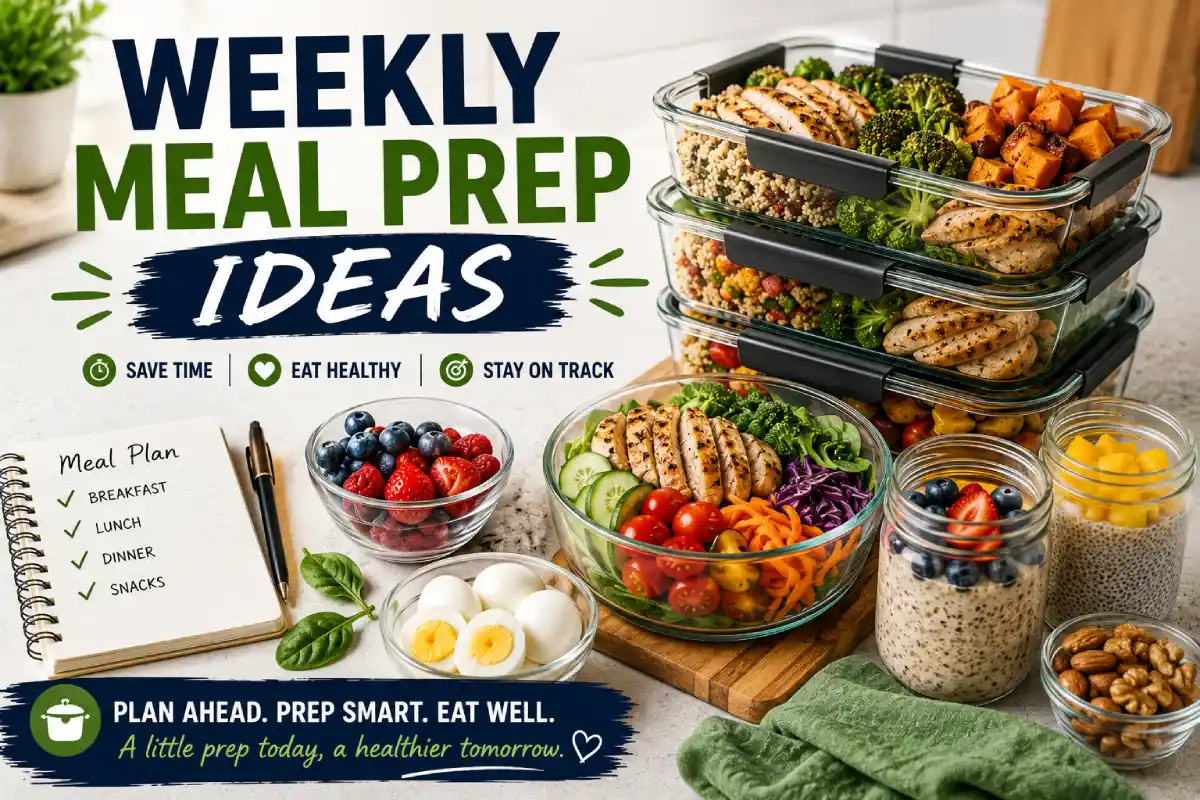
Weekly Meal Prep Ideas: If you always seem to be running short on time, then preparing a number of meals or meal ingredients a week in advance may be a good tip to try. Instead of having to think about what to eat each day, you will have some meals always prepared and waiting to be eaten when you need them. Meal prep doesn‘t have to be an all day affair on the weekend. You could create a simple system of batch cooking a handful of proteins, veg, car by bits, breakfasts and snacks, to put together differently each week. No matter what your goal is whether it be losing weight or gaining muscle or saving money. Or even just eating healthy for the week meal prep can help you stay on task without over complicating your food.
What Is Weekly Meal Prep?
Weekly meal prep is the act of preparing meals or ingredients in advance for future consumption.
You can prepare:
- Complete meals
- Breakfasts
- Lunches
- Protein sources
- Vegetables
- Other grains such as rice
- Healthy snacks
- Smoothie ingredients
Convenience is everything. If good, healthy food is prepared and ready to eat, it‘s easier to keep yourself fed and not running for fast food when you‘re in a time crunch.
Quick summary: Meal prep is a planning tool and not a diet.
10 Weekly Meal Prep Ideas to Try
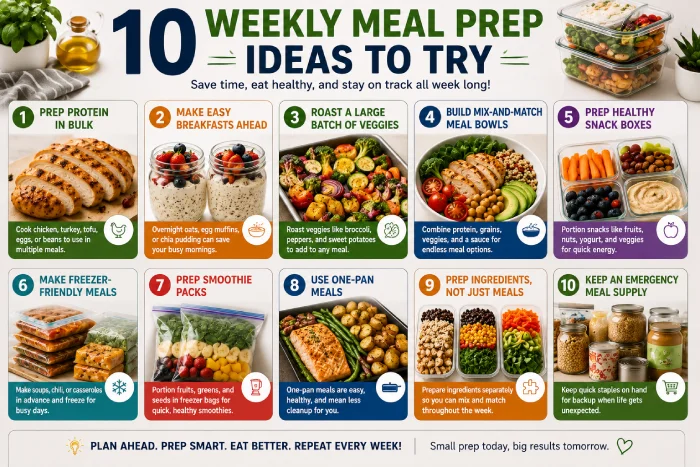
1. Prepare Protein in Bulk
Protein can provides the base for many of our meals.
Cook a few servings of:
- Chicken
- Turkey
- Fish
- Eggs
- Tofu
- Lentils
- Beans
- Lean beef
Spread the portions out over the season so that lesser eaten foods are being consumed. KFC chicken could be served as a filling in a wrap, bowl or sandwich or chicken could be incorporated on a salad or rice bowl in the same week.
Tip: here are some suggestions of other ways to cook your food if it is suitable to your nutrition goals: baking, grilling, roasting, air-frying.
2. Make Easy Breakfasts Ahead
Occasionally, one is not able to sit down and enjoy their breakfast because they have hurried to work. They tend to take whatever in convenient to eat. Prefabricate Make a good deal of your preparation work the night before.
Good options include:
- Overnight oats
- Yogurt with fruit in Greek style
- Egg muffins
- Chia pudding
- Breakfast wraps
- Homemade oatmeal cups
- Smoothie packs
For example, overnight oats can be portioned out into individual pots of oats, milk or yogurt, fruit and seeds. What makes you say “A convenient breakfast can ease a busy morning by one decision”?
3. Roast a Large Batch of Vegetables
Roasted vegetables are very flexible and easy to prepare as they are quick to make.
Try:
- Broccoli
- Carrots
- Bell peppers
- Zucchini
- Cauliflower
- Sweet potatoes
- Brussels sprouts
- Onions
Cook a big batch and incorporate the vegetables into bowls, wraps, salads, omelets, and dinner plates. You are able to alter the taste of the food also, during the second week of the plan.
Design: For instance you might use roasted peppers and onion on one day in a wrap but then have the same ingredients with a rice accompaniment one day later.
4. Build Mix-and-Match Meal Bowls
Meal bowls are a perfect choice for weekly meal preparation, as all of the components could be mixed-and-matched as needed.
A simple formula is:
Protein + carbohydrate + veggies + healthy fat + sauce
For example:
- Grilled chicken
- Brown rice
- Broccoli
- Avocado
- Yogurt-based dressing
Next day, try the same ingredients with a different sauce or seasoning. What this offers you is diversity without me giving you completely different meals.
5. Prepare Healthy Snack Boxes
Snacks can be easily forgotten when designing meals. That‘s a great idea but if it‘s not opt instead of waiting until you are hungry, have on hand= grab and go.
Try:
- It is interesting looking at how the most common choice for a snack, apple and peanutbutter, average 364 calories.
- Greek yogurt, berries, and so on.
- Carrots and hummus.
- Nuts and fruit.
- Boiled eggs and vegetables
- Cottage cheese and fruit 40g of cottage cheese mixed with an assortment of fruit in syrup. (All fruit used is part of the 5 a day campaign.)
- The whole-grain crackers and the cheese
Pre-cut portions of snack foods can help to keep portion sizes under control and prevent mindlessly grabbing whatever snack is in reach.
6. Make Freezer-Friendly Meals
Having freezer meals can be a real life saver when you have so many busy days ahead.
Meals that can work well for freezing include:
- Chili
- Vegetable soup
- Bean stew
- Turkey meatballs
- Burrito bowls
- Casseroles
- Homemade fresh pasta sauce
Make extra and freeze any left over that you are unlikely to consume within the advised refrigerated storage time. All containers should be labeled with the meal and date it was prepared so they are easy to identify.
7. Prepare Smoothie Packs
While smoothies may be easy, it can be time consuming to get ingredients ready each morning.
Create freezer packs using ingredients such as:
- Berries
- Banana
- Mango
- Spinach
- Chia seeds
- Different (other) fruits and vegetables.
As you are ready to blend, place the ingredients in a blender and add the liquid and protein of your choice. This transforms a potentially long process in to a quick one.
8. Use One-Pan Meals
They help you to save time on cooking and washing-up.
A simple combination could be:
French chicken; sweet potatoes; broccoli
Other combinations include:
Salmon + potatoes + green beans
Tofu + peppers + onions + zucchini
Put the ingredients on a baking sheet, add seasoning, cook and portion into meal containers.
If you prefer not to spend lots of hours in the kitchen, the following is ideal.
9. Prep Ingredients Instead of Complete Meals
Preparing 5 of the same meal is one of the biggest NO NOs. When it appears to be far more time-efficient to prepare up a huge amount of the same food, it‘s quite tempting to prepare the same thing for 5 days running, which is a terrible idea.
For example:
- Protein: Chicken
- Carbohydrate: Rice
- Vegetables: Broccoli and peppers 9a) 2 for £1.00 b) 2 for 79p c) 45p 0.33p per 100g 0.27p per 100g 0.36p per 100g
- Healthy fat: Avocado
- Sauce: salsa, dressing or yogurt.. Based on 2 out of 4 votes
Transitioning to a daytime choice in the week, use these ingredients and make bowls, salads, wraps, or plates! 10 This provides more variety and can really help to make it easier to adhere to meal prepping.
10. Keep an Emergency Meal Supply
Nothing is perfect, and nothing is ideal. Even the best meal prep can sometimes be transgressed by one reason or another. You might be working late, stuck in traffic, or just never actually made it to the kitchen. Have some snacks and grab-and-go stuff ready in the meantime.
Examples include:
- Canned beans
- Frozen vegetables
- Quick-cooking rice
- Oats
- Whole-grain wraps
- Nuts
- Shelf-stable milk
- Tinned or your long life protein choices…
They may also allow you to create an easy meal with less work involved than just calling in takeout.
Weekly Meal Prep for Weight Loss
Can also help with weight loss through portion control, for example:. However, it alone does 100% cause weightloss. Total food consumption, activity, sleep etc.. is also important.
For a weight-loss-focused meal plan, emphasize:
- Protein-rich foods
- Vegetables
- Fruits
- High-fiber foods
- Appropriate portions
- Almost all minimally processed foods.
- Water and other appropriate low-calorie drinks
For example a basic meal might be grilled chicken, baked vegetables, rice and a light serving of avocado. The proper right portions are determined by your calorie requirements and goal.
Weekly Meal Prep for Muscle Gain
Individuals seeking muscle gain may require sufficient caloric, protein, and carbohydrate intake to facilitate training and recovery.
Meal-prep foods can include:
- Chicken
- Turkey
- Eggs
- Fish
- Greek yogurt
- Cottage cheese
- Tofu
- Beans
- Rice
- Oats
- Potatoes
For example, a ready-made meal could include chicken, rice, vegetables and a healthy fat source. Individual requirements also differ, for the size of your portions should be dictated by your body, activity levels and objectives.
How to Keep Meal Prep Interesting
If you eat the same meals every day for the week. The quickest fix is to change flavors instead of totally changing ingredients.
Try different combinations:
- Mediterranean: Lemon, herb, yogurt sauce
- Mexican inspired: Mash with salsa, beans, avocado.8 Mexican inspired:.. 8 Add the beans into a cup of water and cook for 2-3 hours till soft. Blend the beans to give a salsa salsa… 8 Use…
- Asian-like: The exception has to be ginger and garlic. It is not a traditional Asian flavor, but really common. Vegetables: Red (orange), yellow, zucchini, green and yellow beans, carrots.
The Indian influence: Curry spices, vegetables, yogurt
A good way to keep variety within this section is to choose one main protein to rotate weekly.
For example:
- Week 1: Chicken
- Week 2: Fish
- Week 3: Turkey
- Week 4: Tofu and beans
This very much comes down to what you would like to create in your daily life. This can make your food experience exciting while not overwhelming your lifestyle.
Common Meal Prep Mistakes
Preparing Too Much
If you‘re binning or throwing away food, shop from recipes. Cutting down on the quantities you cook:
Making Complicated Recipes
Unfortunately there is no such thing as cheap meal prep. A good meal prep will save you a bunch of time but shouldn‘t take up your whole weekend.
Forgetting Snacks
When you‘re hungry unexpectedly, commercial food stuffs can be harder to resist.
Ignoring Your Schedule
Your meal plan should be realistic in terms of your lifestyle.
Expecting Perfection
Failure is not here. One meal prep does not mean you‘re done. Get used to it, learn, and move on!
A Simple Weekly Meal Prep Formula
If you‘re new to meal prep, start with this simple formula:
2 proteins, 2 carbs, 3 veg, 2 crisp, 1 breakfastand if so reducing the 2nd pack to just 2 carbs.
For example:
- Proteins: chicken and eggs.
- Carbohydrates: rice and potatoes.
- Vegetables: broccoli, pepper, and carrot.
- Snacks: yogurt and fruits, including the use of dried fruits such as apricots (purchased at English Market and Glanmore)
- Breakfast: Overnight oats
These can be made into different meals all throughout the week. The system is simple, adaptable, and easy to modify.
Final Takeaway
The most effective weekly meal prep ideas are those you will actually stick to. It‘s not about fancy recipes or hours in the kitchen. Just prep a couple of basic foods, keep them well, and mix them up in a dozen different ways over the week.
No matter if you‘re attempting to shed pounds, promote muscle growth, pinch pennies, or just eat more regularly, meal prep helps make healthy eating a little easier. Begin with three or four days’ worth of meals while you adapt to your new schedule rather than attempting to plan an entire week from the beginning. As you learn what works into your schedule, slowly develop routines that work for you.
Schedule your meal, set your basics, have a wide choice and make your next healthy meal more tempting.