

Mohd Arbaaz is an Editor and Writer at Fitnessison.com with 5 years of experience in SEO and digital content creation. He creates informative, reader-focused content covering fitness, workouts, nutrition, health, healthy lifestyle, technology, and computers.

Shashi Teja is a Reviewer at Fitnessison with over 6 years of experience in SEO, content strategy, digital publishing, and content optimization. He reviews content for clarity, research quality, topical relevance, readability, structure, and overall usefulness to readers.
Last Updated: September 28, 2026
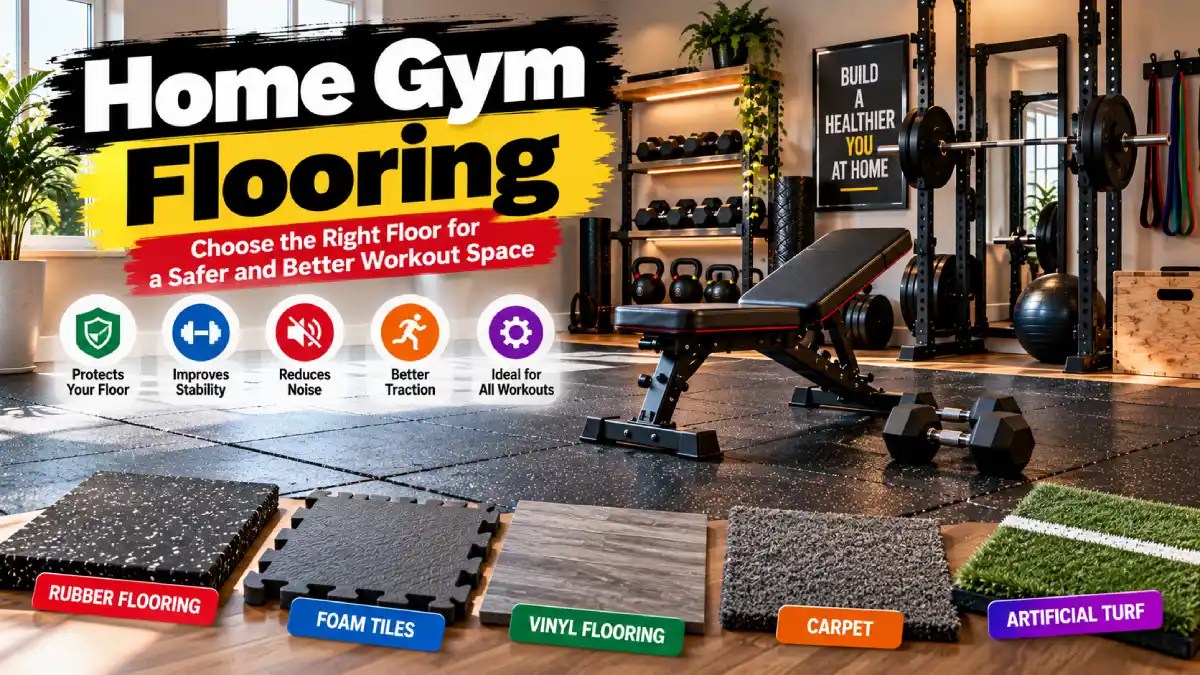
Selecting the most suitable home gym flooring can prevent your current floor from damage, and could enhance the usability of your workout space. You will also find that it facilitates the placement of home gym equipment, and could contribute to the control of impact, vibration, and sound in some instances of exercise. However, one style of flooring material is not the ideal solution for all home gyms, and a yoga room will have different house rules than a garage loaded with barbells. A person working out in an apartment will also have different house rules to a person converting their basement. Your individual requirements can only be determined through taking into account all influences of your specific workouts.
Why is It Important to Have proper home gym flooring?
Gym flooring sits in between you and the original surface below.
Depending on the material, it may help with:
- Floor protection
- Traction
- Equipment stability
- Impact absorption
- Sound and vibrationandnoise and vibration,or vibrations and audible noise,are phenomena that occur when a mechanical part vibrates such that causing the generation of sound, either as a by-product or as an intended outcome of the machine‘s operation.
- Easier cleaning
- The definition of workout zones;
Flooring is especially critical when working with dumbbells, weight plates, benches and racks, and cardio equipment. But remember thicker flooring is not better flooring select flooring that best matches your-room activities. For general planning advice, refer to our full Home Gym Set-up guide.
What Is the Best Flooring for a Home Gym?
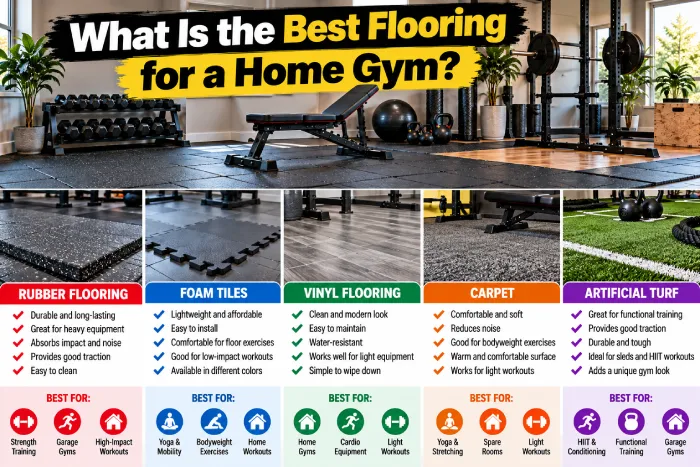
Rubber is the most popular choice, however it depends on what the intended use is, it can be foam, vinyl, carpet and then artificial turf.
Rubber Flooring
Rubber is a popular choice for strength-training areas because it is tough and performs efficiently beneath weights and other gym equipment.
Common options include:
- Rubber rolls: Good for covering larger areas with fewer joins.
- Rubber tiles: Cheaper if you want to change sections. Widely available on the market.
- Heavy-duty mats: often found in smaller lifting areas and garage gyms.
Rubber flooring is great for around racks, dumbbells, benches and weights. But weak points include the actual thickness, the quality of the material, smell, the installation process, and the cost.
Foam Tiles
Interlocking foam tiles are inexpensive, quite cheap, lightweight, and easy to set up.
They may work well for:
- Stretching
- Mobility
- Yoga
- Bodyweight exercises
- Light at-home workouts
The only trade-off is that a softer foam will easily give way to heavy equipment. A rack, a bench, or heavy dumbbells may leave body-shaped impressions and be unsteady depending on the product.
Vinyl Flooring
Vinyl provides a clean look and is fairly simple to wipe Clean. Vinyl might be more appropriate for less frequent use of the gym. In lighter gyms with no heavy weights being dropped all the time a vinyl floor could work well. Think about covering gym mats if you intend to place a lot of gym equipment on vinyl.
Carpet
Carpet can also be sufficient for some light-impact workouts. It is an adequate surface for many floor exercises, but may not be as practical when using equipment, or when sessions require a lot of sweat. Think about the type of training you expect to do before ripping up the carpet:
Determining the appropriate thickness for home gym flooring
No one-size-fits-all thickness for all workouts. The light yoga/ resistance-band room might need a lot less insulating than an area where tremendously heavy free weights are used. Think activity.
| Training Type | Flooring Priority |
| Yoga & mobility Yoga, all kinds of yoga, especially those with a physical component to the exercises, uses mobility as a component. This was expressed in the group‘s discussion, particularly when describing the knees as people talked about sitting and the entire discussion was cut off. Overuse of knee joints as a result of missed stair runs or physical changes in the knee joints could cause mobility problems. | Handling and grip10 As discussed in the mechanical properties of the prosthesis section, comfort and grip are important issues when considering the design of the prosthesis. While grip typically refers to the hand controlling the articulations, it can often be extended to a more general definition relating to the forearm. |
| Bodyweight workouts | Comfort A common concern in the cycling community is that low pressures are uncomfortable and give poor control. However a more common problem experienced at low pressures is ‘pumping’. To avoid this cyclist should maintain pressure at 50psi and experiment with the pressure in this range. The above graph shows the value this should be. |
| Dumbbell workouts | Protection and stability. Use of protective equipment (face shields, goggles, gloves) to ensure the safety of both the patient and the healthcare provider. (p. 177) |
| Cardio equipment | Stability and mitigation of vibrations |
| Intensive strength training | Vijayavel Products Footwear Durability and impact protection |
| Garage gym | Durability and floor protection |
Are you having custom flooring installed? Always review the guidance from your flooring or equipment manufacturer before installation.
Home Gym Flooring for Different Rooms
Bedroom or Spare Room
Sometimes a flooring that can be easily taken up is what a bedroom gym requires to safeguard the original flooring without modifying the room. Exercise mats or rubber mats can be used to section off an area to exercise on.
Garage Gym
The strength of concrete is one of the reasons your garage feels suitable for a strength workout however, placing equipment directly on the concrete floor isn’t always the best idea. Tough rubber floors can provide more functional lifting surface.
Apartment Home Gym
Consideration should be given to the apartment floors. Noise and vibration may travel through the building it is most noticeable with jumping or high impact type exercises. The flooring will be a small help but cannot completely eliminate impact noise. Think about using different exercises if this is a problem.
Match Flooring to Your Home Gym Layout
Design the layout and floor of your home gym at the same time. It is not always required to have a uniform surface in the whole room.
For example:
- Non-slipping zone: Hard rubber floor.
- Mobility zone: Exercise mat or a comfortable surface.
- Guy: cardio zone.1 Equipment is a mat and pads, chest high. Bustin‘n out the bag! Floor, top of the deck.2
- Storage zone: Standard flooring where appropriate.
Zones allow you to use the protective floors more efficiently, hence saving expense.
Common Home Gym Flooring Mistakes
Choosing Flooring Only by Price
Low-cost flooring could be costly if it tears, splits, or has to be replaced too soon. Think about longevity as well as price.
Assuming Soft Flooring Is Always Safer
Soft surfaces Although superficial feel comfortable, they may be unstable underneath a piece of heavy equipment. Firmness should be aligned to activity.
Installing Flooring After Heavy Equipment
Lay the flooring if you are going to before the rack is assembled or before having large cardio equipment in position. It will save time and trouble later on.
Ignoring Moisture
Basements and garages are especially susceptible to moisture. Fix the moisture issue before hiding it with flooring.
Forgetting Maintenance
Hour:Dust:Sweat:Dirt: Build-up occurs continually. Select a surface you can reasonably maintain.
How to Choose Home Gym Flooring
Before buying, answer five questions:
- What exercises will I do?
- What is the weight of my gear?
- What is the nature of the original floor I am safeguarding?
- Are noise and vibration consequential?
- First question do I want these floors to be fixed (carpet, wood, quarry tiles, tiled vinyl) or removable (solid or floating floor systems)?
Once you have those answers you can compare flooring much more easily. Don’t buy flooring just because it “looks like gym flooring.” Buy because it helps your gym floor have the problems that your gym space actually has.
Final Thoughts
The ideal home gym flooring depends on your training types and space. Rubber floors are great for most strength training, foam is suitable for lighter workouts, and mats are idea for specific areas like cardio and yoga without covering the entire room. Consider the weight of equipment before installation, ease of cleaning, sound, moisture, and tailor different flooring for various areas when appropriate. Don‘t overthink your home gym flooring. Their goals are to be cost-effective and functional for your personal needs.