

Mohd Arbaaz is an Editor and Writer at Fitnessison.com with 5 years of experience in SEO and digital content creation. He creates informative, reader-focused content covering fitness, workouts, nutrition, health, healthy lifestyle, technology, and computers.

Shashi Teja is a Reviewer at Fitnessison with over 6 years of experience in SEO, content strategy, digital publishing, and content optimization. He reviews content for clarity, research quality, topical relevance, readability, structure, and overall usefulness to readers.
Last Updated: September 28, 2026
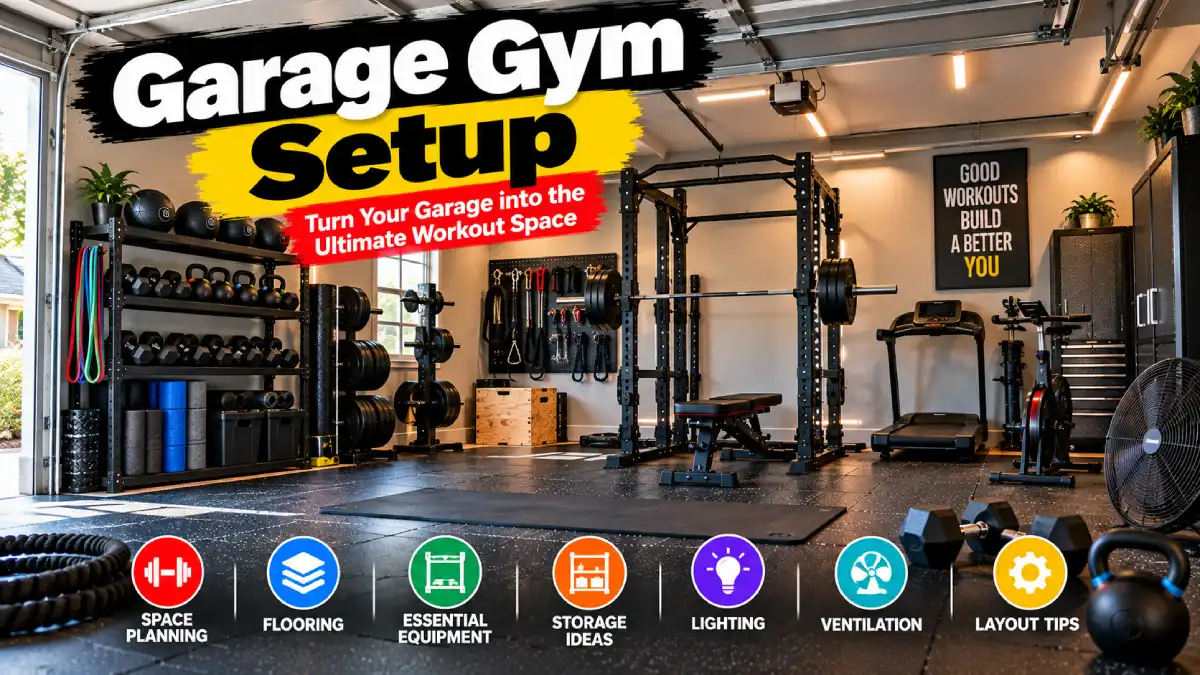
Transform your underutilized garage space into a home workout area for strength, cardio, and total body conditioning. Garages tend to have a lot more space for racks, barbells, weight plates, and bigger pieces of equipment than homes bedrooms or living rooms. However, a garage isn’t enough.
Temperature, flooring, moisture, ventilation, light, storage and space all influence the comfort of the gym throughout the year. Before purchasing equipment, layout the room according to the exercises you wish to do.
How Much Space Do You Need for a Garage Gym?
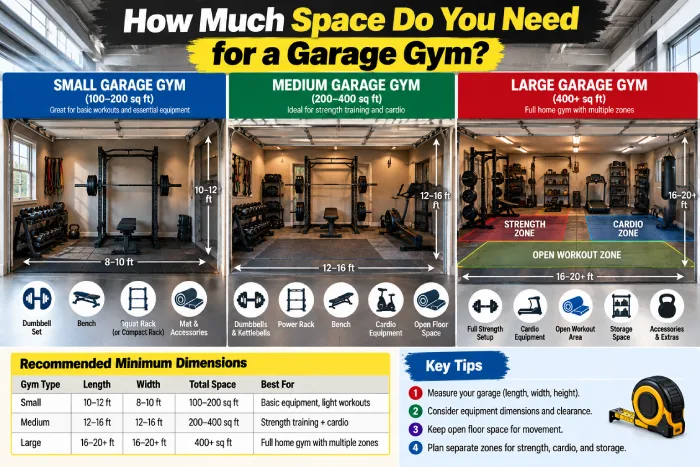
You don’t even have to convert a whole garage Perhaps a one- or two-car garage section is suitable for a workout.
Start by measuring:
- Floor length and width
- Ceiling height
- Garage-door clearance
- Door tracks
- Windows
- Electrical outlets
- Existing shelving
- Parking requirements
- Water heaters and Utilites
Next, determine the dimensions of the equipment you intend to use. Don‘t forget that equipment size is just one aspect of the formula. A barbell, for instance, needs plenty of space around it to load plates and perform lifts effectively. Leave as much floor space as possible. For comprehensive room designing tips, head over to our Home Gym Setup pillar.
Plan Your Garage Gym Layout
Simple home gym layout. Plan the garage into four straightforward areas:
Strength Zone
Group your rack and bench, barbell, plates, and dumbbells. Keeping strength equipment in one area minimizes pointless transitions between exercises.
Open Workout Zone
Leave part of the floor empty for:
- Warm-ups
- Lunges
- Mobility exercises
- Kettlebell movements
- Core training
- Stretching
Don’t think of empty floor as wasted space. The open space on a garage gym is one of its most valuable assets.
Cardio Zone
When working out on a treadmill, exercise bike, or rowing machine, position it so that it isn’t in the way of your lifts. Powered machines need to be accessible to the power, but should not turn into cables to trip on.
Storage Zone
Use racks, shelvers, hooks and wall mounted appropriate storage for stores of items. Manage your movement space and training area so that the major walking areas areas are kept clear.
Choose the Right Garage Gym Flooring
Most garages have concrete floors. While this will give a firm foundation, you may want to provide some suitable flooring for the home gym to safeguard the existing floor as well as protecting the equipment you may put on it. Items like rubber mats or tiles are a good consideration. You don‘t need to put the whole garage down.
If your gym is in a place where vehicles or household storage is also kept, you can only have specialized flooring in the workout area. Think about dampness in the room before having the flooring put down. Putting down flooring over a dampness issue will not get rid of the bottom problem.
Best Equipment for a Garage Gym Setup
The right gear depends on your purpose.
For a strength-focused garage gym, you might consider:
- Power or squat rack.
- Barbell
- Weight plates
- Adjustable bench
- Dumbbells
- Resistance bands
You may want a lot less if your goal is general health and fitness. Adjustable dumbells, a bench, bands, kettlebells and a mat for floor work can provide a very wide variety of workout options without taking up a large portion of the garage. If cardio work is going to play a big role you might look to have a treadmill, bike or rower available depending on your space and training needs. Ultimately get what you‘ll use regularly!
Think About Temperature and Ventilation
Climate is another major differential between a garage gym and a home gym set up indoors. Climate varies depending on the location of your home: in some areas a garage can become very hot and in others very cold at certain times of year. Adequate ventilation and temperature control should be part of your planning.
Depending on the garage and local climate, solutions may include:
- Fans
- Improved ventilation
- Insulation
- Weather sealing
- Heating or cooling as required
Any electrical, structural, or permanent modification can/should be done correctly and in accordance with local requirements. A pretty gym isn’t much good if the temperature means you won’t use it for the best part of the year.
Improve Garage Gym Lighting
The majority of garages in the sample were built with a view to providing parking and storage, rather than space for activity. If the space is inadequately lit, this can detract from the area‘s effectiveness for exercise. An effective over-head lighting system can aid users in seeing the equipment clearly and make the room more welcoming. Use of natural light from windows should be maximized where present. Equipment should not be situated to unnecessarily block existing sources of light.
Organize Garage Gym Storage
Garage gyms are not the only things competing to get your mind. Serious home gym storage becomes with your household items such as tools, bicycles, boxes, and other supplies. Light weight home gym storage such as resistance bands and jump ropes are best hung on suitable wall storage.
Dedicated racks can organize:
- Dumbbells
- Weight plates
- Kettlebells
- Mats
- Foam rollers
- Accessories
Ensure the heavy equipment is placed on a storage system that is st rated to carry the load. If you garage still has to store a vehicle vertical storage becomes even more essential.
Common Garage Gym Setup Mistakes
Buying Equipment Before Measuring
A rack may be flush on the floor but foul the garage door or ceiling. Measure first.
Ignoring the Garage Door
Keep in mind that the door and tracks require lift to function.
Filling the Entire Garage
Provide leaves of sufficient width to enable easy movement and safe access.
Ignoring Temperature
Consider seasonal impacts prior to an extensive investment in equipment.
Poor Storage
The numerous tools weights, bands, harnesses scattered throughout my garage create clutter and take away from the available training area.
Buying Everything Immediately
Build up in stages. For several weeks, you‘ll be able to see which equipment you do need.
Simple Garage Gym Setup Example
A straightforward strength and fitness setup could include:
| Zone | Equipment |
| Back wall | Rack, barbell and bench |
| Side wall | Storage of DUMBELLS and WEIGHTS5,9:Z Weight and dumbbell storage8 Dumbells should be stored on a rack at or above shoulder height as this is the most common so to encourage usage. Zinc plated and cast dumbells should be stored in levels below shoulder height (where possible). Well maintained racks need to be designed and constructed using a safe personnel system; all that rest of the committee can do is to make the system as safe as possible. |
| Corner | Walking or jogging. If you have access to using a rowing machine or bike.63 |
| Wall hooks | Bands and accessories |
| Center | Open workout area |
Such setup will save you myspace in center of the garage, by storing gear around the edges. The final configuration will be determined by garage dimensions as well as by gear needed.
Final Thoughts
A good garage gym balances solid equipment with efficient space planning. Take measurements first. Carefully plan your flooring, designate workout areas in the room, and leave adequate open space to move around. Equally considerations are temperature, ventilation, and lighting, as well as moisture and how you’ll store your gear. There’s no need to upgrade the whole garage or purchase all the equipment at once. Begin with the basics to match your training objectives and upgrade when your workouts motivate you to do so. An average garage gym that’s slightly uncomfortable but consistently used beats the high-end garage gym that gets turned into a cluttered storage room.