

Mohd Arbaaz is an Editor and Writer at Fitnessison.com with 5 years of experience in SEO and digital content creation. He creates informative, reader-focused content covering fitness, workouts, nutrition, health, healthy lifestyle, technology, and computers.

Shashi Teja is a Reviewer at Fitnessison with over 6 years of experience in SEO, content strategy, digital publishing, and content optimization. He reviews content for clarity, research quality, topical relevance, readability, structure, and overall usefulness to readers.
Last Updated: September 8, 2026
You need to drink water everyday. Maintaining well-hydrated body can be simple to neglect. Water consumption… you may remember to drink when you‘re exercising or on a very hot day. Hydration however, is something you do every day and it is part of your everyday routine. Your body is constantly losing water through normal processes such as breathing, sweating and urination and is replenished by fluids and food. Water is required for cell functioning and flow of nutrients..
Fortunately, it doesn‘t have to be difficult. You will not need to track every single ounce of water you consume, or come up with an even hydration goal for each day. Don’t worry about drinking all day, instead just keep water consistently flowing through your body. Start to drink often and listen to what your body wants. Make water a natural part of you everday routine. If your goal is overall lifestyle enhancement, check out our comprehensive guide to healthy habits.
Why Healthy Hydration Habits Matter
Water is involved in many of the body‘s essential processes.Water is also very important as it is needed for normal cell functioning, it helps to fill blood volume, it helps regulate temperature and keeps nutrients moving around the body as well as the removal of waste products.They are not always the same everyday. You might require more fluids when you are exercising, in hot weather, sweating a lot or experiencing increased fluid loss. That is why the efficacy of any good hydration protocol should be flexible rather than based on one single number, however this may be.
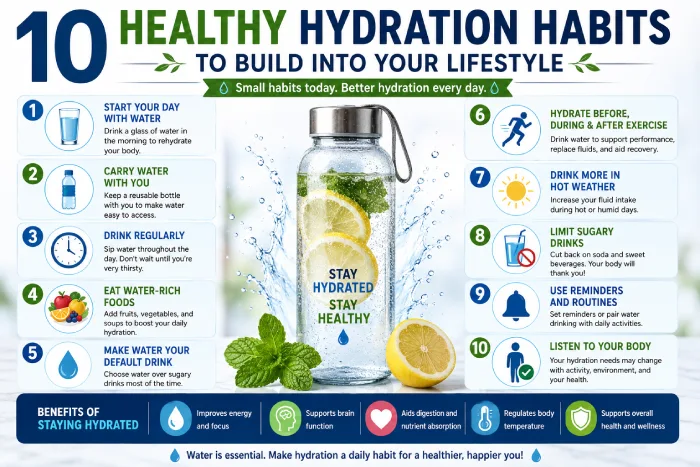
10 Healthy Hydration Habits to Build Into Your Lifestyle
1. Start Your Day With Water
Once you have had a some sleep, water can also be an easy way to start your day. Arrange for a glass or reusable bottle to be within easy reach of your bed so you can drink water as soon as you wake up. There‘s no need to include other ingredients such as lemon, herbs and supplements to improve your water intake; regular water is naturally free of calories and just as good for drinking. Water is best absorbed when it‘s cold water, so drink it cold until your body is used to it. You can also work drinking water into your morning routine, for example by drinking it after you‘ve brushed your teeth or while you‘re making breakfast.
Simple habit: Put your water bottle in plain sight.
2. Carry Water With You
One of the primary reason everyone drinks too little water is inertia. Waterless you just ignore it until you really want it.Take a travel mug, a reusable water bottle, or some other sort of portable container with you to work, or to head out for a walk or trip.A constant reminder to keep drinking is to always have a water bottle in sight. A further contribution could be that it may lead to substituting these for water.
3. Drink Regularly Instead of Waiting Until You‘re Very Thirsty
Thirst is a good indicator, but the amount of fluids you need will depend on your activity level, weather, what you eat and drink, and other factors.In public, it may appear too much if you drink a lot of water, so also make sure to have your water milked. Instead of drinking all your 8 litters in bulk, make it easy. Drink regularly with your food, in rest periods and active hours. The idea here is not to keep yourself from drinking all the time. It is to not to suffer long dry spells when your body must have all the fluids.
4. Make Water Your Default Beverage
Definitely for the health reasons, water is the naturally good option for daily consumption as it re-hydrates the body and its sugar free where it contains the calories.Replacing some of your diet or regular similarly flavored carbonated or non-s carbonated drinks (including sweetened drinks) with water can help reduce added sugar and calorie consumption. The CDC has identified plain water as a healthy hydration choice and has discussed possible advantages of swapping out your sugar sweetened beverages. You don’t need to get rid of all other drinks. Focus on making water the place you go most frequently when seeking a drink.
5. Eat Water-Rich Foods
Drinks are not the only source of hydration.
Foods provide part of the fluid intake. A lot of water can be found in fruits and vegetables, soups, yogurt and other foods. According to the National Academies,
Including high in water content foods in your diet.
Examples include:
- Watermelon
- Oranges
- Cucumber
- Tomatoes
- Strawberries
- Melons
- Lettuce
- Soups
This makes drinking water just like any other part of your daily intake and not a separate memory test.
For more nutrition-related habits, see our healthy eating habits guide.
6. Increase Your Fluid Intake During Exercise
Your body‘s water requirements may also rise when you exercise since water is expelled from the body through sweat. Make sure you have available water/fluids before exercise,. If you are exercising for an extended period or at high intensities then drink to satisfy your thirst and consider the surroundings. Replace fluids lost by sweating after exercising. Your needs differ with time and level of your workout, as well as temperature, humidity and amount of sweats. Plain water can be an effective fluid choice for short, moderate exercise. Ultra-endurance exercise sessions or very long/very intense sessions may require specific personal hydration plan.
7. Pay Attention to Hot Weather
Hot and humid weather increase fluid loss. Carry water with you while outdoors when the temperature is warm and use it from time to time.Other methods to prevent heatwould be to go to cooler environments including air conditioned offices or shaded outdoor locations, to wear thread light-weight, loose, light colored clothing and to limit activities that are not necessary.Which is at the forefront of many outdoor activities, especially effective when Hydration may be one aspect of a broader set of approaches to heat management.
8. Limit Your Reliance on Sugary Drinks
Soft drinks, frizzies, sweetened fruit juices, energy drinks and other sugared drinks will add lots of sweetness and calories to your intake. You don‘t need to ban the drinks you love altogether. Alternatively, maybe try switching to drinking water as your main beverage and having sugary drinks once in a while.If plain water is too dull, drink flavored water without sugar or sweetener or add flavor to water through the use of carbonated water or raw foods such as lemon, lime, cucumber or fresh fruit.The consequences of this could be to make drinking somewhat more enjoyable, without turning every glass of water into a sugar-wide drink.
9. Create Hydration Triggers
If you are prone to forgetting to drink water, relate drinking water to existing habits.
For example:
Upon waking to→ drink(consume) water.
Before going out of home –> switch on your bottle.
If became hungry → killed time sitting at the Icdoc. How long after becoming hungry will complain, “I‘m hungry. I‘m going to get something to eat?”. Eating too slow (more than 30 minutes). Talk about other places to eat.
For more than 2 hours before exercise. 2. For 45 minutes during exercise.3. For 15-30 minutes after exercise.
While having a work break → grab a few drinks.
These simple triggers can take care of the hydration automatically.When you get absorbed and start losing track of the time, set alarms on your cell phones.
10. Pay Attention to Your Body and Your Environment
No one hydration schedule tends to be ideal for everyone. Your needs may vary, depending on exercise, climate, diet, body size, age health status, fluid losses.
Monitor your feelings and your context:
If you‘re at high intensity or in a hot environment for long periods, you require a different hydration approach to being out in cool weather, sitting at your desk when you are not competing. The National Academies note that water needs can vary based onlevel of physical activityandpropsity and osmosity of the environment:
How is your water intake calculated?
You might have been told that everyone has to drink 8 glasses of water every 24 hours. In practice, of course, there isn‘t one figure that applies equally to everyone. The National Academies has established guidelines for total water intake, that is, from drinks and foods, which can depend on ages, sex, activity, climatic and other conditions. That is, you ought not to guess that just one particular number is your own requirement. The wiser solution is to hydrate routinely and merely increase the quantity of fluid in times of greater fluid demands of the body. If you have a medical problem which affects fluid balance or been given individualised fluids by a doctor, follow these.
Healthy Hydration Habits for Exercise
When you are active, being hydrated is more critical.
A simple approach is to think about three stages:
Before Exercise
Never wait until you are very thirsty before you start your workout. Rather come prepared and adequately hydrated beforehand.Have plenty of water available to hand before you start.
During Exercise
For shorter to medium duration, will drink according to taste and circumstance. Longer session, more vigorous effort, hot environment should be carefully considered.
After Exercise
Drink more after training to replenish the fluid loss caused by sweating. You may have different hydration requirements after a long, hard exercise session in a hot environment than after a short walk. To learn about other fitness behaviors, check out our article of healthy exercise habits.
Signs You May Need to Pay More Attention to Hydration
Your body is capable of telling you to drink more liquids. Depending on the scenario, signs of dehydration may be thirst, dry mouth, fatigue, dizziness, headache or a decreased need to urinate. Furthermore, symptoms may have other factors producing their effect, so they must not be immediately attributed to Dehydratio. Dehydration, especially if severe, can become dangerous when exposed to heat or when performing hard, prolonged exercise. Seek advice from a medical professional if you develop severe symptoms of.
Can you over hydrate?
The more, the better?
Healthy kidneys normally maintain the water balance. But if you consume too much water, your blood sodium level can drop dangerously low. This is especially true:
The National Academies state that it is possible for harmful effects to result from too much fluid intake in excess of losses.
This is another reason why you shouldn‘t bend over backwards to drink excessive quantities of alcohol just because some phenomena on social-media suggests you should.
It is also essential to hydrate at regular intervals and then adapt your fluid intake around your requirements and situation.
A Simple Daily Hydration Routine
You can also ease the strain of hydration by combining it with your current routine.
In the morning: Have water upon waking and with breakfast.
Work or studies: Have a bottle handy and sip through the day.
Food: drinking a glass of water at lunch and dinner.
Exercise: Maintain adequate fluids readily available before, during and after activity as appropriate.
Night: Drink in accordance with one‘s needs and not in large quantities just before retiring.
However, the precise quit amount will, of course, depend on the individual.
His are the ideas you need to maintain experience hydration effortlessly all day.
Common Hydration Mistakes to Avoid
In fact, even those who set out to drink enough water may do themselves a disservice by adopting them.
Avoid:
- One of the worst practices for a hikers is to drink only when he/she has a great thrist. The problem is that thirst may occurs very late and need at least 15 minutes to be spread. So it‘s often too late when you felt it.
- One session of the most (200 glasses) in a few minutes.
- Suppose… thatall is necessary for all users.
- Having sweetened drinks instead of up to two thirds of your water
- Overlooking rising fluid demands due to vigorous exercise or hot temperatures.
- Forgetting meal with a lot of water content.
- To force excess water consumption based on a trend.
- Committing to a single hydration rule in all situations
Most of the time it is more realistic if the players maintain a well-proportioned diet rather than take up such extreme hydration trials.
How to Make Healthy Hydration Habits Last
The simplest way to develop a hydration habit is to take out the “friction” or obstacles.
Have a bottle at your desk. Take one on holiday. Take on a day trip. Also, remember to refill it before you leave home. Take it with you during exercise.
You can also go down the path of habit stacking.
For example:
- Transforming from me sitting at my desk → I have a few drinks.
- Upon finishing my workout→ I take a sip of water
- If, when I make my lunch → I fill my glass.
The more naturally water will become a part of your day-to-day living, the more likely you are to remember to drink it.
Frequently Asked Questions
Healthy hydration habits include?
Marbella, M. (2010). Good hydration practices are to consume fluids frequently during the day, primarily water, carry water around with you, consume lots of water filled foods, be aware of the need for higher fluid intakes when exercising and in hot weather conditions and to not overdo the fluid intakes.
Is it good for health to drink water each morning?
Absolutely. Having a glass of water first thing in the morning is an easy way to put hydration into the day‘s plan. There‘s nothing special needed in the water for it to do its job.
How many liters of water should I take on in a day?
No quantity is best for everyone. Overall water requirements come from fluids in both food and drinks and depend on such factors as age, sex, activity levels, and environment.
Undeniably, water is far superior to all calories containing beverages.
Water Zero kilocalorie method of hydration replaces sugar-sweetened beverages. Drinking water instead of Beverages with sugars reduces the amount of sugar and calories.
Am I drinking enough water while I work out?
Is it often? Yes. Depending on intensity and duration and temperature and humidity, exercise can have a great effect on fluid losses through sweating. The longer an athlete trains and the more intense the training (fewer rest breaks), the more hydration they may need.
Is it possible to obtain water from food?
Certainly. Your water consumption includes all liquids you consume as well as those present in the foods you eat. Asparagus, berries, melons, grapes, lettuce, and celery are just some of the foods that contain a significant amount of water.
Final Thoughts
Developing good water-consuming habits isn‘t about counting up every glass of water consumed.
It is simply about encouraging the use of fluids to become a normal and habitual lifestyle.
Maintain adequate hydration, sip water frequently, prefer water over carbonated or sugary drinks, consume water-containing foods, and be especially mindful of your hydration needs when exercising or in the heat.
And in the same breath, just watch out for the extremes. Your hydration needs are your own and gulping down too much water is no quick fix to a better you.
The consistency of proper hydration is identical to work out, proper diet, proper sleep and proper mental health.
For more specific and actionable techniques that you can actually implement on a daily basis, consider our comprehensive guide to adopting healthier behaviors.