


Mohd Arbaaz is an Editor and Writer at Fitnessison.com with 5 years of experience in SEO and digital content creation. He creates informative, reader-focused content covering fitness, workouts, nutrition, health, healthy lifestyle, technology, and computers.

Shashi Teja is a Reviewer at Fitnessison with over 6 years of experience in SEO, content strategy, digital publishing, and content optimization. He reviews content for clarity, research quality, topical relevance, readability, structure, and overall usefulness to readers.
Last Updated: September 8, 2026
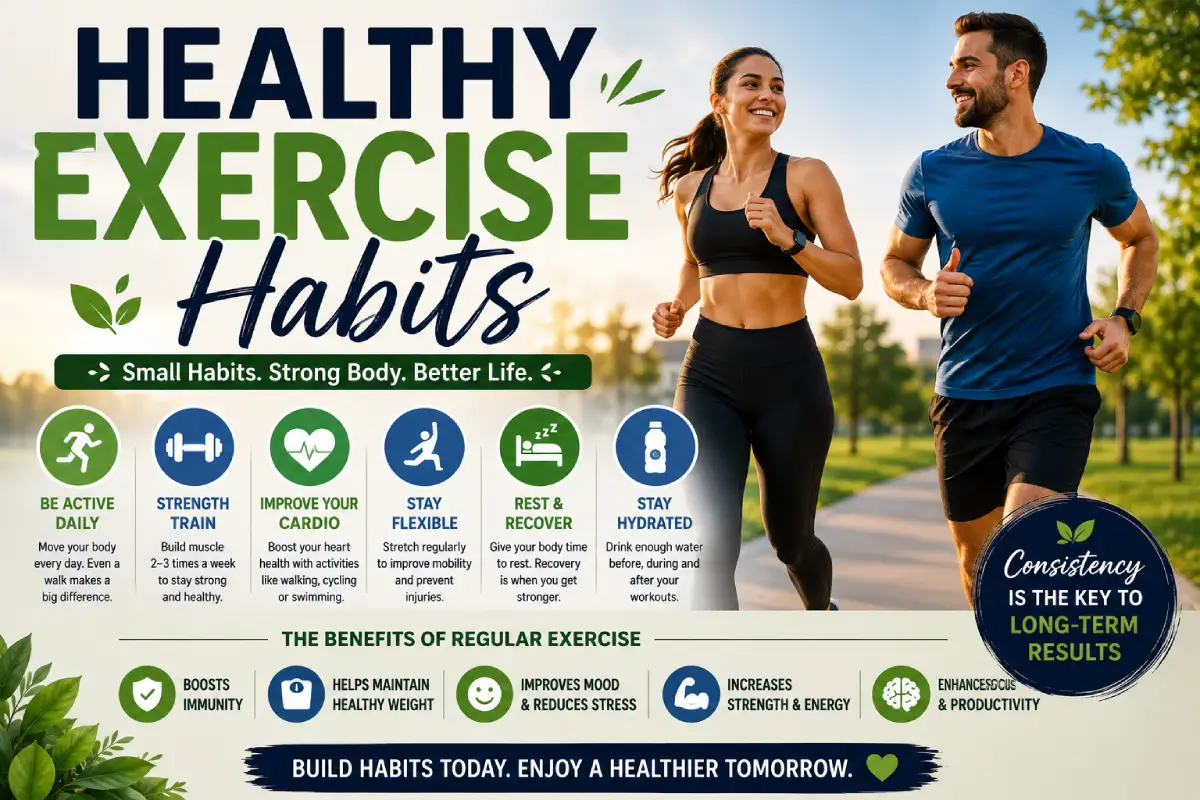
Exercise doesn‘t have to involve several hours at the gym. It could be going for a walk in the morning. It could be getting on your bike, swimming, dancing, lifting weights, going out for a game of golf or just being more active than you already are.
The real struggle is not knowing exercise is good. It is doing something you can do on a regular basis.
That‘s where staying on top of things with healthy exercise habits can help.
Develop a program that emphasizes daily movement, rest, strength, flexibility, etc. over hard workouts and short- term fitness objectives.
According to guidelines from the World Health Organization adults should undertake at least either 150150 min or 753150 min of moderate intensity aerobic activity per week, in addition, muscle strengthening activities should be undertaken at least two or more days per week. It further states that any physical activity is better than none.
If you want to focus on rehabilitating your whole life, see our comprehensive Healthy Habits guide.
Exercise needs to be integrated into your day, not just your training.
People often make the mistake that aerobic exercise takes place only when in your workout gear.
No.
Going walking to the store, riding the bike to work or school, using the stairs, participating in activities of the household, play with the children or going an evening walk are actions that make us active: walking, riding a bike, gardening and sports activities are considered as physical activities as well. Tranport, work, household task and sports are included in the physical activities considered.
A healthy exercise routine therefore starts with a simple idea:
Occupy more, relax less.
After you‘ve grasped that concept, building sustainable exercise habits becomes a lot simpler.
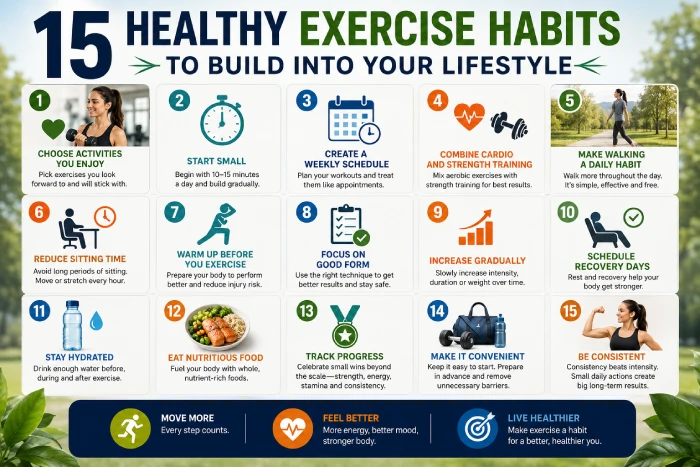
15 Healthy Exercise Habits to Build Into Your Lifestyle
1. Choose Activities You Actually Enjoy
The best exercise is the one you would do again and again.
If you really cannot stand doing running, you do not have to run every morning. When you hate running, make yourself walk, cycle, swim, dance, play badminton, football, do yoga or whatever else you enjoy doing.
When exercise becomes a punishment it is hard to stay with it. When you enjoy what you do, being active is much easier.
2. Start Smaller Than You Think
It is not necessary to do a one hour workout.
If you haven‘t been exercising regularly, then begin with 10 or 15 minutes perhaps going for a walk or doing some easy exercises at home.
Who emphasizes that starting activities in small doses for inactive and increas all the parameters quantity, frequency, and intensity progressively over time.
This is the initial aim.
3. Create a Weekly Exercise Schedule
Schedule a date to do your exercise.
Choose something more specific then saying “I‘ll exercise when I have time”. For example, pick a time and decide when you are going to exercise.
For example:
Monday: walk for 30 minutesTuesday: weightsWednesday: gentle bikeThursday: rest or gentle movementFriday: weightsSaturday: longer day outSunday: rest/repair/stretching path
Your schedule might be totally different. What‘s important is to have a realistic plan.
4. Combine Cardio and Strength Training
A well balanced exercise routine…. should include a variation of activities.
Cardio such as fast walking, cycling, swimming or jogging can help build cardiovascular fitness. Strength training works your major muscle groups.
For Adults, WHO suggests muscle-strengthening activities that engage all major muscle groups on two or more days per week.
Use different types of exercises to provide variety and make your routine more interesting.
5. Make Walking a Daily Habit
Walking is the simplest way to be more active.
Walking before work, after dinner, between meetings, while reading one‘s e-mail, on the treadmill on the way to the post office
You don‘t have to be hitting a certain step count everyday to get the benefits of walking.
Begin by increasing the amount of walking you already do.
Simple idea: Just 10 minute walk after (one) meal a day
6. Reduce Long Periods of Sitting
You finally get out of the gym. Still, if you spend the remaining 23 hours of your day sitting down, you are not being active!
Aim to break up long periods of sitting.
Stand more when on the phone, walk around during breaks, stretch in between tasks or take a couple of minutes to move around every hour when possible.
WHO highlights that “Lower levels of sedentary behaviour and higher levels of physical activity should be promoted.”
7. Warm Up Before Harder Exercise
Warm-up Your warm-up introduces your body to exercise after a period at rest.
Begin with a few minutes of low level activity for at least 7 minutes before increasing to a higher intensity activity. This could be walking, low level cycling or mobility work. Increase the level of activity gradually.
A warm-up also provides an opportunity to pay attention to your movement pattern before the more demanding portion of your workout.
8. Focus on Good Exercise Technique
Performing an exercise improperly can make the exercise less effective and possible put you at risk of injury.
When learning a new movement, if the task requires too much potential force, start out level with a moderate level of difficulty with control.
For strength training, this may involve using less resistance until you get the move.
As long as you are lifting the heaviest weight that you possibly can or doing the fastest workout that you can do then that‘s all that matters.
9. Increase Exercise Gradually
What commonly gets overshot.
As soon as you jump from no exercising at all to 3 hours a day (this could be running and weights), your body will find it harder to adapt.
Or you can building up your exercise training time, the frequency (exercise sessions per week), and the intensity.
That way instead of trying to jump right into riding for two hours, for instance, if you presently walk for 15 minutes, you could gradually build up to 20 or 25 minutes.
Progress should push you, but not to the point where it becomes too difficult to maintain your normal routine.
10. Schedule Recovery Days
Rest is incorporated in exercise.
Your body reacts to marathon training special effort as it needs time to recover – especially after intense workout sessions.
Having a recovery day doesn‘t have to mean sitting on the couch all day. Go for a relaxed walk, do some stretching, perform some gentle mobility drills, or just take a break from high intensity.
Listen to your body. Don‘t use coming to the point of exhaustion as an indicator that you are not pushing enough in your training.
11. Stay Hydrated
Water is essential for the functioning of the body and hydration is especially important when involved in physical activity.
Have water on hand throughout the day and sip to meet your needs particularly when exercising in hot, humid weather.
During exercise your hydration requirements will fluctuates depending on the intensity and duration, how hot the environment is, how much you sweat, your diet and general individual factors.
12. Support Exercise With Nutritious Food
A partnership which, with judicious application, Exercise and nutrition is.
Make sure your body is getting enough energy and nutrients to help you stay active and recover. Choose meals that include a wide range of foods from the bottom of the food pyramid including vegetables, fruit, 100 percent whole grains, protein, and legumes, nuts and other high energy foods.
You do not have to follow an intense diet to work out efficiently.
Eating in a balanced way is more likely to be maintained than a constant effort to control food intake.
13. Track Progress Beyond the Scale
There are other indicators of outcome such as:
You might see improvements in your fitness even if the number on the scale changes minimally.
Pay attention to other improvements, such as:
- The importance of walking over longer periods of time
- The heavier he lifts
- Recovering faster
- Feeling stronger
- Improving balance
- More stamina to sustain additional effort, to play for a longer period of time.
- Be more consistent in completing workouts
Despite of the changes, they may help you keep motivated even when no visible improvements occur.
14. Make Exercise Convenient
The simpler it is to begin, the more probable it is you exercise.
Leave your walking shoes at the door. Hang up your gym wear. Have a workout changing kit ready. Select a gym in or near your home/work place. Keep some basic pieces of exercise equipment at home if this is your choice.
Likewise you might select activities where no preparation is necessary.
A half hour walk can be more manageable to incorporate into a hectic lifestyle than a complex, hour-long workout with an additional hour of preparation and travel.
15. Make Consistency Your Main Goal
You do not need a flawless exercise routine.
There will be weeks where you will be busy. You might not make it to the gym as planned, you might have to travel on occasion, then other weeks you might just be tired or have other commitments.
Instead of quitting hen your routine gets altered, get back to it.
Works out medium hard and involves no extremes (repeating the same routine regularly) is always more beneficial in developing a long-term routine than a hard intensity work out you give up in a matter of weeks.
Think Long Term.Completely unemotional. Break down and cry. Decide immediately to go home. Frame a decision that gets you back to the project today. Focus on how those changes will lower the budget, reduce the schedule, or otherwise make it better. Think about your career growth.
Your aim isn‘t to exercise badly. Your aim is to keep exercising.
How Much Exercise Do You Really Need?
For adults aged 18–64, WHO recommends:
- 150–300 minutes per week of moderate intensity aerobic activity, or
- 75–150 mins per week of higher-intensity aerobic activity, namely
- A combination of moderate and vigorous activity at an equivalent level.
- Muscle strengthening activity (on 2 or more days).
In some cases, adults can realize further advantages by exceeding the minimum recommendation(s).
But if you are not currently working out then these numbers arenotnecessary to hit right away.
Begin from where you stand.
Any level of increased activity will benefit, and inactive individuals should aim to increase gradually becoming more active bit by bit.
A Simple Weekly Exercise Formula
If you are unclear about how to structure your week. beginning simple. For example,
3 Days of Cardio
Select any activity walking, bicycling, swimming, running, dancing, or any other activity that interests you.
Fortnight of Strength
Use resistance exercises such as bodyweight, resistance bands, free weights or machines to work all your major muscle groups.
Daily Movement
Whenever possible, incorporate walking, stretching, stairs into your day; and if you are sitting for extended periods, make an effort to change your position regularly.
1–2 Easier Days
Set your activity level to a lower setting, such as (this means to use lighter activity or rest).
Note that this is only a sample program. Your own program should be adjusted depending on your fitness level, individual needs and goals, personal preferences, schedule, and responsibilities.
Why aren‘t you exercising?
You don‘t have to have a long workout.
Split your activity into several short sessions during the day.
For example:
10 minutes in the morning + 10 minutes at lunch + 10 minutes in the evening = 30 minutes activity.
A walk in the fresh air is always better than a stiff from the chair.
WHO also stresses that no matter what you do, all activity counts and it‘s better than sitting around all day.
Healthy Exercise Habits for Beginners
The first thing you should not do if you are just beginning the activity is entering into conversation with people who have been practicing the activity for years.
It is advisable that your first objective is to be consistent.
Begin with the activities that you are able to perform without difficulty. As your fitness develops, slowly extend the duration and intensity of each activity.
For example, start with walking 15 minutes a day several times a week and then add strength training or longer cardio work.
No hurry in the world.
If Should You Exercise More Cautiously?
The majority of people can safely benefit from an increase in activity. Every individual has unique needs and conditions.
In the case of a medical condition, severe mobility restrictions, pregnancy and/or recent childbirth, or if you believe you have any other reason for beginning and/or increasing physical activity, you should seek individualized advice. The WHO also reminds us that, depending on your health status, you may require some extra precautions or medical consultation.
If you are exercising. cease and promptly consult a healthcare professional if symptoms such as severe chest pain, fainting or profound difficulty breathing occur.
Frequently Asked Questions
What are proper exercise behaviors?
Good exercise habits are regular actions that can help you keep active in a safe sustainable way. Good exercise habits include exercising on a regular basis, Combination of aerobic and strength activities, warming up, cooling down, Hydrating and enjoying the activity.
How many days a week should I exercise?
There isn‘t one ideal schedule. For adults, WHO suggests a weekly dose of aerobic activity as well as joint and muscle strengthening physical activities for a minimum of two days in the week. You may split your exercise from the rest of the week in the most efficient manner as required.
Is walking and be enough exercise?
Walking is a good form of exercise. As you can see running may be your best source of aerobic activity for the week, but by adding some good strength exercises your exercise program will be more balanced.
Can I use exercise to help control my weight?
Exercise can be an effective daily activity to maintain a healthy body weight in combination with a suitable eating pattern. Physical activity has general health benefits to not only body weight but also to the cardiovascular, metabolic, psychological and holistic health status.
What is the most effective exercise for beginners?
The “best” is one you like and will do regularly, and that is appropriate to your level of fitness. Walking, cycling, swimming, beginner strength exercises, etc. may be a good beginning.
Final Thoughts
Trying to build good exercise routines isn‘t about the hardest workout, or working out every day.
Its about making a routine that will fit into your life.
More walking. Less sitting. Get active doing things you love. Build strength training into your life. Dial up your activity levels gradually. Rest and fuel your body with healthy eating and hydration.
Most importantly, maintain consistency.
Even if you begin with just 10 minutes of activity per day, it can serve as the 10 minutes that will lead to becoming more active.
Exercise is one part of a healthy lifestyle, which also includes eating well, getting adequate sleep, managing your stress, and engaging in other positive daily activities. To get more specific suggestions, read our comprehensive list of healthy habits.