


Mohd Arbaaz is an Editor and Writer at Fitnessison.com with 5 years of experience in SEO and digital content creation. He creates informative, reader-focused content covering fitness, workouts, nutrition, health, healthy lifestyle, technology, and computers.

Shashi Teja is a Reviewer at Fitnessison with over 6 years of experience in SEO, content strategy, digital publishing, and content optimization. He reviews content for clarity, research quality, topical relevance, readability, structure, and overall usefulness to readers.
Last Updated: September 9, 2026
If you’ve searched for “fat burning workouts,” you’ve probably scrolled past a dozen lists promising the “ultimate” routine to melt fat fast. Here’s the honest version: no single workout burns fat by itself. What actually drives fat loss is a combination of consistent training and an overall calorie balance that favors using more energy than you take in. The workout is what makes that process efficient, protects your muscle, and shapes how your body looks as the weight comes off — but it’s not a magic switch.
That doesn’t mean workout choice doesn’t matter. Some methods maximize speed, sustainability, and muscle preservation over others. This guide to the main types of fat–burning workout high intensity interval training (HIIT), cardo, strength training, home workouts, and goal-specific programs will help you construct a workout plan that actually works with your life, instead of trying to keep up with whatever new workout trend is hot this month.
Fat-Burning Workouts Resource Center
Explore our complete collection of fat-burning workout guides covering HIIT, cardio, strength training for fat loss, home workouts, abdominal exercises, and workouts designed for women.
How Workouts Actually Contribute to Fat Loss
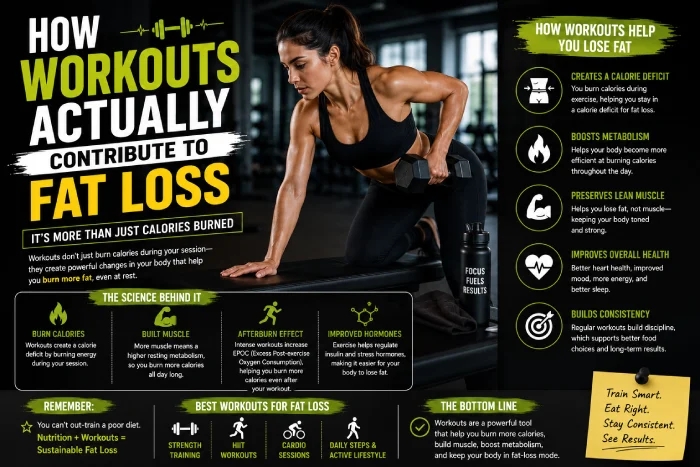
It helps if you understand how it all works before breaking into the type of workout, as it explains a lot of what confuses people.
Key takeaways:
- Fat loss ultimately requires a calorie deficit — burning more calories than you consume, whether through diet, activity, or both
- Workouts increase your total calorie burn, which makes the deficit easier to create and sustain, especially if you’d otherwise need to cut food intake more aggressively
- Different workout styles affect how much muscle you keep and how efficiently you burn calories — this is where the real differences between HIIT, cardio, and strength training show up
- No exercise “targets” fat from a specific body part — where you lose fat first is determined by genetics and hormones, not which muscle you’re working
Practical tip: Think of your workout as the tool that makes a calorie deficit sustainable and shapes your results — not as a stand-alone fat-loss method disconnected from what you eat.
HIIT: Short, Intense, Time-Efficient
HIIT means High-Intensity Interval Training. HIIT is a type of workout where you work very hard during a very short period, alternate with a very short recovery. It has become the most popular type of fat loss training because of the intense workload you can cram into a very short workout.
Key takeaways:
- HIIT sessions typically run 15–30 minutes, with effort reaching roughly 80–95% of your max heart rate during work intervals
- HIIT tends to burn more calories per minute than steady-state cardio, and creates a modest “afterburn” effect (EPOC) where your body keeps burning slightly more calories for hours afterward — real, but smaller than marketing often suggests
- It’s demanding on recovery — most people do well with 2–3 HIIT sessions a week, not daily
Practical tip: if you‘re time poor, HIIT is one of the best modes to get a fairly fat burn in but it isn‘t necessarily “better” than cardio if it‘s causing you to miss recovery or burn out in two weeks.
Ready for full routines? See our guide to HIIT fat burning workouts, including beginner-friendly intervals.
Steady-State Cardio: Consistent and Sustainable
Steady state (“LISS”, if you want to get technical): Maintaining a moderate, steady pace (such as running, cycling, swimming or brisk walking) for a long time; generally around 60-75% max HR.
Key takeaways:
- Burns fewer calories per minute than HIIT, but sessions are typically longer, and many people find it easier to sustain long-term
- Lower-impact on joints, making it a strong option for beginners, people returning from injury, or anyone who prefers a less intense session
- A larger share of the calories burned during steady-state cardio come directly from fat (versus a mix of fat and carbs during HIIT) — though total calories burned matters more for fat loss than which fuel source is used in the moment
Practical tip: If HIIT feels unsustainable or you dread every session, steady-state cardio you actually enjoy — a daily walk, a bike ride — will very likely produce better long-term results simply because you’ll keep doing it.
Explore our complete guide to fat burning cardio workouts for a detailed workout and intensity guide.
Strength Training: The Underrated Fat-Loss Tool
Strength training may not be instantly linked with “fat burning”, but its value is through its important contribution that cannot be substituted by cardio.
Key takeaways:
- Building and preserving muscle during fat loss helps protect your resting metabolic rate, which tends to drop as you lose weight
- Strength training changes body composition — the visible, “toned” look most people associate with fat loss comes from a combination of lower fat and maintained (or built) muscle, not from cardio alone
- It also continues to burn calories during recovery as muscle tissue repairs, though this effect is modest compared to the direct calorie burn of the workout itself
Practical tip: A well-rounded fat-loss routine usually includes 2–3 strength sessions a week alongside cardio or HIIT — not strength training instead of cardio, or cardio instead of strength training.
Get the complete guide to strength training for fat loss, including sample splits and exercises.
Fat Burning Workouts You Can Do at Home
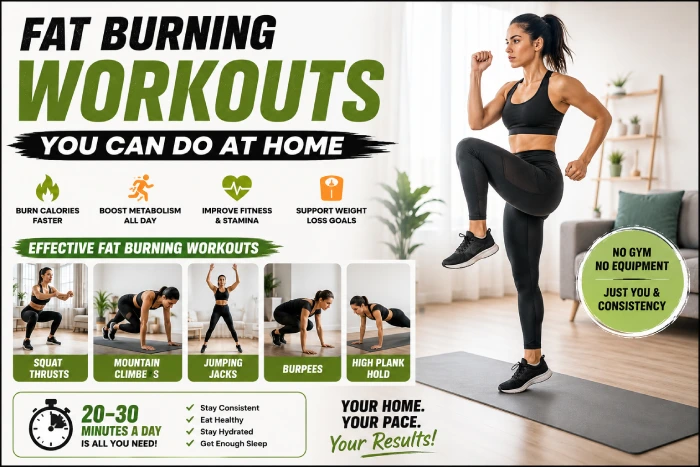
Not everyone has the luxury of time to go down to the gym, but that shouldn‘t prevent you from doing fat burning workouts.
Key takeaways:
- Bodyweight circuits (squats, push-ups, lunges, mountain climbers) can deliver a strong HIIT-style workout with zero equipment
- A pair of dumbbells or resistance bands opens up strength-focused home routines that rival gym-based training for fat loss purposes
- Consistency matters more than location — a 20-minute home workout done four times a week beats an hour-long gym session done once
Practical tip: Pick a small, dedicated space and a repeatable routine so a home workout doesn’t require setup decisions every time — removing friction is what makes home workouts stick.
See our full collection of fat burning workouts at home, including no-equipment routines.
Belly Fat: What Actually Works (and What Doesn‘t)
Wouldn‘t it be great if we all had a six pack or at least a flatter belly? That‘s one of the most popularly searched fat-loss topics around, and at the same time one of the most confused.
Key takeaways:
- Spot reduction is a myth. Doing hundreds of crunches will strengthen your core, but it won’t specifically burn fat from your stomach — fat loss happens across the whole body based on genetics and hormones, not the muscle you’re training. This has been tested directly in research comparing localized ab training to overall fat distribution, and the results consistently don’t support targeted fat loss.
- Core exercises are still valuable — they build strength and definition that becomes visible once overall body fat drops through a broader fat-loss approach, and a strong core also supports better performance in almost every other type of workout, from lifting to running.
- Visceral (belly) fat tends to respond well to consistent cardio and strength training combined with a sustainable calorie deficit — the same fundamentals that drive fat loss anywhere else on the body. It’s also worth noting that visceral fat is linked to metabolic health in ways subcutaneous fat elsewhere isn’t, which is one more reason overall consistency matters more than isolated ab exercises.
- Genetics and hormones largely determine where your body loses fat first and last — some people see changes in their midsection early, others see it last, and neither pattern reflects how hard someone is training.
Practical tip: Treat core workouts as one piece of a full-body fat-loss routine, not a stand-alone belly-fat solution — the results show up faster when they’re paired with overall training and diet consistency.
Read the full breakdown in our guide to belly fat burning exercises, including the science behind why spot reduction doesn’t work.
Fat Burning Workouts for Women
Though the fundamental science of fat loss is universally true, there are some practical issues that actually make a significant difference for a lot of women.
Key takeaways:
- Hormonal fluctuations across the menstrual cycle can affect energy levels and recovery — adjusting workout intensity around your cycle (rather than forcing the same intensity every day) often improves consistency and reduces the frustration of “off” days that feel disproportionately hard
- Strength training is particularly valuable for women, both for body composition goals and for long-term bone density, which becomes increasingly important with age, especially after menopause when bone density loss accelerates
- Life-stage considerations — postpartum recovery, perimenopause, menopause — can change how the body responds to training and may call for adjusted intensity or recovery time, and working with a knowledgeable trainer or physical therapist during these transitions can help avoid setbacks
And a practical tip: if training feels harder or recovery more sluggish certain weeks, that‘s good data to report back to your coach not a reason to need a tweak to your training plan.
For more details, see our guide to fat burning workouts for women.
How and why the Afterburn Effect (EPOC) occurs18
You will come across EPOC constantly in fat-loss advertising and talk about it as if it were the Holy Grail that makes some HIIT programs so much better. Interestingly, the real story isn‘t so amazing but it‘s a good thing to have an awareness of.
Key takeaways:
- EPOC is real: after an intense workout, your body uses extra oxygen (and therefore extra calories) to restore itself to baseline — repairing muscle, replenishing energy stores, and returning your heart rate and hormones to normal
- The effect is genuinely larger after HIIT than after steady-state cardio, but research generally puts the additional calorie burn from EPOC at a relatively small percentage of the workout’s total calorie cost — not the hundreds of extra calories some marketing implies
- The bigger practical advantage of HIIT isn’t EPOC alone — it’s the combination of high calorie burn per minute plus a modest afterburn bonus, which adds up over consistent weekly sessions
Practical tip: Don’t choose a workout style purely because of afterburn claims. Choose based on what you’ll do consistently — the accumulated effect of regular training beats any single workout’s afterburn total.
Warm-Up, Cool-Down, and Injury Prevention
One of the cornerstones of most fat-loss routines is to warm-up, so obviously not warming-up is one of the most common and simple ways of ruining a fat-loss routine. Not because it affects calories burned, but because if you injure yourself early you can be knocked out for weeks.
Key takeaways:
- A 5–10 minute dynamic warm-up (light cardio plus movement-specific drills) prepares muscles and joints for higher-intensity work and reduces injury risk, especially for HIIT and strength sessions
- Cooling down with a few minutes of lower-intensity movement helps your heart rate return to baseline gradually rather than stopping abruptly
- Proper form matters more than speed or intensity, particularly for beginners — an intense workout done with poor form is a common cause of setbacks
Practical tip:If you have the option of doing one more round of the workout or taking some time to get a good warm-up, go with the warm-up.Consistency over months is much more important than intensity over a single session.
Recovery: The Part Most Fat-Loss Plans Skip
It is very tempting to think that more workouts will always equal more fat loss, but the real adaptation is happening while your body is recovering.
Key takeaways:
- Muscle repair, hormone regulation, and even motivation all depend on adequate recovery between sessions — training hard without it tends to backfire through fatigue, injury, or burnout
- Sleep quality has a direct effect on workout performance and recovery; poor sleep is linked to reduced exercise capacity and slower recovery
- Active recovery (an easy walk, light stretching, yoga) on rest days can support blood flow and muscle recovery without adding significant fatigue
Practical Tip: If your energy, motivation and possibly workout performance is heading south over a period of a couple of weeks, adding a rest day is the recommended course of action, rather than in fact doing more and trying harder.
A Realistic Example Week
It‘s probably more helpful to think of this as an actual weekly schedule, rather than simply percentages and number of sessions. Below is a sample week where someone works a full-time job and does a few training sessions:
- Monday: 30-minute strength training session (full body)
- Tuesday: 20-minute HIIT session
- Wednesday: Rest or a 30-minute walk
- Thursday: 30-minute strength training session (full body)
- Friday: 20-minute HIIT or steady-state cardio, whichever sounds more appealing that day
- Saturday: Longer steady-state cardio (a hike, bike ride, or extended walk) — optional and enjoyable rather than obligatory
- Sunday: Full rest
Notice this adds up to roughly 2–3 hours of intentional activity across the week — not an extreme daily commitment. Has strength and cardio built in, at least one dedicated rest day, and is adaptable (you can substitute out sessions based on how much energy you have and how busy your schedule is). This kind of planning can be maintained over months rather than the overcommitted, all-or-nothing daily 90minute sessions which are impossible to maintain after a busy week or two.
Practical tip: If you know you‘re going to do a plan on this week, not having to make it up every day will really help you start it and pre-deciding is one of the most effective ways to shove conscious effort out of the equation.
How to Choose the Right Approach for You
With five workout categories to consider, here’s a simple way to narrow it down:
| If you… | Consider starting with… |
| Have limited time each week | HIIT |
| Are new to exercise or have joint concerns | Steady-state cardio |
| Want to protect muscle and improve body composition | Strength training |
| Don’t have gym access | Home bodyweight or dumbbell workouts |
| Want a routine that covers all the bases | A mix: 2 strength sessions + 2 cardio/HIIT sessions per week |
Fueling Your Fat-Burning Workouts
What you consume before, during and after your workouts influences the basic calorie-balance rule but it doesn‘t detract from it. It just impacts your performance and recovery which has, you guessed it, an impact on consistency!
Key takeaways:
- Protein supports muscle repair and preservation, especially important when you’re in a calorie deficit and training regularly — most active adults benefit from spreading protein intake across meals rather than loading it all at once
- Carbohydrates before higher-intensity sessions (like HIIT) can support better performance, since they’re the body’s preferred fuel for intense effort — training on empty energy stores often just means a weaker, less effective session
- Hydration affects both performance and perceived effort; even mild dehydration can make a moderate workout feel much harder than it should
- Eating in a large calorie deficit while also training intensely is a common recipe for poor performance and slower recovery — pairing an overly aggressive diet with an overly aggressive workout plan tends to backfire on both fronts
Practical tip: If workouts consistently feel flat or harder than they should, look at whether you’re under-fueling before assuming you need to push harder or change your routine entirely.
Tracking Progress Beyond the Scale
The number on the scale is only one signal, and often not the most useful one for judging whether your fat-burning workouts are working.
Key takeaways:
- Body measurements (waist, hips, arms) often show change before the scale does, especially if you’re building muscle while losing fat simultaneously
- Progress photos, taken in consistent lighting and clothing every couple of weeks, reveal changes that day-to-day scale fluctuations can hide
- Performance metrics — lifting heavier, running longer, recovering faster between HIIT intervals — are a strong sign your fitness (and likely your body composition) is improving, even when the scale is stubborn
- How clothes fit is a simple, low-effort way to track change that many people overlook in favor of obsessively checking the scale
Practical tip: Pick two or three tracking methods beyond the scale and check them every 2–4 weeks rather than daily — this gives a much clearer, less discouraging picture of real progress.
Getting Started as a True Beginner
If none of this is familiar territory yet, it’s worth resisting the urge to start with the most intense option available.
Key takeaways:
- Starting with 2–3 sessions a week (a mix of walking, bodyweight strength moves, and light cardio) builds the habit and the physical base needed before adding intensity
- Beginners often see meaningful early progress even from moderate activity, simply because the body hasn’t adapted to increased movement yet
- Building the habit of showing up consistently for a few weeks matters more, long-term, than starting with the most advanced or intense program available
Practical tip: Give yourself a 2–3 week “starter phase” focused purely on consistency and learning proper form, before worrying about intensity, calorie burn, or advanced programming.
Common Mistakes People Make
- Doing cardio only, and skipping strength training entirely — this often leads to losing muscle along with fat, which can leave you looking “smaller” but not necessarily more defined. Over months, this can also lower your resting metabolic rate more than a routine that includes resistance training.
- Doing HIIT every day, which increases injury risk and often backfires through burnout or poor recovery. The intensity that makes HIIT effective is also what makes it demanding on your joints, nervous system, and hormones when overdone.
- Chasing the “best” workout instead of the most consistent one — the most effective workout is the one you’ll actually do three or four times a week for months, not the one that looks most impressive on a fitness influencer’s feed.
- Ignoring diet entirely, assuming exercise alone will offset any amount of eating — workouts support a calorie deficit, they rarely replace the need for one, especially since it’s easy to eat back more calories than a workout actually burned.
- Expecting visible results in days, when meaningful, sustainable fat loss typically shows up over weeks to months of consistent effort. Comparing week-one results to a six-month transformation photo online sets an unrealistic and discouraging bar.
- Comparing your routine to someone else’s, without accounting for different starting points, genetics, schedules, and life circumstances — what works for one person’s body and calendar may not translate directly to yours.
- Overcomplicating the plan, adding more workout styles, supplements, and rules than can realistically be sustained — a simple, repeatable routine beats an elaborate one that falls apart after three weeks.
Myth vs. Fact
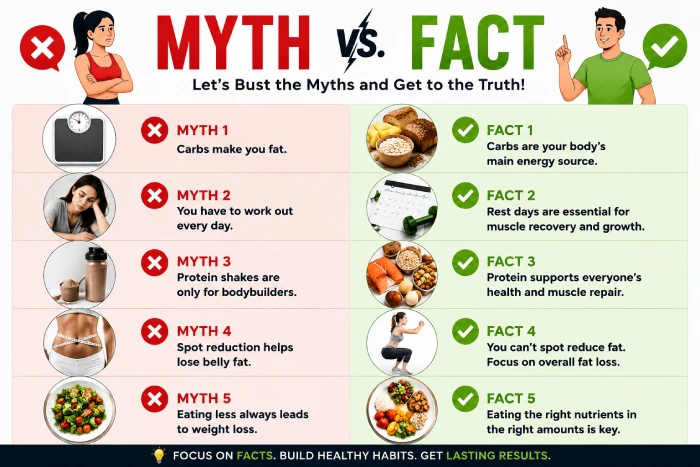
Myth: “Sweating a lot means you’re burning more fat.”
Fact: Sweat is your body regulating temperature, not a direct measure of fat burned — a hot, humid session can make you sweat heavily while burning a similar number of calories as a cooler one.
Myth: “You need to do cardio on an empty stomach to burn more fat.”
Fact: Total calorie balance over the day and week matters far more than whether a single session happens fasted — research on fasted cardio shows minimal difference in overall fat loss for most people.
Myth: “Lifting weights will make women bulky.”
Fact: Building large amounts of muscle mass generally requires a calorie surplus, high training volume, and time — most women who strength train while in a calorie deficit build a toned, defined look rather than significant bulk.
Myth: “More workout time always equals more fat loss.”
Fact: Beyond a certain point, more volume without adequate recovery leads to diminishing returns and higher injury risk — a well-structured 30-minute session often outperforms a poorly recovered 90-minute one over the course of months.
Building a Weekly Routine That Actually Works
A simple, sustainable structure many people find effective:
- 2–3 strength training sessions (full body or split by muscle group)
- 1–2 HIIT sessions for time-efficient calorie burn
- 1–2 steady-state cardio sessions (walking counts) for recovery-friendly activity
- 1–2 full rest or active recovery days to allow adaptation and prevent burnout
This isn’t a rigid formula — the right mix depends on your schedule, fitness level, and what you’ll actually stick with. The framework matters more than the exact numbers: a blend of intensity levels, consistent frequency, and built-in recovery.
The Bottom Line
There’s no single “best” fat burning workout — there’s the workout style, or combination of styles, that you’ll do consistently while maintaining an overall calorie balance that supports fat loss. HIIT offers efficiency, cardio offers sustainability, strength training protects muscle and shapes results, and home workouts remove the barrier of needing a gym. Use the guides linked throughout this page to build out the specific routine that fits your schedule, equipment, and goals.
FAQs
What are the best fat burning workouts?
There’s no single “best” workout — HIIT, steady-state cardio, and strength training all contribute to fat loss differently. The most effective approach usually combines all three and is one you can do consistently.
Can you burn fat in a specific area, like your belly?
No — this is known as spot reduction, and research doesn’t support it. Fat loss happens across the whole body based on genetics and hormones, not the specific muscle you’re training.
How often should I do fat burning workouts?
Most people do well with 4–6 days of activity per week, combining 2–3 strength sessions with 2–3 cardio or HIIT sessions, plus at least one full rest day.
Is HIIT better than cardio for fat loss?
HIIT burns more calories per minute and has a modest afterburn effect, but steady-state cardio is often easier to sustain long-term and gentler on the joints. The better option is whichever one you’ll do consistently.
Do I need equipment to do fat burning workouts at home?
No — bodyweight exercises like squats, push-ups, and lunges can form an effective fat-burning routine with zero equipment. Dumbbells or resistance bands add more options but aren’t required to start.
How long does it take to see results from fat burning workouts?
Most people notice performance improvements within a few weeks, with visible body composition changes typically appearing over 6–12 weeks of consistent training combined with a supportive diet.