

Mohd Arbaaz is an Editor and Writer at Fitnessison.com with 5 years of experience in SEO and digital content creation. He creates informative, reader-focused content covering fitness, workouts, nutrition, health, healthy lifestyle, technology, and computers.

Shashi Teja is a Reviewer at Fitnessison with over 6 years of experience in SEO, content strategy, digital publishing, and content optimization. He reviews content for clarity, research quality, topical relevance, readability, structure, and overall usefulness to readers.
Last Updated: September 17, 2026
Introduction
Keto Diet Plan is a low carbohydrate (very low) high fat diet which results in the metabolic switch in the body where the body begins to burn fat (and ketones) rather than glucose. The glucose in turn is derived from carbohydrate. A true Keto Diet is not a low carb diet but is much more restrictive and high in fatt.
Keto has gained attention as a weight management intervention, but it is a therapeutic diet with uses in the medical arena for specific types of epilepsy. Its restrictive nature means it is not appropriate for everyone, and it is important that safety and sustainability are taken into account in the long term.
For those of you just starting out on the ketogenic way of eating, 3 things will make it very easy: knowing what fits the ketogenic profile, creating simple balanced meals, and planning what you‘re going to eat before starvation demands it.
What Is a Keto Diet Plan?
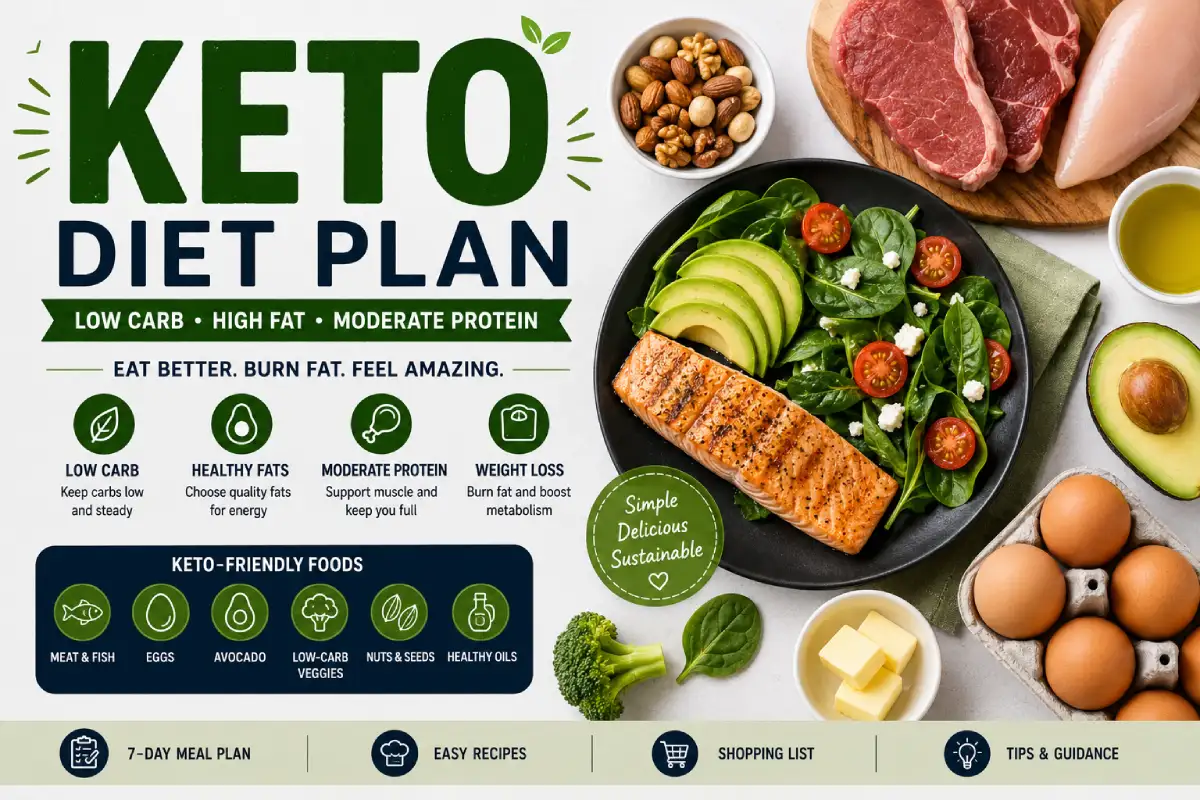
A ketogenic diet is one that is high in fats, moderate in protein and very low in carbohydrates.
Many keto diets restrict carbs to between 20 50 g per day but how many carbs it takes to get in to ketosis ( a situation where the body is using endogenous fat store for energy instead of carbs ) is a personal matter and may take a few days to become keto-adapted.
The ultimate goal isn‘t just to “eat fewer carbs.” The ultimate goal is to design a dietary pattern in which carbohydrate availability is reduced sufficiently that the body begins to make ketones from fat.
A basic keto plate might include:
- Eggs or chicken
- Salmon or the other type of fatty fish
- Avocado
- When the greens greens of the vegetables become pale in color.49The reason for the changes in the green color is probably due to soluble compounds in the leaves being water soluble and thus hydrolyzed or leached out during boiling of the vegetables.(31){}
- Crookneck squash An asparagus sprous you can eat raw (ric accident or bitter.) Broccoli or cauliflower
- Olive oil
- The nuts and seeds
- Cheese or bare full-fat dairy Where justified.
The quality of these foods counts. A ketogenic diet that revolves around highly processed foods, fried foods, butter, and processed meats, is very different from one that focuses on nuts and seeds, fish, vegetables, unsaturated fats and avocados.
Quick Takeaway
Keto is a way of eating which involves extremely limiting carbohydrate intake in favor of high fat consumption and a moderate protein intake.
How Does the Keto Diet Work?
Carbohydrate will tend to provide the body with glucose for energy use in the body. This, however, is a decreasing equation as the intake of carbohydrate decreases so too does the amount of glucose available to the body. The body will begin to use fat to form ketone bodies:
It is referred to as ketosis.
Keto may also help reduce hunger, which makes it easier to eat fewer calories some short-term studies of ketogenic diets show they may lead to weight loss and have some positive effects on blood-sugar control, but long term adherence can be hard to maintain:
Hence keto must be considered as an eating plan and not a pathway to Pounds loss. Your food quality in general, calories, activity, sleeping and maintaining the diet.
What Foods Can You Eat on a Keto Diet?
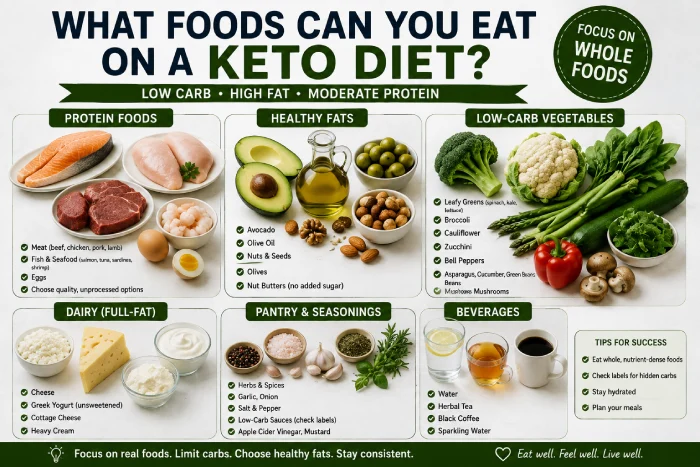
There are many options that would fit into a good keto meal plan. The key is knowing what you need to get in on your shopping list.
Protein Foods
Good options include:
- Eggs
- Chicken
- Turkey
- Beef
- Pork
- Salmon
- Tuna
- Sardines
- Shrimp
- Other seafood
Protein wise – yes, above all, however, keto is not a high-protein diet. Having high amounts of protein in the diet can become a problem for some people in maintaining ketosis.
Healthy Fat Sources
You want to focus on all kinds of fat sources. Not so much on saturated fat.
Examples include:
- Avocados
- Pureb is improved for the typical characteristics, including Extra-virgin olive oil.
- Nuts
- Seeds
- Pure nut butters with no added sugar
- Olives
- Fatty fish
Low-Carbohydrate Vegetables
Non-starchy vegetables can also add dietary fiber, vitamins and minerals and volume.
Try:
- Spinach
- Kale
- Lettuce
- Broccoli
- Cauliflower
- Zucchini
- Cucumber
- Mushrooms
- Bell peppers
- Asparagus
- Green beans
In addition Cleveland Clinic recommends in the keto diet to do the same; choose whole unprocessed foods, choose low-carbohydrate vegetables.
What Foods Should You Limit on Keto?
Since sugar and starches are known sources of carbohydrates, many more popular foods don’t appear to have a place in a standard ketogenic plan.
Foods commonly limited include:
- Bread
- Pasta
- Rice
- Breakfast cereals
- Potatoes
- Candy
- Cookies
- Cakes
- Sugary drinks
- Coffee drinks with added sugar or syrups.
- Most desserts
- Large portions of high sugar fruit.
- A large number of snack foods processed in restaurants.
Watch out for the hidden carbs in sauces, dressings, marinades, pre-packed foods and drinks.
Absorb knowledge on food. Put the image of the nutrition label in your mind. Don‘t blindly ask, “Is this food keto?” Think about the whole meal.
How to Build a Simple Keto Meal
Everything you need to make a keto friendly dish is very easy to get hold of.
Use this simple formula:
Protein + Low-Carb Vegetable + Healthy Fat
For example:
Lunch:
Grilled chicken / spinach salads / avocado + olive oil dressing
Dinner:
Baked salmon + roasted broccoli + olive oil
Breakfast:
Which equals to 850 calories. 1hour ofWalking into the shop: 800 calories 1hour ofGet the bacon: 522 calories Not to forget theConsumption of the shopping: 1273 calories Calculating the total:3045 calories
This provides you with a reproducible system that can make meal planning easier.
Example
Rather than get a combination of fast-food items loaded with everything you shouldn‘t eat, like big-fat-fried-burgers, chips, and saturated carbs, you could opt for some grilled chicken, salad greens, avocado, and easy-to-make dressing of olive oil with such.
What we‘re after is consistency, not complicated recipes.
7-Day Keto Diet Plan for Beginners
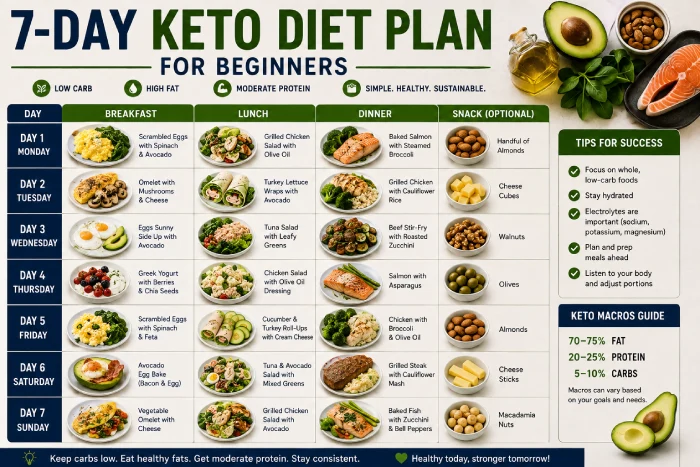
This sample 7-day keto meal plan is intended to serve as a broad example rather than a personalized calorie or medical plan.
Day 1
- Breakfast: eggs, one hand of spinach and half an avocado.
- Lunch: Grilled chicken salad with olive oil 6
- Dinner: Baked salmon, broccoli
- Snack: A handful of almond
Day 2
- Breakfast: hoe, fried eggs with mushrooms.
- Lunch: Turkey, rolled in lettuce, and, taken with avocado.
- Dinner: Chicken, under poached 3 minutes and then grilled, with a grated cauliflower and a mixed salad
- snack: Cheese and cucumber rounds
Day 3
- Breakfast: omelet that contains vegetal cheese and spinach.
- Lunch: Tuna salad with green.
- Dinner: Beef roasted with zucchiniand Heineken Please note that perhaps before dinner.
- Snack: Walnuts
Day 4
- Breakfast: with eggs and avocado and fried down veg.
- Lunch: chicken salad with olive oil.
- Dinner: grilled salmon, asparagus
- Snack: Aero (or next best choice); a small amount of plain Greek yogurt, if it will not push you over your carbohydrate limits.
Day 5
- Breakfast: I had scrambled eggs with mushrooms and spinach, which was lovely.
- Lunch: Turkey and cheese lettuce wraps.
- Dinner– chicken, broccoli, and avocado (didnt manage to get the avocado so only had chicken and broccoli)
- Snack: Almonds
Day 6
- Breakfast: Omelette with vegetables and cheese.
- Lunch: Salmon salad in Olive oil. A dish comprised of diced beef, fried and then cooked in a sauce with the addition of cauliflower and leaves.
- Snack: Olives and cucumber
Day 7
- Breakfast: eggs, spinach and avocado 250.
- Lunch: (from home in my bag) Chicken sandwich on Starbucks Pain de Mie ham and cheese, from home, sliced grapes.
- Dinner: baked fish with broccoli and zucchini.
- Snack: Walnuts or another low carb snack.
Don‘t forget that every individual will require a different amount and type of carbohydrate and have varying nutritional needs.
Keto Diet for Weight Loss
Weight loss is probably the number-one reason why people look for a keto diet plan. As a food plan, keto may lead to comparatively rapid initial weight loss – at least in part because cutting carbs affects water retention apart from the food itself. Reduced appetite is another possible side effect. There may be short-term weight-loss benefits, even though upkeep in the long-term may prove difficult.
The important question isn‘t simply:
“How fast Can I drop weight on keto?”
A better question is:
Will I be able to maintain this regime in terms of meeting my nutritional requirements?
If a ketogenic diet leaves you hungry all the time, fatigued, socialise difficultly or simply unable to eat a healthy balanced diet another style of eating might be more suitable.
Keto-Friendly Snacks
Snacks are optional but are good to keep you going when you really are hungry between meals.
Some simple options include:
- Almonds
- Walnuts
- Boiled eggs
- Cheese
- Avocado
- Olives
- Cucumber with a suitable dip.
- Unsweetened Greek yogurt if appropriate carbohydrate consumption
- Vegetables and unsweetened nut butters Celery4
A ‘good’ portion size is an important consideration.9 For example, foods like nuts, cheese and nut butters can pack a lot of calories into a small amount. One of the most common mistake is to think that this endless list of “keto foods” contributes to losing weight.
Beginner Keto Grocery List
The easiest way is to plan your shopping trip before you leave.
Protein
- Eggs
- Chicken
- Turkey
- Salmon
- Tuna
- Shrimp
- Meat with little or moderate amounts of fat or lean meat.
Vegetables
- Spinach
- Broccoli
- Cauliflower
- Zucchini
- Cucumber
- Lettuce
- Mushrooms
- Asparagus
Healthy Fats
- Avocados
- Olive oil
- Nuts
- Seeds
- Olives
Other Foods
- Cheese
- Plain unsweetened yogurt;
- Herbs
- Spices
- Sauces and dressings with reduced sugar content
Always look at the labels on packaged foods as carbohydrate amounts can vary greatly.
Common Keto Diet Mistakes
Going keto doesn‘t have to be difficult, however, making some simple mistakes can make going keto much more difficult.
1. Eating Too Many Processed Keto Foods
Even “keto-friendly” cookies, bars, desserts, and packaged snacks can still be very highly processed.
2. Ignoring Vegetables
It is also important to remember that avoiding carbs does not mean avoiding veg. Non-starchy vegetables contain important nutrients and fibre.
3. Eating Only Bacon, Cheese, and Butter
Keto shouldn‘t become an excuse for using processed meat and saturated fat for every meal. Opting for fish, avocado, nuts, seeds and olive oil will also not alter the quality of the eating pattern.
4. Forgetting Hydration
Alteration of carbohydrate intake can influence fluid and electrolyte balance. Headache, fatigue, constipation and/or dizziness can occur upon initiation of keto.
5. Making the Diet Too Complicated
You don‘t need 30 different keto recipes. One or two repeatable breakfasts, lunches, and dinners a month will be enough to get the ball rolling.
What Is the Keto Flu?
Some individuals experience a temporary “rebound” following seriously cutting down on carbohydrates, that can cause:
- Headaches
- Fatigue
- Irritability
- Nausea
- Constipation
- Dizziness
- Difficulty concentrating
This has been dubbed as “keto flu”. As per Cleveland Clinic, symptoms may also occur as you first enter into ketosis and you should consult your doctor about keto specifically if you are on medication already as these can interact with a new diet. Cease work if symptoms become heavy, protracted and worrying and consult suitably qualified medical practioners.
Is a Keto Diet Plan Safe for Everyone?
‘NO’. Keto is a restrictive diet and it isn‘t suitable for everyone. Individuals with health conditions, children, women who are pregnant or lactating as well as those who have a history of eating disorders may need to take particular care or avoid the diet altogether. Kidney disease and issues related to cardiovascular health can also have an impact.
Diabetics need to be very careful. While a ketogenic diet will lower blood glucose levels, it also may increase the likely hood of hypoglycemia for some diabetics on diabetes medication. There are also some circumstances that can increase the chance of ketoacidosis. Anyone with any form of diabetes should speak to a healthcare professional with respect to any major dietary change. Keto has been an established therapeutic diet for some case of treatment resistant epilepsy and that is radically different from just using keto for weight loss.
How to Make a Keto Diet Easier to Follow
The best keto diet is the one you can stick to.
Try these practical strategies:
Plan three to four meals ahead
Being aware of what you‘re eating prevents impulsive choices.
Cook protein in batches
Advance the chicken, fish, eggs, or other protein.
Keep vegetables ready
Prepare the vegetables, wash and cut them in a manageable size.
Have emergency meals
Have on hand easy ingredients for days you just don‘t have the time to cook.
Read nutrition labels
Open the following packaged foods and check that the packs contain more carbohydrates than you might think. Avoid depending on specialist ketolow products. A good healthy diet consists largely of whole foods.
Keto Diet Plan vs. Low-Carb Diet
Keto and low carb diets are connected, but not interchangeable. For instance, a generic low carb diet could be moderate in carb intake without necessarily placing one in the state of ketosis. The ketogenic diet is a far more strict dietary restriction that actually seeks to alter the body in to making ketones. This is an important difference, as one could successfully sustain a moderate low carb diet, without able to maintain the level of carb restrictions that place the body in ketosis.
Frequently Asked Questions
Q1) How many carbs can I eat on keto?
The ketogenic diets commonly have a carbohydrate consumption of approx 20–50 g/day but this can vary from individual to individual.
Q2) Can I eat fruit on keto?
Some of the lower carbohydrate fruit are allowed with some of the diets as long as they are small portions. However, most of the fruit contain so much carbohydrate that to enjoy the benefits you need to be aware of what you eat.
Q3) Can I eat rice on keto?
Normal rice is generally much too high in carbohydrate to be included in normal ketogenic diet.
Q4) Is keto good for weight loss?
Keto can help people lose weight at first, but it‘s hard to keep doing the diet and keep losing weight in the long term.
Q5) Can I exercise while following keto?
Yes you can train on a ketogenic diet. It will be affected by carbohydrate depletion on a ketogenic diet which will have an impact on training and energy, specifically in the transition stage.
Final Takeaway
Keto Diet Plan A Keto Diet Plan can be a plan to help you cut way down on carbs (this can be significant) and instead push your body to use fats and ketones to provide energy. Initially it is easiest for me to recommend sticking with whole foods, non-starchy veggies, quality protein sources and native fats over the vast processed “keto” foods. A straightforward meal plan, meal planning in advance, and having reasonable expectations will help facilitate adherence to the diet.
That said, keto does not become automatically healthier because it is carbohydrates limited. There is evidence of some short-term advantages, specifically in the areas of weight reduction and blood-sugar regulation, but there are still uncertainties about its conservation and safety in the long run.
To further assist with meal planning, proceed to the Diet plans home page or review other diet plan guides including Mediterranean, low carbohydrate, high protein, vegetarian and intermittent fasting diet plans.
By the way medical note: This article is for educational use only and is not a substitute for medical or nutritional advice. If you have a medical condition, take medication, are pregnant or are considering keto for a therapeutic purpose, please consult with an appropriate healthcare provider before undertaking any serious dietary changes.