


Mohd Arbaaz is an Editor and Writer at Fitnessison.com with 5 years of experience in SEO and digital content creation. He creates informative, reader-focused content covering fitness, workouts, nutrition, health, healthy lifestyle, technology, and computers.

Shashi Teja is a Reviewer at Fitnessison with over 6 years of experience in SEO, content strategy, digital publishing, and content optimization. He reviews content for clarity, research quality, topical relevance, readability, structure, and overall usefulness to readers.
Last Updated: September 17, 2026
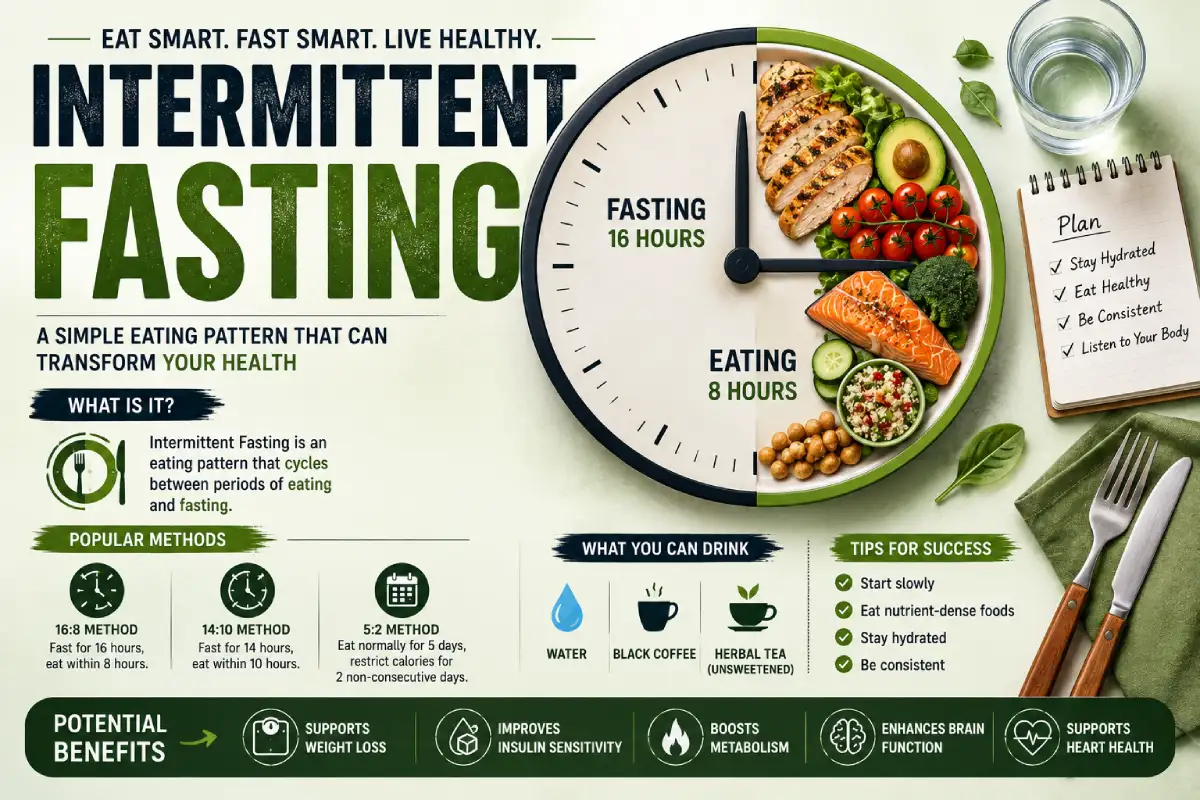
Intermittent fasting is not a diet, it is a pattern of eating. It is not about what you eat but when you eat. With intermittent fasting, you can eat whatever you like; you simply designate time windows when you eat and other times where you abstain from food. It is popular for weight loss and has been theorized to impact blood sugar, insulin sensitivity and other facets of metabolic health. The great thing about intermittent fasting is that it‘s not about going 3, 4 or 5 days without eating. It doesn‘t even need to be your new normal – it can start simple with a normal day-to-day fasting period:
What Is Intermittent Fasting?
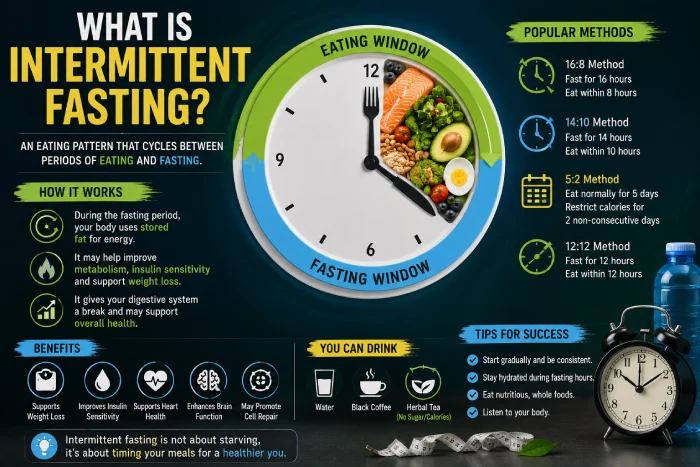
Intermittent fasting – alternation between eating periods and fasting periods. The simplest approaches are time-restricted eating, limiting the number of hours in a day you eat, such as 16:8, where she will eat in 8 hours from 12 p.m. to 8 p.m. and fast for the rest of the time. Or you can do the 5:2 method, eat normally 5 days a week and restrict calories significantly to 2 days a week. No particular time table. All of your factorsduty, sleeping schedule, workout, family-foodtiming, likes, etc. will play role in decision-making.
How Does Intermittent Fasting Work?
Fasting. While you are fasting, you are slowly shifting from burning your energy directly from a recently ingested meal to burning stored energy. This change is then sometimes referred to as metabolic switching. When fasting, the body may transition to more efficiently using its stored fat as fuel. Scientists are investigating whether the health benefits are due merely to caloric restriction or fasting itself.
The practical benefit for some is fairly simple:
not having long enough to eat, helping to reduce unnecessary snacking and food consumption.
Popular Intermittent Fasting Schedules
12:12 Method
You fast for 12 hours and eat within a 12-hour window. This one of easiest ways to begin. For instance: having lunch at 8 a.m. and finishing dinner at 8 p.m.
14:10 Method
Here you are not required to eat for 14 hours, but you want to since you can only eat during a 10 hours span.
Instances include: fasting for 12 hours or eating for8 hours.
16:8 Method
Most popular method: eat for8 hours and fast for 16 hours. Example day: eat from 11 a.m. to 7 p.m.
5:2 Method
You‘re eating normally 5 days per week and severely cut back on calories (by 500 or more) 2 days per week that are not consecutive. This type of caloric restriction may be more difficult for some individuals. It‘s important to note that there is no proven benefit to longer fasts. Johns Hopkins warns that “using longer fasts (24 hours or more) may be unsafe and is not necessary for beginning.”
What Can You Eat During Intermittent Fasting?
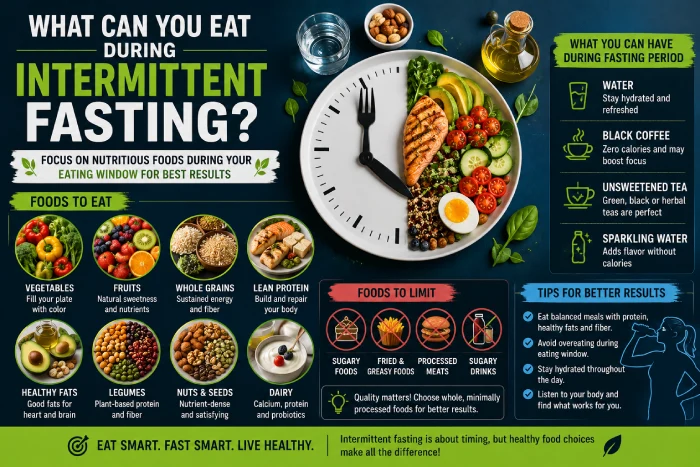
Intermittent fasting doesn‘t specify what foods to eat. But the quality of food still matters.
Build meals around:
- Forfresh and leafy greens,it is always recommended to buy fresh, high-quality vegetables and greens in order to attain the best possible taste. Handle the vegetables and greens carefully and select fine and portable greens.
- Fresh fruits
- Bean, Lentil
- Whole grains
- The eggs and the lean meat: chicken and turkey
- Fish and other types of seafood
- Greek yogurt and other nutritious dairy foods
- Nuts and seeds.
- Avocado and olive oil.
Within your eating window, avoid too many processed foods, drinks containing sugar, larger quantities of food, and too many sweets. A typical example of an error is to assume the eating window is a free-for-all. Its a bad idea to load up on huge quantities at a time just because you‘ve fasted.
Can Intermittent Fasting Help With Weight Loss?
Yes, it can. For some people periodic fasting can help lose unwanted weight, as it is a caloric restricting lifestyle. NIDDK research observed in one study that time-restricted eating and classic calorie cutting resulted in comparable weight loss of comparable magnitude over a year, implying that fasting should be considered a another choice instead of the best diet for every person. For optimal weight control, it‘s best to include a varied diet with appropriate levels of activity, sufficient protein, plenty of sleep and moderate portion sizes.
Potential Health Benefits
Although there isn‘t enough evidence to we can draw any conclusions about the benefits of fasting, studies on intermittent fasting have suggested a number of areas where it could be beneficial:
- Body weight
- Glycaemic control Definition number 1: regulation of blood glucose gluTrol.2 It is an example of a generic name, which is more descriptive of the action of blood glucose regulating. This term appears to be fairly neutral as it does not lean towards a positive or negative connotation.
- Insulin sensitivity
- Blood pressure
- Risks factors for cardiovascular disease;
The best evidence to date is for weight control and metabolic health. However, most of the other claims mentioned are far from being proven, as they wait for longterm human studies.
Therefore it would be wiser to treat intermittent fasting as another eating pattern rather than end all and be all cure for health.
Is Intermittent Fasting Safe?
However, this, along with other methods mentioned, may not be suitable for all people. Those who are pregnant or breast-feeding, children and teenagers, those with a history of eating disorders or other medical conditions should not use fasting without consulting a doctor or nutritionist. People with diabetes should speak to their doctor to see how this variation may effect their blood glucose levels and medications.
In the event that fasting induces dizziness, headache, nausea, abnormal feeling of anxiousness, or any other undesirable symptoms then it should be discontinued and discussed with a healthcare provider.
How to Start Intermittent Fasting
There‘s no need to go straight into a 16 hour fast. Start by fasting 12 hours over night, and once this becomes easy then try a 13 or even 14 hour fast. Make sure your diet contains a healthy balance of meals and drink large quantities of water or free calorie drinks while fasting. And most importantly, choose a eating schedule you‘ll be able to. If eating breakfast makes you feel deprived or affects the quality of your workouts and thoughts, another eating schedule might be the right one for you.
Frequently Asked Questions
Can I drink water while fasting?
Yes, simply though water is very important to keep the body hydrated through the window period. Unsweetened tea and black coffee are also very common.
Is 16:8 fasting good for beginners?
Yes, you could, but not necessarily. simply to be good. For beginner training 12:12 or 14:10 may be the preferable options at first. By training at this ratio it will be easier to continue with while the body adjusts to training.
Does intermittent fasting work without exercise?
It may help to lose weight, but a regular form of exercise is also important to sustain muscle, fitness and one‘s health.
Can I eat anything during my eating window?
In reality, intermittent fasting is all about timing, but food quality is important as well. The more balanced your diet, the better it will support your body, than simply loading all of your eating window with highly processed foods.
Final Thoughts
Intermittent fasting might also be a straightforward approach to organize your eating and reduce unnecessary snacking without having to be aware of every calorie. Short eating windows are good for some people and suit their lifestyles and may assist with weight loss. Start slowly, consume nutritious foods, stay well hydrated, and select a fasting method that works for your lifestyle. Be sure to speak with your physician prior to beginning a fasting routine should you have health concerns or require medications that depend on timing related to eating.