

Most guides treat crossfit workouts at home as random circuits. Real results come from structured programming, progressive overload, and smart intensity management — and you can apply true CrossFit principles at home without a full gym.
Here’s the direct answer: yes, you can get strong, lean, and well-conditioned at home — but only if you stop doing random WODs and start following a structured framework.
The Problem With Most “At-Home CrossFit”
Problem: You Google workouts, pick something intense, sweat hard, and feel destroyed.
Agitation: After 3–4 weeks, nothing changes. You plateau. Or worse, your knees ache and motivation drops.
Why? Because intensity without structure is chaos.
CrossFit — originally popularized by CrossFit, LLC — was never meant to be random punishment. It was built around functional movement, measurable progress, and scalable intensity.
The solution? Treat crossfit workouts at home like performance training.
Key Takeaways
- CrossFit at home works when structured properly.
- Strength work is non-negotiable.
- Progressive overload doesn’t require barbells.
- Intensity must be cycled.
- Tracking performance is mandatory.
Why Most CrossFit Workouts at Home Don’t Work
Most articles turn CrossFit into glorified HIIT.
But CrossFit is broader. According to its foundational philosophy (introduced by Greg Glassman), it’s about improving work capacity across broad time and modal domains.
Translation: You must train different energy systems — not just go hard for 12 minutes daily.
Without:
- Strength progression
- Skill development
- Recovery planning
you’re just exercising, not training.
What CrossFit Actually Means (Beyond Sweat)
Functional Movements
Squat. Hinge. Push. Pull. Carry.
Your workouts should revolve around these patterns, not random exercises.
Example:
- Air squat → Goblet squat → Front squat
- Knee push-up → Push-up → Handstand push-up
Progression matters more than variety.
Constant Variance (But Controlled)
Variance doesn’t mean chaos. It means rotating stress intelligently.
Bad variance:
- Random YouTube WOD daily.
Good variance:
- Structured week: strength focus Monday, longer conditioning Thursday.
High Intensity (Properly Defined)
High intensity is relative to your capacity.
The American College of Sports Medicine explains intensity as effort relative to maximum ability — not just sweating hard.
If you max effort daily, recovery collapses.
The 4 Pillars of Effective CrossFit Workouts at Home
1. Strength Foundation
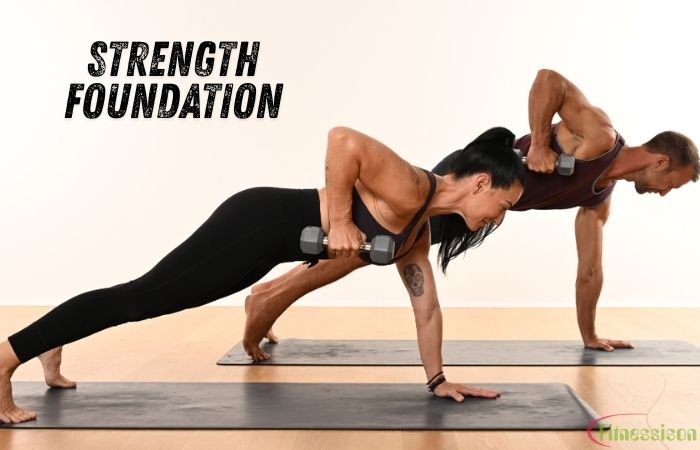
Even without barbells, you can build strength through:
- Tempo reps (3 seconds down)
- Unilateral training (single-leg, single-arm)
- Paused reps
- Backpack loading
Example progression:
Week 1: 3×8 bodyweight squats
Week 2: 4×8 slow tempo
Week 3: 3×10 goblet squats
Week 4: 4×6 heavier load
That’s progressive overload.
2. Gymnastics & Control

Master bodyweight before chasing speed.
Progression ladder:
- Plank → Side plank → Hollow hold
- Knee push-up → Push-up → Decline push-up
Control first. Speed later.
3. Metabolic Conditioning (MetCon)

Common formats:
- AMRAP (As Many Rounds As Possible)
- EMOM (Every Minute On the Minute)
- For Time
- Intervals
Each trains different time domains.
Short (8–10 min): Power + anaerobic.
Long (18–25 min): Aerobic capacity.
Mix them weekly.
4. Recovery & Mobility
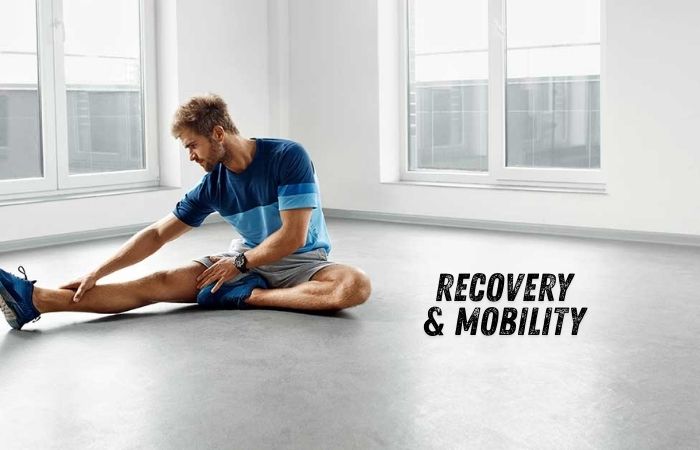
The National Strength and Conditioning Association emphasizes recovery as critical for adaptation.
At home, include:
- 10–15 min mobility twice weekly
- One lower-intensity day
- 7–8 hours sleep
Skipping recovery stalls progress.
Equipment Spectrum Model
No Equipment
Pros:
- Accessible
- Zero cost
Cons:
- Harder to load progressively
- Strength ceiling lower
Best for:
- Beginners
- Travel
Minimal Equipment (Dumbbell/Kettlebell)
Pros:
- Easy overload
- Better strength stimulus
- Versatile
Cons:
- Small investment required
Best long-term choice.
Expanded Home Gym
Pull-up bar, adjustable dumbbells, maybe a barbell.
Best for:
- Intermediate and advanced lifters.
- Long-term progression.
You don’t need it — but it accelerates results.
Workout Formats Explained
AMRAP
Great for:
- Conditioning
- Pacing skill
Example:
12-min AMRAP
10 squats
8 push-ups
6 sit-ups
Track rounds weekly.
EMOM
Best for:
- Density training
- Skill consistency
Example:
EMOM 15
Min 1: 12 goblet squats
Min 2: 10 push-ups
Min 3: 12 sit-ups
For Time
Benchmark style.
Example:
21-15-9
Thrusters
Burpees
Repeat monthly to track improvement
Progressive Overload at Home (The Missing Link)
There are 4 levers:
- Volume – More reps/rounds
- Density – Same work, less time
- Load – Heavier weight
- Complexity – Harder variation
Rotate these weekly.
This is what separates structured crossfit workouts at home from random circuits.
4-Week CrossFit at Home Starter Program
Weekly Template
Monday – Strength + Short MetCon
Tuesday – Conditioning
Wednesday – Mobility/Core
Thursday – Strength + Longer MetCon
Friday – Benchmark Workout
Monday:
- 4×8 Goblet Squats
- 8-min AMRAP (Push-ups + Sit-ups)
Tuesday:
- 20-min steady EMOM
Wednesday:
- Mobility + Planks
Thursday:
- 3×10 Single-leg RDL
- 15-min For Time circuit
Friday:
- 21-15-9 Squats & Burpees
Each week:
- Add reps
- Add load
- Or reduce res
Week 4 = Deload or benchmark repeat.
Scaling Ladder (Beginner > Advanced)
Push-ups
Wall > Knee > Standard > Decline > Handstand
Squats
Box squat > Air squat > Goblet > Front squat > Jump squat
Level up when:
- Form is stable.
- You complete workouts without technique breakdown.
Common Mistakes
- Going max effort daily.
- Ignoring strength work.
- Not tracking rounds.
- Skipping recovery.
Random training feels intense. Structured training builds results.
Who This Is NOT For
- Competitive CrossFit athletes needing full Olympic lifting volume.
- Individuals with serious injuries without medical clearance.
- Those unwilling to track progress.
If you have cardiovascular issues, consult a physician before high-intensity training.
Final Thoughts
You don’t need a CrossFit box to get in serious shape. You need structure.
When crossfit workouts at home follow progressive overload, smart intensity cycling, and balanced programming, they become real performance training — not just sweaty chaos.
FAQs
1. Can you really build muscle with CrossFit workouts at home?
Yes. Muscle growth happens when you apply progressive overload. Use tempo reps, unilateral work, and added load to stimulate strength adaptations.
2. How many days per week should I do CrossFit at home?
Three to five days per week works best. Include at least one lower-intensity or recovery-focused day.
3. Is 20 minutes enough for a CrossFit workout?
Yes, if intensity and structure are correct. Short sessions can be extremely effective when programmed properly.
4. Do I need equipment for CrossFit at home?
No, but minimal equipment like dumbbells significantly improves strength progression.
5. Is CrossFit at home safe for beginners?
It can be safe if movements are scaled properly and intensity is controlled. Beginners should prioritize form and gradual progression.
6. What’s better: AMRAP or EMOM?
Both work. AMRAP builds pacing and endurance. EMOM improves consistency and density.
7. How do I avoid burnout?
Cycle intensity. Avoid max effort daily. Include recovery days and deload weeks.
8. Can I lose fat with CrossFit at home?
Yes. Combine structured training with a calorie-controlled diet for sustainable fat loss.
9. How long before I see results?
Most beginners notice conditioning improvements in 2–3 weeks and strength gains within 4–6 weeks.
10. Is home CrossFit as effective as gym CrossFit?
It can be, especially for general fitness. Advanced Olympic lifting development may require full gym access.