

Mohd Arbaaz is an Editor and Writer at Fitnessison.com with 5 years of experience in SEO and digital content creation. He creates informative, reader-focused content covering fitness, workouts, nutrition, health, healthy lifestyle, technology, and computers.

Shashi Teja is a Reviewer at Fitnessison with over 6 years of experience in SEO, content strategy, digital publishing, and content optimization. He reviews content for clarity, research quality, topical relevance, readability, structure, and overall usefulness to readers.
Last Updated: September 8, 2026
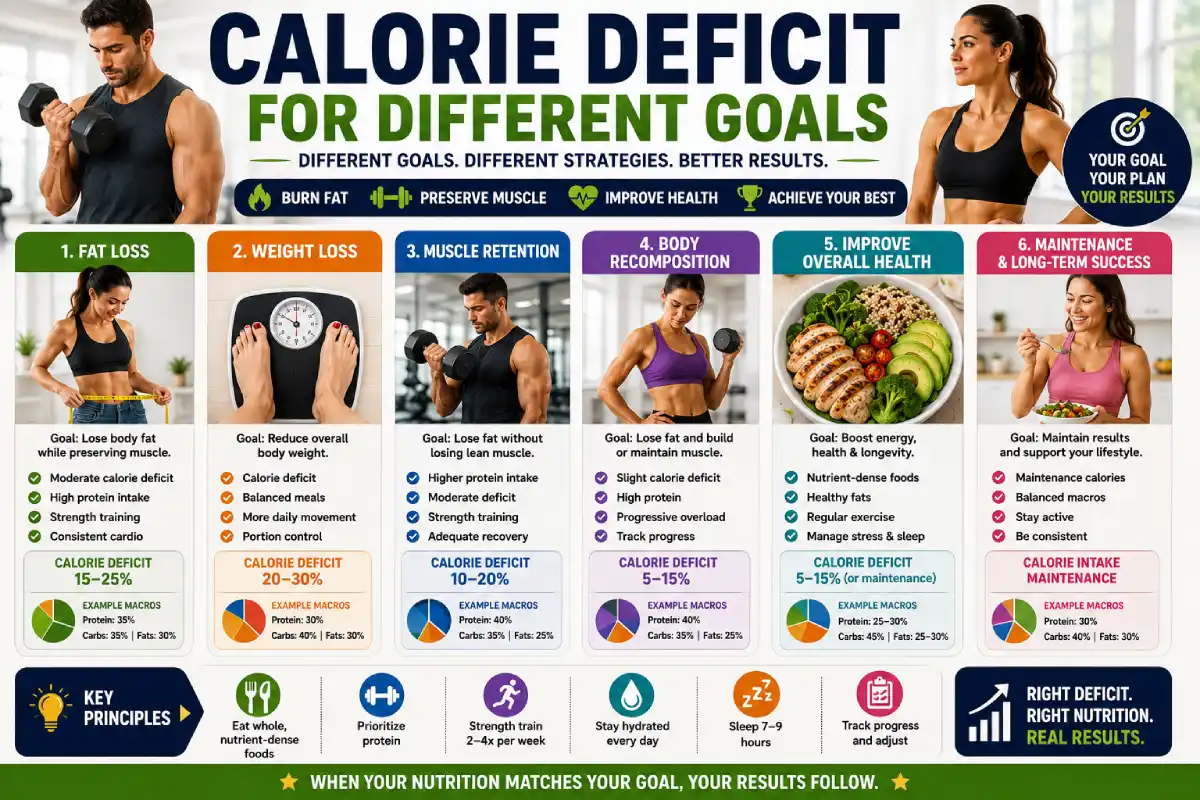
A calorie deficit is not a one-size-fits-all for varying goals. For example, though consuming less calories than your body burns is necessary for weight loss, the magnitude of the calorie deficit and nutritional approach needs to be tailored to your goal.
Another example might be how a person trying to shed bodyfat quickly might approach a calorie deficit differently than someone trying to stay at a certain weight and increase his or her strength and performance and recompose his or her body.
Knowing how to adjust your calorie deficit in order to achieve your desired results more efficiently and with greater ease while maintaining energy levels, strength and good health can be beneficial.
What Is a Calorie Deficit?
To gain a comprehensive understanding of the term “calorie deficit,” let‘s define the components.
To create a calorie deficit, consume fewer calories than you burn off through activity over the course of a day.
Your body uses calories for:
- Breathing
- Digestion
- Walking
- Exercise
- Brain function
- Daily activities
- Muscle recovery
If calorie consumption is less than the calories burnt, your body will draw on its storage of energy sources, such as body fat, to provide it with what it needs.
Why Your Goal Matters
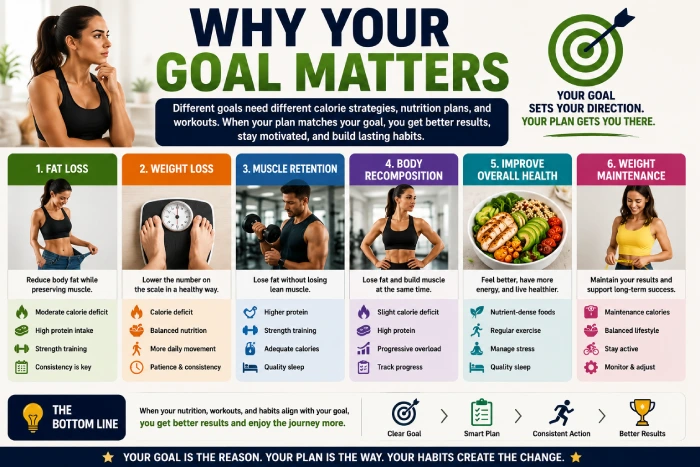
Different folks have different reasons for doing a calorie deficit. However.
Common goals include:
- Losing body fat.
- Better body composition.
- Maintaining muscle
- Event planning.
- Improving health in general
- Helping with long term weight management.
Each goal is enhanced by a different nutrition and training regimen.
Goal 1: Fat Loss
For people primarily focused on reducing body fat:
Priorities
- Moderate caloric restriction.
- High-protein meals
- Strength training
- Daily movement
- Consistency
Best Foods
- Chicken
- Fish
- Eggs
- Greek yogurt
- Vegetables
- Whole grains
- Fruits
Remarkably, the more you train with weights, the better your body maintains muscle mass.
Goal 2: Weight Loss
Some people just want the number to go down.
Focus On
- Calorie consumption should be balanced. If more calories are taken in through food than are used or needed, weight gain will occur. If less calories are taken in than are used or needed, weight loss will occur.
- Portion control
- Whole foods
- Walking
- Cardio
- Healthy habits
Keep in mind that weight loss includes water, fat and muscle. Improving your body composition can often be a more achievable long-term goal than achieving a lower number on the scales.
Goal 3: Muscle Retention During Fat Loss
If you want to lose fat without sacrificing muscle:
Priorities
- Get an adequate amount of protein.
- Make sure you are. â…• Muscle training.
- Don‘t.go overboard with calorie restriction.
- Ensure adequate sleep.
- Stay hydrated.
This method is particularly crucial for the active adult and elder demographic.
Goal 4: Body Recomposition
Definition of body recomposition: Burn off the fat while holding/gaining lean muscle at an equivalent or slow rate.
Key Strategies
- Resistance training
- High-protein diet
- Adopting a modest caloric reduction.
- Progressive overload
- Consistent recovery
Results may show up in body measurements and strength gains before the number on the scale make a significant jump.
Goal 5: Improving Overall Health
Contrarily, a calorie deficit, with healthy eating habits, may also be used to reach other goals.
Focus on:
- Much vegetables
- Fruits
- Whole grains
- Healthy fats
- Lean protein
- The benefits of engaging in physical activity on a daily basis
- Quality sleep
Long term, good habits outweigh Crash dieting for sheding pounds.
Goal 6: Long-Term Weight Maintenance
Once you approach your goal, increase your caloric intake gradually to maintenance level, while maintaining the healthy behaviors.
Continue to:
- Exercise regularly.
- 4. Consuming a completely nutririous diet.
- Regularly check progress.
- Fidget. Keep yourself moving during the course of the day.
How Nutrition Changes Based on Your Goal
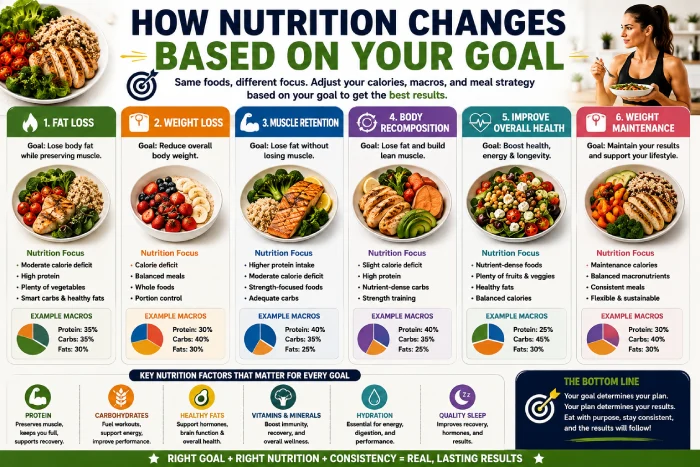
Protein
Protein is important for pretty much any goal.
Good sources include:
- Chicken
- Turkey
- Fish
- Eggs
- Greek yogurt
- Cottage cheese
- Tofu
- Lentils
Carbohydrates
Carbohydrates supply energy to work out and to use in everyday life.
Choose:
- Brown rice
- Oats
- Sweet potatoes
- Whole grains
- Quinoa
Healthy Fats
The healthy fats are nutrients that support hormone production and general health.
Examples:
- Avocados
- Olive oil
- Nuts
- Seeds
Fruits and Vegetables
Aim for a wide range of colorful fruits and vegetables in the diet each day providing fiber, vitamins and minerals.
Exercise Recommendations by Goal
| Goal | Best Exercise |
| Fat Loss | Strength Training + Cardio |
| Weight Loss | Walking + Cardio + Strength |
| Muscle Retention | Strength Training |
| Body Recomposition | Progressive Strength Training |
| Overall Health | Walking, Strength, Mobility |
| Weight Maintenance | Mixed Exercise Routine |
For the majority of goals it is best to combine resistance training with movement.
Sample Meal Plan
Breakfast
- Oatmeal
- Greek yogurt
- Mixed berries
Lunch
- Grilled chicken
- Brown rice
- Steamed vegetables
Snack
- Apple
- Almonds
Dinner
- Salmon
- Sweet potato
- Broccoli
Evening
- Herbal tea
- Water
Common Mistakes
Avoid these common errors:
- Selecting such a drastically low calorie deficiency3, 4.
- If I ignore about protein what?
- Skipping one‘s strength training
- Using solely cardio
- Consuming excessive amounts of processed foods
- Getting insufficient sleep.
- Expecting instant results
Tips for Success
To improve your results:
- Be realistic.
- You should track your progress on a weekly basis.
- Stay hydrated.
- Prioritize recovery.
- Create regular routines.
- Seek long term improvements rather than what will work to solve a problem quickly.
Frequently Asked Questions
Works of literature on the subject? Is the same number of Calories coming in (food) appropriate for everyone?
No. The quantity of calories you need to be in a calorie deficit for will vary depending on all the factors before, such as age, activity level, body size and health and your aim.
Is it possible to simultaneously go lean and gain muscle?
However, there are circumstances under which some people (beginners, former trainees or higher body fat) can successfully incorporate body recomposition with just resistance exercise, a reasonable calorie deficit and adequate protein consumption.
Which exercise is best during a calorie deficit?
More generally, strength training is very good for not losing muscle while losing fat. Adding more cardio and activity to your lifestyle can help you burn up those caloric needs.
Do I switch up my calories once I hit my goal?
Yes. When you‘ve reached your goal body composition, gradually work your way back to maintenance calories and don‘t lose your good eating habits and training.
How much time is appropriate to be in a caloric deficit?
The shelf life depends on what you want, how far you want to travel, and how healthy you are.
It is unlikely you will need to go without putting on additional weight in the real world for a prolonged period, so adapt your approach accordingly.
Conclusion
All calorie deficits, for whatever goal, need to be tailored to the individual, not general. If your goal is fat loss, weight loss, muscle maintenance, recomposition or general health the most effective calorie deficit along with good nutrition, moderate exercise, sleep and some form of consistency will almost always be the one that you can maintain in the long term and develop effective sustainable habits for life.