
Last Updated: September 17, 2026
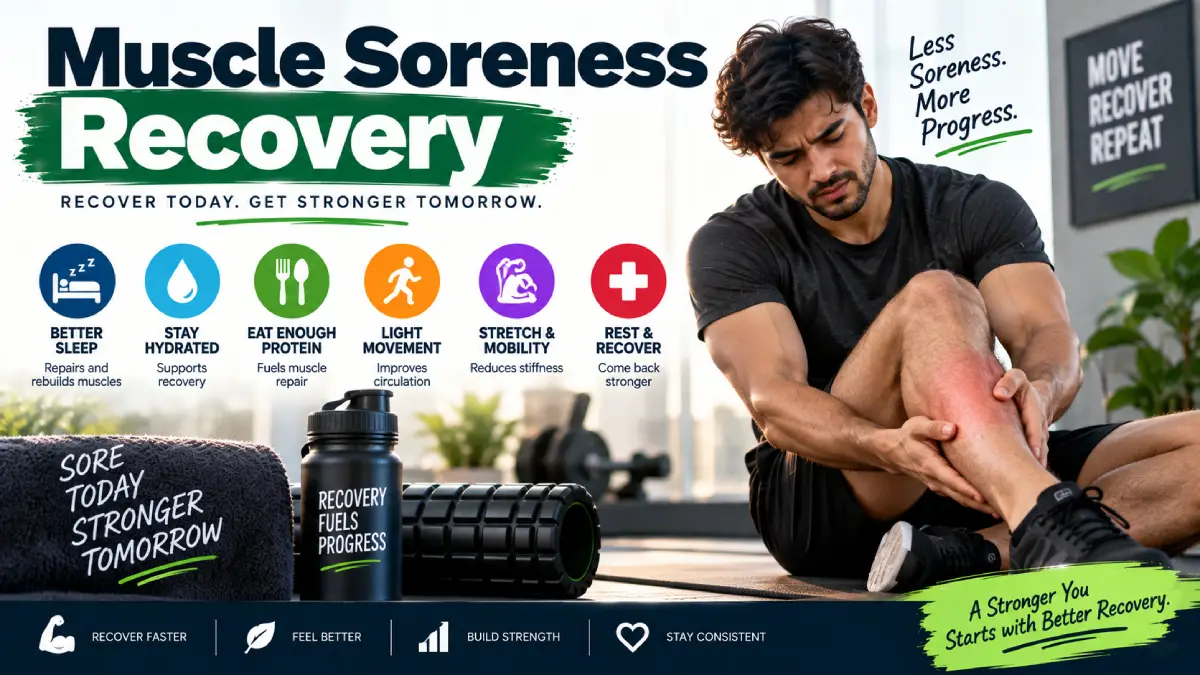
Recovery from myofascial pain is an essential part of every gains, staying motivated and feeling great for your next workout. If your muscles feel sore 24-48 hours after a workout, fear not. You are feeling what most of you have called delayed-onset muscle soreness, or DOMS. It can happen after a new workout, a workout that is more difficult than usual, or even a set of exercises that your body isn‘t used to. The easiest advice for this kind of workout soreness is that most common soreness responds to time and basic recovery techniques.
What Causes Muscle Soreness After Exercise?
Muscle soreness can be experienced when your muscles are subjected to a stress that they are not used to. This can be experienced after weight training, downhill running or jumping, or in new exercises. DOMS usually occurs a couple of hours after exercise and intensifies over the following one to three days.
You may notice:
- Tender muscles
- Stiffness
- Limitations in the range of motion
- Temporary weakness
- Pain/discomfort when moving/using the muscles.
Being sore does not necessarily indicate a better workout. You can definitely progress without being very sore in a workout.
How Long Does Muscle Soreness Last?
Most experienced trainiers recover from the typical DOMS within a couple of days. How long it takes to recover depends on total body workout, training history, effort level, sleep habits, nutritional habits, and general activity level. A new exercise trainee, just beginning a resistance training program, may continue to experience DOMS after a few sessions, while, an athlete with a long training history my recover in significantly less time after a workout. If symptoms are getting worse with time, last an excessive amount of time, or are accompanied by swelling, intense pain, weakness, or other notable signs and symptoms it is essential to discontinue exercise and seek appropriate medical attention.
Best Ways to Support Muscle Soreness Recovery
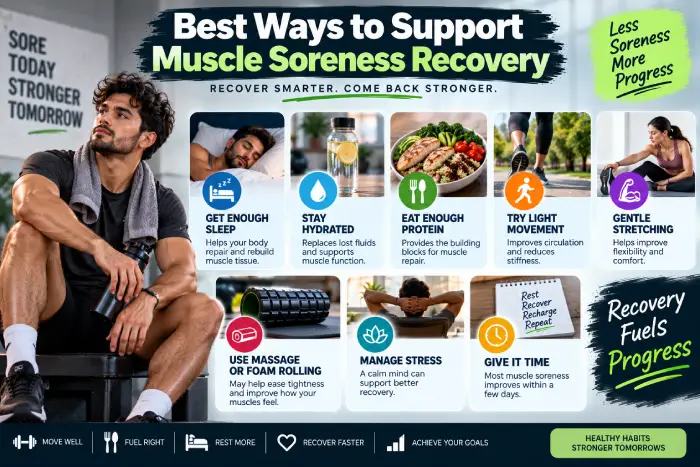
No one size fits all recovery trick. Instead get back to basics first.
1. Get Enough Sleep
Getting good, restorative sleep will enable your body to recover from the physical strain you put on it. Establish a consistent schedule and try to create a relaxing and calming environment for sleeping. You will not feel as rested without this, and the strenuous training sessions can seem even more demanding.
2. Stay Hydrated
Hydrating. Make sure to keep well hydrated by drinking fluids generally during the day especially if you sweat a lot. However your fluid requirement will depend on the intensity of your exercise, weather and your body size.
3. Eat Enough Protein
Protein is a pack of amino acids your body can use to repair and maintain muscles. Add some protein friendly foods like eggs, fish, meat, milk and cheese, beans, lentils, tofu or other to your diet. There‘s no need for an expensive supplement to aid recovery. A balanced diet will do just fine.
4. Try Light Movement
Less moving around is sometimes more comfortable than not moving at all. Examples of activity for active recovery: Walking; slow cycle, gentle yoga or movement exercises. Keep activity level very low; if light movement worsens pain and/or fatigue then rest your body more.
5. Use Gentle Stretching
Gentle stretching may ease stiffness and feeling comfortable with movement. Do not stretch forcibly or move a muscle into a painful place. Think of stretching as becoming comfortable with movement, not about moving yourself through pain.
Can Massage or Foam Rolling Help?
Massage and foam rolling are both common methods of recovery, although rolling your muscles might only provide short-term benefit to your perception of how your body feels they can be beneficial as an addition to a comprehensive recovery program. They should never be relied upon instead of sleep, good nutrition and hydration, productive training, and rest. Reduce the pressure if foam rolling causes stabbing pain or any intense discomfort then back off or stop entirely. Recovery should not be a punishment.
Should You Exercise When Your Muscles Are Sore?
It is individual as to how you are feeling and the level of soreness. Lightly sore does not necessarily mean you can not exercise. An alternative session or muscle group or an easier session can often be done during the recovery time of the sore area.
Say you just did a strength workout if your legs are just a little stiff, you might be able do a light upper body session. If you are sore as hell, weak, experiencing strange pain, or not moving well, rest! Make sure your program provides sufficient recovery between hard workouts.
Common Muscle Soreness Recovery Mistakes
A common thing many people do to hinder their healing process is to try and do too much.
Common mistakes include:
- Training hard through serious pain.
- Since a lot of pain gives improvement.
- DiMS? neglects long-term pain
- Not eating for hours after intense runs why?
- Dehydration
- Making reduced sleep commitments in order to schedule greater training.
- Every day off from the gym is another trip to the gym.
- Higher workout intensity with greater frequency
It’s usually easier to be consistent when your training and rest/ recovery are in harmony.
When Is Muscle Soreness Not Normal?
Not all post-exercise pain should be regarded as normal soreness. Pain that persists, is localized or sharp, is accompanied by high swelling, ongoing weakness, sore joints or abnormal bruising should be investigated. Very dark urine, with painful muscles and muscle weakness following strenuous exercise may be the sign of a medical emergency and needs urgent medical attention. Whenever you are not sure if what you are experiencing is normal workout pain or an injury, seek advice from a healthcare professional.
A Simple Muscle Soreness Recovery Routine
Don‘t over complicate things after a tough workout. Initially get a good mix of fluids and a balanced meal including protein and carbs. When comfortable take an easy walk or work on mobility. Get enough sleep. The next day, decide for yourself whether to push yourself again and train hard, or take it easy until your body has recovered and then go back to training hard. Listen to your body and adjust your training accordingly don‘t follow a specific timetable blindly.
Final Thoughts
There is no magic pill to cure muscle soreness, it is simply providing your body with the right circumstances to recover. Sleep, hydration, proper eating, gentle activity, intelligent program design, and adequate sleep all play a part. But most importantly, get the hang of distinguishing your normal post-effort soreness from pain that might be indicating a problem. When your recovery is integrated into your training schedule, you‘ll be able to train more reliably and with less fear.