

Last Updated: September 15, 2026
Inflammation is a normal response by the body to injury and infection but can become a health concern when it persists for a long time. There is a link between long term inflammation and various health conditions. There is no one food that can reduce inflammation as such but a balanced diet containing a wide range of healthy whole foods may be of benefit. Instead of looking for one “superfood” it is better to think about your general eating pattern. Following a mainly healthy unprocessed diet will enable you to take in a wide range of nutrients from your diet.
Top 8 Anti-Inflammatory Foods
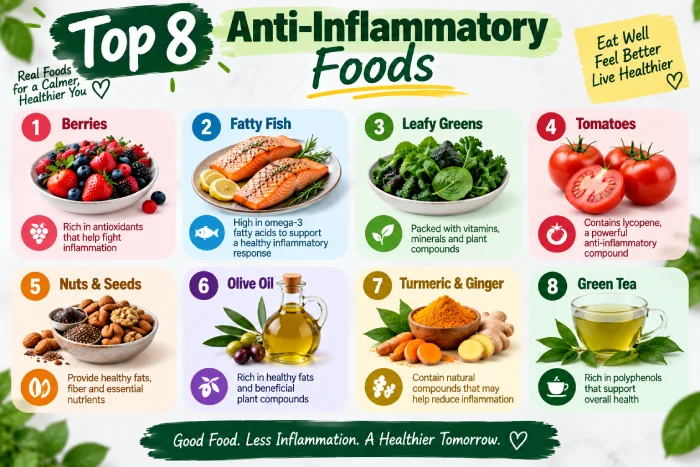
1. Berries
They‘re easy to add into breakfast or snacking. Try adding berries to oatmeal, plain yogurt, smoothies, or just having them fresh as a very simple snack. Frozen berries are another quick, cheap alternative when fresh berries aren‘t available.
2. Fatty Fish
Fish that are high in fat are good sources of omega-3 fatty acids. These provide a source of the essential fats needed in many bodily functions and perhaps in the prevention of maintaining an appropriate level of inflammation.
Good choices include:
- Salmon
- Sardines
- Mackerel
- Trout
- Herring
Maximise the types of fish you include in your diet, and choose healthier forms of cooking such as baking, grilling or steaming rather than going for deep fried options.
3. Leafy Green Vegetables
Vegetables: Greens are a nutritional treasurehouse of fiber, vitamins, minerals and phytochemicals. Vegetables like bok choy, spinach, kale, lettuce, mustard greens and collard greens can certainly be part of an overall healthful diet quite easily. Mix and match them with: salads, soups, curries, sandwiches, omlettes, smoothies. Mixing between various vegetables on the weekly basis will lead to be able covering more nutrients.
4. Extra-Virgin Olive Oil
For salad dressings, veg or cooking whenever appropriate. Nutrition per calorie in this as in other oils, so use sparingly!
5. Whole Grains
Whole grains have more of the original grain components than those that are refined can provide fiber and other nutrients.
Examples include:
- Oats
- Brown rice
- Barley
- Quinoa
Whole-grain products were identified in some instances by increasing the ratio of whole to refined grain products. Replacing some refined grain products with equivalent whole-grain products may lead to increased consumption of fiber and overall diet quality.
6. Beans and Lentils
Use lentils in the cooking mixing them with tinned lentils for soups and curries, use chickpeas in salads or in hummus, use cooked beans in wraps or in rice dishes.
7. Spices Such as Turmeric and Ginger
Turmeric and ginger are two ingredients that can be found in traditional Indian cuisine, and both spice ingredients naturally contain compounds which have been extensively researched for their anti-inflammatory effects. Turmeric has also has an active component as does ginger curcumin however ginger has a number of bioactive components. Common use of these spices in our fare would be delicious and also supplement a diverse diet. The consuming foods and culinary spice should not be seen as alternatives to medication.
8. Green Tea
Green tea and contains a plant chemical, EGCG. Drinking green tea without sugar and milk is a very simple technique of including plant chemicals in your diet. If you are not a fan of green tea, then there is no point in continuing to consume it. Fortunately, there are a number of other foods which have valuable polyphenols.
Foods to Eat Less Often
Eating well is not only about adding to your diet, but also about excluding certain items from being eaten regularly. Foods that are ultra-processed with high levels of sugar, salt or fat content are generally better consumed on an occasional basis. For instance sugar-sweetened drinks, processed meats that have undergone extensive processing, fast food, convenience treats, and refined snack foods. You don‘t have to cut those foods out entirely, just try to focus your diet around nutrient-dense such as:
Build an Anti-Inflammatory Meal
Getting a balance of foods in each meal doesn‘t have to be difficult once you familiarize yourself with a short list of foods. For example, the meal could consist of grilled salmon, brown rice, leafy greens, a few tomatoes and a few vegetables with a little olive oil, or a lentil and vegetable curry with a wholegrain roti and a side salad. Aim for variety. When snacking, different foods will help provide your body with a variety of nutrients. Vary your snacks between the different foods.
Lifestyle Matters Too
Providing healthy food is only 1 aspect of encouraging overall health. There are other ways in which we can encourage our long-term health, for example through maintaining a physically active lifestyle; getting adequate sleep; lowering stress levels; maintaining a healthy body weight; and not smoking. Don‘t bank on a specific ‘food’ to clear up an inflammatory problem. Instead, establish regular lifestyle patterns.
Final Thoughts
The greatest benefit is reflected in the overall quality and consistency of the diet rather than one specific ‘superfood’. If you are suffering with an ongoing problem such as inflammation or pain, or any other health problem, be sure to speak to a trained healthcare professional about the cause and treatment for your problem.