


Mohd Arbaaz is an Editor and Writer at Fitnessison.com with 5 years of experience in SEO and digital content creation. He creates informative, reader-focused content covering fitness, workouts, nutrition, health, healthy lifestyle, technology, and computers.

Shashi Teja is a Reviewer at Fitnessison with over 6 years of experience in SEO, content strategy, digital publishing, and content optimization. He reviews content for clarity, research quality, topical relevance, readability, structure, and overall usefulness to readers.
Last Updated: September 17, 2026
Snacks may be a nutritious and tasty part of a balanced diet. Snacks may also be a means of avoiding overly hungry feelings, of sustaining energy or of making consumption at the main meals easier if the snack is selected sensibly. However, unfortunately most of the food products on offer on the shop shelves are stuffed with either additional sugar or processed carbohydrate, for example white bread and rice, salt, or saturated and Trans fat. A quick guide to healthy snacks.
Top 10 Healthy Snacking Tips
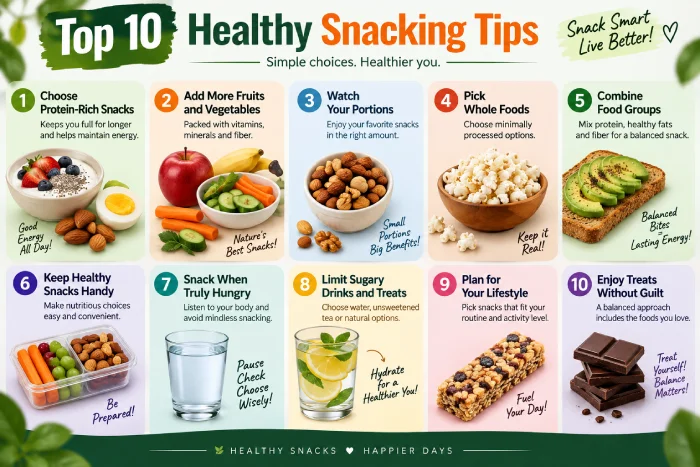
1. Choose Snacks With Protein
Protein can also keep the feeling of being hungry away for longer. Rather than going for the chocolate biscuits or sweet, then go for a snack with a decent amount of protein.
Some easy options include:
- Greek yogurt
- Boiled eggs
- Cottage cheese
- Roasted chickpeas
- Sands, nuts and seeds.
- Weights and measures; Peanuts in their skin: 200g5; Peanut butter with fruit: 250g; More indicative weights and measures should a WATERS sticker be found on the litter.
- Hummus and potato
Augmenting your snack with a source of protein can also increase its satiety, particularly if there is a relatively long period of time before your next meal.
2. Add Fruits and Vegetables
These are probably some of the easiest foods to add to your healthy diet. They will give you vitamines, minerals, fiber and many more essential nutrients. To keep it simple keep some of these things around that are easy to eat without blowing your calorie count. Apple, banana, orange, berries, carrot, cucumber or a bell pepper. If you want combination of fruit and do not want to murder the little you do eat with tons of calories, add a few spoonfuls of yogurt or a tiny bit of some sort of nut butter.
Say you‘re looking for a snack.. You can dip vegetables in hummus or some of the many yogurt dips or make your own chutney. Keep your vegetables prepared so it‘s easier to resist the hungry munchies.
3. Pay Attention to Portion Sizes
So any foods can contain huge calories if eaten in quantity. Nuts, seeds, dried fruits, the whole of granola and /or nut butters make it very easy to have a large amount of calories. Put your eatable in a small bowl or container instead of directly from a big packet. This tiny tip can help you become more aware of the amount of what you are eating.
4. Pick Whole Foods More Often
My own healthy eating tips for snacking is to snack on as many pure (whole) foods as possible. The more processed a food is the less nourishing and filling it tends to be.
Instead of candy, pastries, or heavily processed snack bars every day, consider:
- Fresh fruit
- Yogurt with no added sweeteners plain or very lightly sweetened
- Nuts
- Seeds
- Whole-grain crackers
- Air-popped popcorn
- Boiled eggs
- Homemade Energy Bites
You do not have to eliminate all you favorite convenience foods.
5. Combine Different Food Groups
A balanced snack can be simple. Often just mixing 2 groups has the potential to create an ideal snack.
For example, try:
- Apple + peanut butter: offers carbohydrates, a good amount of fiber and protein with healthy fats.
- Yogurt + berries: Blends protein and fruit along with naturally present healthy nutrients.
- Wholegrain toasted + egg: Contains carbohydrates and protein.
- Some snack ideas Carrots + hummus: Provides vegetables with additional protein and healthy fats.
Thinking about combinations of foods rather than individual foods can be very helpful at snacking time because it can produce longer lasting snacks.
6. Keep Healthy Snacks Easily Available
Your environment can affect the food choices you make. If, when hungry, it‘s hard to find healthy snacks but candies and fried snacks are always at hand convenience may win. Make healthy options visible and easy to access. Have fresh fruit on the kitchen worktop, carry prepared vegetables, or have small containers of nuts at work. Having something you can eat immediately eliminates the temptation of opting for the very first overly processed item readily available.
7. Do Not Ignore Your Hunger
Snacking should truly be an exception to the rule and not a default way of snacking. Time for a quick reality check: are you hungry? Next time you want to snack, ask yourself:.
Boredom, anxiety, heat or routine, can often be confused with hunger. Consider drinking some water and waiting a moment to determine whether your body is actually hungry. But you do not have to stay away from snacks either, just because they are “wrong”. If you are really hungry in-between meals snacking can even be a healthy eating habit.
8. Be Careful With Sugary Drinks
Take note that snacks are not always in solid form. Drinks like sweetened coffee, soda, energy drink, canned fruit juice etc. can also contribute significant quantities of sugar to your daily intake.
9. Plan Snacks Around Your Lifestyle
Just what makes the best snack is where you are going to eat it. An office worker may want something like fruit and yogurt whereas a person on the go may need more portable options like nuts or roasted chickpeas. Your choice of snack may also be influenced by the time of day at which you exercise if you are training regularly. For instance, having a carbohydrate snack before training and protein plus carbohydrate snack after training. If you have planned your day and know that you are going to need a snack, then this will prevent you from being so hungry you eat everything in sight.
10. Enjoy Treats Without Guilt
Good nutrition doesn‘t have to be perfect. Sometimes indulging in chocolate, chips, ice cream or some other treat doesn‘t mean you‘re wrecking your eating plan. The aim is to develop routines, not codified set of rules. Only a few of your snacks should be healthy, with a few others being foods you just like.
Final Thoughts
Adhering to healthy snacking guidelines doesn‘t require hours in the kitchen cooking and baking elaborate recipes. Some easy starting points are just adding some extra protein and fruit, including more whole foods, calorie controlling, drinking plenty water and being prepared with take along snacks. Making your own decisions of doing these things are the cheapest and most sustainable options. Fortunately, if filling, nutritious, tasty, convenient and enjoyable foods or snack options start to become incorporated as your default way of eating, then healthy choices will start to feel a lot more enjoyable!