

Mohd Arbaaz is an Editor and Writer at Fitnessison.com with 5 years of experience in SEO and digital content creation. He creates informative, reader-focused content covering fitness, workouts, nutrition, health, healthy lifestyle, technology, and computers.

Shashi Teja is a Reviewer at Fitnessison with over 6 years of experience in SEO, content strategy, digital publishing, and content optimization. He reviews content for clarity, research quality, topical relevance, readability, structure, and overall usefulness to readers.
Last Updated: September 17, 2026
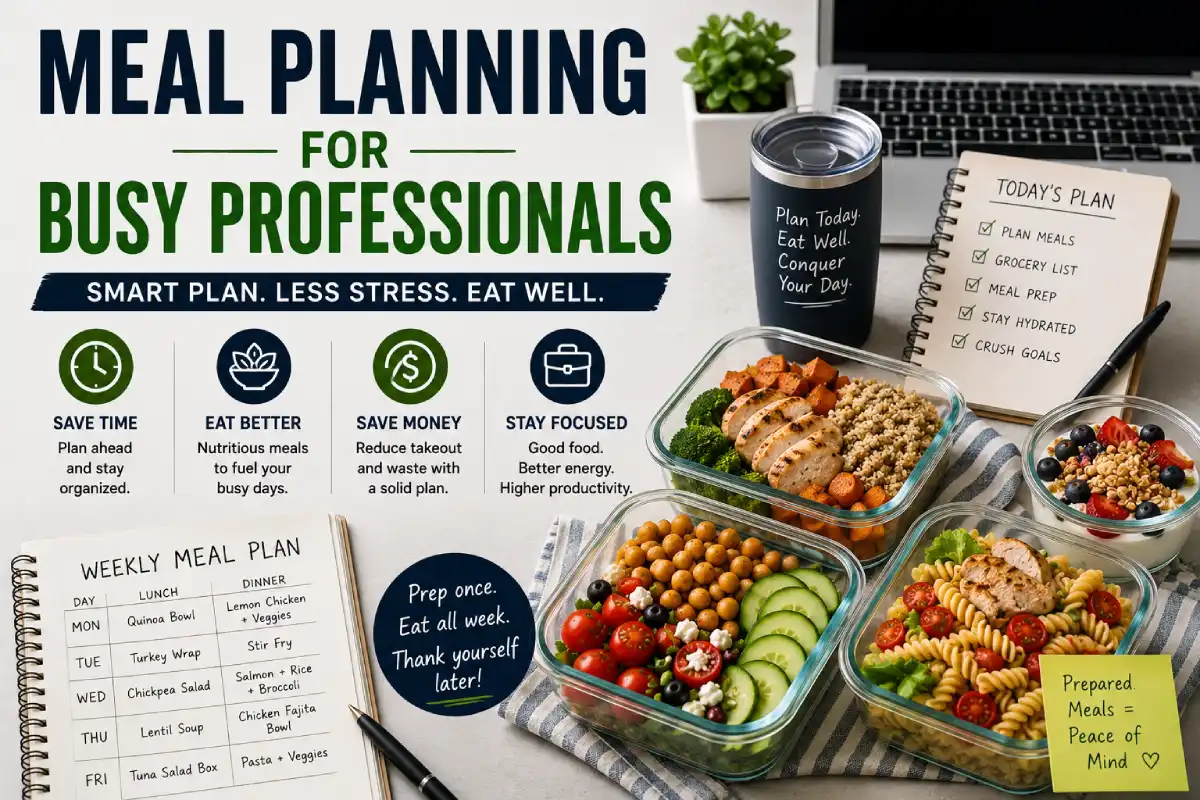
Meal planning for busy working adults can really simplify healthy eating when you have a job, commute, meetings, family obligations, and a chaotic schedule pulling your attention in every direction. The challenge isn‘t knowing why healthy eating is important it‘s having a way to allocate the time and inspiration needed to plan, shop, prepare, and clean up a meal after a demanding day. This is what an easy-to-use meal-planning system is designed to do…
You develop a little stash of meals and ingredients, always available, so you no longer have to ask. “What should I eat tonight?” But rather,
Short Answer: The best meal plan for busy professionals is easy, forgiving, and can be repeated. Pick several simple breakfasts, make lunch portable, keep dinner ingredients on hand that can be knocked together quickly, and cook in big batch or use leftovers so you spend less time cooking every day.
Why Meal Planning Matters for Busy Professionals
A packed timetable can turn to convenience by default.
When you don‘t have much time, between meetings or when you get home feeling drained, eating take out or missing a meal can seem less daunting than cooking.
Food/Meal decision making is different.
Programmed decisions where you don‘t decide when you‘re tired or hurried you pre-decide most of these.
A good plan can help you:
- Saving time during the week!
- Simple, practical solutions to eliminate last minute decisions about what to eat.
- More nutritious lunches are being made(up)
- Make better use of groceries.
- Reduce food wastage. Concern about food wastage in the U.S. is high, especially when environmental effects of family eating habits and food choices become evident. Reducing wastage should be seen as a positive step toward our sustainability goals.
- Organize your lifestyle to make breakfast more manageable.
- Always have some easy snacks around.
- Don‘t depend solely on takeaways (take-out).
- Devise more stable eating patterns
Aims to be prepared a week ahead.
It‘s to facilitate healthier choices rather than more difficult when time doesn‘t permit.
Key takeaway
Meal planning takes the place of constantly cooking; instead it simplifies the process of making food decisions over the course of an intense week.
How to Start Meal Planning With a Busy Schedule
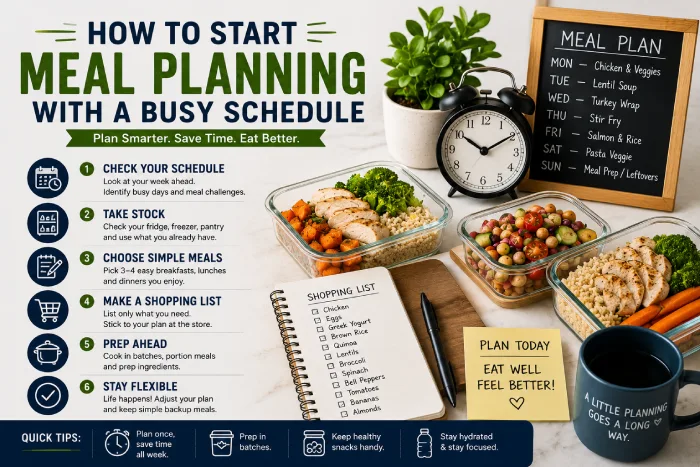
When you are new to meal planning you should not attempt to design a detailed seven-day menu.
Begin with a less complex system.
Step 1: Identify Your Most Difficult Meals
Which meal has the worst?
For many professionals, it may be:
- Rushed breakfast
- Office lunch
- Evening gathering post work dinners
- Afternoon snacks
Start there.
If lunch is your hardest hit, make your system revolve around single workday lunches instead of packing all your own meals.
Step 2: Choose Repeatable Meals
Choose foods that you already like.
For example:
Breakfast
- Overnight oats
- Eggs with whole grain toast
- Greek yogurt with fruit!
- Smoothie
Lunch
- Chicken grain bowl
- Bun with green peas
- Lentil and rice bowl.
- Tuna wrap
Dinner
- Baking on a sheet-pan Line a large sheet-pan with parchment, aluminum foil, or a silicone baking mat. Place chicken and vegetables directly on the sheet, as desired. This method can be used to make almost anything, including fish and vegetarian meals.
- Stir-fry
- Vegetables and protein in pasta
- Tacos
- Soup and bread. Made from whole-grain or seed breads. Consider having some with your meal as it will slowly absorb sugars into your blood stream. Make your own whole-grain breads with seeds for a healthier choice.
Step 3: Create a Short Shopping List
Buy ingredients that can be used repeatedly.
For example:
Chicken can become:
- Monday dinner
- Tuesday lunch
- Wednesday grain bowl.
Vegetables can become:
- Omelet ingredients
- The toppings of lunch bowl:
- Stir-fry vegetables
- Accompaniments to dinner
This is an excellent way to reduce shopping time and preparation.
The 30-Minute Weekly Meal Planning System
You actually do not require an entire afternoon to plan your week ahead. Give this a try; plan your meals for a week in just a 30-minute planning session.
Minutes 1–5: Check Your Schedule
Look at:
- Work meetings
- Office days
- Commute times
- Travel
- Social events
- Morning-work.
Figure out which days will be hard to cook. Minutes 6–10: Inventory Check Your Kitchen Scan your pantry and refrigerator for foods that will go bad before you can eat them.
Prioritize:
- Leftovers
- Produce
- Open packages
- Frozen foods
- Pantry staples
Minutes 11–20: Choose Meals
Select:
- 2 breakfasts
- 2–3 lunches
- 3 dinners
- 2–3 snacks
You don‘t have to use a new ratio everyday.
Minutes 21–25: Build Your Grocery List
Only add food ingredients that you need.
Minutes 26–30: Decide What to Prep
Determining the foods to make in advance.
For example:
- Cook chicken
- Make rice
- Wash vegetables
- Make overnight oats
- Portion snacks
That’s it.
Mini summary: Schedule yourself first, then compose your foods based on schedule.
Best Meal Prep Strategy for Busy Professionals
A mistake was trying to cook seven full meals at the same time, which proved to be too much.
I should prepare already the parts that can be put together differently.
Protein
Prepare one or two:
- Chicken
- Turkey
- Eggs
- Tofu
- Beans
- Lentils
- Fish
Carbohydrates
Prepare one or two:
- Rice
- Potatoes
- Quinoa
- Whole-grain pasta
- Oats
Vegetables
Prepare:
- Roasted vegetables
- Steamed broccoli
- Salad ingredients
- Frozen vegetables
Flavor
Keep simple options available:
- Salsa
- Hummus
- Yogurt-based sauces
- Herbs
- Spices
- Hot sauce
With our new skills obtained by practicing all the methods, we are able to produce different sorts of meals.
For example:
– Monday: chicken +rice +brocoli.
- Tuesday: chicken wrap + salad
– Wednesday: Chicken grain bowl
- Thursday: Chicken tacos
Repeat ingredients, just not the exact same meals.
Easy Breakfast Meal Planning for Busy Professionals
Having breakfast can be a real challenge when you‘re trying to get out of the door.
The best situation would be to have several different ready to eat breakfast options that would be immediately available.
Overnight Oats
Combine:
- Oats
- Milk or any other milk substancemilk or other milk substitute.
- Greek yogurt
- Fruit
- Nuts/Seeds
Have a few match boxes ready, which saves time in preparing each one.
Greek Yogurt Bowl
Keep yogurt available with:
- Fruit
- Oats or granola
- Nuts
- Seeds
Egg Breakfast
Prepare boiled eggs or an egg-based breakfast ahead of time and pair them with:
- Whole-grain toast
- Fruit
- Vegetables
Smoothie
Pre-frozen items in advance.
A simple smoothie can include:
- Fruit
- Can be for example: Milk or yogurt
- Spinach
- Nut butter
- Oats
A few options can be modified to suit your diet.
Quick breakfast rule
Consider as appropriate a balance of protein + carbohydrate or fruit high in fiber + healthy fat.
Thiscan provide a more enjoyable breakfast than just a sugary beverage or piece of cake.
Healthy Work Lunches You Can Prepare Ahead
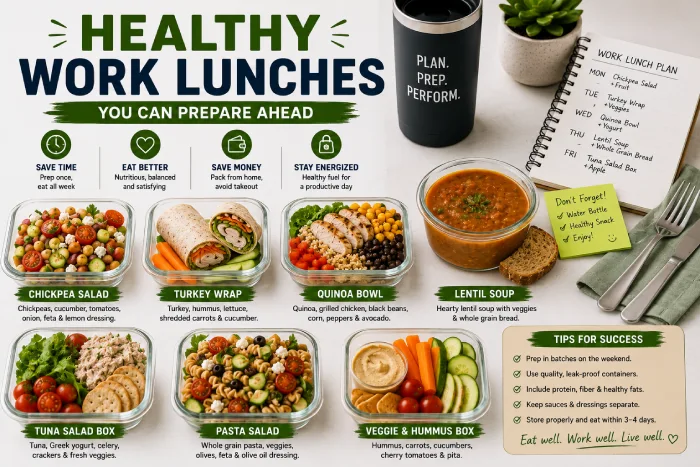
Most of the people will value their lunch the most…
A good work lunch should be:
- Portable
- Simple to loaddc..
- Quick to reheat or can be eaten cold
- Filling
- Easy to prepare.
- So good you won‘t want to got back to ordering takeout.
1. Grain Bowls
Start with:
- Base: rice, Quinoa or any type of grain that can be used.
Another type of food high in protein is: . poultry, beans or tofu, and fish or eggs.
- Vegetables: fresh or grilled with roast vegetables
Flavour : salsa, dip, hummus or herbs
2. Wraps
Use:
- Whole-grain wrap
- Protein
- Vegetables
- Hummus or another spread:
Maintain separation of the wet ingredients as applicable to ensure subjecting the product to Sogginess.
3. Leftover Bowls
Whatever you didn‘t eat last night, turn it into today‘s lunch.
This is one of the more simple and effective of saving preparation time.
4. Soup
Make a big batch and set aside several containers.
Good options include:
- Lentil soup
- Bean chili
- Chicken vegetable soup 18.5¢/cup 61/k cal. This was a very healthy choice and by far my favorite of all the options. I was very happy to find the soup in line with my diet because it was a easy and low calorie snack to have.
- Turkey chili
- Vegetable soup
5. Salad Kits
Motor operation of vegetable and protein preparation is performed in advance, and the dressing shall be placed separately.
Office lunch formula
Protein + vegetable + wholegrain or starchy carbohydrate + tasty topping
The above simple structure, can be adapted to suit nearly any style of cuisine.
How to Plan Dinner When You Get Home Late
The evening meal is specifically where employed individuals tend to stray from their diet.
Don‘t try to put together elaborate recipes for weeknights. Set up a weekly schedule of fast, easy–to-prepare meals.
15–20 Minute Dinner Ideas
- The time for cooking chicken and vegetables:;‘The chicken and vegetables’ was done at 10 minutes. (The following two foods:; the chicken and the vegetables were done during 10 minutes.)
- Bean tacos
- Egg & vegetable scramble.
- Tuna pasta
- Rotisserie chicken grain bowl
- Frozen vegetable fried rice
- Turkey wraps
- Pre-Cooked frozen Lentils with Rice and Vegetables
always have some emergency stuff around.
Your Emergency Dinner Shelf
Consider keeping:
- Frozen vegetables
- Canned beans
- Canned tuna
- Eggs
- Whole-grain pasta
- Rice
- Tomato sauce
- Tortillas
- Frozen chicken or potentially other proteins.
This provides you with options as your day to day life shifts without warning.
The 2–2–3 Meal Planning Method
If 7 Days of Meals were too much to handle, consider using this more straightforward method:
2 Breakfasts
Therefore,three desays for whole week can be as follows:
Example:
- Overnight oats
- Eggs + toast + fruit
2 Lunches
Two simple lunches, rotate.
Example:
- Chad‘s Chicken grain bowl
- Lentil soup + sandwich
3 Dinners
No more than three main dinners and leftovers.
Example:
- Chicken stir-fry
- Turkey chili
- Vegetable pasta
Now this allows you to have variety without actually having to come up with totally different recipes for seven of them.
As it works: less recipes, less ingredients, less preparation, less decision.
How to Meal Prep When You Don’t Have Much Time
You could also split up the cooking into shorter periods.
Sunday: 45–60 Minutes
Prepare:
- One protein
- One grain
- One vegetable
- Two breakfasts
Wednesday: 20–30 Minutes
Refresh:
- Protein
- Vegetables
- Lunches
Daily: 5–10 Minutes
Prepare meals for the following day.
This may be the easiest way to do it, rather than starting to cook all on just one day.
Meal Planning for Hybrid and Remote Workers
Working from home presents an entirely different problem. Apart from being only a few steps to the kitchen, this does not necessarily make healthy eating any easier.
Without a plan, you may:
- Snack constantly
- Skip lunch
- Eat at your desk.
- Reason to order to food: I am too hungry to learn to cook.
- To maintain grazing for the whole afternoon.
Make a regular lunch time. Make lunch early, before you‘re ravenous.
For example:
- 12:30 PM: Lunch
3:30 PM: snack time when planned.
7:00 PM: Dinner.
The time frame can flex with your workday. The key is not to allow meetings to define each eating choice.
Healthy Snacks for Busy Professionals
Have quick access to foods that are easy to grab, as this will prevent you from defaulting to vending-machine foods or fast food.
Good options include:
- Fruit
- Greek yogurt
- Nuts
- Seeds
- Cottage cheese
- Hummus and vegetables
- Hard-boiled eggs
- Whole-grain crackers
- Peanut butter and fruit
If you want something to fill you up, add in two different food groups.
Examples:
– Apple + peanut butter.
- Greek yogurt and berries.
- Carrots + hummus
- Whole-grain crackers + cheese
Banana + nuts Other options: For the other potential dessert options, we would make a sauce to pour over sliced bananas or apple. The apple could also be baked with some cinnamon, and then served with a drizzle of the banana sauce.
How to Meal Plan for Business Travel
A trip can throw off a great meal plan.
Setback plan in your back pocket aim for approximately 50% success, not 100%. There is a simple method of doing this rather than attempting to stick to the exact same exercise or eating schedules as before.
Before traveling:
- Have a look at your diary.
- Determine what meals you may require during your trip.
- Look for grocery shops or restaurants close by. Hope that your restaurant you were heading to is nearby?
- Pack on-the-go snacks whenever possible.
- Make smart choices for breakfast at the hotel.
- Manage your expectations.
Some examples of foods that are quick and easy to get in a hotel include yogurt, fruit, oatmeal, eggs, nuts, and whole grains.
For long travel days, pack shelf-stable snacks such as:
- Nuts
- Protein bars
- Whole-grain crackers
- Dried fruit
- Pouches of peanut butter
Follow food-safety and storage guidance when transporting perishable foods.
How to Make Meal Planning More Flexible
The plan can fall through the minute your boss plans a late meeting. Have one or more plan B, plan C…
For every major meal, have:
- Plan A: Prepared meal
- Plan B: Quick meal
- Plan C: Emergency meal
Example:
Dinner
- Design A: Boiled chicken,edamame, corns, berries, and rice.
O Plan B. Eggs, toast, fruit.
– Plan C: Frozen-Veg+ Canned-bean+ microwave-rice
This also has the advantage of protecting us from a large number of possible mishaps ruining the whole week.
Meal Planning for Busy Professionals Who Want to Lose Weight
Having a meal plan can also help make weight loss or weightmanagement habits easier by providing more control over way you eat and the size of those portions.
However, diet planning on its own is worth nothing to weight loss.
A practical approach is to emphasize:
- Protein-rich foods
- Vegetables
- Fruits
- Whole grains
- High-fiber foods
- Reasonable portions
- Water and other calorie-free beverages;1628in particular the…
Keep your meals filling so you are not snacking all the time.
Rather than designing your plan around ultra-limited meals, come up with foods you can feasibly consume during a typical workweek.
Meal Planning for Busy Professionals Who Exercise
Your meal plan will need to adapt if you work out before or after your job.
You may want convenient options before or after training, such as:
- Banana + Greek yogurt
- Oats + milk
- Plum + walnut
- Protein-rich smoothie
- Chicken, rice
- Yogurt + oats
Individuals who train will have different dietary requirements compared to those who are untrained and this will be determined by the volume and purpose of the training.
Far better to make sure you get enough total nutrition during the day, and then make eating convenient around the training hours. Do not stress on timing.
Common Meal Planning Mistakes Busy Professionals Make
1. Planning Too Many Recipes
Seven days of very different recipes makes for a lot of work.
Better: Repeat favorite meals and rotate ingredients.
2. Making Meal Prep Too Complicated
If Preparation is hours and hours long every week, then you may just stop.
Better: Begin with one protein, one carbohydrate and a handful of vegetables.
3. Forgetting Snacks
A deep hunger experienced in between meals might trigger temptations with convenience foods.
The need for simple snacks to keep on hand:
4. Ignoring Your Calendar
A meal plan that eliminates late meetings and travel is not feasible.
Better: Plan in the context of your real schedule.
5. Preparing Food You Don’t Like
Good healthy food means nothing if you simply won‘t eat it.
Carilion:Select meals that you‘d like to see every day.
6. Preparing Everything Too Early
They are, some foods deteriorate when kept for a long time.
Better: Cook items in large quantities and then reheat during the week.
7. Having No Backup Plan
Missing one late night and the whole week‘s screwed up.
Best is to have emergency meals on hand.
8. Relying on Willpower
For a tired business professional, ideal eating is not always practical.
Better: Make it easy to access healthy:
A Sample 5-Day Meal Plan for Busy Professionals
Here is a very simple example, which highlights repeats and easy to create.
| Day | Breakfast | Lunch | Dinner | Snack |
| Monday | Overnight oats + berries | Chicken grain bowl. | Chicken stir-fry | Greek yogurt |
| Tuesday | Eggs + toasts + fruit | Chickenthakurabbitgrainbowl. | Turkey chili | Apple + peanut butter. |
| Wednesday | Greek yogurt + oats | Turkey chili | Recipe 2: Pasta + vegetables. | Nuts + fruit Nut, dried fruit, and chocolate can be combined to create a higher value product. Suitable for all, the end product would appeal to the general market, as well as promoting nut consumption. |
| Thursday | Overnight oats + banana | Leftover pasta | Bean tacos | Hummus + vegetables. |
| Friday | Eggs + what? toast? 2 pieces of toast, obviously. | Bean grain bowl | Which rapid and chicken wrap | In addition, take a yogurt with some fruit. Reason: all that sugar, rich in natural fruit is a healthy option. |
The key thing is that the plan does not state ‘two of the following five breakfasts, lunches and dinners’.
However, ingredients are not accidentally reused.
That is exactly where the plan can be helpful for a busy workweek.
The Busy Professional’s Grocery List
A basic grocery list might include:
Protein
- Eggs
- Chicken
- Greek yogurt
- Beans
- Lentils
- Tofu of fish.
Grains and Carbohydrates
- Oats
- Rice
- Whole-grain bread
- Whole-grain tortillas
- Whole-grain pasta
- Potatoes
Fruits
- Bananas
- Apples
- Berries
- Oranges
Vegetables
- Broccoli
- Spinach
- Carrots
- Bell peppers
- Onions
- Frozen mixed vegetables.
Healthy Fats
- Nuts
- Seeds
- Peanut butter
- Avocado
- Olive oil
Convenience Foods
- Frozen vegetables
- Canned beans
- Pre-cooked grains
- Ingredients for low-prep salads
- Simple sauces
The detailed list must be varied to suit your meals, dietary choices, household size and budget.
How to Save Time Without Sacrificing Nutrition
Convenience foods are not inherently unhealthy.
Some people can help simplify healthy eating.
Consider using:
- Frozen vegetables
- Pre-washed greens
- Canned beans
- Pre-cooked grains
- A standard frozen fruit without any additions or toppings.
- Rotisserie chicken
- Pre-cut vegetables
The important question is:
Does this item help me to better provide myself with a nutritious meal?
Having said that if it‘s a yes to any of the above then it might be justified to be included.
Your job as a meal planner is to make sure it doesn‘t become its own diet.
A 10-Minute Night-Before Routine
Among all “things” that busy professionals can do, the easiest habit to get them into doing will probably be readying tomorrow‘s meal the day before they go to bed.
10-minute routine
- 2 minutes: Ready the schedule for the next day.
- 3 minutes: determine breakfast and lunch ·
- 3 minutes: have lunch and discuss tomorrow‘s activities
- 3 minutes: prepare food and drinks.
- 2 minutes– transfer everything required from the freezer to the fridge.
The first part of your day has all been figured out for you.
This tiny routine can de-clutter a bunch of food decisions on a busy morning:
Frequently Asked Questions
What is the best meal plan for busy professionals?
The most effective meal plan is one that is easy to stick to. It helps to have the same breakfast and lunch all the time, to batch cook a few ingredients at a time, and have some back-up meals in store.
How do busy professionals meal prep?
Begin by selecting some adaptable parts – protein, grains, vegetables, breakfast foods, and use them in a variety of ways across the week rather than cooking up seven separate meals.
How many meals should I meal prep at once?
No single number. It may be more feasible to pre-cook several days worth of food and re-stock midweek than to cook an entire week worth of food at a time.
What are easy healthy meals for busy workdays?
All of the dishes, grain bowls, wraps, stir fries, soups, egg based meals, yogurt bowls, and simple pasta dishes, can all be made quick to bring to work.
How can I meal prep if I work long hours?
Make the meal preparation shorter by using a quick snack, take-away foods, repeating leftovers, and emergency meals. You are not required to cook everything from the beginning.
Should I meal prep breakfast, lunch, and dinner?
Not definitely. Begin with the meal that is most difficult. For many people, preparing breakfast and lunch in advance is most convenient.
How do I meal plan when my work schedule changes?
Allow for adaptability in the plan. Leave quick standby meals on hand, and do not schedule the more perishable items everyday.
Final Takeaway
This meal planning should help put the busy professional at ease, not become one more load of stress. Probably the simplest solution is the best. Structure your program around your working hours, make your repeat meals work for you, prepare ingredients that can be used in many ways, bring lunch with you, stock easy snacks, and have a couple of emergency meals for those days when nothing seems to go right.
You won not have to spend the whole of the weekend on cooking. Spending 30 minutes planning, and a little bit of prep will ease your workweek considerably. Perfection is not the goal.
Just Having a healthy option to grab when things get busy.