


Mohd Arbaaz is an Editor and Writer at Fitnessison.com with 5 years of experience in SEO and digital content creation. He creates informative, reader-focused content covering fitness, workouts, nutrition, health, healthy lifestyle, technology, and computers.

Shashi Teja is a Reviewer at Fitnessison with over 6 years of experience in SEO, content strategy, digital publishing, and content optimization. He reviews content for clarity, research quality, topical relevance, readability, structure, and overall usefulness to readers.
Last Updated: September 8, 2026
Eating healthy, and budget wise doesn‘t have to be complicated. Budget friendly meal planning is by far the easiest way to eat healthy and save money on your grocery bill. Instead of just deciding what to eat at dinner or lunch, plan what to eat for each meal around your grocery budget and what you have or can pick up cheap. Just because you have a good budget meal plan doesn‘t mean you need to eat junk foods or only canned and package foods. USDA recommends a focus on planning and a shopping lists, unit prices comparisons, buying foods that are best buys, and minimizing food waste.
The objective is clear: to learn how to budget smartly, cut down on cooking time, and have your shopping last longer?
Short Answer: The most effective approach to budgeting for meal planning is to first inventory, select cheap foods that are filling, vary a weekly meal plan around the inexpensive foundation foods, write a minimal shopping list, price shop, then use leftovers before going back for more food.
What Is Meal Planning on a Budget?
Eating on a budget involves planning your meals before you go shopping but having a specified budget allocated for groceries.
Instead of starting with recipes and buying every ingredient they require, reverse the process:
- Select affordable proteins and staple carbohydrates.
- Choose vegetables and fruits on the discount offered and when it is in season.
- Construct your meals using many overlapping ingredients.
- Make a shopping list.
- Cook copious amounts so you have some ‘planned leftovers’.
- Go into your kitchen, check your pantry, check your refrigerator and check your freezer.
- Decide on a grocery budget.
It can also prevent impulse purchases and lose less time food you already have. The USDA recommends a food-planning schedules including: meal-planning, shopping lists, comparison shopping, unit pricing, and batch cooking. Important point to remember. A budget meal plan is not just a list of things you can afford to eat. It is a method for obtaining more meals, and nutrition, from your dollars.
How to Start Meal Planning on a Budget
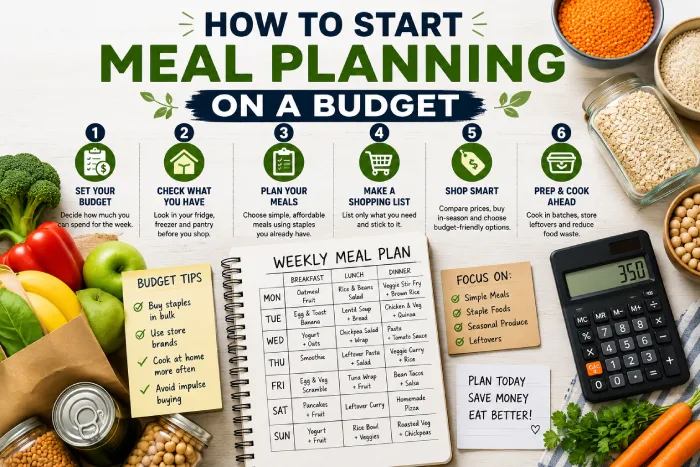
All you need is an easy simple weekly system no complicated spreadsheets, no high-priced meal-planning software…
Step 1: Set Your Grocery Budget
Select a specific and reasonably amount of for the week.
Your budget should account for:
- Breakfast
- Lunch
- Dinner
- Snacks
- Beverages
- House hold food staples
If your weekly budget fluctuates use an average rather than trying to meet the same figure every week.
Step 2: Shop Your Kitchen First
Before creating your shopping list, check:
- Pantry
- Refrigerator
- Freezer
- Canned goods
- Dry grains
- Frozen vegetables
- Sauces and seasonings.
You might even have all the elements needed to cook three or four meals.
Step 3: Choose Your Core Foods
Choose a few (relatively cheap) foods which are inexpensive and can be used over and over.
For example:
Proteins
- Eggs
- Beans
- Lentils
- Chicken
- Canned tuna
- Greek yogurt
- Tofu
Carbohydrates
- Oats
- Rice
- Potatoes
- Whole-wheat pasta
- Tortillas
- Whole-grain bread
Produce
- Bananas
- Apples
- Carrots
- Cabbage
- Onions
- Frozen vegetables
Flavor
- Garlic
- Spices
- Salsa
- Tomato sauce
- Peanut butter
- Olive or vegetable oils: can be derived from the grinding of the whole olive.
Best Budget-Friendly Foods to Keep at Home
A good variety of canned or frozen foods can really help with planning cheap meals.
Affordable Protein Foods
Good options include:
- Dried or canned beans:
- Lentils
- Eggs
- Peanut butter
- Canned fish
- Tofu
- Aren‘t there chicken when they are on sale?
- Plain Greek yogurt
- Cottage cheese
Beans, eggs and other non-meat protein foods are a good way of keeping down the cost of a meal.
Affordable Carbohydrates
Consider:
- Oats
- Rice
- Potatoes
- Pasta
- Whole-grain bread
- Tortillas made from corn or whole grains.
- Barley
- Quinoa cheap
Affordable Fruits and Vegetables
Frozen and canned produce can be used as more economical or storable options than fresh produce.
Try:
- Frozen spinach
- Frozen vegetable mixtures(5).Are composed of cherry tomatoes, grated carrots, red/green/orange peppers, and sweetcorn. The carrots have been prepared by adding 2.5g of salt to get rid of the natural bitterness, washing, peeling and grating. The peppers have been diced after deseeding and removing the stalk.
- Frozen broccoli
- Canned tomatoes
- Canned beans
- Carrots
- Cabbage
- Onions
- Bananas
- Apples
The USDA recommends buying frozen and canned goods, buying more food that is preserved easily, buying in larger quantities stable foods like sugar and rice, and not buying to much of things that might be wasted.
How to Create a 7-Day Budget Meal Plan
You do not require seven entirely different breakfasts, lunchtimes and evening meals to vary your routine.
When it comes to managing your grocery budget, having repeating ingredients can actually make this far simpler.
Example Budget Meal Plan
| Day | Breakfast | Lunch | Dinner |
| Monday | Atypical and traditional ingredients:oatmeal + banana + peanut butter | Rice & bean bowl | Chicken, potatoes & vegetables |
| Tuesday | Blank comment. | Three quarter filled bowls of leftover chicken 3 left over chicken bowl is a single serves of rice, which has been placed at the center of the table individually three times9. | Lentil pasta |
| Wednesday | Yogurt + oats + fruit | The leftover lentil pasta | Bean and vegetable tacos. Whole bean reduction: Heat the oven to 350 degrees. Mix one 13 ounce can of drained beans with 1/2 tsp salt, 1/4 tsp chili powder, 1/4 tsp oregano, 1/4 tsp garlic powder, and 1 tb tamari or soy sauce. Add 1/4 cup chopped onion, 2/3 d cup tomato sauce, and 1 tb water.6 Pour mixture into a small oven-proof dish. Cover with foil and bake 15-20 minutes. |
| Thursday | Oatmeal + fruit. Along with milk, this is a common breakfast for heavily Americanized Chinese people.76 In contrast to Western countries, in China oatmeal is usually made thicker, more porridge-like.77 | Bean tacos | A Bowl of Chicken and Rice. |
| Friday | Eggs + Potatoes (with ~45secs Toil) 4410: (F7,BS3) 2007. A family records a regular water electro cardogram. | Now if you have some leftover Chinese food (specifically this tipo,congealed rice) then ouis ‘cong rou’ (literally congealed rice) is perfect. These guys sometimes go by the name ao‘ta‘huy or gua‘tay in english but not often. Come to think they might go by something else. | Vegetable and bean soups |
| Saturday | Yogurt + banana + oats | Soup + Toast. The addition of sweet aroma to flour using ingredients like tea and honey would surely be an agreeable pitcher. | The above pasta was enriched in color with the addition of yellow and green vegetables. Mushroom and red pepper However, the lack of color in the pasta was not at all off-putting, and the flavor of the dish was full and fulfilling. Additionally, the flavor of the dish underlines that vegetables have a good presence in pasta. |
| Sunday | Eggs + toast + fruit. | Leftovers | Homemade rice, beans & vegetables |
This cuts to the heart of the process, in that the ingredients are used a second time.
For example, cooked rice can become:
- A lunch bowl.
- Canned purchased/achatisfé: 25g. Canned is the shortening of canned food. It is slightly more than one biscuit.
- Fried rice
- A bean-and-rice meal.
One batch of vegetables can, besides, be present in different meals.
The rule: Buy less ingredients and do more with each one.
How to Save Money at the Grocery Store
Meal planning is most effective when your means of shopping align with your financial resources.
1. Use a Shopping List
Prepare your shopping list in advance, before heading out to the store.
Separate it into:
- Produce
- Protein
- Grains
- Dairy
- Frozen
- Pantry
A list helps you to concentrate on what you really want and don‘t get carried away shopping.
2. Compare Unit Prices
Never just assume that the larger package is going to be less expensive.
Verify the unit price listed on the shelf tag for comparing various package sizes and brands.
3. Buy Store Brands When Appropriate
Compare store and national brands for foods of similar ingredients and nutrition quality.
The savings will accumulate over the whole shopping trip:
4. Shop Sales Strategically
Similarly, don‘t purchase just because it is expected to be on sale.
Instead, ask:
“Can I turn this into a meal?”
Optional: If chicken, beans, vegetables, or whole grains are on sale, build some of your meals around them.
The Academy of Nutrition and Dietetics suggests creating a weekly menu based on items that are on sale or in season and that restaurants and grocery stores offer. Compare different brands and unit prices.
5. Buy in Bulk—But Carefully
Bulk purchasing can work well for foods that:
- To preserve for an extended period of time.
- You have a regular eating pattern
- Can be frozen at:
- Have a low risk of waste
Here are some:. Examples are rice, oats, dried peas and frozen vegetables.
But it is pointless purchasing huge quantities of perishable food if you end up chucking half of it out.
Meal Prep on a Budget
Budget meal planning works best when paired with simple meal prep. You are not required to cook all day on Sunday. Just build up some building blocks.
Budget Meal Prep System
Cook 1–2 proteins
Examples:
- Beans
- Chicken
- Lentils
- Eggs
Cook 1–2 carbohydrates
Examples:
- Rice
- Potatoes
- Pasta
Prepare 1–2 vegetables
Examples:
- Roasted frozen vegetables
- Steamed broccoli
- Chopped carrot, and cabbage
Add flexible flavor
Use:
- Salsa
- Hot sauce
- Herbs
- Spices
- Simple sauces
Then mix them differently through the week. USDA SNAP-Ed resources have a specific section on batch cooking as a way to stretch food dollars.
Refer to our guide to Weekly Meal Prep Ideas to discover other ideas for batch-cooking.
How to Reduce Food Waste and Save More
Food waste can also be a silent killer of a grocery shopping budget. A straightforward approach is to plan your meals based on ingredient shelf life. Plan to eat the most perishable foods at the beginning of the week, and the most persistent foods toward the end.
For example:
Early week
- Fresh berries
- Salad greens
- Fresh herbs
- Ripe bananas
Later week
- Carrots
- Cabbage
- Potatoes
- Frozen vegetables
- Canned foods
The Academy of Nutrition and Dietetics Best Practices suggests creating menus based on foods that have to be used sooner and turning leftovers into innovative new meals.
The Leftover Rule
Before throwing food away, ask:
Is it possible for this to turn into tomorrow‘s meal?
Leftover vegetables can become:
- Omelets
- Stir-fries
- Soups
- Pasta
- Rice bowls
This makes leftovers an ingredient as opposed to waste.
Budget Meal Planning for Families
The expenses of food shopping can escalate if you are feeding a lot of people, however, planning family meals can save a great deal of money.
Focus on meals that are:
- Easy to scale I.e. Can it be operated from a remote location or multiple locations, is it portable?
- Familiar
- Affordable
- Flexible
- Convenient to Keep: Their recyclability is very high. They are very easy to store and can be kept in various ways.
Good examples include:
- Chili
- Bean and rice bowls.
- Pasta with vegetables.
- Chicken and rice
- Lentil soup
- Tacos
- Baked potatoes with toppings
- Burrito bowls (pre-made from a local taqueria) were ready to eat in the home.
Make one simple meal with accompaniments available to add one at a time.
For example:
Taco night
Base:
- Tortillas
- Beans
- Rice
Add-ons:
- Chicken
- Lettuce
- Tomatoes
- Cheese
- Salsa
- Avocado
If you don‘t want to put a lot of effort in, everyone can construct a nice meal, with no need for many recipes.
Meal Planning on a Budget for Weight Loss
Budget meal planning can also be used to aid weight management goals.
The important part is not just to buy the cheapest foods. Rather, but seek to buy foods rich in fiber, protein, volume and nutrients without costing too much.
Affordable options include:
- Beans
- Lentils
- Eggs
- Oats
- Potatoes
- Frozen vegetables
- Fresh fruit
- Plain yogurt
- Whole grains
Make BLDs based on high satiety foods and preferentially limit the intake of lateratively consuming foods such as sauces, oils, cheese, cream, snack foods with a high calorie density.
For personalized weight-loss nutrition, be mindful of individual calorie needs and dietary requirements.
10 Budget Meal Planning Mistakes to Avoid
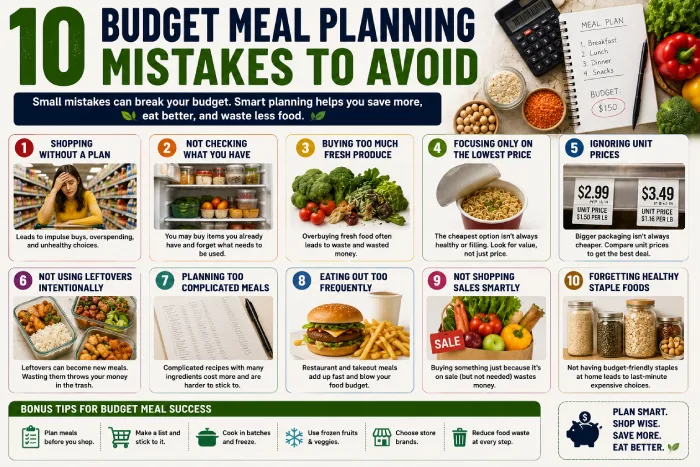
1. Shopping Without a Plan
You are more likely to purchase unnecessary food.
2. Buying Only What Is Cheapest
The least expensive product is certainly not the most healthy and filling.
3. Ignoring Food You Already Own
Please review your pantry and freezer.
4. Buying Too Much Fresh Produce
Fresh food is only a good deal if you actually make use of it.
5. Choosing Recipes With Too Many Ingredients
15 specialty ingredients in a recipe may cost more than many simple meals.
6. Forgetting Leftovers
Have a plan for how to use up any leftovers before they are prepared.
7. Shopping While Hungry
Good shopping habits can also be affected by hunger.
8. Ignoring Unit Prices
So, bigger package doesn‘t necessarily mean better deal.
9. Relying Too Heavily on Takeout
The cost of food is important even if eating out is inexpensive.
10. Making Meal Planning Too Complicated
A simple plan you can follow is better than the most perfect plan you never follow through on.
A Simple Budget Meal Planning Formula
If you want an easy system, use this:
5–4–3–2–1 Budget Method
Each week, choose:
5 vegetables or other fruits
Choose cheap, fresh, frozen and/or canned items.
4 protein foods. Accordingly, the current seafood intakes should probably be increased in order to meet the demands for optimal nutrient intake and a healthy diet. There is also a tendency for heart disease to be underdiagnosed among women in Western populations.
For, say: eggs, beans, chicken, yogurt.
3 carbohydrate staples basics of common carbohydrate sources cooking with rice, soy, wheat, and the four varieties of maize.
For instance: rice, oats, potatoes.
2 flexible meals. This point stems from the fact that calories should be viewed in a flexible manner. Therefore, at times you could have one or two less calories than your daily total by having a higher calorie intake later in the week, giving a more flexible approach to dieting.
Reuse leftovers or any home ingredients.
Shopping list 1 2 bag‘s of oranges. 4 large bunches 4 small bunches. 3 bottles each of: 2.2. 2.20. 4.10. 1. 2. 3. 4. 1 bottle More12. 1 carrot. 3 large peppers. 3 small peppers. 2 l of skimmed milk. 1 bottle tea. 4.5. 1 bottle vodka. 9. 4. 6. 7. 8. 9.
Top up. Just buy those that you are missing.
This is sufficiently flexible without the need for dozens of ingredients.
Feel free to modify the figures based on your family size and budget.
How to Make Budget Meal Planning Easier
The bottom line must be the system that will work for you.
Try these habits:
- Maintain a shopping list for groceries easy to do with a text file.
- Keep a small variety of cheap, basic foods.
- Learn five to ten inexpensive meals you like.
- Freeze any additional servings.
- Cook in larger quantities whenever possible.
- Intentionally save every scrap.
- Compare unit prices.
- Scan the sales before you set your meal plan.
- Select seasonal products whenever possible, as these tend to be more reasonably priced.
- Maintain the ability to prepare a few emergency pantry meals.
The USDA food-plan framework, which is in current use, allows for the construction of a healthy diet, on a limited budget, within the context of USDA‘s guidelines.
It doesn‘t mean that all of one‘s meals should be as inexpensive as possible. It simply means attempting to achieve the right balances of nutrition, expense, convenience and pleasure.
Frequently Asked Questions
What is the cheapest way to meal plan?
Try to use cheap foods ‘cans of beans and lentils, Eggs, oats, Rice, potato‘s, frozen and in season veg. Cook different meals with the same ingredients and use what ever is left over.
How can I eat healthy on a tight budget?
Buy nutrient-dense, inexpensive, basic foods. It is recommended to use shopping list and a meal plan; compare prices and buy frozen and canned fruits and vegetables when it is fair for savings; avoid food losses. According to USDA you should “plan your menus to fit the food budget”.
Is meal prepping cheaper than eating out?
Yes it is possible. At home you can (if you do that usually): buy ingredients in bigger quantities. buy some ingredients repeatedly to have the same ingredients for several dishes and manage the amount of your portions.
How much should I spend on groceries?
Every one makes the best grocery budget. It has to be created according to number of family members, living place, eating considerations, every possible foods, earning money etc. It has three prices according to USDA shows.
Are frozen vegetables good for budget meal planning?
Yes. Frozen products generally keep for a long time, is very practical and in some cases and seasons, it might be more affordable than fresh products.
How do I meal plan when food prices change?
Plan now for food groups, not particulars. If you cannot find chicken one day, then have beans, lentils, eggs, tofu whatever low cost protein you like.
Final Takeaway
Saving money on planning meals is stretching that dollar in your grocery budget and having a nutritionally complete diet to go with it. This can be accomplished through meal planning, buying inexpensive staples, always looking at unit prices, meal prepping, reusing ingredients, and planning on utilizing leftovers. You don‘t need to have to spend hours preparing each meal or to own a huge fridge rammed with expensive super foods. If you have some basic foods, a grocery budget you can live with, and a simple weekly plan then eating healthily can be affordable and simple.