


Mohd Arbaaz is an Editor and Writer at Fitnessison.com with 5 years of experience in SEO and digital content creation. He creates informative, reader-focused content covering fitness, workouts, nutrition, health, healthy lifestyle, technology, and computers.

Shashi Teja is a Reviewer at Fitnessison with over 6 years of experience in SEO, content strategy, digital publishing, and content optimization. He reviews content for clarity, research quality, topical relevance, readability, structure, and overall usefulness to readers.
Last Updated: September 8, 2026
You can have a good diet and exercise very much, and make an effort to cope with stress around you. However if you are often deprived of sleep, a healthy lifestyle can be challenging.
The issue is that many bad sleep habits are quite simple ones. Long bedtime conversations on your phone, a late afternoon coffee, a different bedtime each night, or a long late evening nap.. though unproblematic in isolation.
The positive aspect is that achieving sleep improvements does not require a intricate routine.
A few stable healthy sleep habits can be developed by having a more sleep friendly environment and daily routine.
Your Sleep Starts Before You Get Into Bed
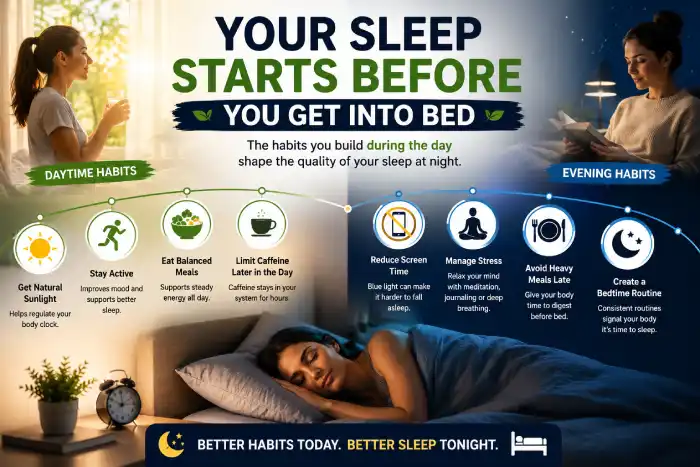
People often treat bed time as the be all and end all of sleep, they do not think about sleep unless the bedroom lights are switched off. Your daytime life affects how ready your mind and body are for sleep.
Your sleep schedule starts days in advance with the planning of your day in addition to just the hours before you go to sleep.
Getting daylight, being physically active, reducing the amount of caffeine you consume in the late afternoon/evening, limiting your stress and sticking to a routine may all be incorporated into a healthier way of sleeping.
Are 15 simple practices you can slowly add to your routine.
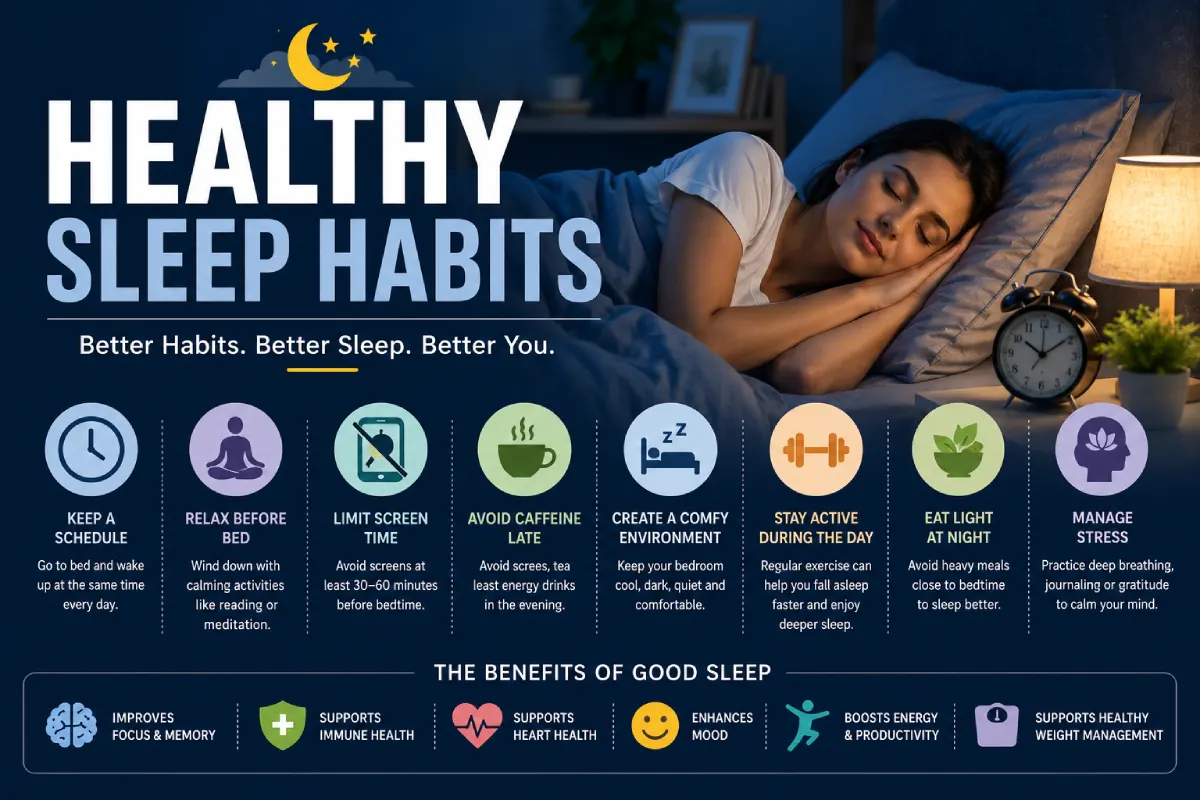
1. Give Your Body a Regular Schedule
Your body prefers regularity.
Consume food regularly; do your best to get to bed and wake up at roughly the same time each day. you do not need to stick to exactly the same times every day, just try not to vary them too greatly from one day to another. Rather than have the thought, tonight I should go to sleep early, have the thought, if I were to have a bedtime that I could actually keep most nights, hvae it. Apart from that, here is an idea. Pick a regular time you want to wake up and then work back from that point to find a reasonable bedtime.
2. Start Your Day With Natural Light
This morning can affect your bedtime.
Light in the natural environment- daylight provides your body with a vital environmental cue that could assist the regulation of your sleep-wake cycle. Scheduling outdoor activites outdoors in the morning can be an effective strategy.Even taking a walk around the block, sitting outside with that warm beverage first thing in the morning, or simply sitting outside for five minutes may be helpful.
Simple synergy: a bit of morning sunshine and a short walk double your good habits.
3. Move More During the Day
An inactive day can be a day where you‘re sitting still but your mind is constantly thinking. Mild exercise can benefit general health and can be an aid to sleep. There is no need to do a time-consuming session. Walking, bike riding, swimming, weights, stretching, sports etc… can all be used towards a more active lifestyle. If exercising in the evening causes the opposite of relaxation, earlier in the day may be the better time to work out.
4. Stop Treating Caffeine Like an All-Day Drink
For many individuals, coffee can be a healthy addition to a daily routine, but if it comes between you and a good night‘s rest (which it can, in some cases), it should probably stay on the shelf. Caffeine is a drug and can have an effect for hours after you have had it. If you generally find it difficult to get to sleep, then assess the amount and timing of the caffeine intake you consume. Various other sources other than coffee. For example some tea, energy drinks, cola, chocolate etc are also sources where caffeine is present.
Try this: Have your last caffeine-filled beverage before, not after, your bedtime and observe how your sleep is affected.
5. Give Your Brain a Digital Break
And then you can take your phone, with you, to bed! Checking the phone for a few minutes can easily turn into an hour of scrolling. The nature of social media, gaming, work related emails, and engaging yet emotional content will make it more difficult to remove yourself mentally. Establish a time before sleeping when you cease using your phone to entertain yourself or communicate with others. When using a mobile phone as an alarm there is an option to keep it at the other end of the room.
6. Turn Your Bedroom Into a Sleep Space
Your bedroom should be somewhere where relaxation just happens. Feel uncomfortable for a room that is noisy, too warm, too cluttered or too bright.
Aim for a sleeping environment that is:
- Dark
- Quiet
- Comfortable
- Cool enough for you38. are you? It‘s much more comfortable in the sunshine.
- Unencumbered by distractions.
If they help make you more comfortable, you may use curtains, an eye mask, ear plugs or white noise.
7. Create a “Slow Down” Hour
Transition more slowly from work or play to sleep. Don‘t go from work or entertainment straight to bed. Allow yourself to relax. Your last activity of the day should be distinct from the most hectic period of your day. You could also do a bit of reading, have a shower, put on some calming music, have a little stretch, pick things to do for tomorrow, and so on. The activity itself is not crucial, rather the process of achieving a gradual winding-down in preparation for sleep.
8. Finish Tomorrow‘s To-Do List Tonight
Sometimes the problem is not in your body, it‘s in your mind. Thinking about work you haven‘t finished, appointments you have, shopping, the bills or the chores to do tomorrow may cause you to lie in bed. Write out what must be done the following day while in bed for the last 5 minutes. Once your thoughts are in paper, probably you‘re gonna stop thinking about it sleeping in bed.
Simple approach: List your three most critical tasks for tomorrow.
9. Be Smart About Evening Meals
He is right the firsttime, but he could have added ..as soon as you have had a really big meal. Allow yourself at least a few hours before going to bed after a large meal. If your craving comes back, pick something small to hold you over instead of making it a full meal. What makes for your perfect eating schedule will vary according to your life, but observing how eating late impacts your sleep can guide you to good practices.
10. Don‘t Let Naps Steal Your Night
Naps are in fact not inherently harmful. One of those famous ‘short naps can be beneficial’ depends on the individual. More so when people are already tired. The problem can be defined when naps tend to be very long or at night. If you have persistent difficulty getting to sleep at night, try cutting your nap short or taking it an hour earlier. A nap should be thought of as a supplement to your sleep, not a substitute for a regular sleep period.
11. Use Relaxation to Lower the Volume in Your Mind
Stress builds up to the point where bed time is when your brain has suddenly realized all the past things it has decided to forget. Don‘t try to battle every thought. Provide the mind with a relaxing activity to concentrate on.
Try:
- Slow breathing
- Meditation
- Gentle stretching
- Journaling
- Reading
- Listening to relaxing music
There is no requirement to meditate for half an hour. Just five minutes can be a good enough transition to the quieter evening.
12. Make Your Bedtime Routine Predictable
A consistent routine or pattern can help with sleep time.
For example: Brush your teeth → wash your face → put your cellphone down → turn off the light → read→ sleep.
Practice the same pattern repeatedly to help make going to bed a ‘set routine’ rather than a personal choice or decision to be made every night. Make sure the routine is not too long, otherwise, you won‘t actually stick to it.
13. Don‘t Force Yourself to Sleep
There are nights when the longer you lay in bed trying to sleep, the more exasperated you grow. If you are lying awake in bed and getting more and more tense, it is often best to leave the bed and do a quiet activity and go back to bed when you are feeling sleepy. Not feeding into this second distraction… Good, don‘t turn it into a second occasion to scroll or absorb other exciting material. The idea is to try and preserve a sense of calm environment and link bed time with relaxation instead of frustration.
14. Make Sleep a Priority, Not a Leftover Activity
Schedule everything else first and treat sleep as the thing that is negotiated last. This is one of the biggest errors people make. Work, playing, working out, hanging out, cleaning, and cooking can all be done at almost any hour. Use sleep instead as a simple element of life schedule. If you have a specific time you need to be up, start with that and work backwards to see when you need to be going to bed. Typically adults should sleep for about 7–9 hours.
15. Focus on Consistency Instead of Perfection
You don‘t have to follow a perfect sleep schedule every single night. There will be long nights, going places, celebrating, busy days at work, and surprises too. It is the thing that you do more then any other that you get from it. If your pattern is thrown off, just revert back to your typical timetable and don‘t think your entire sleep schedule has fallen apart. Healthy habits are not built in a day. Just remember…. Healthy habits are built through repetition.
A Better Night Starts in the Morning
One interesting thing about sleep is that some of the best sleep habits occur during the daytime.
A healthy day might look something like this:
- Morning: Wake up at same time every day and get some natural light.
- Afternoon: hythens to engage in physical activity and reduces caffeine intake during later hours.
- Evening: have a restful meal; complete a final batch of “to do” items and then wind down stimulating behavior.
- Night: Turn off the lights, take your cell phone and put it away, perform your set comfort routine, and go to sleep at a regular time.
It integrates sleep into the full range of daily activities.
The 30-Minute Sleep Reset
Suppose what you‘re doing now in the evening seems hectic. Then begin with a 30-minute increment.
In the first 10 minutes: Be ready:
Brush your teeth, wash your face, pack anything you need for tomorrow, and make your room cozy.
Next 10 minutes: Disconnect
Put your phone away, reduce unnecessary notifications, dim the lights, and stop work-related activities.
Final 10 minutes: Relax
Read, stretch gently, practice slow breathing, or sit quietly.
Then go to bed.
You can increase or decrease the timing depending on your schedule. The goal is simply to create a repeatable transition from your day into sleep.
Care to explore? What Effect will Enhancing your sleep have?
Having good sleep habits can help you better cope with your daily life. Waking up reliably, staying focused during the day, working out regularly and adopting other healthy habits become simpler. Sleepalso interacts with eating habits, physical activity, stress reduction and other lifestyle factors. This is precisely why enhancing sleep should not be regarded as an end in itself. It is one aspect of a wider healthy lifestyle. See our full article on healthy habits for more practical tips.
When Your Sleep Problems Need More Attention
Sleep difficulties from time to time are normal. We all have nights when we can‘t get to sleep or sleep longer than usual. However, chronic sleep problems are a completely separate issue.If you find it hard to fall asleep, wake during the night, feel sleepy in the daytime, and/or wake feeling unrefreshed even though you are sleeping a great deal, see your doctor.If it is chronic until a very long time, maybe there exists some sleep disorder or other disease. Good sleep hygiene is helpful but it can‘t substitute professional help if sleep disturbance lasts very long time.
Frequently Asked Questions About Healthy Sleep Habits
What can I do to be better sleep naturally?
Start by making small, simple changes: Maintain a regular sleep/wake schedule, go outside during the day, stay active, cut back on caffeine late in the day, early evening, reduce screen time late at night, and create a relaxing bedtime routine.
What sleep habit do we believe is most vital?
Consistency is perhaps one of the most useful foundations. Going to bed and waking at approximately the same time can help you develop a regular sleep pattern.
Is it ok to use my phone in bed?
It is preferable to cut down on unnecessary on your bed. Facebook, work, games or this sort of thing can keep your mind on overdrive just when you‘re trying to calm down.
What is the optimal number of hours an adult should sleep?
For most mature adults, sleep of 7–9 hours a night is considered good for them. This sleep duration may differ from person to person.
Is it going to improve my sleep if I exercise?
Exercise, especially when done regularly, can help improve quality of sleep and health in general. If high intensity exercise close to bedtime keeps you awake, try to perform it earlier.
Final Takeaway
You don‘t have to have a flawless nightly routine in order to improve your sleep. Begin with the fundamentals. Establish a routine, be exposed to sunlight during the day, stay active, limit caffeine, avoid electronic use at night, keep your room relaxing, and be patient.
Start with this and expand on it. The best sleep routine isn‘t the best impressive one. It‘s the one that you‘re realistically able to do over and over. And when well-being sleep becomes part of your daily routine, it can also reinforce the other healthy habits you are trying to develop.