


Mohd Arbaaz is an Editor and Writer at Fitnessison.com with 5 years of experience in SEO and digital content creation. He creates informative, reader-focused content covering fitness, workouts, nutrition, health, healthy lifestyle, technology, and computers.

Shashi Teja is a Reviewer at Fitnessison with over 6 years of experience in SEO, content strategy, digital publishing, and content optimization. He reviews content for clarity, research quality, topical relevance, readability, structure, and overall usefulness to readers.
Last Updated: September 8, 2026
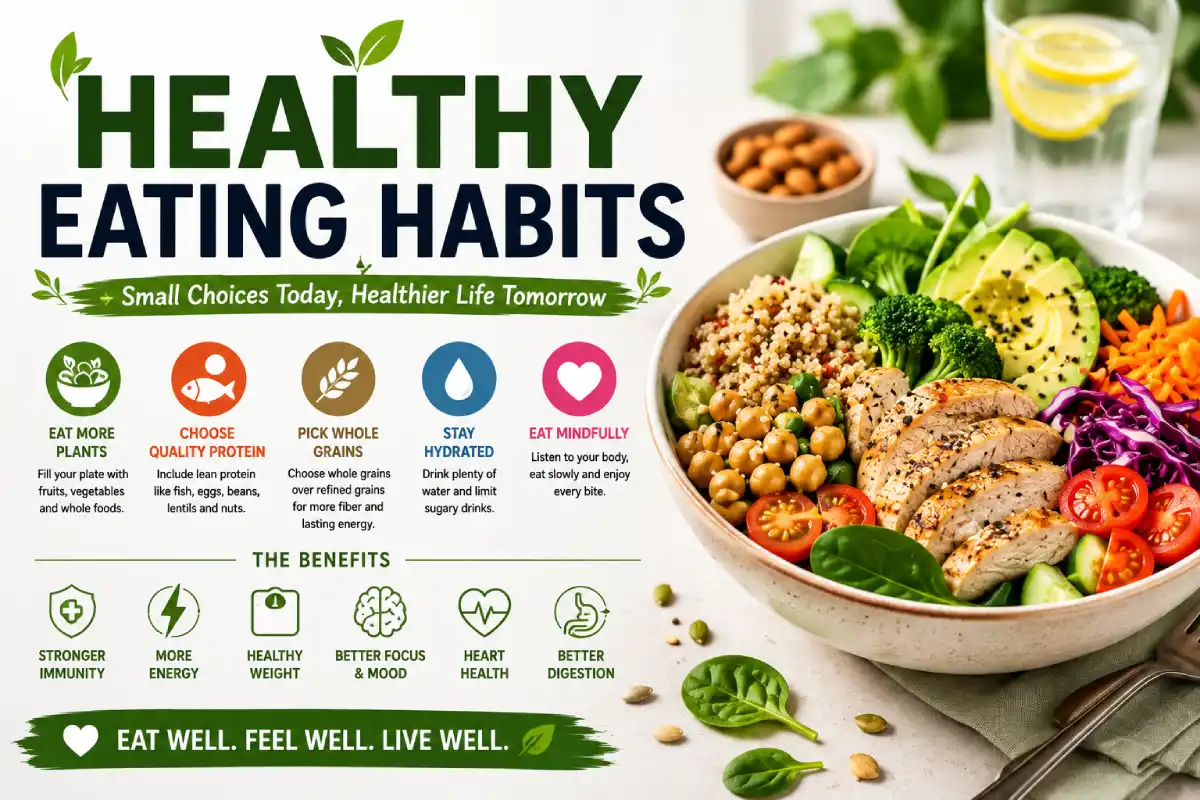
Eating healthy is not dieting; not changing completely the foods you eat; not avoiding any of the food groups. It is about developing a healthy eating pattern that will be with you forever.
The food you eat each day supplies your daily caloric intake in order for you to survive and the nutrients required for your good health. Consumption of a mixing of foods from the other four groups, vegetables and fruit, whole grains, beans and nuts and the correct type of protein should provide you with a balanced diet. The World Health Organisation advises eating less of:.. and added salt.. and free sugars, saturated and trans fats from industrially produced processed food and snacks.
A few small adjustments can make eating healthily far easier. If you try to make no fewer than ten changes to your eating within a day or two, it is very easy to lose motivation and grow frustrated, reverting to old habits very quickly. Rather than attempting this, develop some simple habits step by step that are suited to your life.
If you‘re looking to enhance other aspects of your life also, check out our full introduction to living well.
Why healthy eating habits?
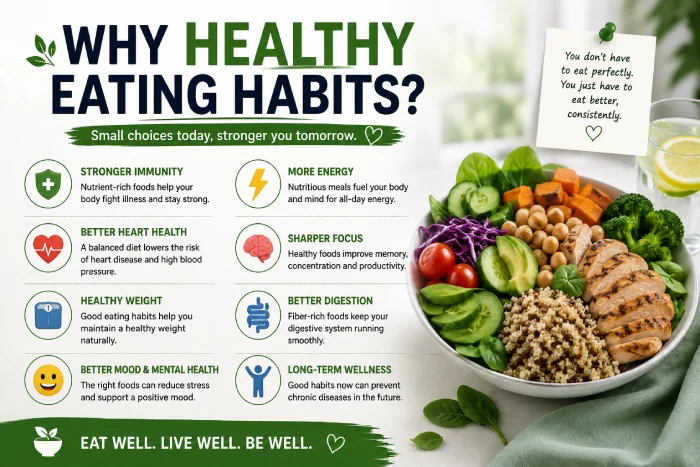
Healthy eating habits are consistent ways of selecting and preparing food that enables you to get the nourishment you require. Want to develop new beneficial eating habits? They may be to eat a variety of foods, increase your vegetable intake, switch to whole grains, drink sufficient amounts of water, learn to portion control, and cut down on food that is rich in added sugars, sodium, and saturated and trans fat.
Eating healthy doesn‘t need to be similar for everyone. The amount of food and the kinds of foods you should be eating can be different depending on your age, activity level, lifestyle, culture, food availability, and other personal factors. You want your eating pattern to be practical and enjoyable as well as nutritious to supply the nutrients your body requires.
The importance of healthy eating habits
Depending on your average eating pattern, it can greatly effect your overall health. A healthy diet provides the body with all the nutrients it needs, for example protein, carbohydrate, fat, vitamin, mineral and fiber. Eating a wide variety of foods that are high in the nutrients you need means your less likely to be eating a lot of foods high in sugar, salt or fat.
The WHO recommends that healthy diets consist of consuming a mixture of vegetables, fruit, grain, nuts and legume with a lower content of salt, free sugars, saturated fat and trans. Healthy eating is therefore not only a matter of weight. It can also become part of a lifestyle that centers around long term health and well-being.
15 Healthy Eating Habits to Start Today
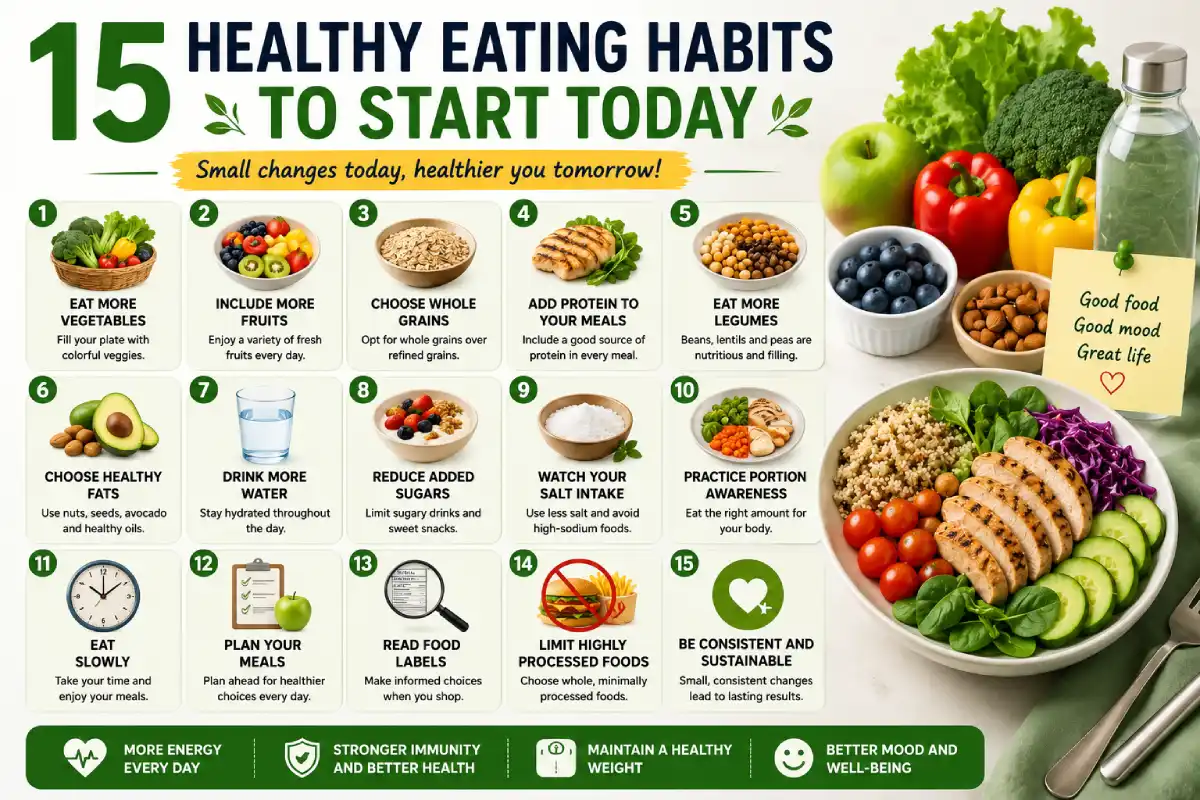
1. Eat More Vegetables
The best things you can do for your diet is and to do so without eat more vegetables. Add vegetables to your breakfast, lunch and dinner as much as you can. Add dark leafy greens such as spinach, rock to the list, and carrots, tomatoes, beans, peas, onions, cabbage, cauliflower, broccoli, peppers and whatever vegetables are in season.
Vegetables contain many valuable nutrients including various vitamins and minerals. They are a good source of fibre and many other nutrients. Minimum of four-hundred grams (equivalent to five servings) intake of fruits and vegetables for adults and children over 10 years old, as recommended by WHO.
2. Include More Fruits
One good alternative to sweet snack is fruits. You may wish to include mangos, kiwi, papaya, avacado, melon, pineapple or seeds. How bioactive compounds and nutrients incorporated in the whole fruit can be transported and undergone exhibit. Instead of reaching for the cookies or candy when craving something sweet replace it with a fresh fruit.
3. Choose Whole Grains More Often
Made with the entire grain including bran, germ and endosperm whole grains can provide a nutritious alternative to refined grain products. Can select from a blend of whole-grain, low-fat choices like oatmeal, brown rice, whole-wheat bread, whole-grain cereal. etc. Many of the refined choices can be increased in the diet as whole grains providing a greater source of fiber and nutrients. World Health Organization (WHO) protocols are to promote the consumption of whole grains and other foods high in fiber carbohydrate sources. You don‘t have to completely ban white rice, bread and other refinedflours just make an effort to substitute some of it out when it makes sense to.
4. Add Protein to Your Meals
Explanation: Protein is an important part of a healthy diet. Sources of protein can be eggs, fish, chicken, dairy foods, beans, lentils, peas, tofu, nuts and seeds and so on (depending on what your diets like). Aim to put some sort of protein source in the main part of your diet. You could have eggs for breakfast, lentils for lunch and beans, fish, chicken, or another source of protein for dinner.
5. Eat More Legumes
Brassicas, carrots, potatos, and other root produce, beans, lentils, chickpeas, and peass are very cheap and versatile components that can be added into many of the above dishes. They provide protein. They also offer a fiber, vitamins and minerals. You can add them to any soups, in the curries, the salads, in the rice dishes or in wraps, or in a meal that you‘ve prepared yourself. It is easy for them toIncrease the diversity and nutrient density of their diet by increasing consumption of legumes.
6. Choose Healthy Sources of Fat
But one thing which cannot be finished with while talking about fats is to state very clearly that they are part of a balanced diet. The phrase which is to be emphasized upon here is ” the right kind of fat” Unsaturated fats can come from foods such as Nuts, seeds, avocado, fish and other foods. Unsaturated fats can also come from oils such as olive, sunflower, soybean and rapeseed oil. The WHO has recommended that where possible, saturated and trans-fats be substituted by unsaturated fats.
7. Drink More Water
Avoid drinks such as soft drinks and replace them wherever you can by water, which should be your main drink every day. Have a fresh reusable water bottle immediately available, so that when you are thirsty it is convenient to do the right thing and drink water. You might also choose water in place of sugared sodas and other sugared beverages. There is no definitive amount of fluid to consume your own requirements may be different depending on how active you are, and the weather and your diet and health.
8. Reduce Added and Free Sugars
Foods and drinks that may contain high levels of free or added sugars include: Sample include carbonated beverages, sweetened tea or coffee, desserts, candy, sweetened cereals and packaged. The WHO recommends that free sugar intake in foods should be less than 10% of total daily energy intake, and that further benefits can be gained by reducing it even more. You don‘t have to get rid of all sweet things. Just ensure you don‘t have foods high in sugar as staple in your diet.
9. Watch Your Salt Intake
Excessive sodium consumption may cause to increase blood pressure and risk of cardiovascular diseases. The World Health Organization (WHO) recommends that adults ingest below 2000 mg (5g of salt) of salt. Note you can also find sodium in the following foods you might not expect them to come from: processed foods (such as ready made meals), snack foods such as biscuits and crisps, sauces, prepared or instant foods and other foods apart from the salt shaker. Use herbs and spices, such as garlic, lemon and other flavorings instead of salt.
10. Practice Portion Awareness
Healthful foods can add up to more calories than you need if you eat very large portions regularly. There is no necessity to measure each ingredient or tally every calorie. Instead, pay close attention to hunger and fullness and use normal portion sizes. Carbo-hydrates; A basic diet could be in the form of some carbohydrate foods like vegetables or fruit, a protein and an adequate amount of grains.
11. Eat Slowly
When it comes to eating fast you may not realize how many calories you intake until you are nice and full. Try laying the fork down now and then, really chewing and appreciating the moment. Eating more slowly can be pleasurable, and listening to the body‘s own information is easier.
12. Plan Your Meals
The organization of your diet will help you to eat right; meal planning can be a huge help: Before the week starts, plan what you will for the main meal of the day. Write a shopping list for those meals. Also want to keep healthy ingredients available in your home. Pre-prepared For example, you could prepare vegetables, cook beans or lentils, hard boil eggs, prepare grains etc. Keep stock of your healthiest snack foods in the cupboard so you are less tempted to treat yourself to take away when time is not on your side.
13. Read Food Labels
Food labels will tell you what you are purchasing. Look at the serving size and the amounts of sugar, sodium, saturated fat, protein and fiber as well as the ingredient list. When shopping for similar products, you would also want to choose the product that has less sugar and sodium added and more fiber. You do not even have to look at every label thoroughly. It is often helpful to look at a few specific nutrients.
14. Limit Highly Processed Foods
Highly processed foods are not banned, however consuming too much food containing lots of sugar, salt, unhealthy fats and the calories can be difficult to eat a balanced diet. The excessive intake of foodstuffs such as foods with excess free sugars, salt, saturated fats and trans fats is a concern identified by the WHO. Foundation your diet on as much as possible in the minimally processed or real food-or at the minimum, nutrient-dense foods- and use processed foods less often.
15. Make Healthy Eating Sustainable
Perhaps the most important practice is consistency. You don‘t have to eat perfectly every single day. If, for one meal, you consume an unhealthier meal, revert back to your regular healthy eating pattern after that meal. Do not feel as though you have set yourself back with just one unhealthier meal. A diet that is sustainable is a diet I can sustain for months and years not months.
Healthy Eating Habits for Weight Management
Eating healthily can aid in a persons weight loss but there is not one single diet or food suited to every individual. Around foods instead of calories. Instead use zdravie foods as the foundation for your meals and monitor the amount of food you eat rather than the calories:
Some useful habits include:
- A healthier diet, and therefore a more nutritious one, is where the intake of vegetables and fruit increases.
- Consumption of whole grains more frequently
- Adding some protein to a meal.
- Choosing to consume water rather than soft drinks and other sugared beverages.
- Limiting foods high in added sugar
- Reduce too much sodium
- Planning meals ahead of time
- The key to providing support is to, 1. Be aware of the appropriate size of a (healthy) portion. 2. Know what the honest energy content of a portion of an individual food is, and 3. Feel capable of advising on how to use that information having seen an example of a (healthy) portion.
- Do regular physical activity.
Healthy eating contributes to and is supported by other choices like; physically active living, good sleep, relaxing and handling the pace of life.
Healthy Eating Habits on a Budget
Eating healthily is not something that always needs to involve import, unusual or cheap ingredients. You can still buy nutritionally balanced meal on a tight budget with foods such as beans, lentils, oats, rice, seasonal vegetables, bananas, eggs and so on. Buying out of season produce, cooking and eating at home, getting the right amount of basic foods, and having a shopping list for meals before going shopping can also cut down on excess spending. Frozen or canned vegetables and fruits may also be helpful. Choose canned vegetable and fruit varieties with little or none added salt or sugar whenever available.
Common Healthy Eating Mistakes
Is even the health conscious making mistakes?
Avoid thinking that:
- Healthy eating means never eating your favorite foods.
- You must completely remove carbohydrates.
- All fats are unhealthy.
- Expensive “superfoods” are necessary.
- One unhealthy meal ruins your progress.
- A very restrictive diet is automatically better.
- You need to follow someone else’s diet exactly.
Healthy eating is about the overall pattern of your diet, not one individual food.
How to Build Healthy Eating Habits
Make a single change rather than trying to change everything in one go. For the first week you could concentrate on adding more water to your daily diet. In the next week you could add another vegetable into your diet during the week and then replace some processed grains with whole-grain. Prepare some healthy foods ahead of time and keep some healthy snacks within easy reach, for example. The key is repetition. When you repeat the same thing over and over, small modifications are more manageable.
Frequently Asked Questions
What are some of the healthy eating habits?
Among the habits that can be very beneficial would be to eat more vegetables and fruits, choose whole grains, incorporate protein, drink water, cut down on excess sugar and salt, become mindful of the portion sizes, and eat a balanced and different diet. What should I do? This is the most difficult transition to making changes in your life. It is sometimes a frustrating process, and you might feel like giving up. This is the time when you need your friends and family helping keep you motivated. Begin by making one or two or three relatively simple changes. For instance, drink more water, include vegetables in one extra meal each day, and substitute a processed snack for fruit or some other healthy choice.
Is healthy diet an aid for weight reductions?
Eating healthily can contribute to weight control provided it is balanced with a suitable overall energy intake, a good physical activity level and that individual needs are taken into account.
Should I give up sugar entirely?
No. Healthy eating doesn‘t have to be perfect. It‘s all about reducing the intake of too much free or added sugars and filling your diet with nutrient-dense foods. WHO suggests a consumption of free sugars not exceeding 10% of your total energy intake.
How much does it cost to eat healthily?
Certainly not. Cheap, natural foods such as beans, lentils, oats, seasonal vegetables and fruits, eggs, and whole grains can be used as the basis for a healthy meal.
Final Thoughts
Healthy eating is about learning new habits; it is not a question of following the ideal diet. Begin by gradually incorporating more vegetables and fruits, opting for whole grain products, incorporating sources of protein, increasing fluid intake, and moderating intake of added sugar and salt. Plan for your meals, be mindful of portion sizes, and allow yourself moderation so you don‘t feel deprived from your favorite foods.
Most importantly, choose habits that you are able to hold onto. Making healthier food choices is only one aspect of a healthier lifestyle. For practical tips on nutrition, fitness, sleep and more, see our comprehensive living well guide.