


Mohd Arbaaz is an Editor and Writer at Fitnessison.com with 5 years of experience in SEO and digital content creation. He creates informative, reader-focused content covering fitness, workouts, nutrition, health, healthy lifestyle, technology, and computers.

Shashi Teja is a Reviewer at Fitnessison with over 6 years of experience in SEO, content strategy, digital publishing, and content optimization. He reviews content for clarity, research quality, topical relevance, readability, structure, and overall usefulness to readers.
Last Updated: September 8, 2026
Intermittent fasting, in combination with walking, running, and lifting weights, can be a very effective strategy for individuals seeking weight loss, a foundation of improved cardio-respiratory health, or the establishment of a more regimented eating pattern.
Intermittent fasting is concerned with the timing of when you eat, whereas exercise is concerned with improving strength, CV fitness, body composition and health.
The two methods can work together, but fasting isn‘t necessary when exercising effectively or losing weight. The key is a meal and training plan that supplies sufficient carbohydrates, protein, fluids, and recovery, whatever your body‘s demands.
A 2020 review indicates that time-restricted feeding added to exercise may have a small effect on decrease fat mass and generally maintain fat free mass, when compared with exercise alone, although the evidence base is not large.
Here, I show you how to integrate intermittent fasting with various forms of exercises, timing of it, recommended foods to consume and common pitfalls to dodge.
What Is Intermittent Fasting?
Intermittent fasting is a dietary pattern that involves regular alternating cycles of fasting and not fasting.
However, it is different to traditional diets in that foods are not avoided but it is just the when diet.
Popular methods include:
- 12/12 fasting
- 14/10 fasting
- 16/8 fasting
- 5:2 fasting
- Other types of time-restricted eating
For instance, if a person were on a 16/8 plan, he or she would have 8 hours of eating and fast for the remaining 16.
How Intermittent Fasting and Exercise Work Together
Exercise increases energy use and offers a stimulus to sustain and/or build muscle,
Intermittent fasting can also help some individuals regulate their calorie consumption by limiting the time period during which they are able to eat.
When combined appropriately, the two strategies may support:
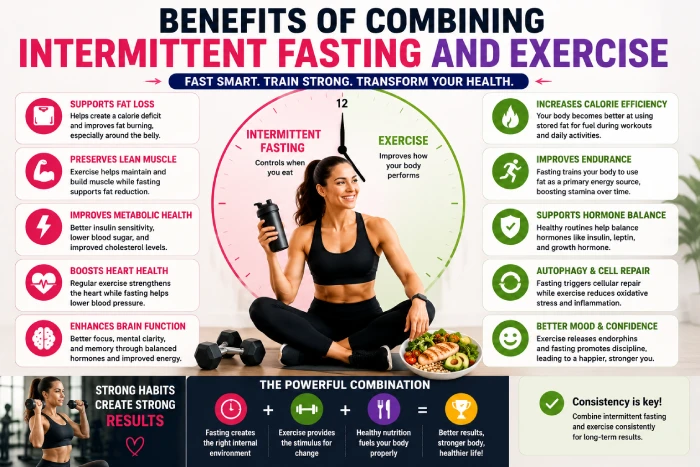
- Fat loss
- Weight management
- Muscle preservation
- Cardiovascular fitness
- Strength
- Improve ad consistency
In 2025 a systematic review and meta-analysis was published in which time-restricted eating and exercise resulted in a small decrease in fat mass in comparison with exercise-matched controls while fat free mass was not significantly different.
The more recent studies on 16:8 time-restricted eating also observed modest further decreases in body weight and fat mass with exercise; however, the authors noted limitations in the studies such as small sample sizes and inter-individual variability.
Benefits of Combining Intermittent Fasting and Exercise
1. May Support Fat Loss
Workout converts energy (say calories) in to motion (say burning it). While an ordered diet may produce in some individuals a reduction in total energy intake.
This can all support a calorie defict.
But it‘s not just fasting alone that burns off the fat.
Your overall energy intake still counts!
2. May Help Preserve Lean Muscle
Strength training is useful when dieting because…
Protein is as important as total nutrition; it is just as necessary.
A recent study on resistance trained adults showed a time-restricted diet may lead to small reductions in body fat while helping to preserve fat-free mass, although the studies published thus far were small and relatively short in duration.
3. Can Improve Workout Structure
A regular daily eating window can help your day to run more smoothly.
For example:
12:00 p.m. First nourishment
3:30 p.m. nam. Have snack.
6:00 p.m. -Workout 00:30 I had no idea what to do when arrived at the gym. I began by just playing around with free weights, doing some bench press and curl, then moved on to do some work on the treadmill.
19:30 7:30 p.m. Dinner?
8:00p.m Fast from now.
Following a predictable routine may also help healthy habits to be easier to sustain.
4. May Support Cardiometabolic Health
Evidence indicates that time restricted eating has the potential to acutely improve a number of metabolic markers in some groups.
Yet, the findings are different and should not be misrepresented to suggest that fasting is better than any other healthy dietary plans.
Similarly, exercise alone has significant beneficial effects on the cardiovascular and metabolic systems.
Best Exercises During Intermittent Fasting
You are not restricted to just one kind of workout.
The best exercise program involves a variety of types of movement.
Strength Training
Weight training is one of the most effective exercises to do when trying to lose fat.
Examples include:
- Squats
- Lunges
- Push-ups
- Rows
- Shoulder presses
- Glute bridges
- Deadlifts
- Resistance-band exercises
Attempt to do better and not just longer.
Cardio
Additional light cardio can be a good addition to your strength training regime and increase your activity level.
Good options include:
- Walking
- Jogging
- Cycling
- Swimming
- Dancing
- Rowing
- Elliptical training
However, moderate-intensity cardio would tend to be easier to do fasted than higher intensity, more challenging cardio.
HIIT
This is the use of short, intense bouts of effort interspersed with recovery.
Examples include:
- Sprint intervals
- Burpees
- Mountain climbers
- Jump squats
- High knees
The benefits of HIIT can be effective, it can seem tougher when you are fasting.
If you are not feeling up to par, or your performance decreases substantially, bring your workout back in line with your window of eating.
Walking
Walking is one of the easiest changes to be incorporated with intermittent fasting.
Getting a walk in before having your first meal might work well for some people.
More walk, which can lead to increase in daily activity, but induce less recovery strain to the body than vigorous exercise.
When Should You Exercise While Fasting?
There‘s no best time to workout.
This is somewhat of a personal choice, based on how you feel and what schedule you can maintain.
Option 1: Exercise Before Your First Meal
Example:
7:00 a.m. Reggro up by walking or exercise
8:00 a.m. Fast whatever you have left
1200 hrs. –First meal (…as if there wasn’t enough to do there already!)
This can be okay for those comfortable in exercising empty stomach.
Option 2: Exercise During the Eating Window
Example:
12:00 p.m. Lunch
4:30 p.m. A snack
6:00 p.m. Workout First Couple of Days of the Week I Gotta Cover For Some “sports-related illness”. 14:00 p.m. Walk from classes to work (hot!)-Ounces, Pure Protein bars, powerade. Got to carry this all to work! 7:00 p.m. Made it to work Took over responsibilities from P. walked 4 times so far that day. Culd use some cardio.
7:30 pm – I‘m going to eat dinner.
Could be desirable for those that need food for before intense exercize.
Option 3: Exercise Shortly Before Your First Meal
Others, however, choose to complete their workout a little while preceding their fasting.
Example:
11:00 a.m. a. m.-mlb: Lean up. Designated time for lifts. PMID:
First meal: 12:00 p.m.
This may facilitate to consume a protein based meal quickly after finishing training.
What to Eat Before Exercise
If you‘re still working out over your eating window, you‘d want to select the types of foods that contain the carbs and the proteins that don‘t leave you feeling too stuffed up.
Good options include:
- Greek 24 frozen berries 2.2 lb frozen berries (I used blueberries and strawberries) 1 cup Greek yogurt I used Dannon Greek 2% plain First, measure out Greek yogurt and berries. Then, combine the Greek yogurt with the frozen berries and enjoy!
- Banana with peanut butter13. Bananas are an excellent source of three minerals: potassium, magnesium, and manganese. Potassium (470 mg) plays an important role in regulating blood pressure and controlling the heartbeat.13 Easy to prepare, bananas are a convenient healthy snack when eaten alone, but also add good flavor when combined with peanut butter.
- Oats and berries are considered one‘s for breakfast.
- Wholemeal toast with eggs.
- The rice with lean protein
The best pre workout meal varies with your workout, and with the time you have before working out.
What to Eat After Exercise
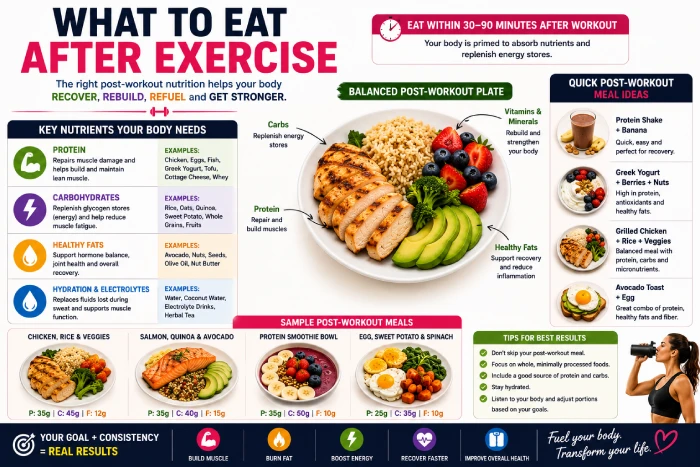
When focusing on preserving muscle while losing fat, post workout nutrition are especially crucial.
Build your meal around:
Protein
Examples:
- Eggs
- Chicken
- Fish
- Greek yogurt
- Tofu
- Lentils
- Beans
Carbohydrates
Examples:
- Rice
- Potatoes
- Oats
- Whole-grain bread
- Fruit
Vegetables
Add vegetables, which are important sources of fiber, vitamins, and minerals.
Healthy Fats
Include moderate portions of:
- Avocado
- Nuts
- Seeds
- Olive oil
Protein and Intermittent Fasting
Another drawback of intermittent fasting is being able to eat enough protein during a reduced time window.
G p If you are working out, don‘t allow fasting to bring your protein or overall caloric intakes into the negative on a persistent basis.
Spread your protein intake throughout your day.
For example:
12.00 p.m.: Meal with a high protein content
4:00 p.m. Protein snack: A handful of nuts.
19:00: Dinner From high-protein food.
And this can be easier than trying to consume a huge amount of protein in a single sitting.
Intermittent Fasting and Exercise for Beginners
Dont hit all the extremes right away if you haven‘t been doing much fasting or working out.
Try this progression:
Week 1
Maintain a simple 12/12 eating pattern and make sure to walk daily,
Week 2
Let‘s suppose that these are the new excesses that were added to the previous sum. In this case, simply subtract the new sum, and you have just added the two strength-training workouts.
Week 3
If it is easy: 14/10 schedule and moving forward.
Week 4
Think about 16/8 as long as it works with your way of life and your daily needs.
You don‘t need to get to 16/8 to start enjoying the working day pattern of eating.
Sample Weekly Workout Plan
| Day | Workout | Suggested Timing |
| Monday | Full-Body Strength | Eating Window |
| Tuesday | Walking | Fasting or Eating Window |
| Wednesday | Cardio | Eating Window |
| Thursday | Rest + Mobility | Flexible |
| Friday | Full-Body Strength | Eating Window |
| Saturday | Light Cardio or HIIT | Based on Energy |
| Sunday | Walking + Recovery | Flexible |
The recommended level of activity for adults is at least 150 minutes of moderate intensity aerobic activity 7 days a week and muscle strengthening activity 2 or more days per week.
Signs You Should Adjust Your Routine
You shouldn‘t feel horrible at all times when fasting and exercising.
Consider changing your schedule if you experience:
- Persistent dizziness
- Unusual weakness
- Severe fatigue
- Performance is poor during workouts, often due to excessive fatigue.
- Difficulty recovering
- Persistent headaches
- Excessive hunger
- Sleep problems
- Menstrual changes
The above symptoms could be caused by anything, and if they persist or seem worrying then they should be checked out by a GP.
Common Mistakes
Exercising Too Hard While Fasting
All of the workouts can be performed at maximum effort, but it is not necessary to do so every time.
Not Eating Enough
A short eating window makes it easier to undereat without meaning to.
Ignoring Protein
However, protein should still be a priority, particularly in strength training.
Drinking Too Little Water
When your existing fasting method permits the intake of fluids, it is up to you to decide whether or not to consume them. However, fasting does not entail any conscious restriction on fluids.
Doing Only Cardio
Number 9: Building Strength Top ten new year‘s resolutions: Does strength training help, among other things?
Expecting Faster Results
Adding fasting to exercise dose not ensure quick fat weight loss.
Close to home, that is restrictive on the extreme is detrimental.
Is Fasted Exercise Better for Fat Loss?
Not necessarily.
Your body relies on stored fat as a fuel under various circumstances, but it doesn‘t follow that working out in a fasted state will lead to increased fat loss in the long run.
Greater than six months body-fat change is determined by total energy balance, nutrition, activity, sleep, and compliance
Indeed, recent research again supports the idea that time-restricted eating may carry a small additional body-composition bonus with exercise, but that fasting is not an absolute requirement for successful fat-loss.
Conclusion
Since intermittent fasting can be combined with a sound weight-management and fitness regimen, frequent fasting is not necessary to achieve the benefits from exercising. The best strategy is one that you can follow strictly, while eating the amount of good food you need, consuming enough protein, drinking enough fluid and recovering effectively.
For fat loss, include movement in your routine along with strength training and a manageable calorie deficit. To maintain muscle mass, focus on resistance training and proper nutrition. And if fasting makes your workouts more difficult or takes a toll on your health, why do it?
The goal is not to train for the longest period you can. The goal is to devise an eating and training routine that will help you attain good health, fitness and maximum long-term outcomes.