


Mohd Arbaaz is an Editor and Writer at Fitnessison.com with 5 years of experience in SEO and digital content creation. He creates informative, reader-focused content covering fitness, workouts, nutrition, health, healthy lifestyle, technology, and computers.

Shashi Teja is a Reviewer at Fitnessison with over 6 years of experience in SEO, content strategy, digital publishing, and content optimization. He reviews content for clarity, research quality, topical relevance, readability, structure, and overall usefulness to readers.
Last Updated: September 8, 2026
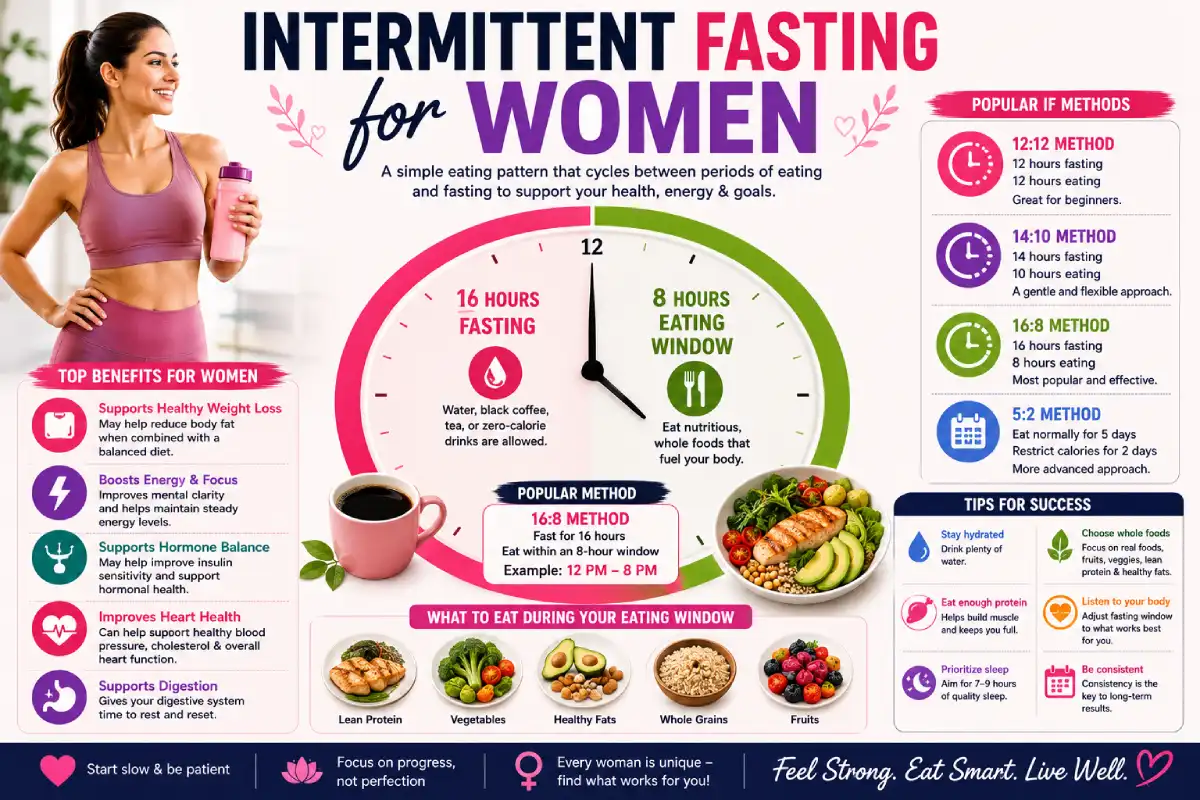
Intermittent Fasting for Women is a way of eating that involve cycles of fasting and eating. It is a form of diet that rather than the focus being on what you eat, the focus of intermittent fasting is on when you eat.
Some popular options include the 16/8 and 14/10 fasting schedules, the 5:2 protocol, and other various forms of time-restricted eating.
There is evidence, however, that intermittent fasting may be effective for weight loss and improving some measures of metabolic health. Nevertheless, the evidence is inconsistent, and it remains to be seen how intermittent fasting stacks up against other CPD approaches.
There are also some other remaining issues for women in those things such as of reproductive health, pregnant women, breastfeeding mothers, menstruations, and those needs of nutrient-supply. Therefore, we need to have the suitable and sustainable adaptation, not necessarily that as longer period of fasting higher permission can be.:
Intermittent fasting explained:
Intermittent fasting divides your week and day into eating and fasting windows.
During the process of fasting, the foods you eaten generally do not give rise to any real calories.
During the feed window, you take in your eating and drinking.
Common approaches include:
- 12/12 fasting
- 14/10 fasting
- 16/8 fasting
- 5:2 fasting
- Time-restricted eating
Time-restricted eating- refers to shortening the time being spend on eating each day (e.g. 6–10 hours).
How Intermittent Fasting May Work
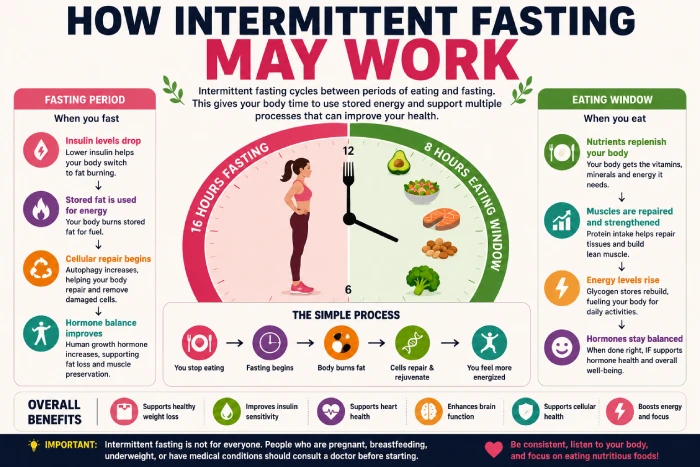
The longer the interval between meals, the more time your body experiences without having anything to eat.
Intermittent fasting may help some people by:
- Calorie reduction overall29 The simplest intervention of all is calorie intake reduction. Calorie intake could be reduced by educating people to eat less, eating smaller portions, and decreasing portion size.
- Relieving myzofornications My noofing of mydroglociast on mydingss Planninig. Cutting down on meal arrangements.
- Cut down on eating at late hours
- How to be supportive of weight management PMID: All of us want to keep our weight where we perceive it should be. Keeping to a weight feels good physically and psychologically. It is unlikely you will be able to motivate someone to eat healthily and keep to a certain weight if that far exceeds their own perception of where they want to be.
- One way of addressing this would be to try to increase adherence to the structured eating program. Could aiming to improve compliance with the existing schedule be a more achievable and practical focus?
But fasting don‘t necessarily lead to fat burn. If a person eats the same amount, or even more, calories when he is allowed to eat, he will not lose weight.
Potential Benefits of Intermittent Fasting for Women
1. May Support Weight Loss
Intermittent fasting may be effective for weight loss in some individuals if it results in a reduction in energy intake.
Evidence found in recent studies indicates any strategy of intermittent fasting that might lead to slight weight loss and a decline in cardiometabolic risk factors. Nonetheless, the variance among fasting methods and calorie restriction does not tend to be dramatic.
2. May Improve Eating Structure
A set eating window can make mealtimes more predictable.
Or, for instance, they may follow the eating schedule of 14/10 and not eat all day past the 6 th hour.
3. Can Reduce Unplanned Snacking
A regular eating window may also be a way to help those who snack frequently during the late hours.
4. May Support Metabolic Health
Certain groups showed a potential rise in blood glucose, insulin sensitivity, blood pressure and lipids among others, although these are not consistent across all fasting methods and groups.
5. May Simplify Meal Planning
Some amount of people find it easier to fast because they have to plan for and make up fewer meals.
This can make sticking to a healthy eating pattern easier to do.
Popular Intermittent Fasting Methods for Women
12/12 Method
It is among the most gentle methods.
Example:
Food provision 7 a.m. – 7 p.m.: Eating Food provision was the longest individual activity occurring throughout the time of the experiment. Participants were hungry and ate for seven hours (grazing throughout the entire research session).
Consumption of 7 p.m. – 7 a.m. – no food (fasting)
It is a sensible place to start for people unaccustomed to time restricted eating.
14/10 Method
Example:
Time 8 a.m. – 6 p.m.: Eating
6 p.m. – 8 a.m.: Fasting.
This gives a longer fasting period, with still being three meals for many.
16/8 Method
This is where the intermittent fasting diet called 16/8 involves a 16-hour fast.
Example:
12 p.m. – 8 p.m. Eating.
8 p.m. – 12 p.m.: fastingthe 8 P.m – 12 P.m. Fasting has been found to dose dependently increase the concentration of serum total ghrelin, including native and Acylated forms.
This is the most well-known type of time-restricted eating.
5:2 Method
Using the 5: 2 method, you consume your own usual amount of food five days and severely limit calorie intake during other two nonconsecutive days.
It is more difficult to follow this than time restricted daily eating.
Which Fasting Method Is Best for Women?
There is no one particular fasting schedule that is appropriate for all women.
A good beginning point is the least restrictive policy that applies to your life.
Consider:
- Your working hours.
- Exercise routine
- Sleep schedule
- Hunger levels
- Social activities
- Nutrition needs
In the end, a 12/12 or even a 14/10 schedule may be more feasible to start off on than rushing into a long fasting window.
What to Eat During the Eating Window
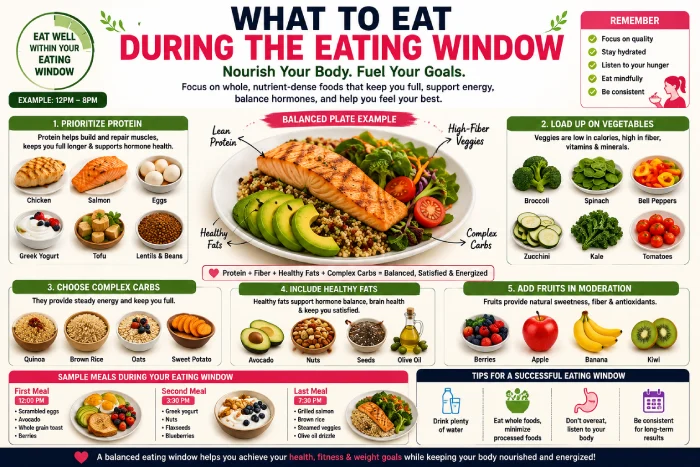
The eating window should not be an excuse to consume mostly highly processed foods.
Centre on healthy foods.25 This concept focuses on including more nutritious foods and less ‘empty calories’. For example, supermarkets markets used to encourage the purchase of nutrients with their advertising campaigns that emphasized health benefits and healthy choices.25
Protein
Include:
- Eggs
- Chicken
- Fish
- Greek yogurt
- Cottage cheese
- Tofu
- Lentils
- Beans
When you‘re trying to stay lean and cut fat protein becomes even more important.
Vegetables
Add vegetables such as:
- Spinach
- Broccoli
- Carrots
- Bell peppers
- Tomatoes
- Cauliflower
Fruits
Good options include:
- Apples
- Berries
- Oranges
- Bananas
- Kiwi
Whole Grains
Choose:
- Oats
- Brown rice
- Quinoa
- Whole-grain bread
- Whole-grain pasta
Healthy Fats
Include moderate amounts of:
- Avocado
- Nuts
- Seeds
- Olive oil
- Nut butters
Sample Intermittent Fasting Meal Plan
8:00 a.m.
Water, unsweetened tea, or black coffee if tolerated.
10:00 a.m.
Continue hydration.
12:00 p.m. — First Meal
- – Eggs or Tofu
- Whole-grain toast
- Vegetables
- Fruit
3:30 p.m. — Snack
- Greek yogurt
- Berries
- Nuts
7:00 p.m. — Dinner
- Chicken or fish cooked on a char grill
- Brown rice
- A large serving of vegetables
- Degree of acidity indicating nutritional status, such as oil content and acidity of avocado or olive oil
8:00 p.m.
Start of fasting period.
Intermittent Fasting and Exercise
For example, while we exercise in a fasted state, women should be concerned about their energy and performance.
Strength Training
Strength training is helpful during weight (fat) loss because it helps maintain lean muscle.
Examples:
- Squats
- Lunges
- Push-ups
- Rows
- Deadlifts
- Glute bridges
Cardio
Walking, riding bikes, running, swimming, and other cardio is a good compliment to a high fat-loss program.
When Should You Exercise?
There‘s no single best time.
Some women like to work out on an empty stomach, some work better after they have eaten.
If fasting makes you feel weak, faint, dizzy or unable to finish your workout safely, alter the timing of your schedule instead of pushing through.
Intermittent Fasting and Women’s Reproductive Health
This is one area where women need to be more careful about generalising.
Research regarding intermittent fasting and female reproductive functioning is still emerging. A 2024 review stated that the link between the two “may also be moderated by factors such as metabolic health, energy availability, and reproductive status,” and that “drawings of firm conclusions remain challenging”
Irregular periods may result from inadequate caloric or nut rient intake while fasting, over-exercising or even excessive weight loss. An absence of menses may also have numerous other causes and should be discussed with a physician.
Intermittent Fasting During Pregnancy
During pregnancy is not the time to start an unsupervised Intermittent–Fasting diet to lose weight.
There is currently limited and inconsistent research available on the effects of fasting while pregnant; the evidence is dependent on the nature of the fast, nutritional intake, trimester, climate and condition of the individual.
A recent review of Ramadan fasting found fairly mixed evidence and advised medical consultation for pregnant and breastfeeding women as safety information is inconclusive.
If you‘re pregnant, consult your obstetric or health care team before deliberately limiting your eating window.
Intermittent Fasting While Breastfeeding
Fasting should not be used routinely as a weight-loss technique during this period, since breastfeeding raises nutritional requirements.
If you‘re already on a breast feeding, ask your doctor or registered dietitian before starting fasting.
Who Should Be Careful With Intermittent Fasting?
Intermittent fasting is not suitable for all.
Extra caution is warranted for people who are:
- Pregnant
- Breastfeeding
- Unable to maintain pounds.
- Lived experience of having/being in an eating disorder
- Taking medications for administration with food this is when there‘s a specific requirement to issue a medication in relation to a meal. Consideration must be taken with the pharmacist in administering medication to ensure this is kept in accordance with the manufacturers guidelines.
- Taking insulin, or other medications that affect blood glucose levels, such as sulfonomides.
- Feeling dizzy or hypoglycemic.
More recently, reviews specifically have distinguished between who needs caution/medical supervision for the following groups: pregnancy, lactation, eating disorders and several diabetes conditions.
Those with eating disorders should be particularly careful as fasting can add to their already restrictive behaviors.
Common Side Effects
Some people experience temporary symptoms when starting intermittent fasting, including:
- Hunger
- Headaches
- Fatigue
- Irritability
- Dizziness
- Nausea
- Digestive discomfort
- Sleep changes
This is not something you should just shrug off. If you continually do not feel well from it then you need to re-evaluate..
Common Mistakes Women Should Avoid
Starting With an Extremely Long Fast
There is no requirement to jump right into 18, 20 or 24 hour fasts.
Begin cautiously, and see how your body reacts.
Undereating During the Eating Window
Restriction to intakes are inadequate to meet needs for protein, vitamins, and minerals, and has a negative impact on energy balance.
Eating Mostly Processed Foods
Fasting is not going to turn an unhealthy diet into a healthy one.
However the overall composition of your food is still important:
Ignoring Protein
Include protein in your meals, especially when you are exercising and looking to lose weight and maintain muscle.
Overtraining While Fasting
Additional exercise may not be an advantage.
Give your body the opportunity to recover.
Ignoring Menstrual or Energy Changes
Watch out for ongoing disruptions to your menses, energy level, sleep, moods and exercise performance. If you experience these, re-evaluate your approach and consult qualified professionals if needed.
Tips for Starting Intermittent Fasting
Start Slowly
Test 12/12 initially and then proceed to a longer fasting duration.
Stay Hydrated
Consume plenty of liquids during the day.
Prioritize Nutrient-Dense Foods
Beef up your meals.
Eat Enough Protein
Have a source of protein with every main meal.
Keep Exercise Balanced
Be sure to add strength, cardio, walking and recovery in this.
Don’t Chase Longer Fasts
A longer fasting period does not necessarily mean that this is an advantage.
Focus on Consistency
Select a schedule you will be able to stick to.
Frequently Asked Questions
Is it safe for women to fast intermittently?
Maybe suitable for some healthy adult women. Certainly not suitable for everyone. Where are you in your life? Where is your nutrition? What medications do you take? Where are you in your reproductive cycle? Where is your health? Do you view food positively?
Is 16/8 fasting women? 16/8 intermittent fasting should I do this?
The 16/8 will be more suitable for some women, however, we cannot say that ‘any woman’ would necessitate a 16 hour fast to obtain this. A more reduced fasting period could be easier.
Does intermittent fasting help women to burn belly fat?
Intermittent fasting is effective for reducing total body weight and body fat when used as an effective method by which to implement a sustainable deficit in daily caloric consumption. It cannot however be used for localized reduction of fat around the abdominal area.
Can women participate in workout routines despite during a fasting period?
Yes, some women will workout during the fasts. However, it depends on how well each woman performs and tolerates the workout. If at anytime you become dizzy, weak or ill then you need to alter either your workout or your meal schedule.
Does intermittent fasting impact my period?
However research is continuing. Heavy energy deficits, over-exercising or dietary deficiencies can disturb the menstrual cycle, so long term changes should not be ignored.
Conclusion
Women may also find it more manageable to follow this sort of eating pattern. However, fasting is not an easy way to lose weight, and the longer fasting periods are not more desirable.
A sustainable approach will promote nutrient dense foods, adequate protein and water intake, strength training, recovery and nutrition & health. Women who are pregnant, breast feeding, have a diagnosed medical problem, take medication that must be taken with food or who have an over or under diagnosed eating disorder need to seek guidance from a trician/trician specialist.