

Last Updated: August 4, 2026
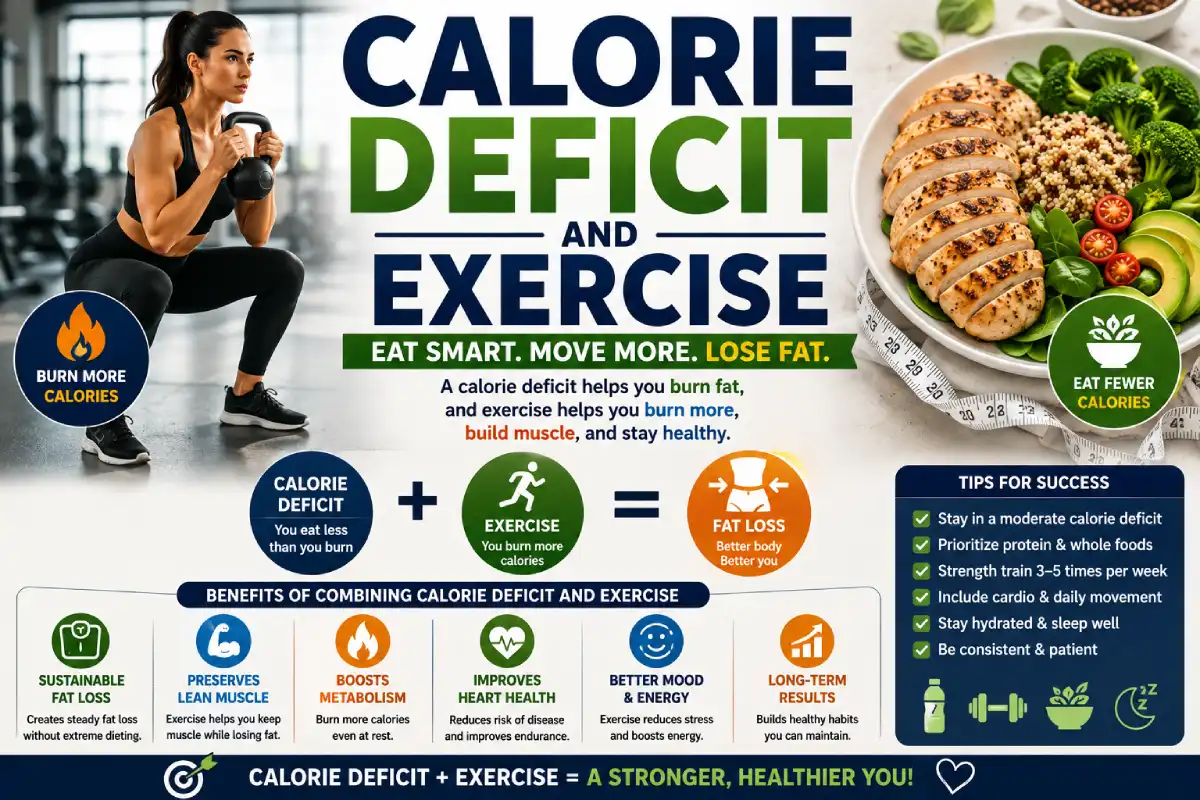
Calorie deficit and exercise are the foundation of sustainable fat loss. While creating a calorie deficit helps your body use stored fat for energy, exercise enhances the process by increasing calorie burn, preserving lean muscle, and improving overall health.
Many people believe that weight loss is only about eating less or exercising more. In reality, the best results come from combining both strategies in a balanced, consistent way.
Whether you’re just starting your fitness journey or looking to improve your results, understanding how calorie deficit and exercise work together can help you lose fat safely while maintaining strength and energy.
What Is a Calorie Deficit?
A calorie deficit occurs when you consume fewer calories than your body burns over the course of a day.
Your body uses energy for:
- Breathing
- Digestion
- Brain function
- Daily movement
- Exercise
- Muscle recovery
When calorie intake is lower than calorie expenditure, your body begins using stored fat as an energy source, which can lead to fat loss over time.
How Exercise Supports a Calorie Deficit
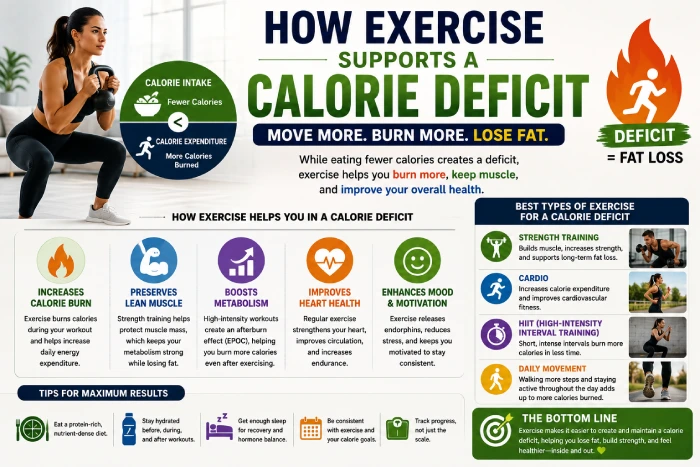
Exercise doesn’t replace a healthy diet—it complements it.
Here’s how it helps:
Increases Daily Calorie Burn
Physical activity raises the number of calories your body uses each day, making it easier to create or maintain a calorie deficit.
Preserves Lean Muscle
Strength training helps maintain muscle mass while losing weight, improving body composition and supporting a healthy metabolism.
Improves Heart Health
Regular exercise strengthens the cardiovascular system and boosts endurance.
Boosts Metabolism
High-intensity workouts and resistance training can increase post-exercise calorie burn, often referred to as the afterburn effect (EPOC).
Enhances Mental Well-Being
Exercise releases endorphins that can improve mood, reduce stress, and make it easier to stay consistent with healthy habits.
Benefits of Combining Calorie Deficit and Exercise
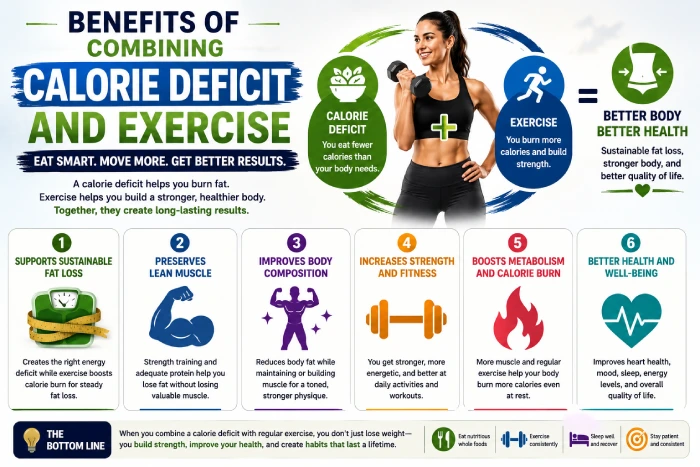
Supports Sustainable Fat Loss
A moderate calorie deficit combined with regular exercise is more sustainable than relying on extreme dieting alone.
Helps Maintain Muscle
Without exercise—especially resistance training—you may lose muscle along with fat.
Improves Body Composition
Instead of simply losing weight, you’ll reduce body fat while preserving or building lean muscle.
Increases Energy and Fitness
As your fitness improves, daily activities become easier and overall energy levels often increase.
Reduces the Risk of Weight Regain
People who stay physically active are more likely to maintain weight loss over the long term.
Best Types of Exercise for a Calorie Deficit
Strength Training
Strength training should be the foundation of any fat-loss program.
Benefits include:
- Preserves muscle mass
- Supports metabolism
- Improves strength
- Enhances body composition
Examples:
- Squats
- Deadlifts
- Push-ups
- Rows
- Lunges
Cardio Workouts
Cardio helps increase calorie expenditure.
Popular options:
- Walking
- Running
- Cycling
- Swimming
- Rowing
HIIT (High-Intensity Interval Training)
HIIT alternates intense activity with short recovery periods.
Benefits:
- Burns calories efficiently
- Saves time
- Boosts afterburn effect
- Improves cardiovascular fitness
Walking
Walking is one of the easiest and most sustainable ways to increase daily calorie burn.
Aim for 7,000–10,000 steps per day, depending on your fitness level and goals.
Mobility and Flexibility Training
Yoga and stretching improve recovery, reduce stiffness, and support long-term consistency.
Sample Weekly Exercise Plan
| Day | Workout |
| Monday | Full-Body Strength Training |
| Tuesday | Brisk Walk (45 Minutes) |
| Wednesday | HIIT Workout |
| Thursday | Upper-Body Strength Training |
| Friday | Cycling or Jogging |
| Saturday | Lower-Body Strength Training |
| Sunday | Walking + Stretching |
This schedule balances strength, cardio, and recovery.
How Many Calories Should You Burn?
The exact number depends on your age, body size, activity level, and goals.
Rather than focusing on burning a specific number of calories during workouts, aim to:
- Stay active consistently.
- Combine exercise with balanced nutrition.
- Maintain a moderate calorie deficit.
- Track progress over several weeks instead of day by day.
Nutrition Tips While Exercising
Exercise works best when paired with healthy eating.
Eat Enough Protein
Protein helps preserve muscle during a calorie deficit.
Good sources include:
- Chicken
- Fish
- Eggs
- Greek yogurt
- Tofu
- Beans
- Lentils
Choose Complex Carbohydrates
Fuel your workouts with:
- Brown rice
- Oats
- Sweet potatoes
- Whole grains
- Quinoa
Include Healthy Fats
Healthy fats support hormone production and overall health.
Examples:
- Avocados
- Olive oil
- Nuts
- Seeds
Stay Hydrated
Drink water throughout the day, especially before, during, and after exercise.
Common Mistakes to Avoid
Many people slow their progress by making these mistakes:
- Creating an extremely large calorie deficit
- Skipping strength training
- Doing excessive cardio
- Ignoring recovery days
- Not eating enough protein
- Sleeping too little
- Expecting rapid results
Consistency beats perfection.
Signs Your Plan Is Working
Healthy progress may include:
- Gradual fat loss
- Increased strength
- Better endurance
- Improved energy levels
- Clothes fitting differently
- Better workout performance
Remember that the scale doesn’t tell the whole story—changes in body composition matter too.
Who Should Combine Exercise With a Calorie Deficit?
This approach is suitable for:
- Beginners
- Adults aiming to lose fat
- Busy professionals
- Home fitness enthusiasts
- Recreational athletes
Individuals with medical conditions should consult a healthcare professional before beginning a new diet or exercise program.
Safety Tips
For sustainable results:
- Warm up before workouts.
- Cool down afterward.
- Increase exercise intensity gradually.
- Prioritize recovery.
- Stay hydrated.
- Listen to your body.
If you experience dizziness, chest pain, or unusual symptoms during exercise, stop and seek medical advice.
Frequently Asked Questions
Can I lose weight without exercise?
Yes. Weight loss is primarily driven by a calorie deficit. However, exercise provides additional benefits such as preserving muscle, improving fitness, and supporting long-term weight maintenance.
Is cardio or strength training better for fat loss?
Both play important roles. Strength training helps maintain muscle and metabolism, while cardio increases calorie expenditure. Combining both is often the most effective approach.
How many days should I exercise while in a calorie deficit?
Most people benefit from 3–5 structured workouts per week, along with regular daily movement such as walking.
Should I eat before exercising?
It depends on your preferences and workout intensity. Some people perform well in a fasted state, while others prefer a light meal beforehand. Choose the option that allows you to exercise safely and effectively.
How quickly should I lose weight?
A gradual rate of weight loss is generally more sustainable and helps reduce the likelihood of muscle loss. Rapid weight loss can increase the risk of losing lean tissue and may be harder to maintain.
Conclusion
Calorie deficit and exercise work best as a team. A balanced eating plan creates the energy deficit needed for fat loss, while exercise helps preserve muscle, improve fitness, and support overall health. By combining strength training, cardio, daily movement, proper nutrition, and adequate recovery, you can achieve sustainable fat loss and build healthy habits that last well beyond your weight-loss journey.