
Last Updated: August 3, 2026
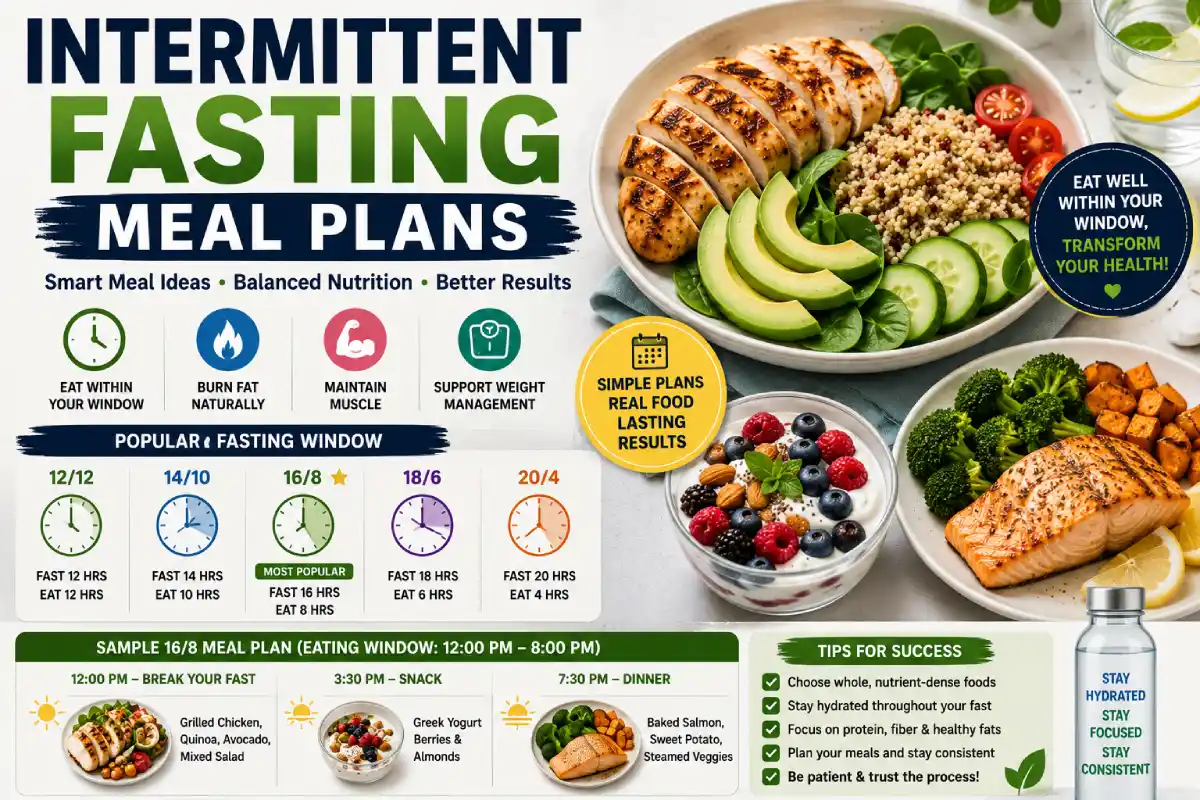
Intermittent fasting meal plan The time as a fasting period in your intermittent fasting schedule is bested by your eating window if it is a period of healthful, balanced food selection. It doesn‘t treat you to eat eat, but making healthy foods choices is the same significant to weight loss, maintaining energy levels, supporting muscle and benefiting your health.
A balanced, nutritious meal plan will deliver the right amount of protein, healthy fats, fiber, and complex carbs needed for satiety during the fast, for long term viability.
Whether you get to the 16/8, 14/10 fasting or not, this cheat sheet will give you ideas when you planning your meals.
What Is an Intermittent Fasting Meal Plan?
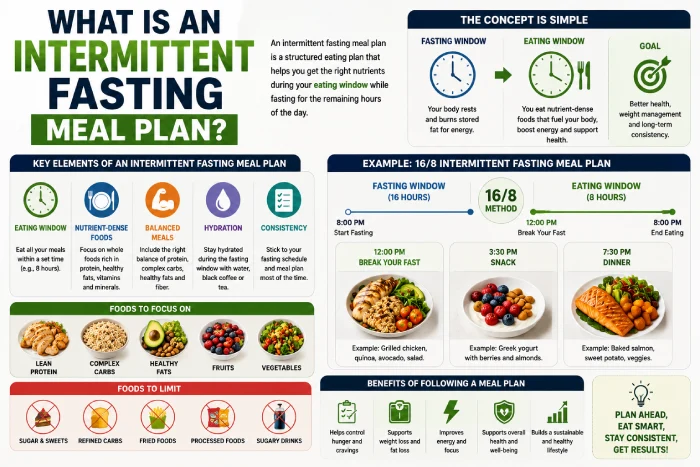
An intermittent fasting meal plan is a specific eating plan that provides you with the necessary nutrition each day within your designated eating window.
Rather than grazing all day, you have all your daily calories from food within a certain time duration. You eat nutritious food.
A good meal plan should include:
- Lean protein
- Healthy fats
- Complex carbohydrates
- Fruits
- Vegetables
- Loads of water
The aim is to keep energized, to sustain muscles and to encourage weight regulation.
Why Meal Planning Matters During Intermittent Fasting
Meal planning offers several benefits:
Prevents Overeating
Pre-planned meals will reduce the desire to binge eat post fast.
Improves Nutrition
Balanced meals ensure you get enough:
- Protein
- Fiber
- Vitamins
- Minerals
- Healthy fats
Supports Fat Loss
Wholesome meals keeps you in a calorie deficit without having you feel hungry and deprived.
Saves Time
Preparing ahead can actually facilitate meal timing because you are much more likely to follow through with your fasting regimen.
Reduces Food Cravings
Eating satisfying, protein-dense meals can suppress our hunger between courses.
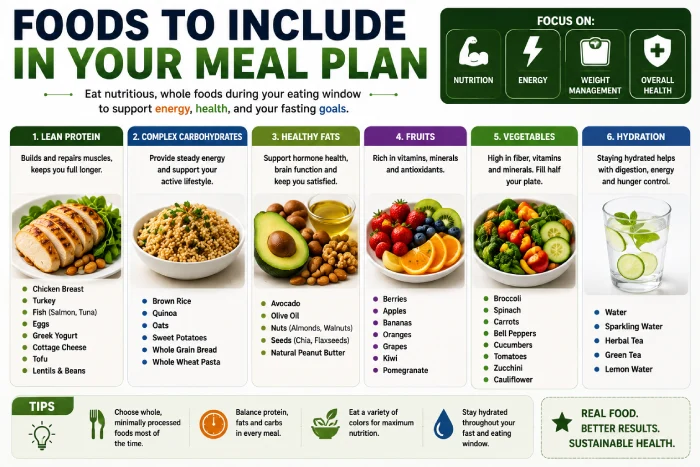
Foods to Include in Your Meal Plan
Lean Protein
Protein, in addition to aiding in maintaining your muscles, additionally leads to the feeling of fullness.
Good choices include:
- Chicken breast
- Turkey
- Fish
- Eggs
- Greek yogurt
- Cottage cheese
- Tofu
- Lentils
- Beans
Healthy Carbohydrates
Incorporate slow burning carbohydrates.
Examples:
- Brown rice
- Quinoa
- Oats
- Sweet potatoes
- Whole-grain bread
- Whole-wheat pasta
Healthy Fats
Good fats, promoting hormone function and satiety.
Include:
- Avocados
- Olive oil
- Almonds
- Walnuts
- Chia seeds
- Flaxseeds
- Natural peanut butter: This option contains only peanuts so is a healthier choice.
Fruits
Choose a variety of fresh fruits such as:
- Apples
- Berries
- Oranges
- Kiwi
- Bananas
- Grapes
Vegetables
Fill ½ of your plate with colorful veg.
Examples:
- Broccoli
- Spinach
- Carrots
- Bell peppers
- Cucumbers
- Tomatoes
- Zucchini
- Cauliflower
Foods to Limit
Try to reduce:
- Sugary drinks
- Candy
- White bread
- Pastries
- Deep-fried foods
- Fast food
- Processed snacks
- Excess alcohol
What is more these foods supply less of nutrients and can be more difficult to fast.
Drinks During the Fasting Window
Most fasting plans allow:
- Water
- Soda (plain water) (Coca-Cola, Diet Coke, Perrier as popular carbonated drinks)
- Black coffee
- Green tea
- Herbal tea
Please refrain from consuming any calories inthe form of drinks.
Sample 16/8 Intermittent Fasting Meal Plan
12:00 PM – Break Your Fast
- Grilled chicken breast
- Brown rice
- Steamed broccoli
- Mixed salad
- Water
3:30 PM – Snack
- Greek yogurt
- Blueberries
- Almonds
7:00 PM – Dinner
- Baked salmon
- Sweet potato
- Green beans
- Avocado slices
Before 8:00 PM
- Herbal tea
- Water
Vegetarian Intermittent Fasting Meal Plan
First Meal
- Lentil curry
- Brown rice
- Mixed vegetables
Snack
- Greek yoghurt or plant based yoghurt
- Mixed nuts
Dinner
- Grilled tofu
- Quinoa
- Roasted vegetables
High-Protein Meal Plan
Meal One
- Scrambled eggs
- Whole-grain toast
- Avocado
Snack
- Cottage cheese
- Berries
Dinner
- Grilled chicken
- Sweet potato
- Broccoli
This diet plan is perfect to keep lean muscle while losing fat.
Budget-Friendly Meal Plan
Affordable meal ideas include:
- Oatmeal
- Eggs
- Rice
- Lentils
- Chickpeas
- Frozen vegetables
- Seasonal fruits
- Peanut butter
- Canned tuna
Eating healthy on a budget is totally doable.
Weekly Intermittent Fasting Meal Plan
| Day | Lunch | Snack | Dinner |
| Monday | Chicken + Rice | Greek Yogurt | Salmon + Vegetables |
| Tuesday | Turkey Wrap | Apple + Nuts | Stir-Fry Chicken |
| Wednesday | Quinoa Bowl | Cottage Cheese | Fish + Sweet Potato |
| Thursday | Lentil Salad | Mixed Fruit | Grilled Tofu |
| Friday | Burrito Bowl | Almonds | Chicken Stir Fry |
| Saturday | Omelet | Yogurt | Steak + Vegetables |
| Sunday | Grilled Fish | Protein Smoothie | Turkey + Brown Rice |
We have included a range of different carfts with the aim of providing some variety to the art and craft sessions, but maintaining balance within the menus.
Meal Prep Tips
Meal planning is not hard, but it is easier with preparation.
Cook Protein in Bulk
Get together enough chicken, fish, tofu, or beans for a couple meals.
Chop Vegetables Ahead of Time
Having ready-to-eat vegetables is also an important convenience food aiding time saving and healthy eating.
Portion Meals
Place meals in containers to avoid overeating and make lazy week days far easier.
Keep Healthy Snacks Ready
Examples include:
- Mixed nuts
- Greek yogurt
- Boiled eggs
- Fruit
Common Meal Planning Mistakes
Avoid these mistakes:
- Under consumption of protein The typical diet consumed in the UK is quite high in protein. Satisfaction of the complex amino acid requirements is almost complete at intakes of 250-300 g/day for the adult.
- Skipping vegetables
- Excessive consumption of food following a period of fasting
- In choosing processed foods
- Consuming sweet drinks
- Difficult to stay well-hydrated.
It‘s not about perfection; it is about consistency.
Nutrition Tips for Better Results
To maximize the benefits of intermittent fasting:
- Bring lots of protein to each meal.
- Eat a lot of vegetables high in fiber.
- Drink plenty of fluid during the course of the day.
- Eat whole foods.
- Adding in healthy fats will help with feeling full.
- The main recommendation is to not take on too much refined sugar.
Frequently Asked Questions
What should I eat? When breaking my fast?
Choose a healthy meal with lean protein, carbohydrates, vegetables and healthy fats and not a high sugar or processed high fat and carbohydrate content.
May I have a snack within my eating window?
Absolutely. Eating quality snacks like Greek yogurt, fruit, nuts, boiled eggs etc. are also a healthy way of fulfilling your nutritional needs.
Do I have to count calories?
Not necessarily, but if you want to lose fat or change your lean mass then recording your calories may be useful.
Can I prepare my meals in advance during intermittent fasting?
Yes it is. If there is one thing that is easy to be disciplined with, it’s meal prep.
What are the highest quality protein when you are doing intermittent fasting?
Lean meats/ fish/ eggs/ dairy products/ fish and other high protein foods depending on liking
Conclusion
Eventually it can be hard to stick to your prescribed fasting regimen. Imponeating plans eliminates the uncertainty and allow your body to function optimally. By designing your diet around the most nutrient-dense options of protein, healthy fats, fibers, complex carbs, fruits and vegetables you will be able to shed excess weight, maintain your muscle, and enhance your health. Preparing your meals in advance, drinking plenty of water and concentrating on whole foods can make intermittent fasting your life change, not a fast.