

Last Updated: September 8, 2026
Learning the names of yoga stances is only step one in learning yoga. Learning the terms used in yoga can help you further in knowledge and practice of yoga whether you‘re just starting out as a beginner, or well advanced.
There are more than a thousand asanas (postures) that can be performed in yoga. The majority are intended to boost the flexibilities, stamina and health. Some poses concentrate on inducing meditation and relaxation; others aim to enhance strength.
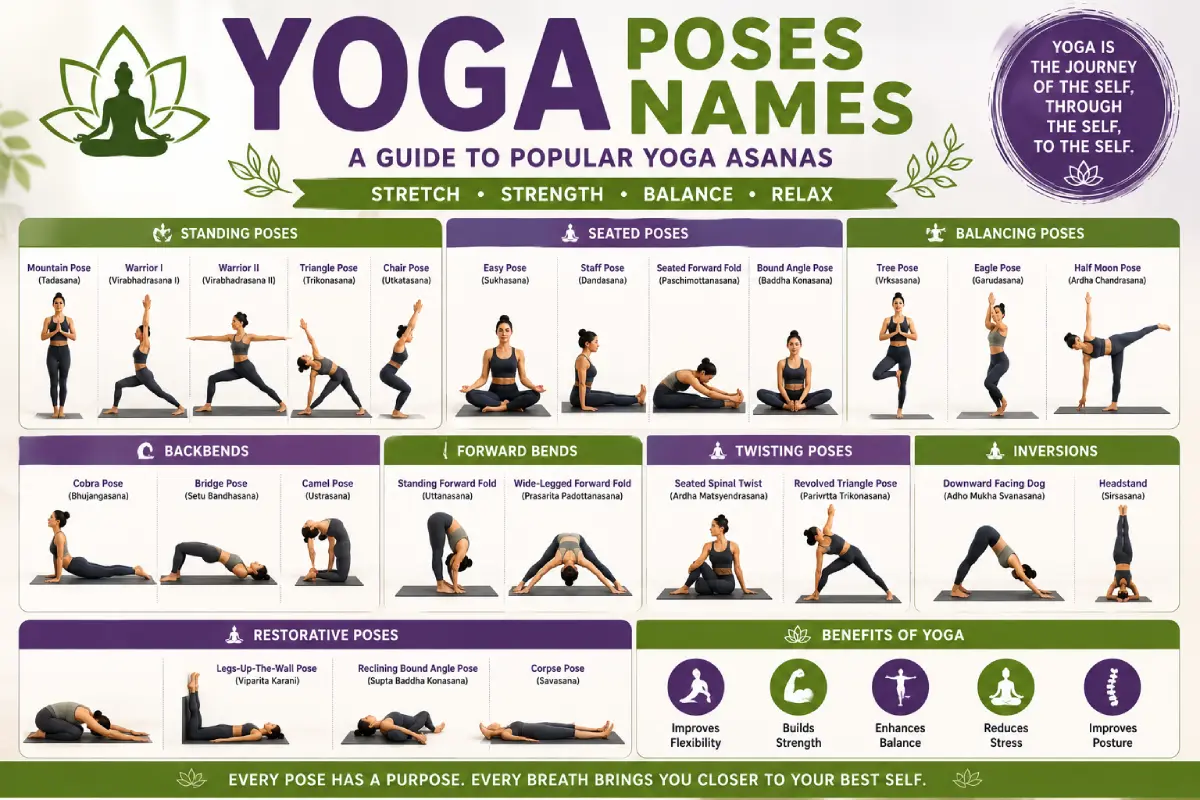
Here, you will find all the most common yoga poses names, each one of their benefits, and how they work together as a full yoga class.
What’s the point of learning Yoga pose names?
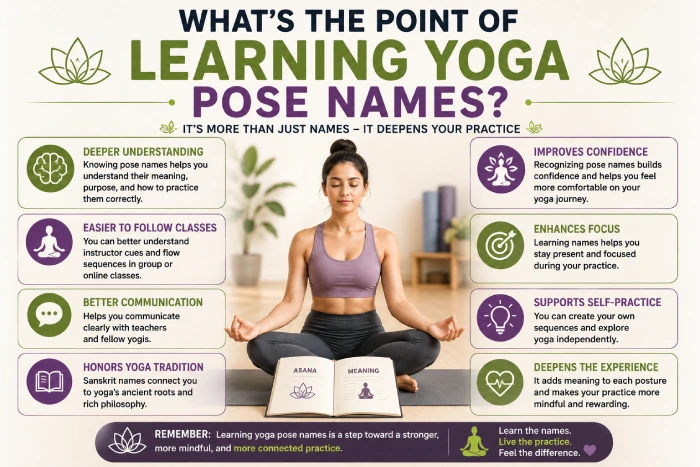
There are various benefits to learning the names of yoga poses.
Improves Learning
Knowing pose names makes it more straightforward to join classes and follow online tutorials.
Enhances Communication
You‘ll also be able to communicate to experienced yoga teachers and other yoga students.
Builds Confidence
Simply identities your recognition poses will make you much more comfortable in yoga class.
Deepens Understanding
Numerous of the yoga poses have their own history and symbolism for the traditional philosophy of yoga.
Standing Yoga Poses Names
Poses in yoga which are done though standing. Focus on building Strength, Balance and constancy.
Mountain Pose (Tadasana)
The foundation for many vertical yoga stances is mountain pose.
Benefits:
- Recovers posture
- Enhances balance
- Increasest(bodyawareness)
Warrior I (Virabhadrasana I)
Delivers a deep consolidation of the area. A strong standing pose.
Benefits:
- Strengthens your legs.
- Improves focus
- Enhances endurance
Warrior II (Virabhadrasana II)
Perhaps the most well known of yoga postures.
Benefits:
- Strengthens legs
- Improves stability
- Upsurges stamina
Trio Pose (Trikonasana)
A standing side stretch that lengthens flexibility.
Benefits:
- Stretches hamstrings
- Improves balance
- Enhances mobility
Chair Pose (Utkatasana)
A difficult posture concentrating on the lower body.
Benefits:
- Strengthens thighs
- Builds core stability
- Improves endurance
Seated Yoga Poses Names
Seated stances are suitable for matching and relaxing.
Easy Pose (Sukhasana)
A seated Lotus.
Benefits:
- Promotes relaxation
- Improves breathing
- Supports mindfulness
Seated Forward Wrinkle (Paschimottanasana)
A long stretch of the back side.
Benefits:
- Improves flexibility
- Calms the mind.
- Stretches hamstrings
Staff Pose (Dandasana)
A basic seated position.
Benefits:
- Improves stance
- Core strengthening
- Develops body consciousness
Bound Angle Pose (Baddha Konasana)
Usually referred to as the Butterfly Pose.
Benefits:
- Opens the hips.
- Improves flexibility
- Reduces tension
Balancing Yoga Poses Names
Balance poses can strengthen focus and coordination.
Tree Pose (Vrksasana)
It‘s one of the balancing poses that most commonly understood.
Benefits:
- Improves balance
- Strengthens legs
- Enhances focus
Eagle Posture (Garudasana)
A more challenging balance posture.
Benefits:
- Improves coordination
- Enhances concentration
- Builds stability
Half Moon Posture (Ardha Chandrasana)
An ASMR balance pose.
Benefits:
- Strengthens legs
- Is an effective core stabilizer
- Enhances flexibility
Backbend Yoga Poses Names
Backbends growth mobility and strengthen the back.
Cobra Pose (Bhujangasana)
A gentle backbend in beginning level.
Benefits:
- – Enhances the back
- Popularizes the chest
- Improves posture
Bridge Pose (Setu Bandhasana)
A soft back bend that is good for beginners.
Benefits:
- Strengthens glutes
- Enhances the flexibility of the spine
- Opens the chest
Camel Pose (Ustrasana)
A more intense backbend for the more experienced.
Benefits:
- Improves flexibility
- Enhances posture
- Raises the chest
Forward Bend Yoga Poses Names
Forward bends: Stretch the back body, help you to get relaxed.
Standing Forward Fold (Uttanasana)
Benefits:
- Stretches hamstrings
- Relieves tension
- Improves flexibility
Wide-Legged Forward Fold (Prasarita Padottanasana)
Benefits:
- Improves mobility
- Opens the hips.
- Soothes nerves.
Twisting Yoga Poses Names
Increased spinal mobility and awareness of positioning are encouraged with twists.
Seated Spinal Twist (Ardha Matsyendrasana)
Benefits:
- 3. Enhances flexibility of the spine
- Enhances posture
- Alleviates back strain
Turned Triangle Pose (Parivrtta Trikonasana)
Benefits:
- Improves balance
- Builds the core – Sit-up2
- Increases flexibility
Inversion Yoga Poses Names
Overturns place the heart and head above the rest of the body and need total concentration and balance.
Downward Facing Dog (Adho Mukha Svanasana)
A mild inversion hence one of the most common yoga poses. Only at the most exciting and flexible!
Benefits:
- Strengthens shoulders
- Improves circulation
- Body parts that elongate the body:
Legs Up The Wall Pose (Viparita Karani)
A reverse restorative.
Benefits:
- Eases work load of tired legs
- Promotes relaxation
- Reduces stress
Head stand (Sirsasana)
A much better inversion.
Benefits:
- Improves balance
- Strengthens upper body muscles
- Enhances focus
Restorative Yoga Poses Names
Restorative poses, such as those that help decrease stress and aid in healing.
Child‘s Pose (Balasana)
Very relaxing yoga positions.
Benefits:
- Reduces stress
- Gets rid of back tension
- Promotes relaxation
Body Pose (Savasana)
Typically skillful only at the end of all yoga practices.
Benefits:
- Promotes deep relaxation
- Improves mindfulness
- Reduces stress
Lounging Bound Angle Pose (Supta Baddha Konasana)
Benefits:
- Opens the hips
- Promotes relaxation
- Supports recovery
Most Current Yoga Poses for Beginners
If you are new to yoga, start with these beginner-friendly poses:
- Mountain Pose
- Child’s Pose
- Cat-Cow Pose
- Downward Facing Dog
- Cobra Pose
- Warrior I
- Warrior II
- Tree Pose
- Bridge Pose
- Corpse Pose
These stances are a good foundation for any future yoga practice.
Yoga Pose Categories at a Peek
| Category | Examples |
| Standing Poses | Mountain, Warrior I, Warrior II |
| Seated Poses | Easy Pose, Staff Pose, Forward Fold |
| Balancing Poses | Tree Pose, Eagle Pose |
| Backbends | Cobra Pose, Bridge Pose |
| Forward Bends | Standing Forward Fold |
| Twists | Seated Spinal Twist |
| Inversions | Downward Dog, Headstand |
| Restorative Poses | Child‘s Pose, Savasana |
Being familiar with these categories provides structure to your yoga practice.
How to Remember Yoga Pose Names
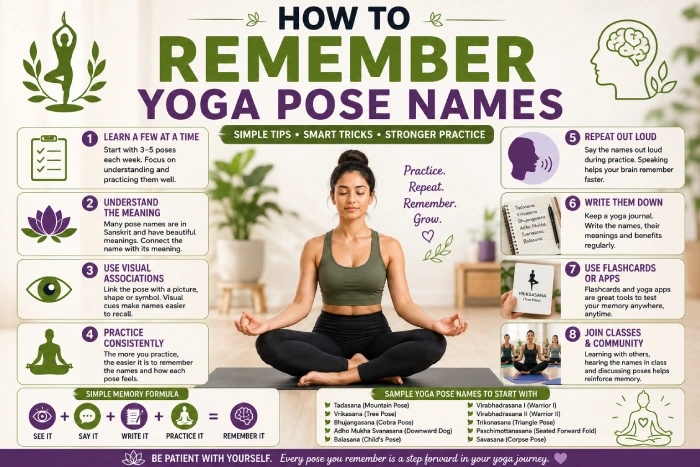
Practice Consistently
Freq (frequency) of practice: allows you to reinforce pose recognition.
Learn Sanskrit Names Gradually
Focus on a few names.
Use Visual References
What might also help memorize, is yoga charts and guides.
Join Yoga Classes
Instructor cues, should connect names to movements.
Create a Yoga Journal
Writing pose names in their native language may aid memorisation.
Benefits of Learning Different Yoga Poses
Learning a variety of yoga poses can:
- Improve flexibility
- Increase strength
- Enhance balance
- Support posture
- Reduce stress
- Improve breathing
- Promote mindfulness
The more poses you learn the more exciting and diverse your yoga practice.
Final Thoughts
Learning the names of the poses you practice is useful for understanding what you are supposed to do in class, this makes your practice safer and more efficient, we can‘t always see ourselves and correcting ourselves is difficult it can help you to do this more easily, it can also give you more confidence. The following list is yoga as in poses categorized as beginner, intermediate and advanced.
Start with the basic postures. Continue doing it frequently and have endurance to learn yoga asanas, after some days you will start to feel solider and more flexible at the core.
FAQs
Which is the most comfortable yoga pose?
This is the very first yoga pose of my practice, i.e. Tadasana, i.e. Mountain pose and kid pose, i.e. Balasana which is the easiest yoga poses for beginners.
Must Neophytes learn the names of the poses in Sanskrit?
Definitely not necessary, but sometimes very helpful, beginners may prefer to use English names and later switch to Sanskrit ones.
What is the most beginner friendly yoga pose?
Child‘s Pose, Mountain Pose, Cat-Cow Pose, and Downward Facing Dog are also suitable for beginners.